EduNinja

IB Economics SL3.2.3—Short-run aggregate supplyTopic Practice

3.2.3—Short-run aggregate supply

• SRAS depends on costs of factors of production and indirect taxes

• Diagram: SRAS curve

• Diagram: shifts of the SRAS curve

Question 2(b)

[Maximum number: 4]

Study the extract and data below and answer the questions that follow.
Price of Chinese exports set to soar

(1) In December 2009, a Chinese trade official declared that China will continue to increase its share of world exports. While China's share of world trade fell in 2009 due to the world economic downturn, the share of other major exporters fell by even more. As a result China overtook Germany to become the world's largest exporter. Over the last 10 years China's exports grew by an average of 23 %, more than twice as quickly as world trade. If this growth continues China could claim 25 % of world trade by 2020.

(2) Chinese producers have become used to producing cheap goods and Chinese and overseas consumers have become used to buying these goods. The production of electronic toys and textiles in China is now suffering from increased production costs. Wages, raw materials and other manufacturing costs in China are rising, forcing up prices for producers and consumers.

(3) Inflation in China is also being affected by a huge increase in Chinese domestic demand as Chinese incomes increase. Chinese toy factories are being forced to give large wage increases to their workers who prefer to work in Japanese-owned electronics factories. Working conditions in a toy factory can be unpleasant and many workers leave resulting in labour shortages. It now takes longer to produce and deliver toys.

(4) These changes in the Chinese economy are beginning to have effects on other economies. Importers are warning of sharp price increases and stock shortages as Chinese factories struggle to meet demand. Prices have risen by 10 % in the last eight months. Having built its reputation on low price manufactured goods, China now faces the problem of inflation and its effect on the export of these goods.

(5) China has also been criticized for maintaining a low and managed exchange rate to gain a competitive advantage and protect its domestic industry and employment and maintain a current account surplus. China's trading partners are becoming concerned and some are suggesting a need for protectionist measures in order to counteract the Chinese exchange rate policy.
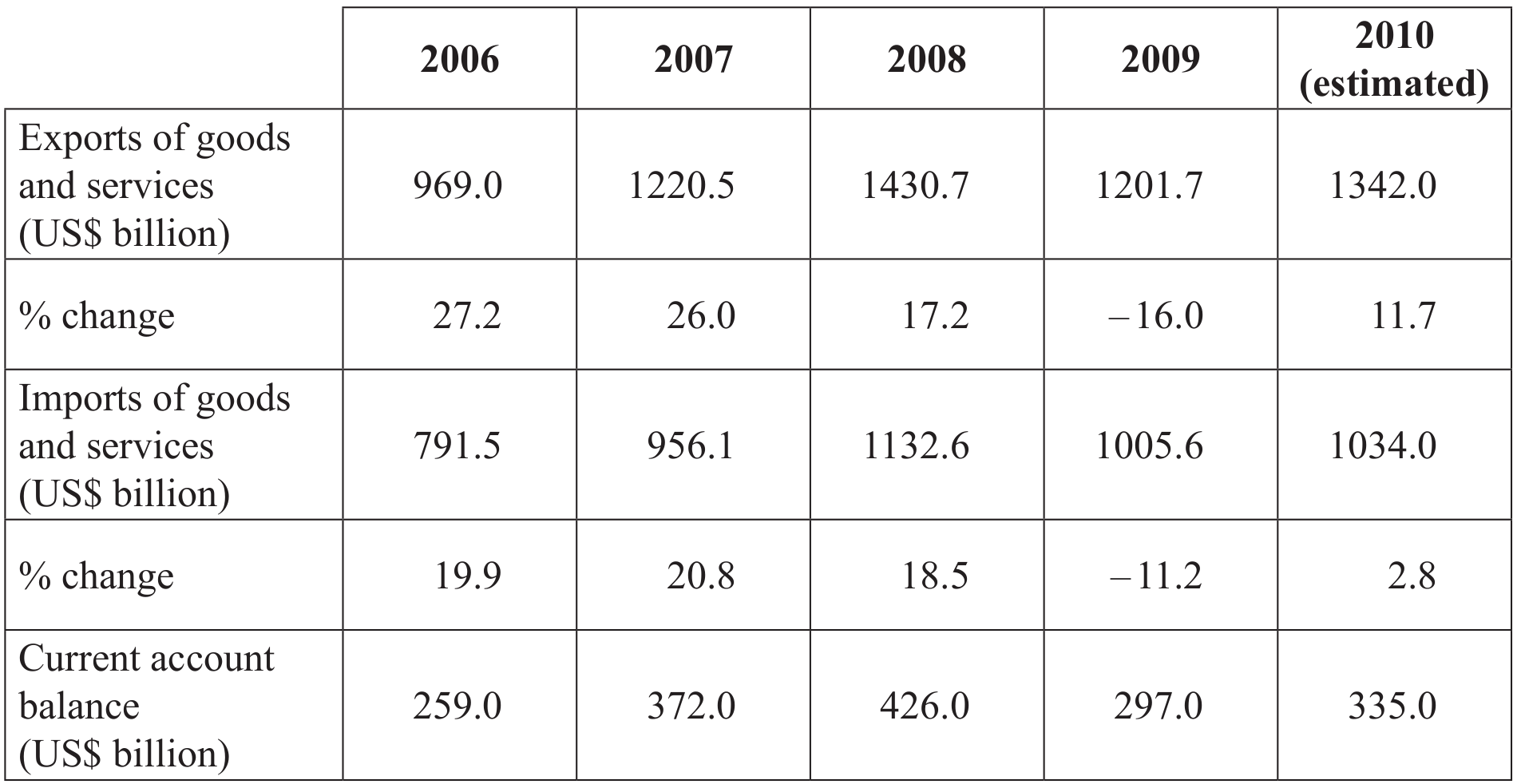
China's trade with the world

China's trade with the world

Using an AD/AS diagram, explain how an increase in domestic wages might affect the output of the Chinese economy.

Question 2(d)

[Maximum number: 4]

Read the extracts and answer the questions that follow.
Text D - Macroeconomic policies in Uruguay

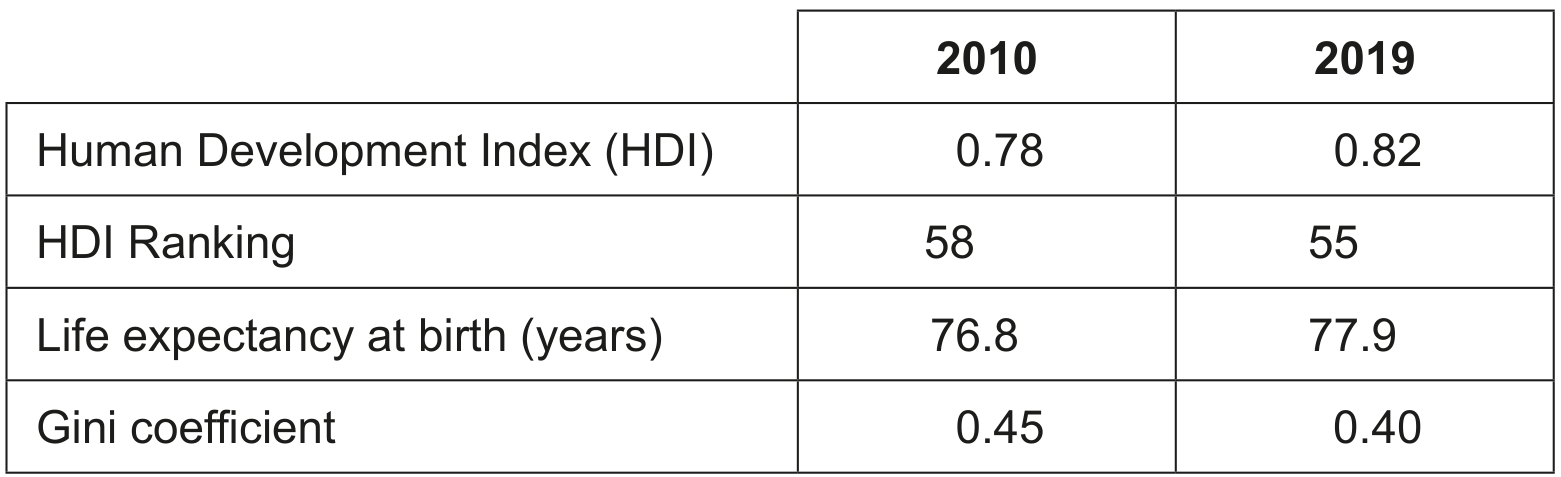
(1) Compared to many other Latin American countries, Uruguay has a high Human Development Index (HDI). This is due to its higher gross national income (GNI) per capita and wider access to health care and education.

(2) One aim of Uruguay's fiscal policy has been income redistribution. For example, in 2017 the tax rate applied to the highest income bracket was raised from 25 % to 36 %. Spending on social programmes, which are targeted towards the poor, has also increased. However, while expenditure on schools is benefitting all families, expenditure on higher education still tends to favour higher-income families, because there are relatively few students from low-income families in universities.

(3) Recently, concern about a growing budget deficit has led to new budget guidelines being implemented. These guidelines aim to reduce borrowing and the national debt by encouraging the government to increase tax revenue and/or reduce expenditures. The main policy goal of Uruguay's central bank is to keep a low rate of inflation. It has announced that it will reduce the inflation target to below 6\% by September 2022.

(4) Several constraints to growth remain, which may limit progress towards sustainable development. Despite plans to upgrade road networks and construct a new central railway, investment in infrastructure needs to be increased further. Education and training could also be improved to meet the needs of new sectors, such as the information and communication technology (ICT) industry.

(5) State-owned enterprises, including railways and suppliers of fuel, water and electricity, are a significant part of the Uruguayan economy. The prices charged by these enterprises tend to be high relative to prices in other countries. As part of a strategy to eliminate excessive costs, the government has proposed measures to improve efficiency in state-owned enterprises and to gradually reduce prices.

(6) The International Monetary Fund (IMF) considers that more labour market flexibility is needed to make it easier for workers to change jobs and for firms in growing sectors such as ICT to hire workers. The government is, therefore, considering deregulation of the labour market.

(7) Overall, by boosting competitiveness and private investment through supply-side policies, the government aims to raise growth and employment.
Text E - Health care system in Uruguay
The public and private sectors that offer health care in Uruguay were combined into one system in 2007, with both overseen by the government and both eligible to receive subsidies. Most medical care is free for low-income patients. The first row of data in Table 3 shows that per capita demand for health care increased by 54.22 % from 2010 to 2018 . The advantages are seen in longer life expectancy figures, which imply an increase in productivity, and other benefits.

Table 3: Health care expenditure and GNI per capita for Uruguay

Table 3: Health care expenditure and GNI per capita for Uruguay

Text F - Trade and exchange rates

(1) Over 50 % of Uruguayan exports are forestry and agricultural goods, including soybeans, rice, and cattle meat. Increasing global demand and a significant rise in commodity prices from 2000 to 2012 encouraged investment in the agricultural sector. However, the price of soybeans has been declining since 2013, partly due to rising productivity in agriculture. Climate-related shocks, such as droughts in 2017 and 2020, and economic crises in the major export markets of Brazil and Argentina have also caused difficulties for producers.

(2) Therefore, Uruguay aims to diversify its export markets. For example, with the growth of the ICT sector, Montevideo (the capital city of Uruguay) has become a leading software development centre. In addition, Uruguay is broadening its markets towards Europe and Asia. Under a proposed trade agreement between the European Union (EU) and the South American trade bloc, Mercosur (Argentina, Brazil, Paraguay, Venezuela, and Uruguay), 93 % of all tariffs will gradually be eliminated. However, a quota will be imposed on cheese imports from the EU.

(3) To help the economy adjust to external shocks and to avoid large fluctuations in the exchange rate of the peso (Uruguay's currency), the central bank uses its plentiful reserve assets of foreign currencies. In 2019, the decline in agricultural export revenues put downward pressure on the peso exchange rate. However, the central bank was able to prevent a large depreciation by using its reserve assets in the foreign exchange market.

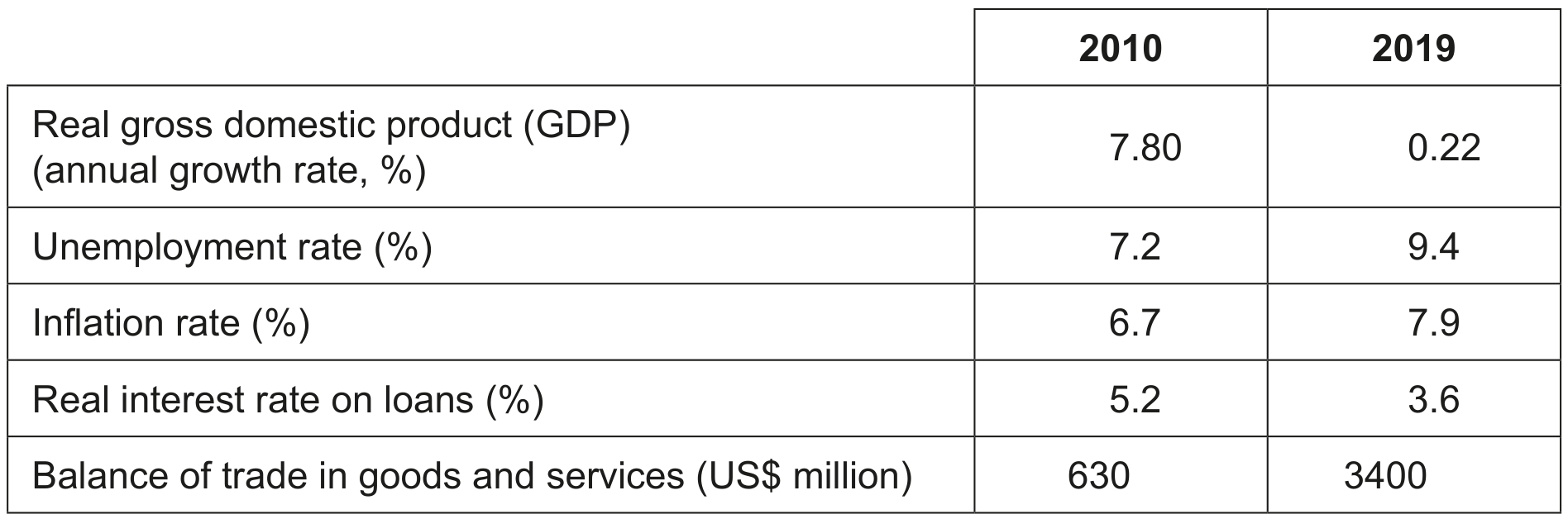
Table 4: Economic data for Uruguay

Table 4: Economic data for Uruguay

Table 5: Development data for Uruguay

Table 5: Development data for Uruguay

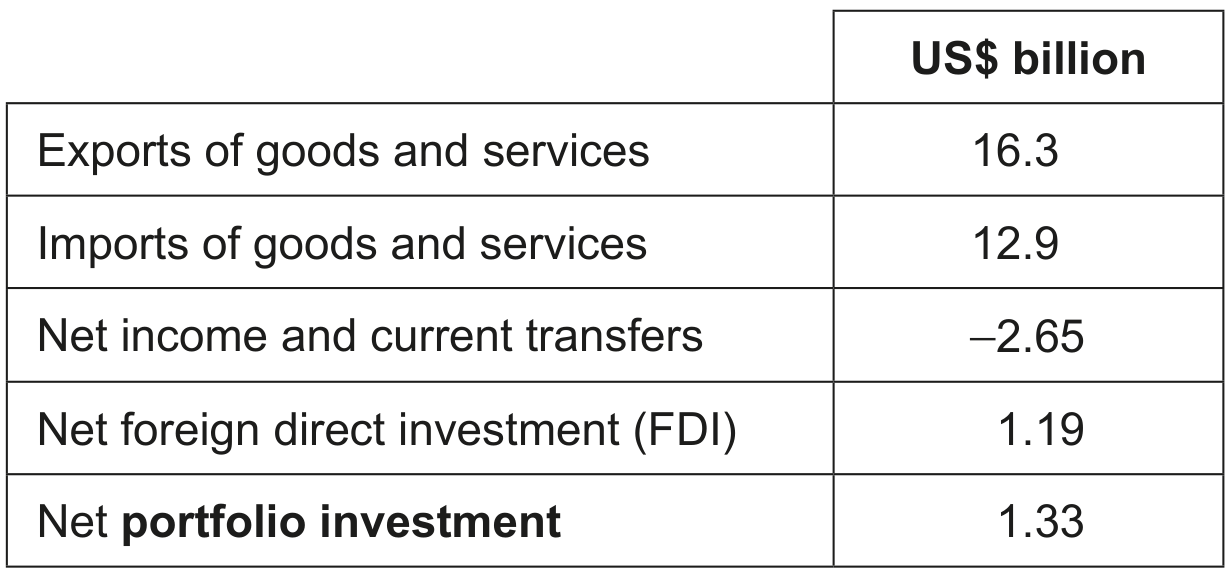
Table 6: Balance of payments data for Uruguay in 2019

Table 6: Balance of payments data for Uruguay in 2019

Using an AD/AS diagram, explain how climate-related shocks, such as droughts, could affect real GDP growth (Text F, paragraph 1).

0 selected