EduNinja

IB Economics SL4.4 Economic integrationQuestion Bank

Question 1

[Maximum number: 15]

Read the extracts and answer the questions that follow.
Text A - Overview of Uruguay

(1) With a population of only 3.5 million, Uruguay is one of the smallest nations in South America. Its membership of the MERCOSUR common market allows Uruguayan producers tariff-free access to 290 million consumers in Argentina, Brazil and Paraguay.

(2) Agriculture accounts for 8 % of Uruguay's gross domestic product (GDP) and 65 % of its export revenue. Exports have increased since the early 2000s, partly due to China's rising demand for commodities. In particular, Uruguay's soybean producers benefitted from significantly higher prices during the commodity boom. China is now Uruguay's most important export destination, with soybeans accounting for over 50 % of its exports to China.

(3) Uruguay's real GDP increased by an average of 5.39 % per year from 2005 to 2014. However, the economy slowed considerably when the commodity boom ended in 2015. It slowed further because of decreased regional demand when the largest members of MERCOSUR, Argentina and Brazil, faced a recession in 2017. Uruguay's real GDP grew on average by 1.04 % per year from 2015 to 2018.

(4) With the increasing importance of China and the European Union (EU) as export markets, Uruguay has managed to reduce its dependency on MERCOSUR. However, attempts to diversify its exports away from agriculture have not been successful. The end of the commodity boom contributed to a fall in export revenue and the depreciation of the peso (Uruguay's currency). The currency has lost over 25\% of its value since 2015.

(5) Inflation stayed at a relatively high rate of 8 % in 2018 due to the weaker currency. The unemployment rate also increased to 7.9 % as a result of the economic slowdown. The higher cost of living and the lower rates of employment could inhibit efforts to reduce inequality and poverty levels.

(6) Despite rising inflation and unemployment, Uruguay's minimal corruption, abundant natural resources and access to a large common market continue to attract foreign direct investment (FDI). Investments in the paper and wood industries have made forestry one of the country's fastest growing industries. Increased FDI inflows have also prevented the peso from depreciating further.
Text B - The EU-MERCOSUR free trade agreement

(1) The EU and MERCOSUR are finalizing the terms of a free trade agreement, which would enable Uruguay to increase its exports to the 27 EU member states. The EU currently buys 11 % of all Uruguayan exports, mostly animal products, paper, vegetables and wood.

(2) Once the free trade agreement comes into effect, almost all agricultural and industrial tariffs between the EU and MERCOSUR will be removed. The imports of beef, poultry and sugar will not be included in the list of tariff-free products but will be subject to very large quotas. This will allow increased exports of these products to EU countries.

(3) The free trade agreement may cause bankruptcies in the manufacturing sector and higher structural unemployment in Uruguay. EU exports to Uruguay largely consist of manufactured goods, such as chemicals, machinery, transport equipment and plastics, which are in high demand despite the current tariffs of up to 35 %.

(4) One third of FDI into Uruguay comes from the EU. Anticipation of the free trade agreement has led to more EU investments in Uruguay's forestry sector. Environmental organizations have warned that the free trade agreement could be a threat to sustainability as South American forests are cleared to create land for cattle farming, paper and wood production. The deforestation might also disrupt water sources that supply rural villages, depriving the villagers of clean water.
Text C — Uruguay seeks trade agreements outside MERCOSUR

(1) Members of MERCOSUR have differing views on trade policies. Brazil, Paraguay and Uruguay believe in trade liberalization and want to increase competition through a reduction of the common external tariff. On the other hand, Argentina wants to maintain the high external tariff to protect industries from cheap imports from China and to avoid prolonging its current recession.

(2) Uruguay has expressed its desire to seek trade agreements apart from MERCOSUR, which is prohibited by the common market's rules. If Uruguay pursues separate bilateral agreements, it is likely to lose its MERCOSUR membership and the benefits of any existing free trade agreement.
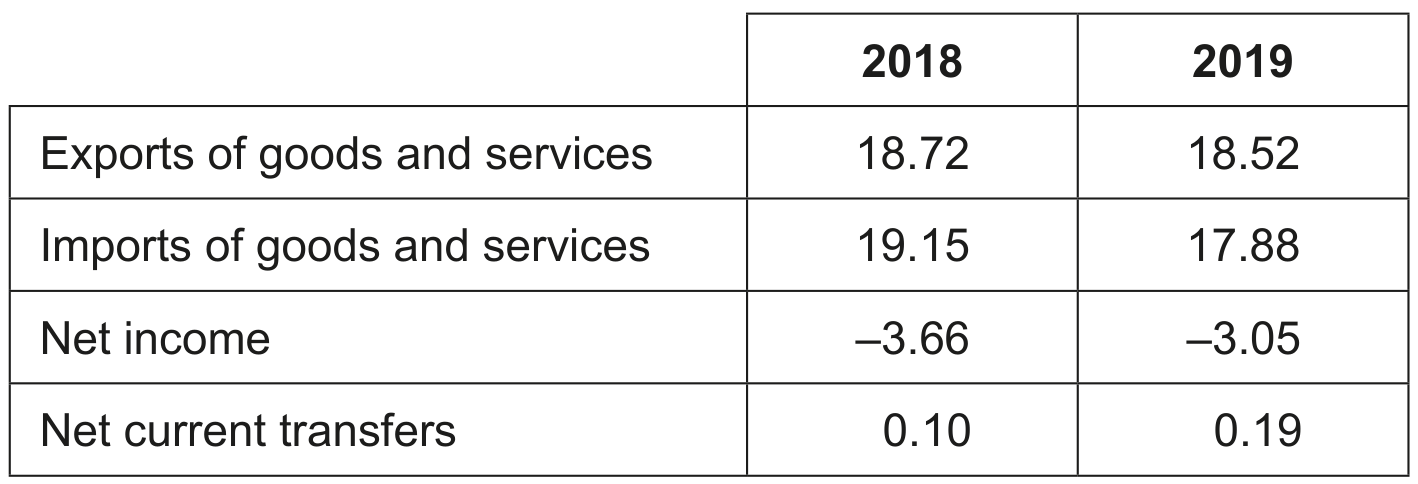
Table 1: Current account data for Uruguay (US\$ billion)

Table 1: Current account data for Uruguay (US\$ billion)

Table 2: Selected income data for Uruguay

Table 2: Selected income data for Uruguay

Question 1(g)

(a)

Using information from the text/data and your knowledge of economics, discuss the impact of economic integration on the Uruguayan economy.
[ 15 ]

Question 1

[Maximum number: 15]

Read the extracts and answer the questions that follow.
Text A — Overview of North Macedonia

(1) North Macedonia is a small, landlocked nation that shares borders with five countries, including Bulgaria and Greece. Bulgaria and Greece are members of the European Union (EU) common market, which North Macedonia hopes to join soon. Since the country began negotiating for EU membership, trade with the EU has increased rapidly and now accounts for 75 % of North Macedonia's exports and 62 % of its imports.

(2) Despite its small market, with a population of approximately 2 million, North Macedonia's proximity to the EU, low wages and expected entry into the common market have attracted foreign investors. Greece, its richest neighbour, was its third highest source of foreign investment in 2019. The lower cost of living also appeals to Greek tourists.

(3) EU companies have invested in the financial, telecommunication, energy and food processing industries in North Macedonia. Many of the most profitable companies are from the EU. If EU membership is granted, foreign direct investment (FDI) inflows may increase as firms located in North Macedonia will be allowed to bypass all custom checks and enjoy tariff-free trade within the common market. One particular challenge for North Macedonia, however, is that most of the profits of foreign companies are likely to be repatriated (sent back to the companies' home countries).

(4) In 2018, North Macedonia's export revenue was US $ 7.57 billion and its import expenditure was US$9.56 billion. The country's main exports are iron and steel, clothing and accessories, and food products. Food, livestock and consumer goods account for 33 % of imports while the remainder are machinery, petroleum and other materials needed for the industrial production process.

(5) The manufacturing sector, which now employs 31 % of the labour force, has gained more importance. The agricultural sector remains strong, contributes over 10 % of North Macedonia's gross domestic product (GDP) and employs about 16 % of the country's workforce.

(6) The unemployment rate decreased from over 30 % in 2010 to 17.3 % in 2019. However, youth unemployment is almost 40 %. Over 20 % of the population lives below the poverty line. Unemployment and poverty contribute to high rates of emigration. More than 20 % of the North Macedonian population have emigrated since 1994, mostly to the EU. As a member of the EU, North Macedonia will enjoy free movement of labour which will make it easy for its citizens to live and work in other EU countries.
Text B - North Macedonia's economic reforms

(1) To be considered for EU membership, North Macedonia implemented a series of supply-side policies to reform its economy. The EU imposes strict requirements for membership but provides financial assistance to countries preparing for membership. North Macedonia has received 633 million euros (the currency of the EU) to help with the reforms.

(2) Most of the supply-side policies seek to improve the international competitiveness of North Macedonia's industries. The authorities are increasing access to education and training for workers. The expansion of the transport network and other infrastructure is also expected to increase efficiency.

(3) Protection of the environment is also on the list of requirements for EU membership. North Macedonia aims to reduce its dependence on coal and to instead promote the use of solar, wind and hydropower technologies. These low-carbon energy sources would help decrease its air pollution, which is among the worst in Europe.

(4) The reforms, which started in 2014, have shown progress. Exports and manufacturing output are more diversified and more concentrated on high-value products. To attract FDI, North Macedonia maintains one of the lowest tax rates on corporate income in the region. The central bank also prevents the denar (North Macedonia's currency) from appreciating against the euro through managing foreign reserves. However, skill shortages and a mismatch of skills with those required by companies discourage foreign firms from investing. Important investment gaps in public infrastructure also remain.
Text C - North Macedonia's trade agreements
North Macedonia participates in five free trade agreements (FTAs), that together cover 95 % of its exports and 78 % of its imports. Most of its trade with the EU is already free but imports of wine, beef and fish products are still subject to quotas. North Macedonia is currently a net importer of agricultural and food products. All protectionist measures on EU products would be removed upon entry into the common market.

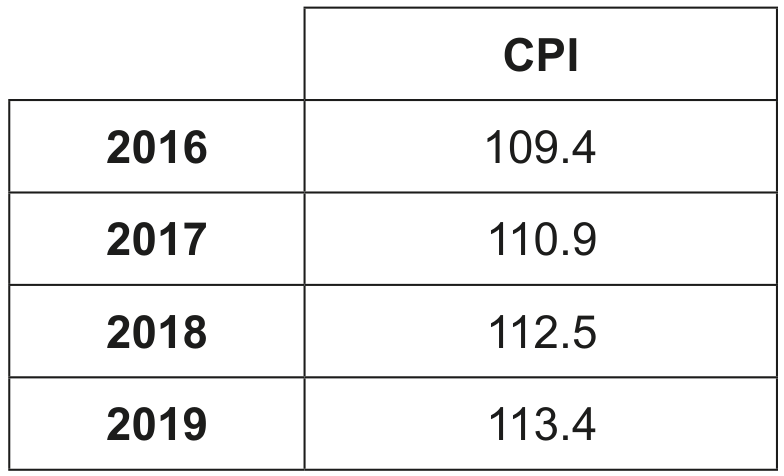
Table 1: Consumer Price Index (CPI) for North Macedonia (base year = 2010)

Table 1: Consumer Price Index (CPI) for North Macedonia (base year = 2010)

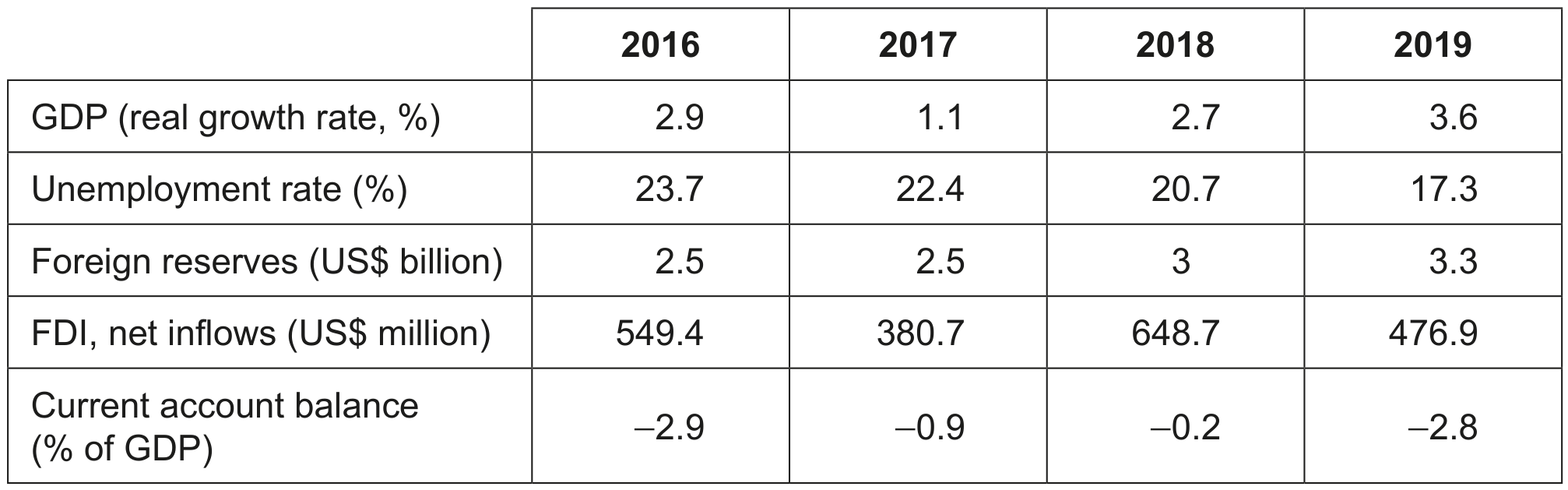
Table 2: Economic data for North Macedonia

Table 2: Economic data for North Macedonia

Question 1(g)

(a)

Using information from the texts/data and your knowledge of economics, discuss the likely economic effects on North Macedonia of its entry into the European Union (EU) Common Market.

[ 15 ]

Question 1

[Maximum number: 10]

Study the extract below and answer the questions that follow.
Latvia to join the eurozone monetary union

(1) Latvia will become the 18th country to adopt the euro after being approved for membership by the European Commission. The country has met the criteria for eurozone membership, including low inflation, low long-term interest rates, a stable exchange rate, low public debt and low budget deficits.

(2) Latvia joined the European Union (EU) customs union in 2004. This resulted in a large increase in the availability of credit and strong economic growth in Latvia. However, the 2008 global financial crisis resulted in the collapse of one of its leading banks and massive economic instability. Economic output fell by about 20 % and Latvia had to accept a bailout (loans) from the International Monetary Fund (IMF) and the EU.

(3) Latvia kept the lat (the Latvian currency) pegged to the euro throughout the crisis. At the time, some economists argued that devaluation would have been a better way to improve the economy. However, Latvia followed the path of other countries such as Greece and Ireland, and chose to improve competitiveness through austerity measures. This involved increasing direct taxes and cutting government spending and public sector wages.

(4) By late 2010, the economy was growing again and Latvia had repaid the loans to the IMF and the EU. In 2012, the economy expanded by 5.6 %, the fastest of any country in the EU, although output was still 12 % below its pre-crisis peak. In addition unemployment was falling, but it remained high at 12.4 %.

(5) For Latvia, which shares a border with Russia, the attraction of the euro is about economics and security. Entering the eurozone in January 2014 is part of a process of shifting away from the influence of Russia, and following its northern neighbour Estonia which joined the eurozone in 2011. Lithuania hopes to join the eurozone in 2015.

(6) Public support for joining the eurozone has been low. Evidence from one survey suggests that a small majority of Latvia's population opposes membership, fearing that prices will rise and Latvians will be drawn into the problems facing Europe's struggling economies.

(7) Nonetheless, there are signs that support is growing. The Latvian prime minister said that "switching to the euro will help economic growth and bring increased foreign investment. Unlike countries that can afford to ignore the euro and additional integration, Latvia cannot easily stand on its own. This is good news, not only for Latvia, but also for the eurozone. It shows that there is still confidence in the single currency".
www.theguardian.com, 16 July 2013]

Question 1(a)

Question 1(a)(i)

(a)
(i)

Define the term customs union indicated in bold in the text (paragraph 2).

[ 2 ]

Question 1(d)

(b)

Using information from the text/data and your knowledge of economics, evaluate the possible impact of Latvia joining the eurozone.

[ 8 ]

Question 1

[Maximum number: 2]

Study the following extract and answer the questions that follow.
China and global trade

(1) On 15 January 2020, the United States (US) and China signed a deal that reduced some tariffs and required China to buy more from US producers. This was a first step towards resolving a trade war, which had reduced bilateral trade flows by 9 % and investment flows by 60 %. However, critics argued that the deal left most tariffs unchanged and did not deal with deeper disagreements.

(2) The US, the European Union (EU) and Japan are calling for tougher World Trade Organization (WTO) rules on government support for firms that manufacture items such as steel or solar panels. The support, which is often in the form of subsidies, has allegedly undermined competing firms overseas, either by promoting exports or by decreasing imports, and therefore distorted global trade. Other governments also give subsidies, but there are claims that China uses them more extensively.

(3) The proposed WTO rule change would require governments to prove that subsidies do not give domestic firms an unfair advantage over foreign firms and that they do not lead to excess supply in the global market. If the rules are implemented, the WTO may regain some of the authority that it has lost in recent years.

(4) One of the US government's goals when imposing huge tariffs on Chinese-made goods was to bring back manufacturing jobs to the US. Therefore, despite the new deal, the 25 % tariff on Chinese-made furniture will stay. As a result, many US furniture firms that had used overseas factories to make their US company-branded products have reduced their imports of Chinese-made furniture.

(5) Meanwhile, Vietnam, Cambodia and Bangladesh are benefitting because US manufacturers of wood furniture are setting up factories there. Therefore, some other US producers are asking for the tariff on Chinese-made wooden furniture to apply to all wooden furniture imported into the US, regardless of where it is manufactured.

(6) China is becoming less dominant as an exporter and more integrated into the global trading system. Its current account surplus was over 10 % of gross domestic product (GDP) in 2007, but it declined to just 0.4 % in 2018 . Chinese producers are increasingly buying raw materials and other inputs from overseas producers. Although most electronic devices sold in the US are assembled in China, Chinese firms are often dependent on foreign suppliers. If the US and China tried to be less interdependent, it would take more than 10 years for China to become self-sufficient in the production of computer semiconductors and for the US to shift to other suppliers of electronic devices.

Question 1(a)

Question 1(a)(ii)

(a)
(i)

List two functions of the World Trade Organization (WTO) (paragraph 2).

[ 2 ]

Question 1

[Maximum number: 2]

Study the extract below and answer the questions that follow.
US steel

(1) With trans-Pacific and trans-Atlantic trade talks missing deadline after deadline, the United States (US) government is putting new tariffs on steel imports. This action will raise prices for many US firms, threaten domestic energy production, and upset trading partners worldwide.

(2) Last week, the US Department of Commerce imposed tariffs on hundreds of millions of US dollars worth of annual trade with South Korea and eight other countries, including India, Taiwan, Turkey and Vietnam. As punishment for allegedly dumping steel into the US market, South Korea's exporters will face tariffs of about 10 % to 16 %, while smaller producers from other countries face rates up to 118 %.

(3) In a preliminary review, the US International Trade Commission found a "reasonable indication" that US steel firms are being "injured" by foreign competitors' low prices.

(4) Low-priced steel from South Korea is good for American buyers but annoying for American producers who would rather have the market to themselves and charge higher prices.

(5) Spokespersons for US Steel Corporation complain that steel imports rose 113 % between 2010 and 2012, with South Korean products accounting for half the increase. They blame dumping, but the better explanation is related to America's energy revolution, where producers have taken advantage of two newly viable technologies: horizontal drilling and "fracking" to release gas and oil from rock formations. The resulting increase in energy production has been dramatic. Between 2007 and 2012, fracking generated an 18-fold increase in US production of what is known as light tight oil. This has created even more demand for steel, as steel products are needed in the gas energy market.

(6) The US steel tariffs will encourage other countries to raise trade barriers against American goods. The World Trade Organization (WTO) has already ruled against US tariffs imposed on Chinese steel and solar panels as well as Indian steel from 2007-2012. In the China case, the WTO ruled that the US had not provided enough evidence that the Chinese steel exporters received government subsidies.

(7) When the US imposes tariffs, it raises prices for many stakeholders to benefit the protected few. Copyright © 2014 Dow Jones \& Company Inc. All Rights Reserved Worldwide]

Question 1(a)

Question 1(a)(ii)

(a)
(i)

State two functions of the World Trade Organization (WTO) (paragraph 6).

[ 2 ]

Question 1

[Maximum number: 2]

Study the extract below and answer the questions that follow.
Clean energy products

(1) In a speech on climate change, President Obama announced a plan for the United States (US) to work with trading partners and the World Trade Organization (WTO) towards global free trade in clean energy products, such as solar panels and wind towers.

(2) The US will build on the Asia-Pacific Economic Cooperation (APEC)* agreement where member economies agreed to remove quotas and reduce tariffs to 5 % or less by 2015 on a negotiated list of 54 clean energy products.

(3) However, the APEC agreement does not include reducing anti-dumping tariffs. Such tariffs are allowed under WTO rules. When importers are suspected of dumping clean energy products on the domestic market, industries seek protection by putting pressure on government to impose anti-dumping tariffs.

(4) In recent years, anti-dumping tariffs on clean energy products have increased. In 2011 China was found to be subsidizing and dumping wind towers on the US market. In retaliation, the US imposed an anti-dumping tariff of between 45 % and 71 %. In addition, a similar tariff was imposed on Vietnamese wind tower imports.

(5) In the solar industry in 2012, a group of seven US solar panel manufacturers sought protection from cheap Chinese imports. After investigating claims of dumping, the US imposed anti-dumping tariffs ranging from 24 % to 36 % on Chinese solar panel producers.

(6) The Coalition for Affordable Solar Energy (CASE), which represents importers, installers and solar power generators, supports the President's strategy to address climate change by making imports of environmental goods more affordable and giving consumers choice. However, the National Association of Manufacturers (NAM), representing domestic producers of clean energy products, are hostile, claiming that the strategy "runs a serious risk of punishing Americans with higher energy bills, fewer jobs, and a weaker economy, while delivering negligible benefits to the environment".

(7) Similar trade issues have arisen between China and the European Union (EU). In 2011, solar panels made up 6.5 % of China's exports to Europe at a value of around US $ 27 billion. In 2012, Belgian solar panel manufacturers claimed that these products were being dumped in the EU market. In June 2013, the EU announced that it would impose anti-dumping tariffs of up to 47 % on Chinese solar products. In retaliation China threatened to impose a tariff on EU wine, arguing that EU farm subsidies had resulted in European countries dumping wine in China. After these Chinese threats of retaliatory trade measures the EU reduced the solar panel tariff to 12 %.
http://economist-pick-research.hktdc.com, accessed 20 August 2013 and
http://bbc.co.uk/news, accessed 6 October 2013]
* Asia-Pacific Economic Cooperation (APEC): member economies are Australia, Brunei Darussalam, Canada, Chile, China, Chinese Taipei, Hong Kong, Indonesia, Japan, Malaysia, Mexico, New Zealand, Papua New Guinea, People's Republic of China, Peru, Republic of Korea, Russia, Singapore, Thailand, The Philippines, The United States and Vietnam

Question 1(a)

Question 1(a)(i)

(a)
(i)

State two functions of the World Trade Organization (WTO) (paragraph (1)).

[ 2 ]

Question 3

Question 3(b)

(a)

Using real-world examples, evaluate the consequences of trading blocs.

[ 15 ]

Question 3

Question 3(b)

(a)

Using real-world examples, discuss the advantages and disadvantages of a country being a member of a trading bloc.

[ 15 ]

Question 2

[Maximum number: 10]

Study the extract and data below and answer the questions that follow.
Tedious journey towards West African single currency

(1) The Economic Community of West African States (ECOWAS) has continued to push for a monetary union. Those involved in pursuing increased economic integration strongly believe that a common currency for the West African Monetary Zone (WAMZ) would increase trade in the region, increase competition (particularly in commodity markets) and stimulate economic growth.

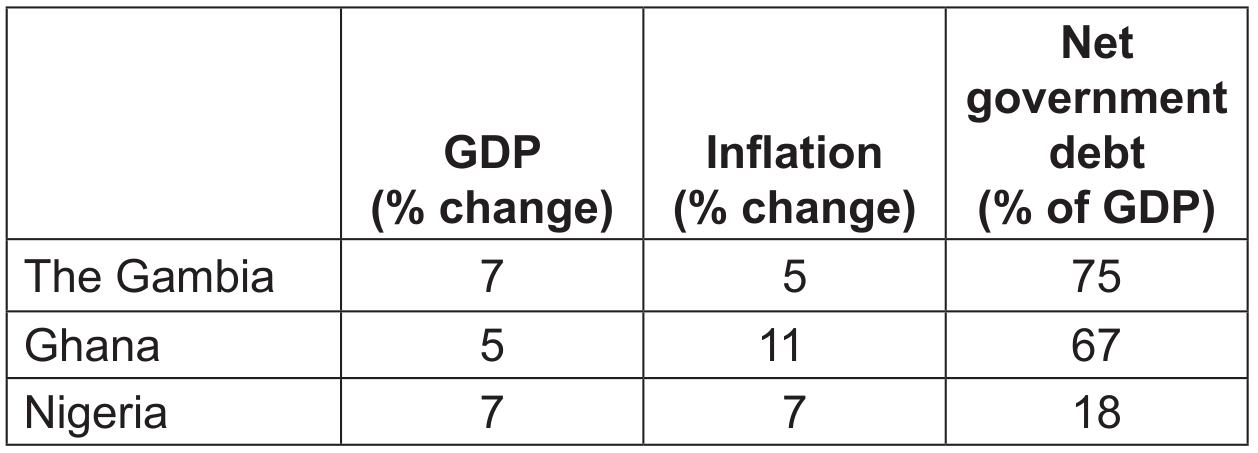
(2) The proposed currency, the eco, will be initially introduced in the 14 member countries of WAMZ* which include The Gambia, Ghana and Nigeria.

(3) The proposal has been postponed four times, largely because of unequal progress among member countries in meeting the requirements to establish a monetary union by 2020.

(4) The main requirements for membership of the monetary union are:
- the budget deficit of each member country should not exceed 3 % of its gross domestic product (GDP)
- the average annual inflation of each country should be below 10 %
- each country must have enough foreign currency reserves to buy a minimum of three months' worth of imports
- the public debt to GDP ratio of each country should not be more than 70 %
- each country's exchange rate should be stable.

(5) Meeting the requirements for all countries by 2020 will be difficult, given that member countries have different economies with their own challenges. Nigeria is the only country which has met all requirements so far.

(6) For the monetary union to succeed there must be honesty among member countries. In addition, member countries would have to double their efforts in strengthening fiscal performance through improving tax revenue collection and reducing government expenditure on public services.

(7) Although a single currency in the region is likely to promote trade, it will mean that individual member countries will lose control over their own monetary policy, creating conflicts of interests. Research shows that the balance of trade of Nigeria, an oil exporter, tends to move in the opposite direction to its neighbours, who are largely importers of oil. Nigeria would push for higher interest rates in periods of high oil prices. That would be disastrous for other WAMZ economies which would be desperate for lower rates. and www.economist.com, 3 October 2014]
* WAMZ: Ghana, Nigeria, Sierra Leone, The Gambia, Guinea, Liberia, Benin, Togo, Cote d'Ivoire, Niger, Mauritania, Senegal, Burkina Faso, and Mali.

Figure 1-2015 projected economic data for selected members of WAMZ

Figure 1-2015 projected economic data for selected members of WAMZ

Question 2(a)

Question 2(a)(i)

(a)
(i)

Define the term monetary union indicated in bold in the text (paragraph (1)).

[ 2 ]

Question 2(d)

(b)

Using information from the text/data and your knowledge of economics, discuss the possible advantages and disadvantages of a monetary union for members of the West African Monetary Zone (WAMZ).

Answer one question from this section.

[ 8 ]

Question 3

[Maximum number: 2]

Study the extract and data below and answer the questions that follow.

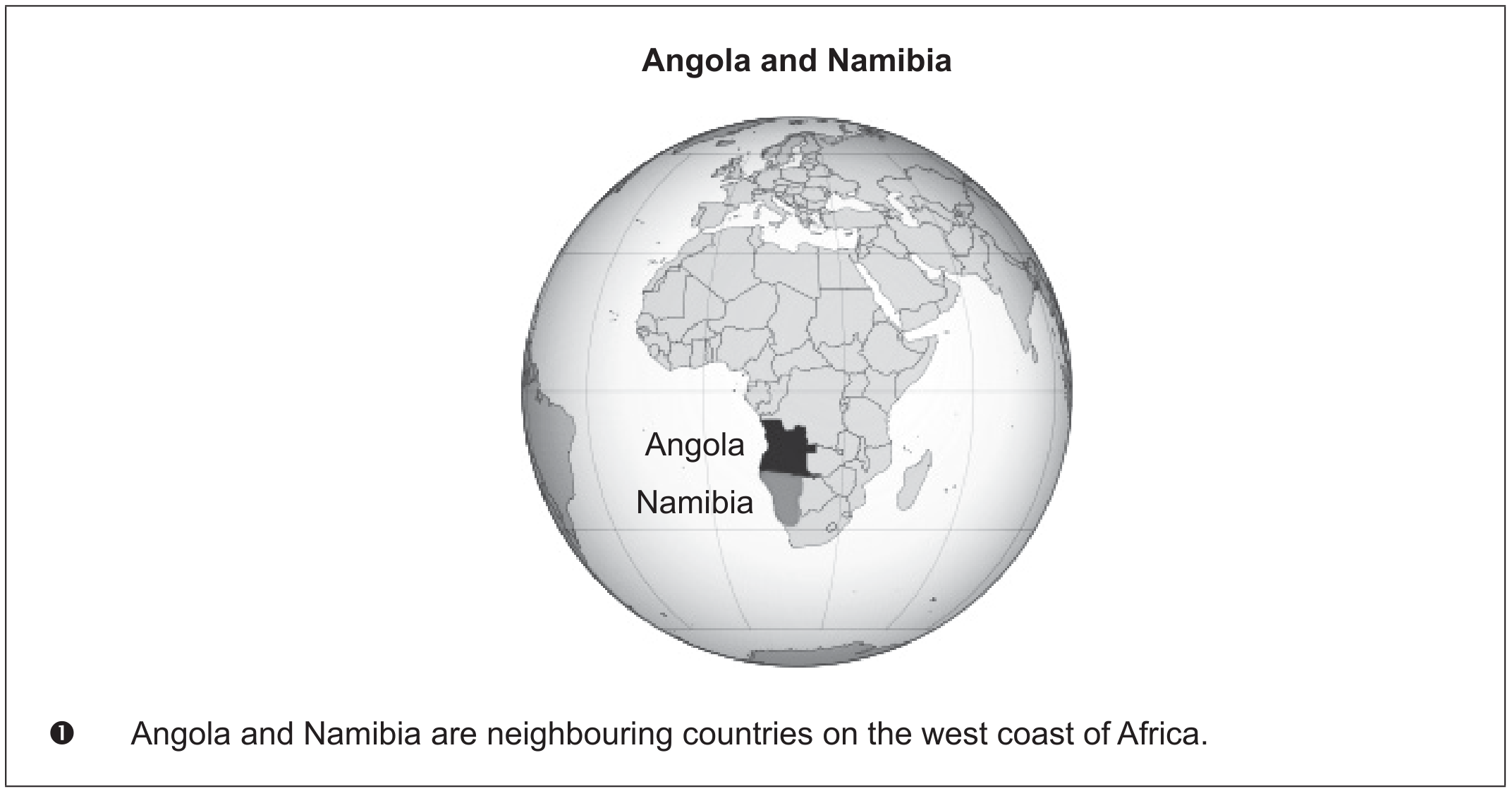
Question image

Angola

(2) Angola's economy is driven by its oil sector. It is the second largest oil producer in Africa. Oil production and its supporting activities contribute about 50 % of gross domestic product (GDP), more than 70 % of government revenue and more than 90 % of the country's exports. Diamonds contribute an additional 5 % to exports. Subsistence agriculture provides the main livelihood for most people in Angola, but half of the country's food is still imported.

(3) Since 2005, the Angolan government has borrowed billions of US dollars from China, Brazil, Portugal, Germany, Spain and the European Union (EU) to help rebuild Angola's infrastructure. The global recession that started in 2008 slowed economic growth. In particular, lower prices for oil and diamonds during the global recession slowed GDP growth to 2.4 % in 2009, and many construction projects stopped.

(4) Falling oil prices and slower than expected growth in non-oil sectors have reduced growth prospects for 2015 . Angola has responded by reducing government subsidies and by proposing import quotas and making it more difficult to import. Domestic fuel subsidies have been eliminated. Corruption, especially in the mining sector, is a major long-term challenge.
Namibia

(5) Namibia's economy is heavily dependent on the mining and processing of minerals for export. Mining accounts for 11.5 % of GDP, but provides more than 50 % of foreign exchange earnings. Namibia is a primary source for high-quality diamonds. In addition, Namibia is the world's fifth-largest producer of uranium, produces large quantities of zinc and is a smaller producer of gold and copper. The mining sector employs less than 2 % of the population. Namibia normally imports about 50 % of its grain requirements.

(6) A high per capita GDP, relative to the region, hides one of the world's most unequal income distributions. The Namibian economy is closely linked to South Africa with the Namibian dollar pegged one-to-one to the South African rand. Namibia receives 30 % to 40 % of its revenues from the countries in the Southern African Customs Union (SACU). Angola is not a member of the SACU.

(7) Namibia's economy remains vulnerable to world commodity price fluctuations and drought. The rising cost of mining diamonds, increasingly from the sea, has reduced profit margins. Namibian authorities recognize these issues and have emphasized the need for diversification.

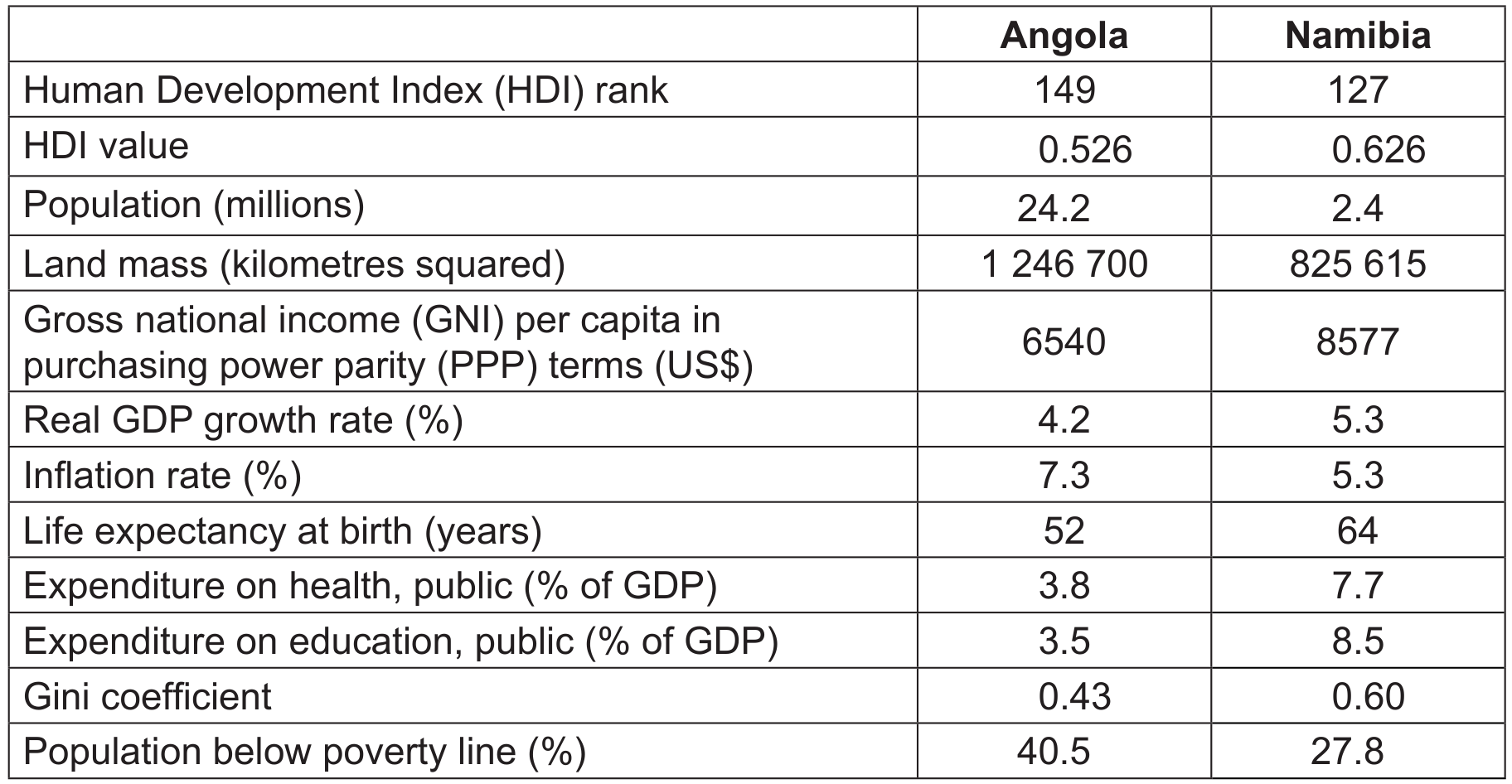
Figure 1: Selected economic data for Angola and Namibia (2014)

Figure 1: Selected economic data for Angola and Namibia (2014)

[Sources: adapted from www.commons.wikimedia.org, 14 August 2014; The World Factbook, Country Reports, Central Intelligence Agency, 2015; www.databank.worldbank.org, accessed 13 August 2015 and www.cia.gov, accessed 13 August 2015]

Question 3(a)

Question 3(a)(ii)

(a)
(i)

Define the term customs union indicated in bold in the text (paragraph 6).

[ 2 ]
0 selected