EduNinja

IB Economics SL3.4 Economics of inequality and povertyQuestion Bank

Question 1

[Maximum number: 6]

Read the extracts and answer the questions that follow.
Text A — Bangladesh: the economic role of women

(1) Bangladesh is a densely populated country in Asia. Its currency is the Bangladeshi taka (BDT). The annual rate of growth of gross domestic product (GDP) has steadily increased from 5.6 % in 2010 to 8.1 % in 2019. Absolute poverty has declined, but inequality has risen, partly due to higher unemployment rates for women than men. Moreover, the labour force participation rate for women is much lower than the rate for men. Over 80 % of the women's jobs are in the informal economy, and these jobs are low paid and insecure. Women need regular paid work, which not only raises household income but also improves economic well-being in terms of education and health.

(2) The structure of the economy is changing. The growth of cities is due to the expansion of the manufacturing sector, which now contributes a larger share to GDP than the agricultural sector. These changes have increased the number of women in the labour force. In particular, the growth of the ready-made garments (RMG) industry (mass-produced clothing) has given women the opportunity to move into formal employment. The RMG industry provides jobs for almost 4 million low-skilled and semi-skilled workers, accounting for over 40 % of total manufacturing employment. The majority of these jobs are being filled by women, with the result that the gap between the wages of men and women is gradually being reduced.

(3) There are concerns about working and safety conditions in the RMG factories. After an accident in a factory in 2013, reforms are being implemented, partly in response to criticisms from overseas retailers and consumers who purchase the garments. The minimum wage has been increased, inspections are carried out, and there are fewer small, unsafe factories.

(4) While working conditions are improving, such reforms raise the costs of manufacturing garments. Furthermore, the international garment market is becoming more competitive, putting pressure on Bangladeshi factories to reduce costs.

(5) The overseas demand for Bangladeshi garments had been rising strongly until 2019. However, demand has recently fallen, reducing firms' revenue. The reduction in revenue and the need to lower costs have forced certain firms to reduce the size of their labour force by dismissing some of their female workers.

(6) The number of ethically and environmentally concerned consumers is increasing globally. Rather than trying to lower costs, firms can be more successful if they produce "green ready-made garments" by implementing sustainable practices. About 100 garment factories in Bangladesh have already been certified as producers that meet specified environmental standards. In addition, global retailers and fashion brands are supporting recycling initiatives through the Circular Fashion Partnership.
Text B - Trade prospects for exports of ready-made garments (RMG)

(1) Exports of RMG account for over 84 % of Bangladesh's total exports. At present, Bangladesh is the world's second largest garment exporter after China. Bangladeshi exports could further increase as Chinese garments become more expensive due to rising wages in China.

(2) Bangladesh is designated as an Economically Least Developed Country (ELDC) and is therefore able to sell goods in Europe and China without any quotas or tariffs being imposed. However, Bangladesh will graduate from ELDC status by 2026 and will then no longer be eligible for preferential trade agreements. Moreover, the USA, which is the largest export market for Bangladeshi garments, has applied a 15 % tariff on imports from Bangladesh since 2013, citing concerns about working conditions in factories.
Text C - Role of foreign direct investment in the RMG sector

(1) Vietnam and Myanmar have significantly increased their garment exports to China due to foreign direct investment (FDI) from China. Chinese investors have set up factories that import raw materials from China and re-export the finished goods back to China.

(2) Consequently, to compete successfully in the huge Chinese market, Bangladesh needs to attract more FDI from China. Bangladesh is developing the required infrastructure, such as transport links. It is also necessary to diversify into expensive high-end fashion, market more aggressively, and use branding strategies.

(3) The funds from additional FDI would be helpful, because the relative contribution of Official Development Assistance (ODA) to Bangladesh's budget is declining. Furthermore, the foreign exchange obtained from foreign investors assists in financing the current account deficit.
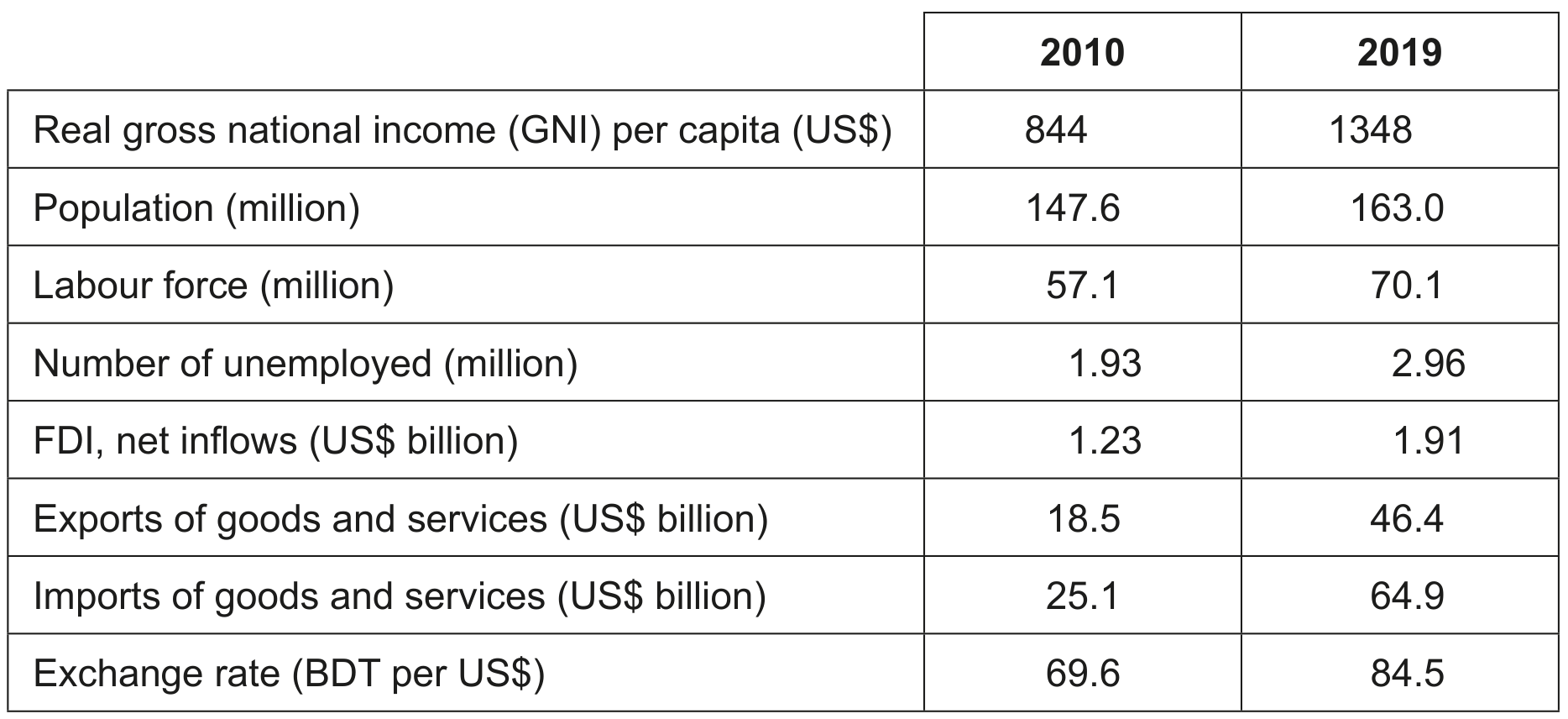
Table 1: Economic data for Bangladesh
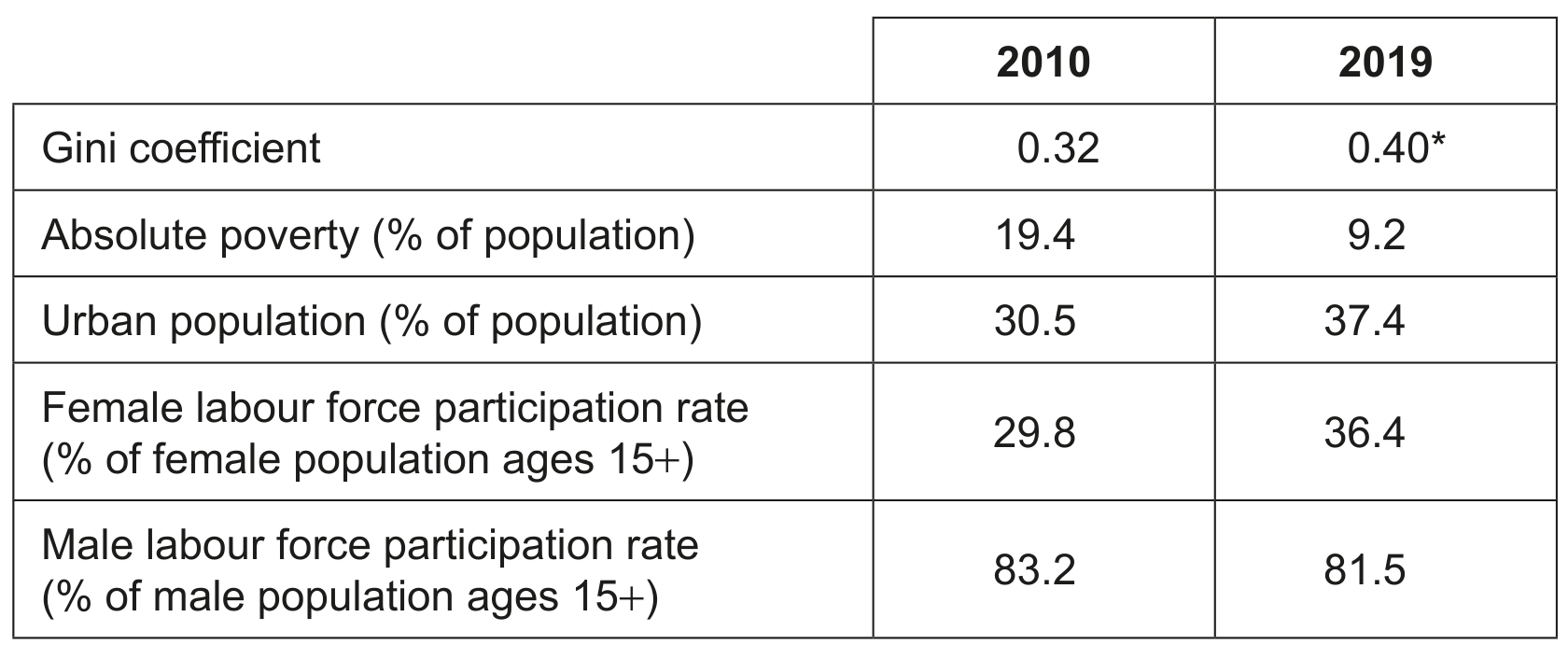
Table 1: Economic data for Bangladesh

Table 2: Development data for Bangladesh

Table 2: Development data for Bangladesh

*estimate

Question 1(a)

Question 1(a)(i)

(a)
(i)

Define the term absolute poverty indicated in bold in the text (Text A, paragraph 1).

[ 2 ]

Question 1(f)

(b)

Using a Lorenz curve diagram, explain what happened to the distribution of income in Bangladesh between 2010 and 2019 (Table 2).

[ 4 ]

Question 1

[Maximum number: 2]

Read the extracts and answer the questions that follow.
Text A - Overview of Uruguay

(1) With a population of only 3.5 million, Uruguay is one of the smallest nations in South America. Its membership of the MERCOSUR common market allows Uruguayan producers tariff-free access to 290 million consumers in Argentina, Brazil and Paraguay.

(2) Agriculture accounts for 8 % of Uruguay's gross domestic product (GDP) and 65 % of its export revenue. Exports have increased since the early 2000s, partly due to China's rising demand for commodities. In particular, Uruguay's soybean producers benefitted from significantly higher prices during the commodity boom. China is now Uruguay's most important export destination, with soybeans accounting for over 50 % of its exports to China.

(3) Uruguay's real GDP increased by an average of 5.39 % per year from 2005 to 2014. However, the economy slowed considerably when the commodity boom ended in 2015. It slowed further because of decreased regional demand when the largest members of MERCOSUR, Argentina and Brazil, faced a recession in 2017. Uruguay's real GDP grew on average by 1.04 % per year from 2015 to 2018.

(4) With the increasing importance of China and the European Union (EU) as export markets, Uruguay has managed to reduce its dependency on MERCOSUR. However, attempts to diversify its exports away from agriculture have not been successful. The end of the commodity boom contributed to a fall in export revenue and the depreciation of the peso (Uruguay's currency). The currency has lost over 25\% of its value since 2015.

(5) Inflation stayed at a relatively high rate of 8 % in 2018 due to the weaker currency. The unemployment rate also increased to 7.9 % as a result of the economic slowdown. The higher cost of living and the lower rates of employment could inhibit efforts to reduce inequality and poverty levels.

(6) Despite rising inflation and unemployment, Uruguay's minimal corruption, abundant natural resources and access to a large common market continue to attract foreign direct investment (FDI). Investments in the paper and wood industries have made forestry one of the country's fastest growing industries. Increased FDI inflows have also prevented the peso from depreciating further.
Text B - The EU-MERCOSUR free trade agreement

(1) The EU and MERCOSUR are finalizing the terms of a free trade agreement, which would enable Uruguay to increase its exports to the 27 EU member states. The EU currently buys 11 % of all Uruguayan exports, mostly animal products, paper, vegetables and wood.

(2) Once the free trade agreement comes into effect, almost all agricultural and industrial tariffs between the EU and MERCOSUR will be removed. The imports of beef, poultry and sugar will not be included in the list of tariff-free products but will be subject to very large quotas. This will allow increased exports of these products to EU countries.

(3) The free trade agreement may cause bankruptcies in the manufacturing sector and higher structural unemployment in Uruguay. EU exports to Uruguay largely consist of manufactured goods, such as chemicals, machinery, transport equipment and plastics, which are in high demand despite the current tariffs of up to 35 %.

(4) One third of FDI into Uruguay comes from the EU. Anticipation of the free trade agreement has led to more EU investments in Uruguay's forestry sector. Environmental organizations have warned that the free trade agreement could be a threat to sustainability as South American forests are cleared to create land for cattle farming, paper and wood production. The deforestation might also disrupt water sources that supply rural villages, depriving the villagers of clean water.
Text C — Uruguay seeks trade agreements outside MERCOSUR

(1) Members of MERCOSUR have differing views on trade policies. Brazil, Paraguay and Uruguay believe in trade liberalization and want to increase competition through a reduction of the common external tariff. On the other hand, Argentina wants to maintain the high external tariff to protect industries from cheap imports from China and to avoid prolonging its current recession.

(2) Uruguay has expressed its desire to seek trade agreements apart from MERCOSUR, which is prohibited by the common market's rules. If Uruguay pursues separate bilateral agreements, it is likely to lose its MERCOSUR membership and the benefits of any existing free trade agreement.

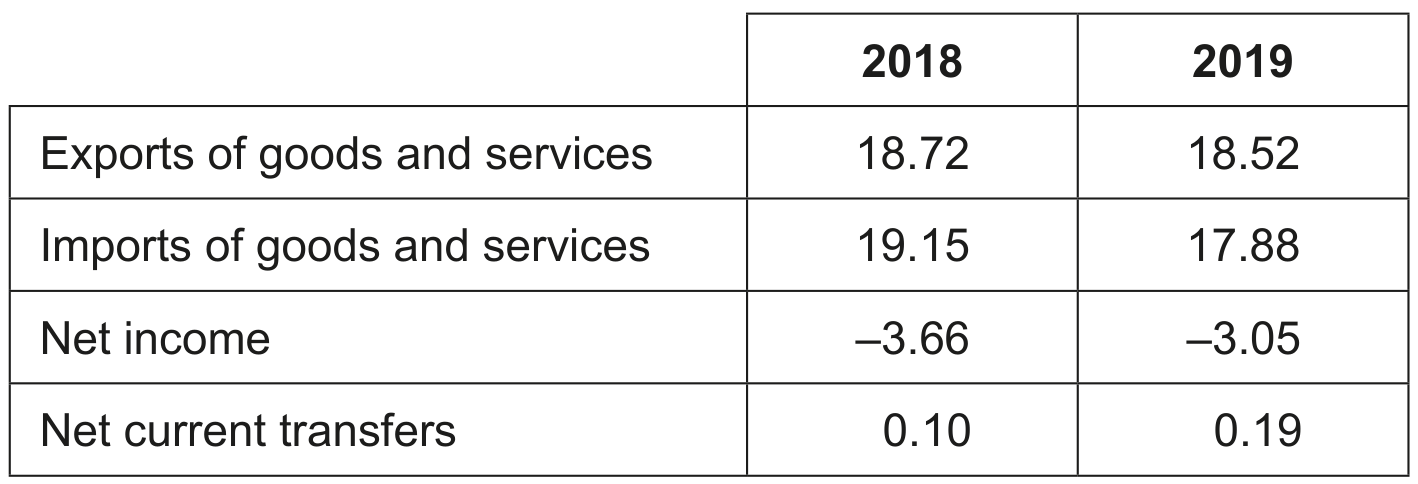
Table 1: Current account data for Uruguay (US\$ billion)

Table 1: Current account data for Uruguay (US\$ billion)

Table 2: Selected income data for Uruguay

Table 2: Selected income data for Uruguay

Question 1(b)

Question 1(b)(iii)

(a)
(i)

Using information from Table 2, sketch the change in Uruguay's Lorenz curve from 2010 to 2015.

[ 2 ]

Question 2

Question 2(a)

(a)

Explain the difficulties involved in measuring poverty.

[ 10 ]

Question 2(b)

(b)

Using real-world examples, evaluate the view that inequality can best be reduced through the use of taxation.

[ 15 ]

Question 2

Question 2(a)

(a)

Explain how the Lorenz curve diagram may be used to measure a change in the distribution of income.

[ 10 ]

Question 2(b)

(b)

Using real-world examples, discuss the role of taxation in reducing income and wealth inequalities.

[ 15 ]

Question 3

Question 3(a)

(a)

Explain how income inequality might be measured in a country.

[ 10 ]

Question 3(b)

(b)

Evaluate the view that the best way to reduce income inequality in a country is by using progressive taxation.

[ 15 ]

Question 3

Question 3(a)

(a)

Explain how an economic recession can lead to an increase in absolute poverty.

[ 10 ]

Question 3(b)

(b)

Evaluate the view that government policies to promote equity will always have a negative effect on efficiency.

[ 15 ]

Question 3

Question 3(a)

(a)

Explain how the Lorenz curve and the Gini coefficient are used to measure income inequality.

[ 10 ]

Question 3(b)

(b)

Discuss the view that the best way to achieve greater equity in the distribution of income in a country is to use a progressive tax system.

[ 15 ]

Question 4

Question 4(b)

(a)

Evaluate the view that attempts to achieve greater equity in the distribution of income will reduce economic efficiency.

[ 15 ]

Question 4

Question 4(a)

(a)

Explain how government expenditures are used to promote equity in the distribution of income.

[ 10 ]

Question 4(b)

(b)

Evaluate the impact on efficiency in the allocation of resources when the government uses taxation to promote equity.

[ 15 ]

Question 4

[Maximum number: 4]

Study the extract and data below and answer the questions that follow.
Economic growth and poverty in India

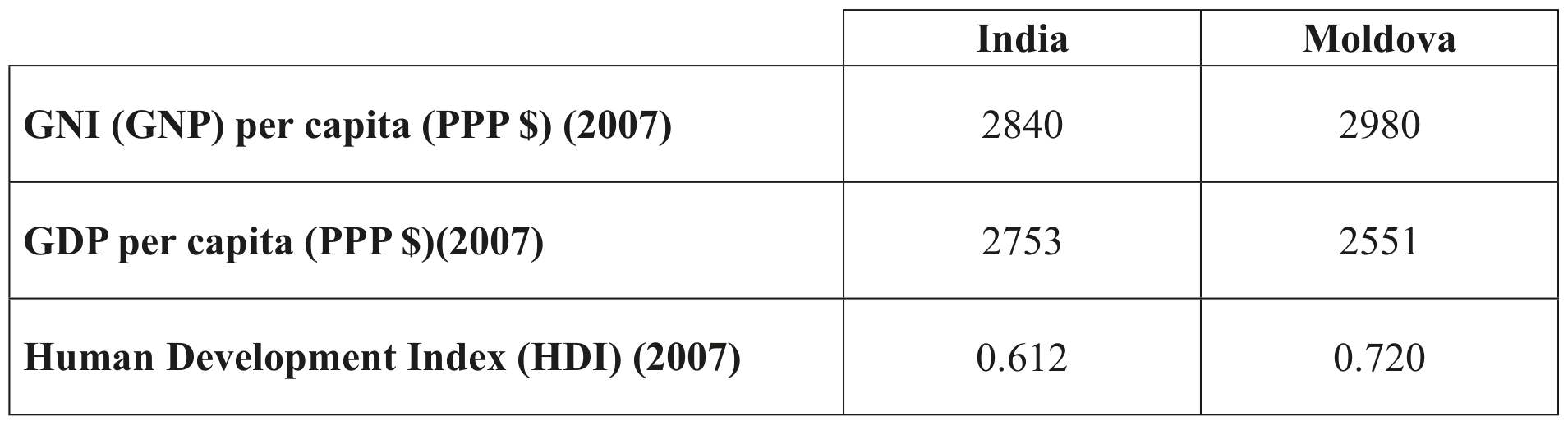
(1) Although India has one of the fastest growing economies in the world, it is unlikely that the Millennium Development Goal of halving the rate of poverty by 2015 will be achieved. An important factor is growing income inequality. Calculations of Gini coefficients show that inequality increased by about 14 % between 2001 and 2011.

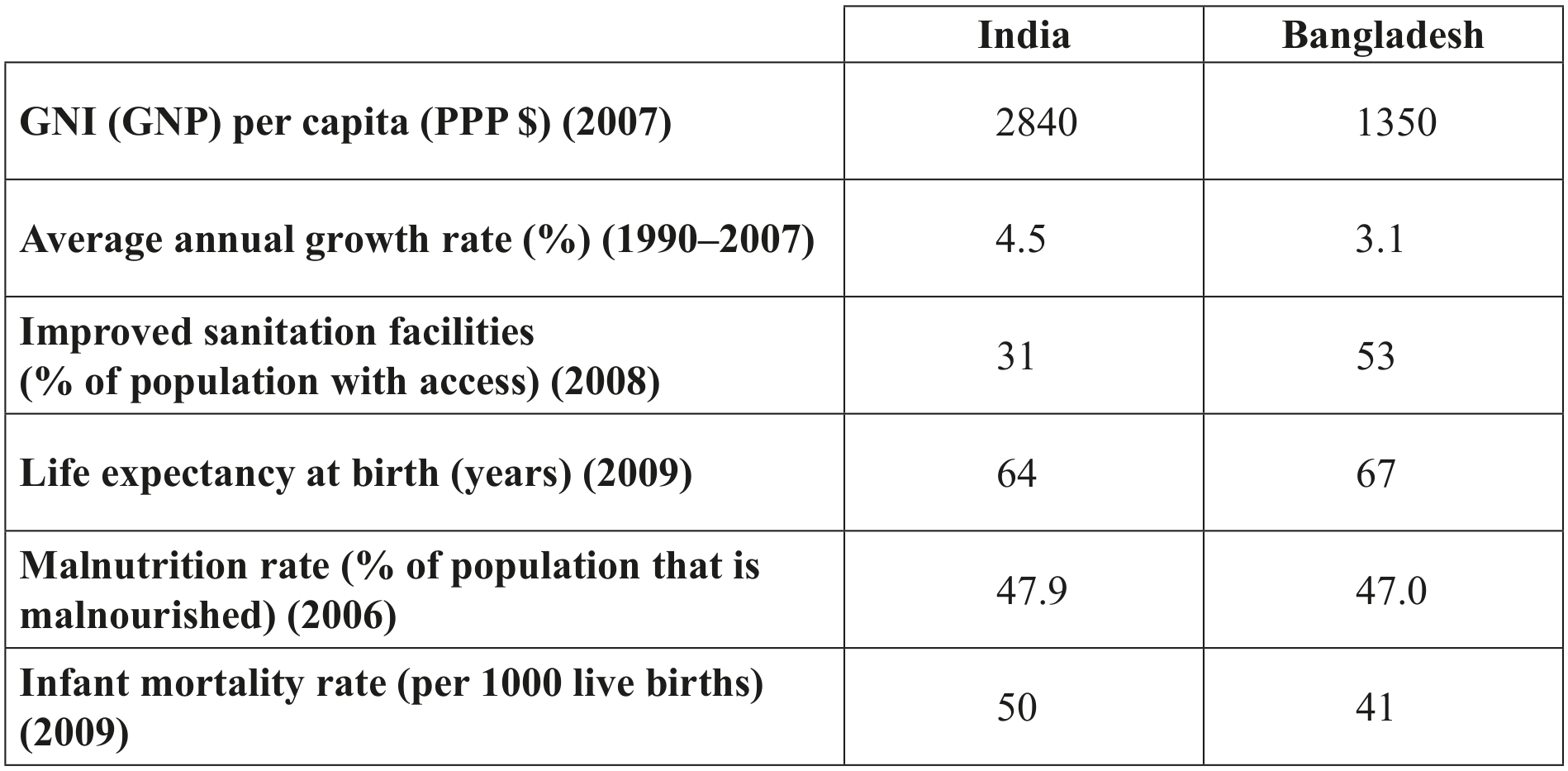
(2) India has about one third of the world's population living in extreme poverty (living on less than $ 1.25 a day). Three quarters of its population live in moderate poverty (less than $ 2 a day). It is estimated that nearly half the Indian population suffers from malnutrition. Part of India's poverty problem is a result of poor governance and failure to address the underlying causes of poverty.

(3) Growth averaged 8.6 % per year in the years 2005-2011 compared with the 10 % needed over 20 years to lift the poor out of their poverty. The central bank governor says that the lack of steps to improve the supply-side of the economy will make it difficult for India to maintain its high growth rates.

(4) The Indian Nobel Prize winner Amartya Sen argues that economic growth should not be "our ultimate objective, but a very useful means to achieve … a better quality of life".
"Poverty reduction in India briefing", uk.oneworld.net, May 2011 and "Addressing income distribution", The Financial Express, 15 January 2011]

Table 1

Table 1

"Human Development Reports", United Nations Development Programme, accessed 2011]

Table 2

Table 2

Question 4(c)

(a)

Using a Lorenz curve diagram showing India's changing income distribution, explain how India's Gini coefficient will have changed (paragraph (1).

[ 4 ]
0 selected