EduNinja

IB Economics SL4.6 Balance of paymentsQuestion Bank

Question 1

[Maximum number: 3]

Read the extracts and answer the questions that follow.
Text A - Overview of Uruguay

(1) With a population of only 3.5 million, Uruguay is one of the smallest nations in South America. Its membership of the MERCOSUR common market allows Uruguayan producers tariff-free access to 290 million consumers in Argentina, Brazil and Paraguay.

(2) Agriculture accounts for 8 % of Uruguay's gross domestic product (GDP) and 65 % of its export revenue. Exports have increased since the early 2000s, partly due to China's rising demand for commodities. In particular, Uruguay's soybean producers benefitted from significantly higher prices during the commodity boom. China is now Uruguay's most important export destination, with soybeans accounting for over 50 % of its exports to China.

(3) Uruguay's real GDP increased by an average of 5.39 % per year from 2005 to 2014. However, the economy slowed considerably when the commodity boom ended in 2015. It slowed further because of decreased regional demand when the largest members of MERCOSUR, Argentina and Brazil, faced a recession in 2017. Uruguay's real GDP grew on average by 1.04 % per year from 2015 to 2018.

(4) With the increasing importance of China and the European Union (EU) as export markets, Uruguay has managed to reduce its dependency on MERCOSUR. However, attempts to diversify its exports away from agriculture have not been successful. The end of the commodity boom contributed to a fall in export revenue and the depreciation of the peso (Uruguay's currency). The currency has lost over 25\% of its value since 2015.

(5) Inflation stayed at a relatively high rate of 8 % in 2018 due to the weaker currency. The unemployment rate also increased to 7.9 % as a result of the economic slowdown. The higher cost of living and the lower rates of employment could inhibit efforts to reduce inequality and poverty levels.

(6) Despite rising inflation and unemployment, Uruguay's minimal corruption, abundant natural resources and access to a large common market continue to attract foreign direct investment (FDI). Investments in the paper and wood industries have made forestry one of the country's fastest growing industries. Increased FDI inflows have also prevented the peso from depreciating further.
Text B - The EU-MERCOSUR free trade agreement

(1) The EU and MERCOSUR are finalizing the terms of a free trade agreement, which would enable Uruguay to increase its exports to the 27 EU member states. The EU currently buys 11 % of all Uruguayan exports, mostly animal products, paper, vegetables and wood.

(2) Once the free trade agreement comes into effect, almost all agricultural and industrial tariffs between the EU and MERCOSUR will be removed. The imports of beef, poultry and sugar will not be included in the list of tariff-free products but will be subject to very large quotas. This will allow increased exports of these products to EU countries.

(3) The free trade agreement may cause bankruptcies in the manufacturing sector and higher structural unemployment in Uruguay. EU exports to Uruguay largely consist of manufactured goods, such as chemicals, machinery, transport equipment and plastics, which are in high demand despite the current tariffs of up to 35 %.

(4) One third of FDI into Uruguay comes from the EU. Anticipation of the free trade agreement has led to more EU investments in Uruguay's forestry sector. Environmental organizations have warned that the free trade agreement could be a threat to sustainability as South American forests are cleared to create land for cattle farming, paper and wood production. The deforestation might also disrupt water sources that supply rural villages, depriving the villagers of clean water.
Text C — Uruguay seeks trade agreements outside MERCOSUR

(1) Members of MERCOSUR have differing views on trade policies. Brazil, Paraguay and Uruguay believe in trade liberalization and want to increase competition through a reduction of the common external tariff. On the other hand, Argentina wants to maintain the high external tariff to protect industries from cheap imports from China and to avoid prolonging its current recession.

(2) Uruguay has expressed its desire to seek trade agreements apart from MERCOSUR, which is prohibited by the common market's rules. If Uruguay pursues separate bilateral agreements, it is likely to lose its MERCOSUR membership and the benefits of any existing free trade agreement.
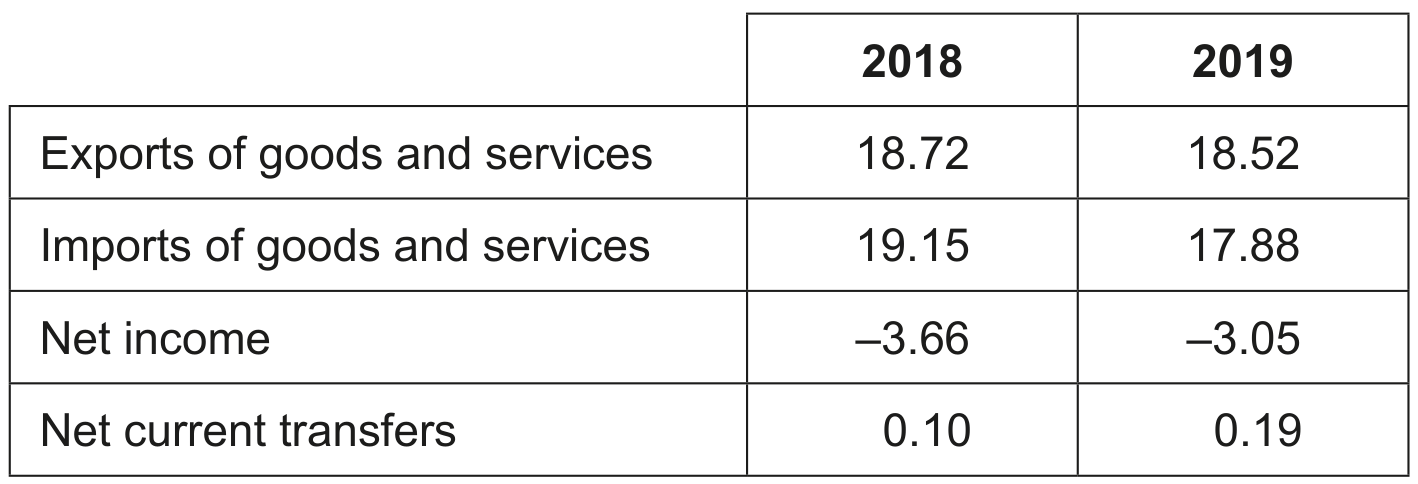
Table 1: Current account data for Uruguay (US\$ billion)

Table 1: Current account data for Uruguay (US\$ billion)

Table 2: Selected income data for Uruguay

Table 2: Selected income data for Uruguay

Question 1(b)

Question 1(b)(i)

(a)
(i)

Using information from Table 1, calculate the change in Uruguay's current account balance between 2018 and 2019.

[ 2 ]

Question 1(b)(ii)

(ii)

Using information from Table 1, state whether Uruguay is facing a deficit or a surplus in its balance of trade in goods and services in 2019.
[ 1 ]

Question 1

[Maximum number: 2]

Read the extracts and answer the questions that follow.
Text A — Overview of North Macedonia

(1) North Macedonia is a small, landlocked nation that shares borders with five countries, including Bulgaria and Greece. Bulgaria and Greece are members of the European Union (EU) common market, which North Macedonia hopes to join soon. Since the country began negotiating for EU membership, trade with the EU has increased rapidly and now accounts for 75 % of North Macedonia's exports and 62 % of its imports.

(2) Despite its small market, with a population of approximately 2 million, North Macedonia's proximity to the EU, low wages and expected entry into the common market have attracted foreign investors. Greece, its richest neighbour, was its third highest source of foreign investment in 2019. The lower cost of living also appeals to Greek tourists.

(3) EU companies have invested in the financial, telecommunication, energy and food processing industries in North Macedonia. Many of the most profitable companies are from the EU. If EU membership is granted, foreign direct investment (FDI) inflows may increase as firms located in North Macedonia will be allowed to bypass all custom checks and enjoy tariff-free trade within the common market. One particular challenge for North Macedonia, however, is that most of the profits of foreign companies are likely to be repatriated (sent back to the companies' home countries).

(4) In 2018, North Macedonia's export revenue was US $ 7.57 billion and its import expenditure was US$9.56 billion. The country's main exports are iron and steel, clothing and accessories, and food products. Food, livestock and consumer goods account for 33 % of imports while the remainder are machinery, petroleum and other materials needed for the industrial production process.

(5) The manufacturing sector, which now employs 31 % of the labour force, has gained more importance. The agricultural sector remains strong, contributes over 10 % of North Macedonia's gross domestic product (GDP) and employs about 16 % of the country's workforce.

(6) The unemployment rate decreased from over 30 % in 2010 to 17.3 % in 2019. However, youth unemployment is almost 40 %. Over 20 % of the population lives below the poverty line. Unemployment and poverty contribute to high rates of emigration. More than 20 % of the North Macedonian population have emigrated since 1994, mostly to the EU. As a member of the EU, North Macedonia will enjoy free movement of labour which will make it easy for its citizens to live and work in other EU countries.
Text B - North Macedonia's economic reforms

(1) To be considered for EU membership, North Macedonia implemented a series of supply-side policies to reform its economy. The EU imposes strict requirements for membership but provides financial assistance to countries preparing for membership. North Macedonia has received 633 million euros (the currency of the EU) to help with the reforms.

(2) Most of the supply-side policies seek to improve the international competitiveness of North Macedonia's industries. The authorities are increasing access to education and training for workers. The expansion of the transport network and other infrastructure is also expected to increase efficiency.

(3) Protection of the environment is also on the list of requirements for EU membership. North Macedonia aims to reduce its dependence on coal and to instead promote the use of solar, wind and hydropower technologies. These low-carbon energy sources would help decrease its air pollution, which is among the worst in Europe.

(4) The reforms, which started in 2014, have shown progress. Exports and manufacturing output are more diversified and more concentrated on high-value products. To attract FDI, North Macedonia maintains one of the lowest tax rates on corporate income in the region. The central bank also prevents the denar (North Macedonia's currency) from appreciating against the euro through managing foreign reserves. However, skill shortages and a mismatch of skills with those required by companies discourage foreign firms from investing. Important investment gaps in public infrastructure also remain.
Text C - North Macedonia's trade agreements
North Macedonia participates in five free trade agreements (FTAs), that together cover 95 % of its exports and 78 % of its imports. Most of its trade with the EU is already free but imports of wine, beef and fish products are still subject to quotas. North Macedonia is currently a net importer of agricultural and food products. All protectionist measures on EU products would be removed upon entry into the common market.

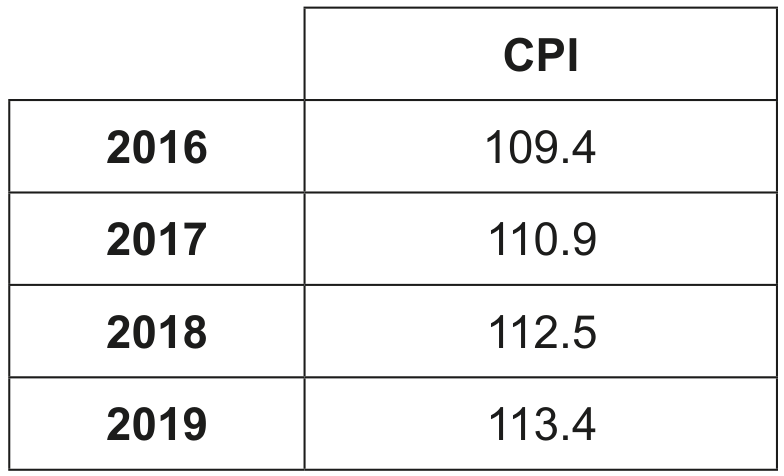
Table 1: Consumer Price Index (CPI) for North Macedonia (base year = 2010)

Table 1: Consumer Price Index (CPI) for North Macedonia (base year = 2010)

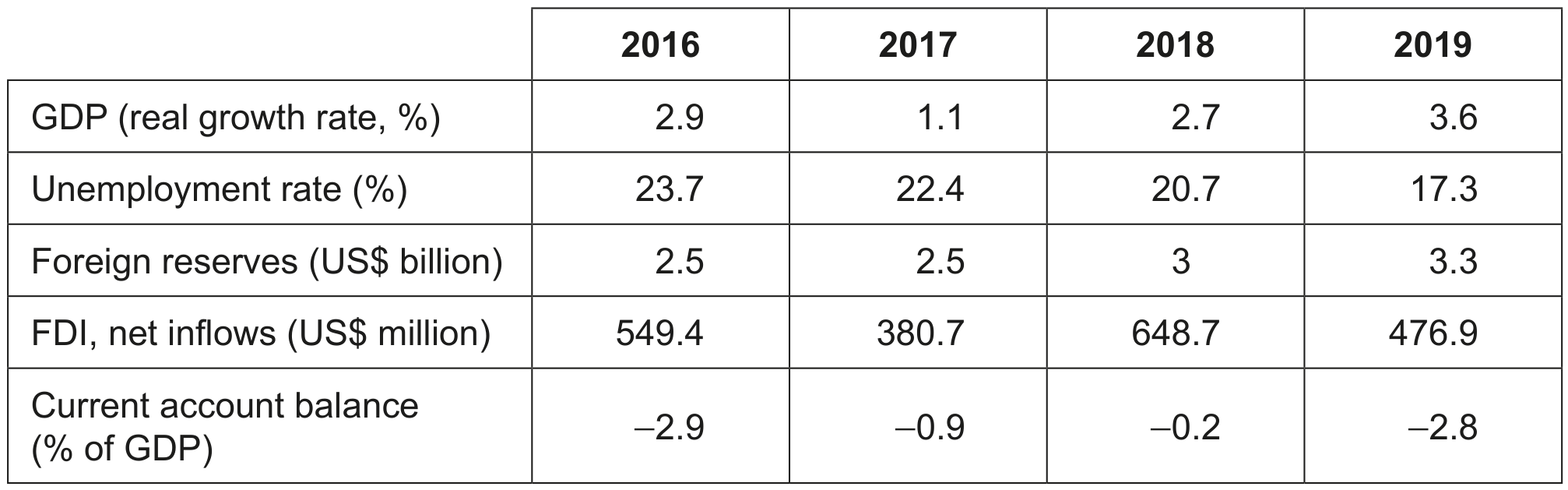
Table 2: Economic data for North Macedonia

Table 2: Economic data for North Macedonia

Question 1(b)

Question 1(b)(iii)

(a)
(i)

Using information from Text A, paragraph 4, calculate North Macedonia's balance of trade in 2018.

[ 2 ]

Question 1

[Maximum number: 2]

Study the following extract and answer the questions that follow.
South Africa's grain millers oppose corn tariff

(1) A battle is taking place between South African corn farmers and the corn millers who process corn. Grain South Africa (Grain SA) is the organization that represents the interests of corn farmers. It has asked the country's International Trade Administration Commission (ITAC) to protect local corn farmers from low global corn prices by imposing a tariff on corn imports.

(2) South Africa's corn millers are opposing the request by Grain SA to implement the tariff on corn imports. The corn millers argue that a tariff will cause a burden for consumers and cattle farmers. In South Africa, corn is an essential food and also a source of feed for livestock.

(3) According to Reuters news service, South Africa is "Africa's largest corn producer and is relied upon by neighboring Sub-Saharan nations to [reinforce] their own corn supplies and feed their people." A drought in South Africa has dramatically increased the price of corn. In addition, the reduced supply has prompted the need for imports. "South Africa [has traditionally been] a net exporter of corn ... [but] for the second year in a row, [the economy] will become a net importer of corn." The need to import corn has shocked both the corn farmers and the government.

(4) The United States (US) is the world's largest corn producer. An unusually large harvest has increased US supply and more than halved the price of US corn to its current price of US$145 a ton. However, in South Africa, because of the drought, prices for domestically produced corn have more than doubled to reach an all-time high of US$348 a ton. The low import prices of US corn have made it very difficult for South African corn farmers to earn sufficient income to survive the drought, which is why they have asked ITAC for protection.

(5) However, a spokesperson for the corn millers said "we are strongly opposed to any attempt to apply a tariff. Why do we need protection for a commodity in which we are so self-sufficient?" However, Grain SA have claimed that corn farmers cannot compete with the big corn-exporting countries, such as the US and Mexico, because their governments are subsidizing corn farmers. According to Grain SA, South African farmers get almost no assistance. This is why they have requested that ITAC implement the tariff to protect corn farmers from these unfair trade practices.

(6) According to economists, South Africa will probably need to import about 970000 tons of corn this year and a further 3.8 million tons in the following 12 months. To make matters worse, the rand (South Africa's currency) has experienced a sharp depreciation against the US dollar. Combined, the need to import corn and the depreciation are likely to negatively impact South Africa's current account. Van Vuuren, http://www.bloomberg.com/news/articles/2016-02-21/grain-millers-oppose-south-african-corn-import-tariff-review, accessed 28 August 2016, used with permission of Bloomberg L.P. Copyright©2017. All rights reserved, and "South Africa's corn crop dilemma and the likely fixes: Braun," by Karen Braun, 8 April 2016, reuters.com, © 2016 reuters.com, http://www.reuters. com/article/us-safrica-maize-braun-corn-idUSKCN0X51QY. All rights reserved.]
}

Question 1(a)

Question 1(a)(ii)

(a)
(i)

Define the term current account indicated in bold in the text (paragraph (6).

[ 2 ]

Question 1

[Maximum number: 2]

Study the extract below and answer the questions that follow.
The Australian dollar

(1) The Australian dollar is very strong against the United States (US) dollar and has reached its highest value against the British pound and the euro since 1992.

(2) The world demand for coal, iron ore, and natural gas is rapidly increasing. Australia has these resources in abundance. This has led to an extraordinary boom in the construction of new mining facilities in Australia that is likely to run for at least 10 years. It has had a huge effect on domestic economic growth and has also threatened inflation.

(3) With its stable economic outlook and high interest rates, Australia has proved to be a magnet for foreign investors since 2002, and this has had a significant impact on the exchange rate. The global surge in foreign direct investment and portfolio investment is a sign of international confidence in the economy but it has come at a cost, and with risks. The rise of the exchange rate has created hardships for domestic exporters of goods and services other than resources, and the tourist industry.

(4) In the context of the resources boom, the high exchange rate helps to make the boom less inflationary. It also lowers the prices of imports for those consumers and businesses that buy them.

(5) Structural change is occurring in the Australian economy as domestic firms adjust to a high Australian dollar. It creates pressure for resources - capital and labour - to shift from manufacturing and service export industries to the expanding mining sector. The result is a change in Australia's comparative advantage.

(6) Everything suggests that the Australian dollar will stay strong, even as export prices increase. The huge spending on mining construction over the years will require a lot of foreign financial capital to flow into Australia, helping keep upward pressure on the exchange rate. and "Aussie Bond Appeal comes at cost", The West Australian, 27 January 2012]

Question 1(a)

Question 1(a)(ii)

(a)
(i)

Define the term foreign direct investment indicated in bold in the text (paragraph 3).

[ 2 ]

Question 1

[Maximum number: 6]

Study the extract below and answer the questions that follow.
Japan in first trade gap since 1963

(1) Japan's current account surplus fell 85.5 % in November 2011 from a year earlier to 138.5 billion Japanese yen (Japan's currency) ( $ 1.80 billion), the Ministry of Finance said. In 2011, Japan recorded its first deficit in its balance of trade in goods since 1963.

(2) The appreciation of the Japanese yen against the dollar has reduced Japan's current account surplus. The Japanese yen gained 8.5 % against the dollar in the 12 months since January 2011. The currency has acquired a new and unusual status as a safe haven, reinforced by the eurozone debt crisis since international investors are concerned about the single European currency.

(3) It is estimated that a 1 % gain in the Japanese yen could reduce the export volumes by 0.34 %, slowing down growth for a country that has relied on overseas demand to maintain its recovery from March 2011's earthquake. To stop the trade in goods deficit from getting worse, the world economy would have to grow by 4 % and the value of the Japanese yen would have to fall by 5 %. It is unlikely that this will happen.

(4) With their rapidly aging and decreasing population, Japanese firms face severe challenges and have little choice but to look abroad for growth. The Japanese yen's appreciation to record highs against the euro and relative strength against the US dollar has led to a boom in outward foreign direct investment (FDI). Exporters are transferring their operations from Japan to other economies, where parts and labour costs are lower.

(5) Japan's current account surplus could move into a deficit sooner than 2015 if more companies shift production abroad to combat losses from a strong Japanese yen. In 2011 Japanese firms purchased a record number of firms across the rest of Asia. Worldwide the number of Japanese purchases reached 455, only just short of its record of 463 in 1990.

(6) Japanese firms are also acquiring shares in natural resource companies. Mitsubishi spent more than $ 5 billion buying a quarter of mining giant Anglo-American's Chilean copper unit, and trading group Itochu bought a $ 1 billion stake in a US oil and gas firm.

(7) The Japanese Prime Minister has encouraged the trend. "We will take advantage of the appreciating Japanese yen to support Japanese companies in purchasing foreign companies and acquiring resource interests," he said.

(8) However, Japanese authorities have signalled there are concerns about a further appreciation of the Japanese yen. The central bank said last month that it plans to increase the funds available for currency intervention.

Question 1(a)

Question 1(a)(i)

(a)
(i)

Define the term foreign direct investment (FDI) indicated in bold in the text (paragraph (4).

[ 2 ]

Question 1(b)

(b)

With reference to the text, explain how Japan's current account can be in surplus while it has a trade in goods deficit (paragraph (1)).

[ 4 ]

Question 2

[Maximum number: 2]

Study the following extract and data and answer the questions that follow.
South Korea's exchange rate and central bank intervention

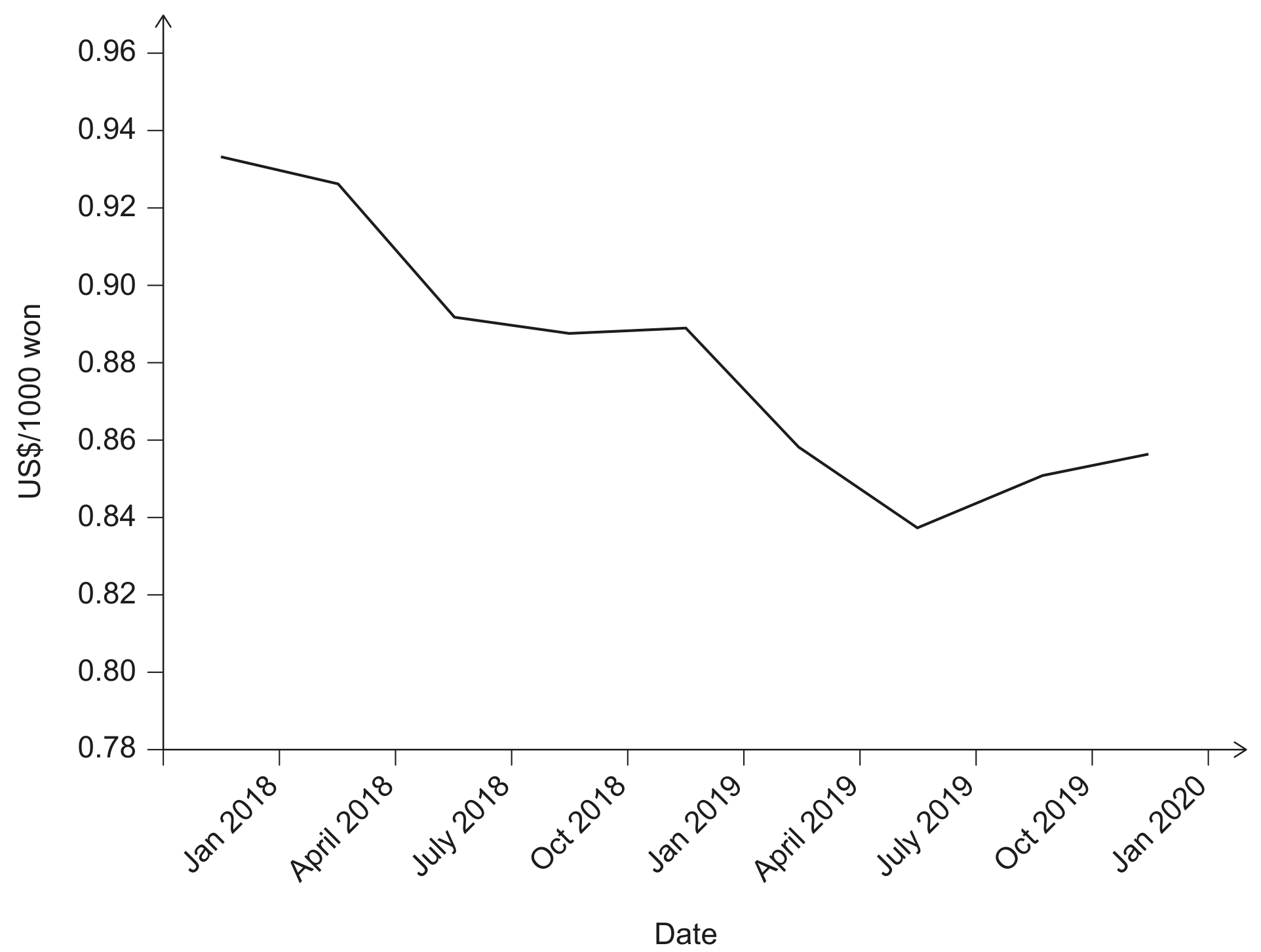
(1) From mid-2017 until mid-2019, there was a downward trend in the exchange rate of the South Korean won (South Korea's currency), and some commentators suggested that it was being deliberately undervalued. Despite the lower exchange rate, however, the value of South Korean exports declined by 10.3 % during 2019.

(2) The main reason for the decline in the value of exports was the weak market for semiconductors. Lower global prices of semiconductors, the largest single export item for South Korea, led to a drop of 25.9 % in the value of exports, despite an increase in their volume. Evidently, price competitiveness of exports from South Korea is not as significant as before, because its exports are now mainly luxury or high-technology items.

(3) In November 2019, South Korea's current account surplus reached US $ 5.97 billion, more than 4 % of gross domestic product (GDP). The financial account in the balance of payments had a net outflow of US$5.34 billion, which was mainly due to a net outflow of US$4.01 billion in foreign direct investment (FDI). There was also a net outflow of US$1.07 billion in portfolio investment, because domestic residents increased their financial assets overseas while inward flows declined.

(4) The Bank of Korea (South Korea's central bank, BoK) had reduced interest rates to record lows in October 2019, which partly accounted for the large portfolio investment outflows. Monetary policy is likely to continue to be expansionary through 2020 , with the possibility of another interest rate reduction, because economic growth is forecast to be low, at less than 2.5 %. The forecast for inflation is that it will be below 1.5 %, while the unemployment rate is expected to continue to rise to over 4 %.

(5) While the BoK is not targeting a specific level for the exchange rate, it seems determined to intervene when the market is unstable. Its actions, however, have contributed to South Korea being accused by the United States (US) of changing the value of its currency to gain an export advantage. If the US concludes that South Korea has been manipulating its exchange rate unfairly, it could impose trade barriers on imports from South Korea.

(6) However, through the last six months of 2019, the South Korean won started to rise against the US dollar (US$). The appreciation was partly due to speculation and expectations of a rise in demand for semiconductors. Moreover, in August 2019, the BoK sold US dollars in order to prevent the South Korean won from depreciating again. Overall, the central bank's foreign exchange intervention has been aimed at restraining the South Korean won's depreciation or stabilizing the market rather than at trying to promote exports.

Figure 1: South Korea's exchange rate with the US\$

Figure 1: South Korea's exchange rate with the US\$

Table 1: South Korea's balance of trade in goods and services, seasonally adjusted

Table 1: South Korea's balance of trade in goods and services, seasonally adjusted

Question 2(a)

Question 2(a)(i)

(a)
(i)

Define the term foreign direct investment indicated in bold in the text (paragraph 3).

[ 2 ]

Question 2

[Maximum number: 2]

Study the following extract and data and answer the questions that follow.
The fall of the Indian rupee

(1) Over the past year, India's current account deficit widened as the 14 % increase in export revenue could not offset the rise in import expenditure. Over the same period, the value of the rupee (India's currency) has fallen by 13 %.

(2) The rise in import expenditure was in part caused by higher oil prices following production cuts by the Organization of the Petroleum Exporting Countries (OPEC). Another reason for the increase in import expenditure was the higher spending on machinery and capital goods needed to achieve economic growth.

(3) Exports of services, especially software services, have helped to boost export revenue. However, one critical weakness in India's exports of services is the lack of diversification. Exports of software services account for more than 41 % of India's total service exports and more than 90 % of its software service exports are restricted to the United States and the European Union.

(4) The depreciation of the rupee, one of the steepest seen in recent years, has resulted in fears of high inflation. An economist at the Reserve Bank of India (India's central bank) has warned that the increase in oil prices and consumers' expectations of rising inflation could worsen inflationary pressures.

(5) Despite calls for an increase in interest rates in order to protect the rupee from further depreciation, the Reserve Bank of India has chosen to keep interest rates unchanged. The combined effect of a fall in confidence and higher interest rates would dampen economic growth.

Table 1: Selected economic indicators for India

Table 1: Selected economic indicators for India

Question 2(a)

Question 2(a)(i)

(a)
(i)

Define the term current account indicated in bold in the text (paragraph (1)).

[ 2 ]

Question 2

[Maximum number: 2]

Study the following extract and data and answer the questions that follow.
Bank of Canada raises interest rates for the first time in seven years

(1) For seven years Canada's central bank, the Bank of Canada, kept its official interest rate at 0.5 %. This period of easy monetary policy may be coming to an end. The Bank of Canada has just raised its official interest rate from 0.5 % to 0.75 %, claiming that there is new confidence in the Canadian economy. Figures show that the 3.5 % growth in gross domestic product (GDP) in the first quarter of 2017 is above its potential. In addition, the Bank of Canada expects growth in consumer spending, exports and business investment to stimulate economic growth in the months ahead. Such factors might contribute to inflationary pressure in the future.

(2) One of the issues that might have delayed the interest rate increase in Canada is that the inflation rate is still low and falling. Central banks typically raise interest rates when inflation is rising. That is not the problem in Canada, where the consumer price index (CPI) has been rising at well below the Bank of Canada's 2 % inflation target. However, the governor of the Bank of Canada says that he is looking at forecasts of future inflation rates, noting that the data suggest the interest rate increase is necessary. An official statement from the Bank of Canada notes that growth is increasing across all industries and regions and that the economy has started to improve. There is no longer a need for the low interest rate.

(3) Positive economic growth figures, the optimism shown by the Bank of Canada, and the recent interest rate increase have caused a rapid appreciation of the Canadian dollar against the United States (US) dollar over recent months. There are now expectations that the Bank of Canada will raise the interest rate once or possibly twice more before the end of the year, as signs continue to point to a healthy economy. This would likely cause further strengthening of the Canadian dollar against the US dollar.

(4) An economist has said that the gain in the Canadian dollar against the US dollar may have a large effect on importers and exporters, although it will likely be months before consumers see the effects. She further noted that the effects would vary across different industries. There is some concern about the consequences for the Canadian current account. Currently the current account deficit is at 3.6 % of GDP.

(5) A stronger currency is also likely to encourage more Canadians to travel south to the US. The Globe and Mail, July 12, 2017, https://beta.theglobeandmail.com]
}

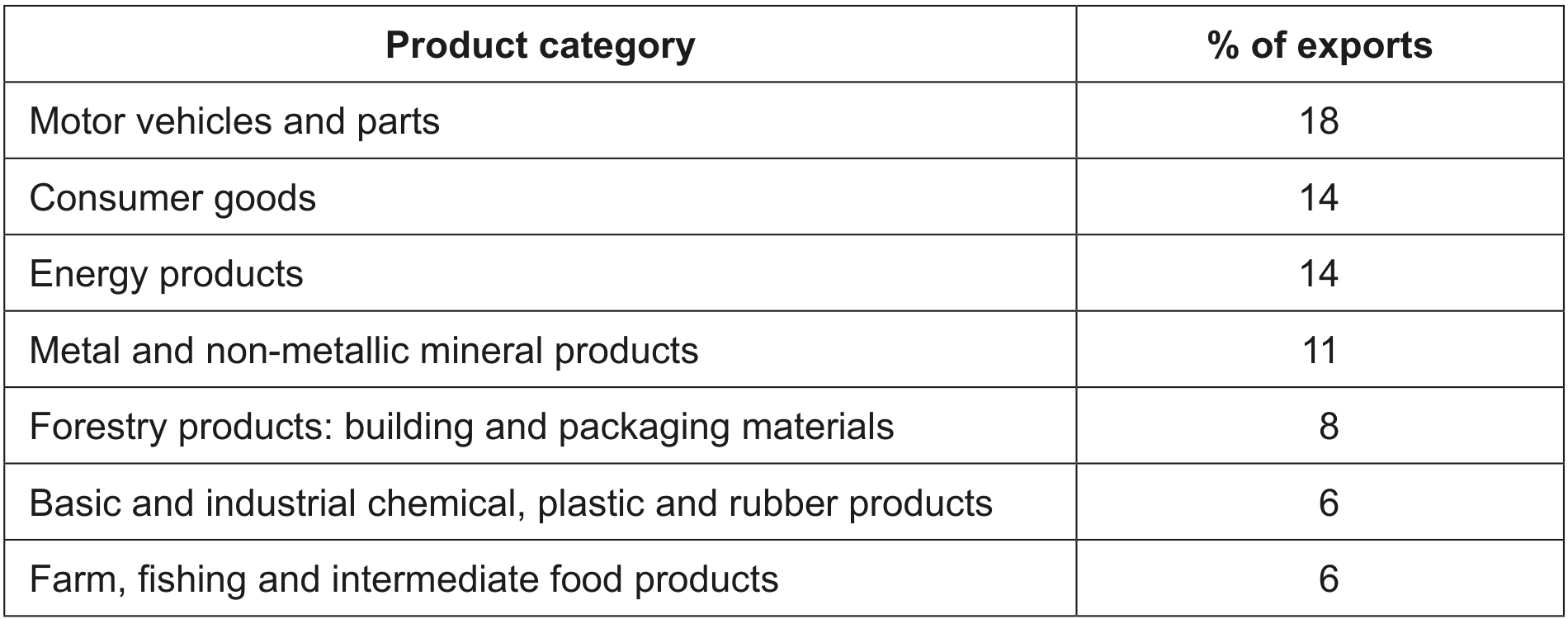
Table 1: Canada's main exports

Table 1: Canada's main exports

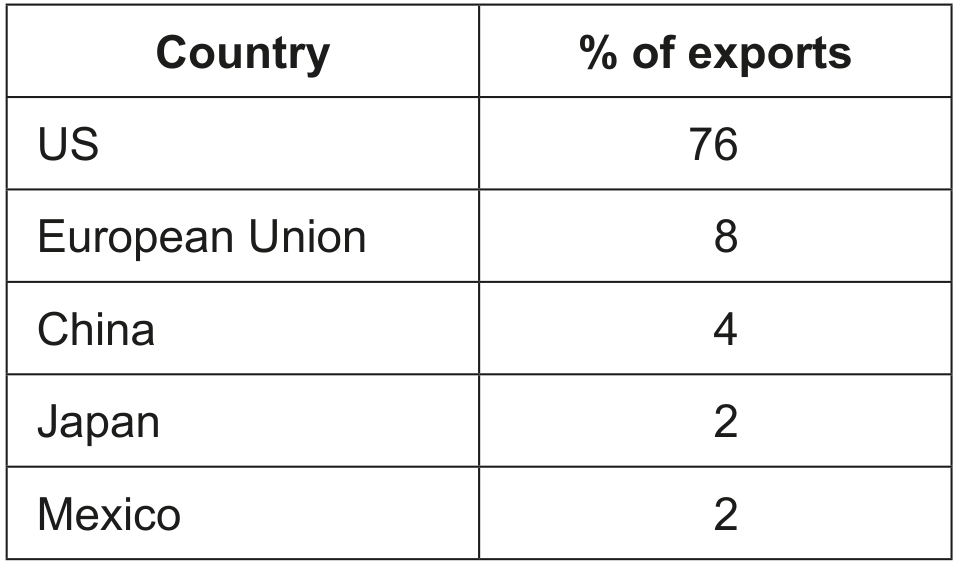
Table 2: Canada's main export destinations

Table 2: Canada's main export destinations

Question 2(a)

Question 2(a)(ii)

(a)
(i)

Define the term current account deficit indicated in bold in the text (paragraph (4).

[ 2 ]

Question 2

[Maximum number: 2]

Study the extract below and answer the questions that follow.
Australian economy feels the effects of falling iron ore price

(1) Iron ore is Australia's largest export and the double effect of slowing growth in China and higher levels of production in Australia has driven the price of iron ore lower. In addition, the Australian dollar (AU$) has experienced a 10 % depreciation against the US dollar (US$). These two factors combined have caused a dramatic worsening in the current account.

(2) Australian mining companies are losing significant revenue from falling commodity prices and this is further worsened by the rapidly depreciating currency. The Australian dollar traded at US$0.7375 on Wednesday, nearly at a six-year low.

(3) Australia recorded a monthly balance of trade deficit of AU$2.61 billion in May 2015, compared with a deficit of AU$1.61 billion a year earlier. The increasing deficit in Australia's balance of trade is an indicator of potential declines in growth and employment, according to a foreign currency expert.

(4) The price of iron ore has fallen more than 67 % between February 2013 and July 2015. In Australia, falling iron ore prices create downward pressure on economic growth. Australia's real gross domestic product (GDP) grew 2 \% in 2015, down from 2.5 \% in 2014. Some economists noted that falling commodity prices reduced Australia's export revenues by more than 2\% of GDP in 2015.

(5) An expanding group of Australian-based economists argue that the central bank should further cut interest rates because of global economic uncertainty, falling commodity prices, weak consumer demand, and persistent weakness in non-mining sectors, such as tourism and education exports. Australia has been a popular destination for tourists and attracts many international students.
[Sources: Sydney Morning Herald: adapted from http://www.smh.com.au/business/markets/china-panic-feeds-into-australian-
sharemarket-20150708-gi7nyk.html
Marketwatch: adapted from www.marketwatch.com, accessed 26 July 2015. Reprinted with permission of MarketWatch, Copyright © 2015 Dow Jones \& Company, Inc. All Rights Reserved Worldwide.]

Question 2(a)

Question 2(a)(ii)

(a)
(i)

Define the term current account indicated in bold in the text (paragraph (1).

[ 2 ]

Question 2

[Maximum number: 2]

Study the extract below and answer the questions that follow.
Brazil's currency slides to new low

(1) In August 2013, the exchange rate of Brazil's currency, the real, fell to its lowest level against the United States dollar (US$) since February 2009 because of the poor performance of its economy. This fall is expected to continue, at least in the short term.

(2) Much of the weakness of the real is due to the possibility that the US central bank may soon start to reverse its easy monetary policy as a result of increased growth in the US. There is speculation that the US interest rate might rise at some point in the future. The consequence of this is that money is leaving developing economies such as Brazil.

(3) Brazil's central bank tried to fight the outflows by raising interest rates three times in 2013 to a high of 9 % and injecting US$7.6 billion into the foreign exchange market in one week. Even with such interventions, the value of the real was down by more than 10 %. The central bank defends its actions, saying that its interventions prevented even larger falls in the value of the currency.

(4) A weaker currency poses additional problems for the central bank in the form of imported inflation. The speed of the real's decline creates problems for companies, which struggle to make plans when they do not know where the currency will be in the future.

(5) In contrast, the finance minister sees a possible advantage to a weaker currency. "The new exchange rate makes Brazil more competitive," the minister told reporters after meeting with leading business people. He acknowledged, however, that the sudden swings in the currency "are not positive for the economy".

(6) Analysts say that the value of the real is unlikely to increase until the economic outlook improves. Forecasters expect economic growth to remain low at 2.2 % in 2013. This is slightly up from the previous year, but much lower than the 7.5 % growth in 2010. Brazil is also concerned about inflation, which is at an annual rate of 6.3 %. This is near the top of the government's target range and is another reason why the central bank has raised interest rates.

(7) Brazil also moved from a US$9.9 billion trade surplus in 2012 to a US$5 billion trade deficit in 2013, contributing to the economy's problems. Brazil's current account deficit has increased significantly. The combination of these economic events presents difficult problems for policy makers. http://en.mercopress.com, 20 August 2013]

Question 2(a)

Question 2(a)(ii)

(a)
(i)

Define the term current account deficit indicated in bold in the text (paragraph 7).

[ 2 ]
0 selected