Question 1
[Maximum number: 2]
Fig. 1.1 is a diagram of a molecule of haemoglobin.
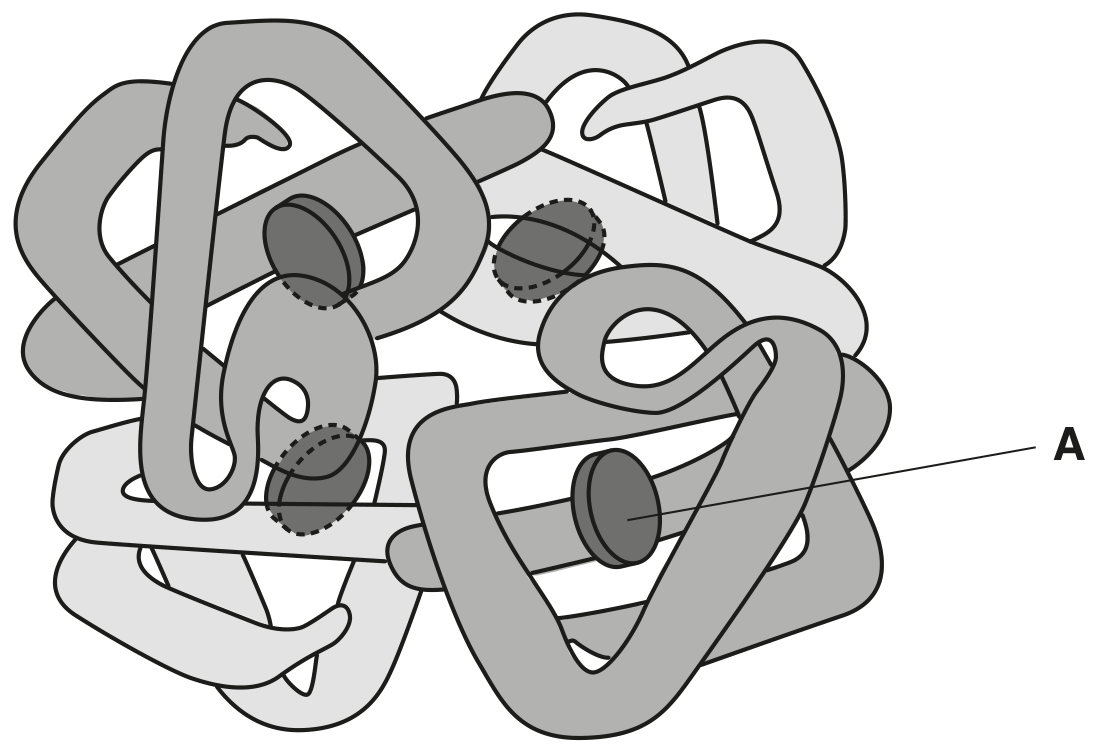
Fig. 1.1
Question 1(c)
(a)
The gene H B B codes for the -globin polypeptide.
State why a polypeptide, such as -globin, is described as a polymer.
[ 2 ]
 EduNinja
Fig. 1.1 is a diagram of a molecule of haemoglobin.
Fig. 1.1
The gene H B B codes for the -globin polypeptide.
State why a polypeptide, such as -globin, is described as a polymer.
Fig. 1.1 is an electron micrograph of three cells of the same species of bacterium, Erwinia carotovora.
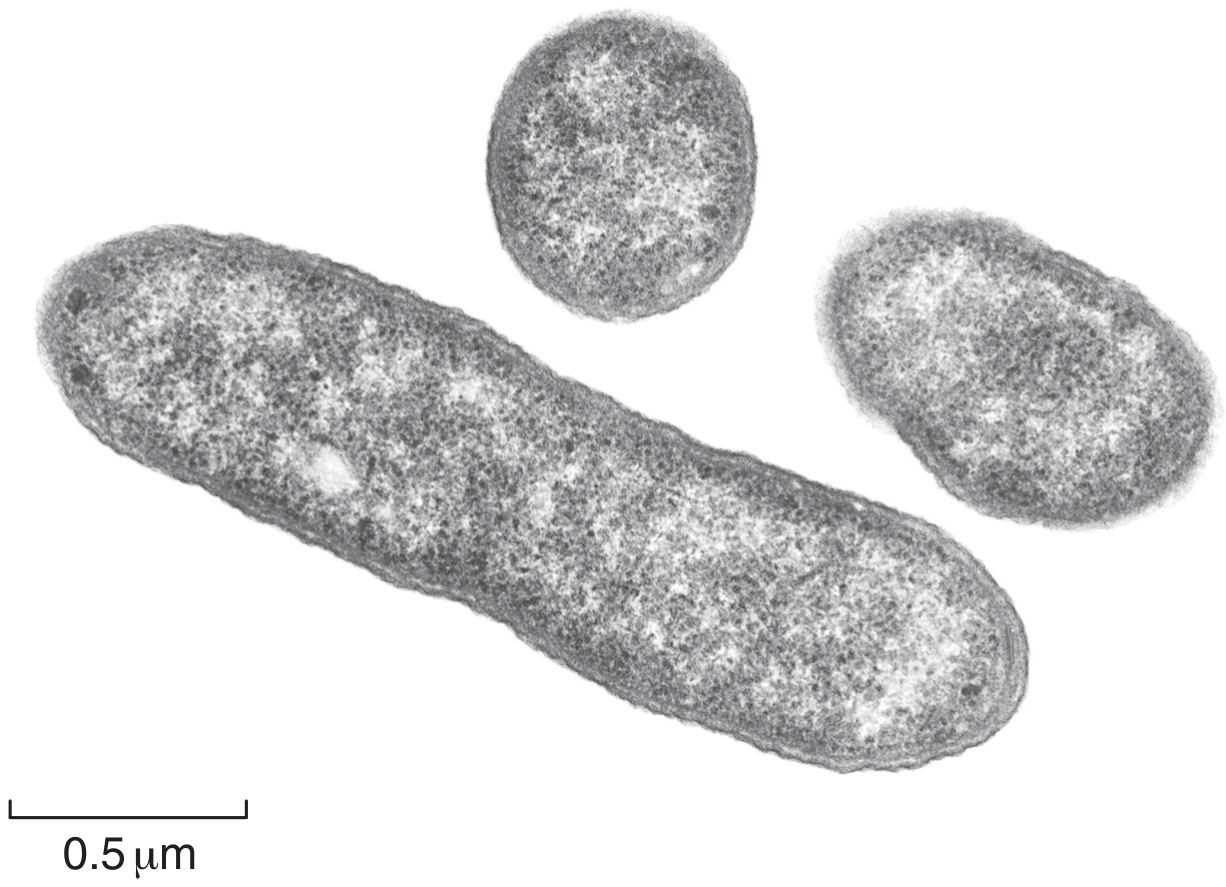
Fig. 1.1
E. carotovora causes a disease in carrot and potato plants.
The bacteria release an enzyme called pectinase which hydrolyses the polysaccharide pectin. Pectin helps plant cells to attach to each other.
Name the type of chemical bond which will be hydrolysed by pectinase.
Fig. 1.1 is a drawing made from an electron micrograph of a mammalian liver cell.
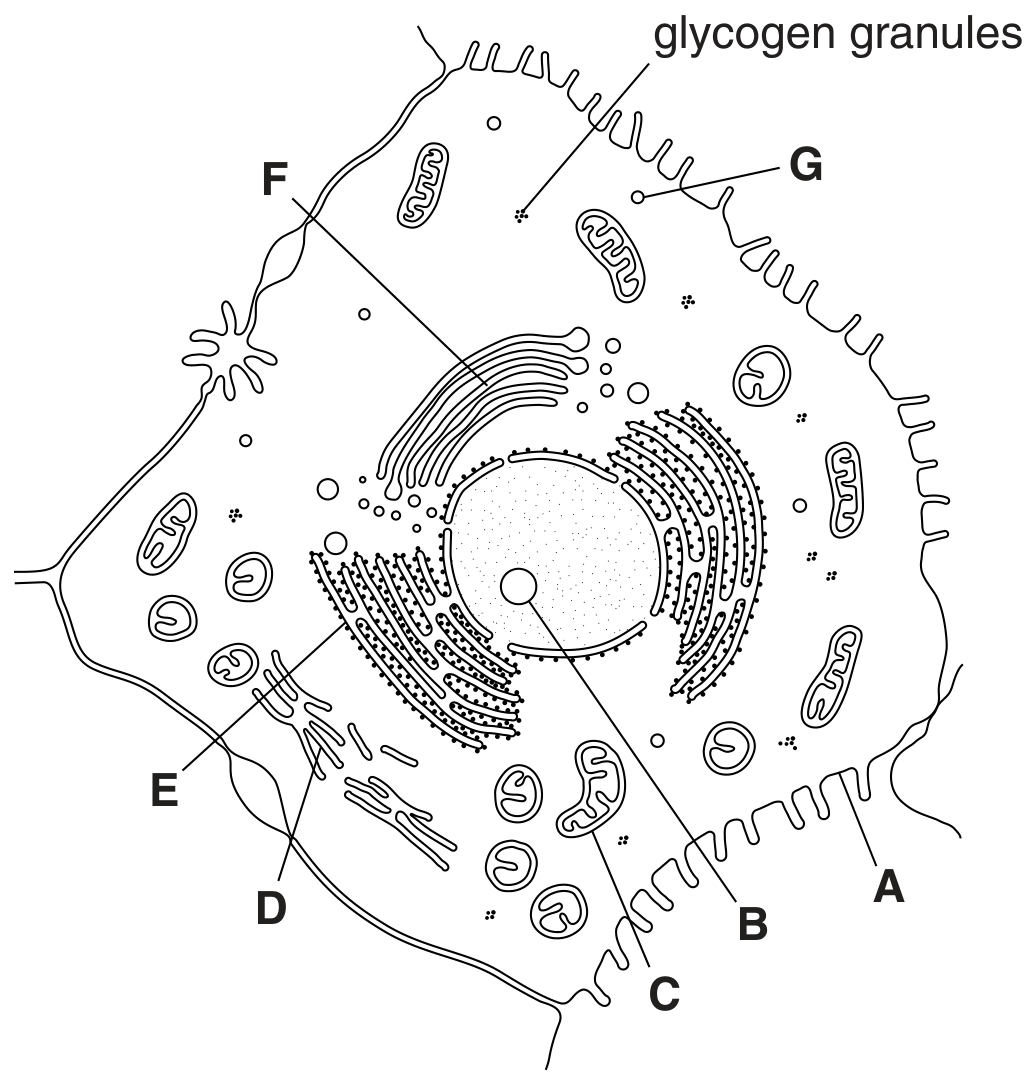
Fig. 1.1
As shown in Fig. 1.1, liver cells contain many storage granules of glycogen.
Describe the molecular structure of glycogen and explain how this structure makes it suitable for storage.
Fig. 1.1 shows the breakdown of a molecule of sucrose.
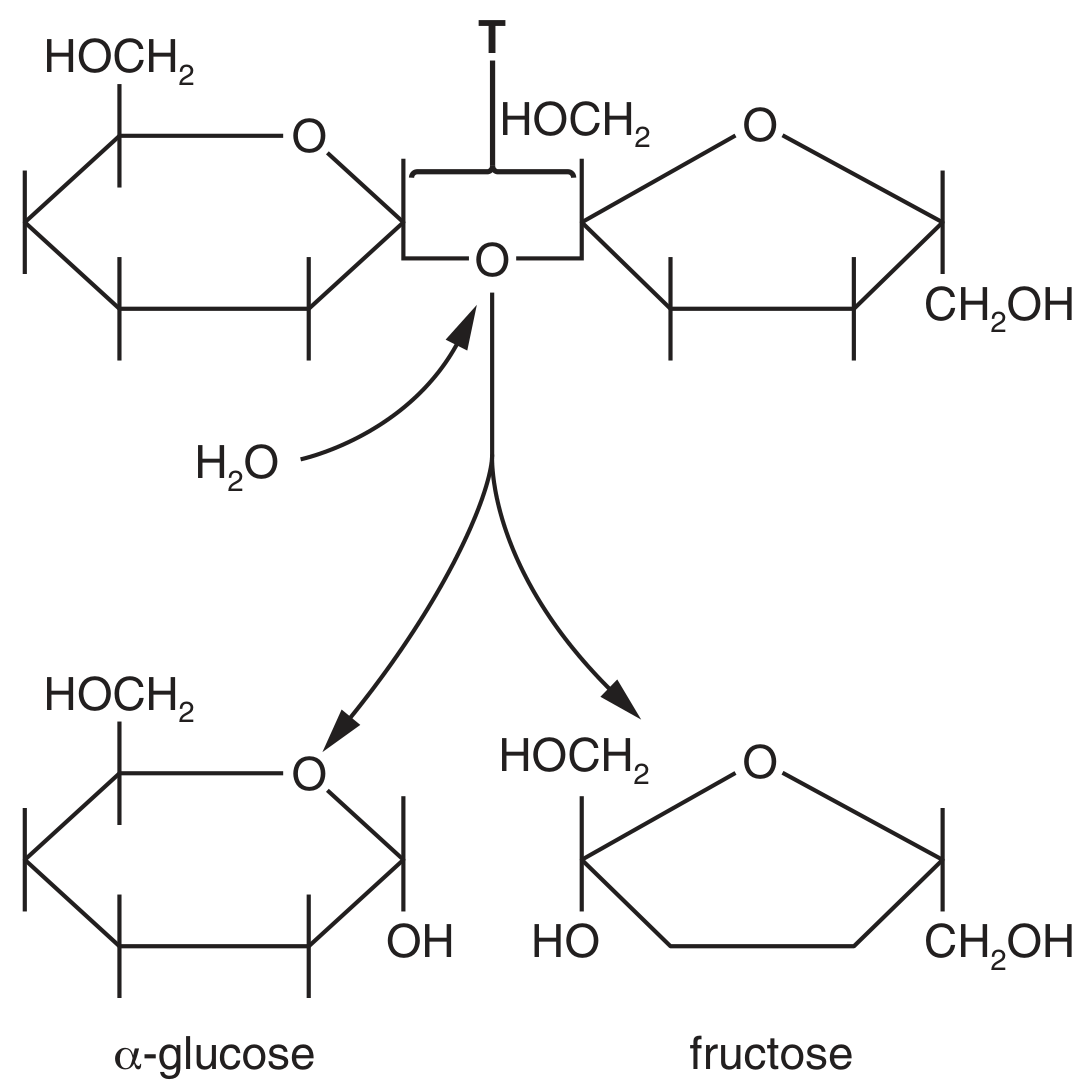
Fig. 1.1
Name the bond indicated by T.
State the name given to this type of reaction in which water is involved.
Fig. 1.2 summarises the reactions that take place after glucose has entered a certain type of cell.
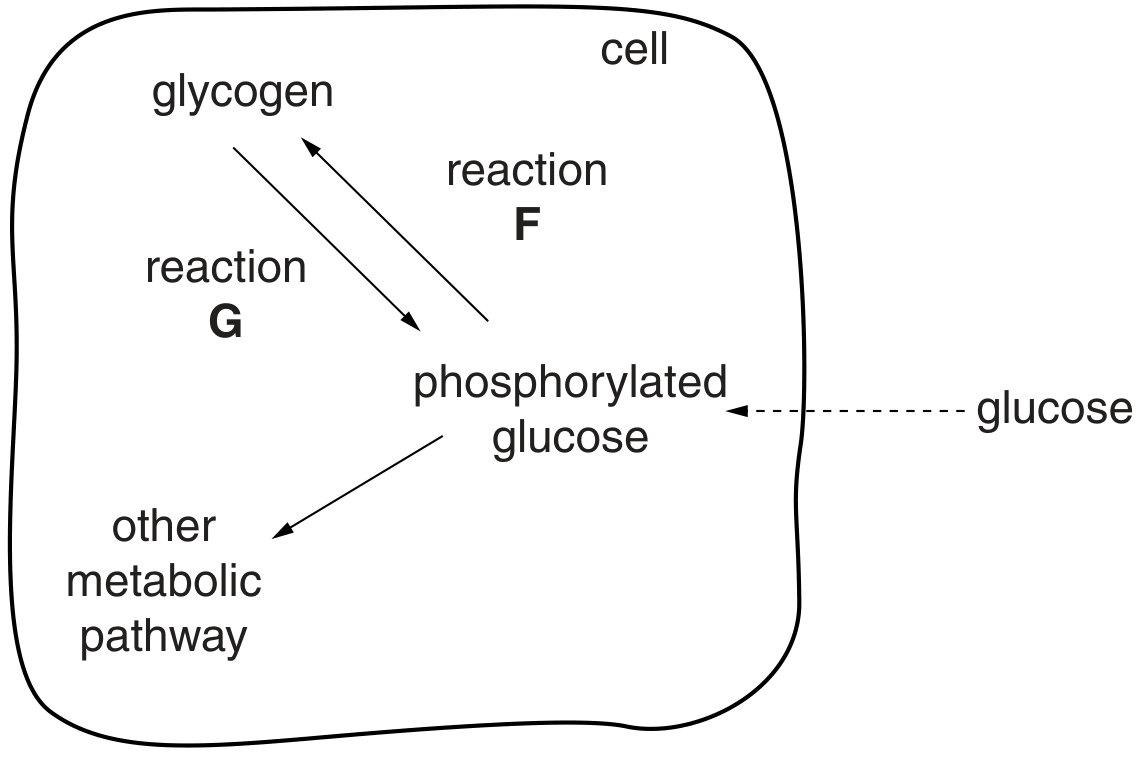
Fig. 1.2
Name the type of reaction occurring at F and the type of reaction occurring at G.
F
G
With reference to Fig. 1.2, suggest one example of an 'other metabolic pathway' for phosphorylated glucose.
Fig. 1.1 is a labelled diagram of a leaf palisade mesophyll cell, as seen with a high quality light microscope.
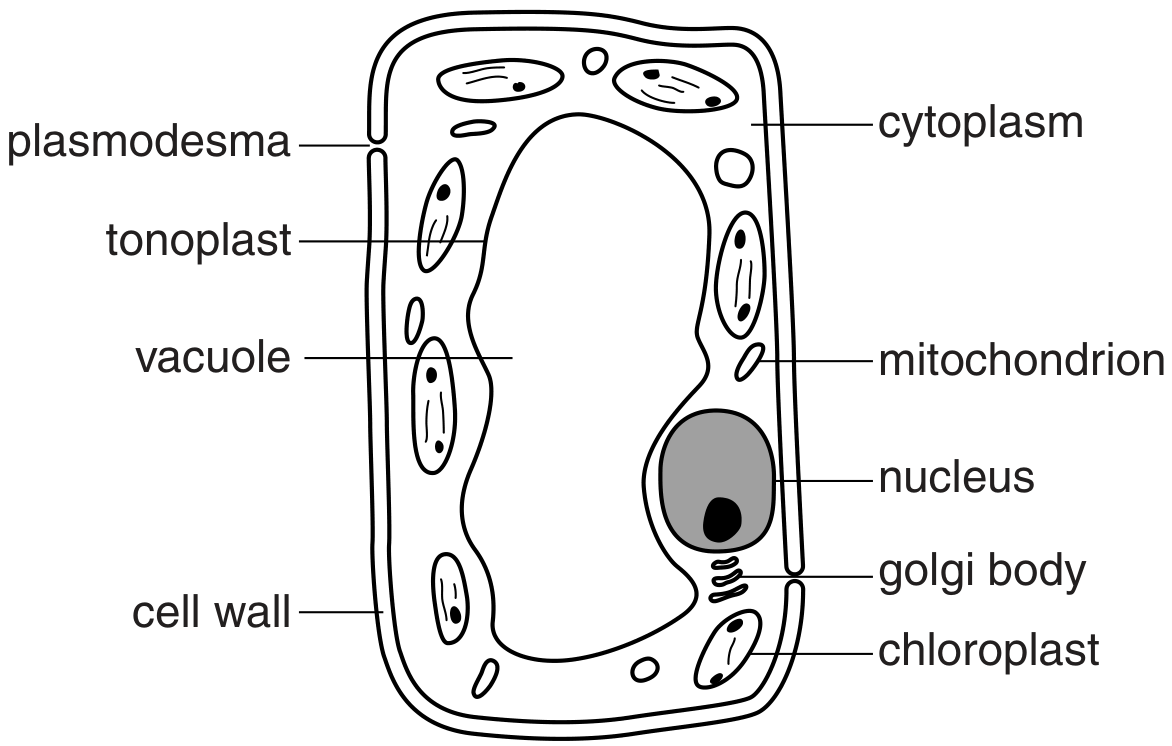
Fig. 1.1
An electron micrograph of the same leaf mesophyll cell at the same magnification would show more detail than is shown in Fig. 1.1.
In Fig. 1.1, starch granules are visible within the chloroplasts. Starch is the most common storage compound of plants. It is composed of amylopectin and amylose.
Describe the structural differences between amylopectin and amylose.
Fig. 1.1 shows the structures of four biological molecules A, B, C and D.
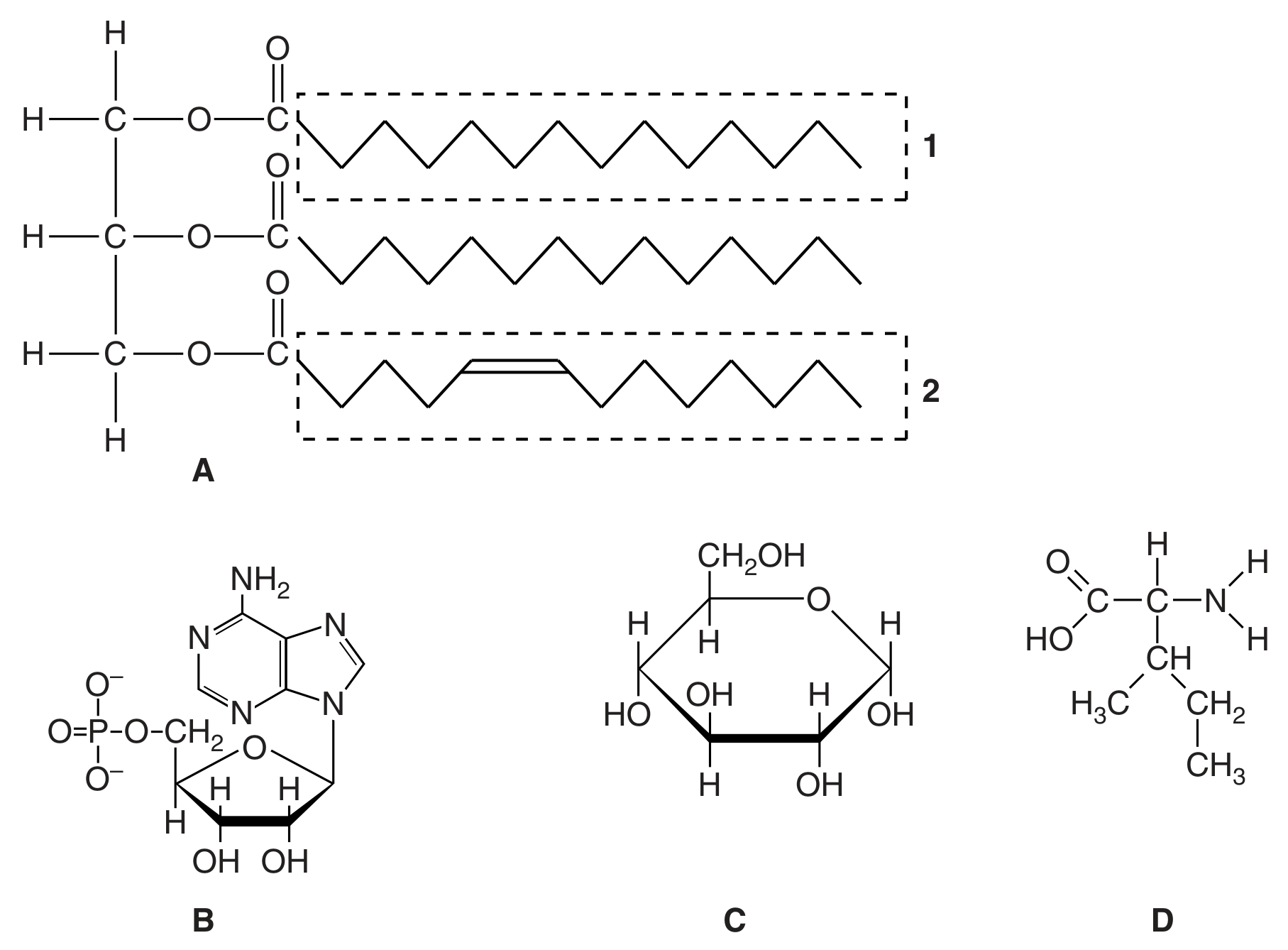
Fig. 1.1
Give the letter, A to D, of the molecule in Fig. 1.1 which:
contains ester bonds.
Some of the molecules in Fig. 1.1 can form polymers.
Name a polymer which can be formed only from many molecules of C.
State one way, visible in Fig. 1.1, in which the part labelled 1 of molecule A differs from the part labelled 2.
Fig. 1.1 is a diagram representing part of the phospholipid bilayer of a cell surface membrane.
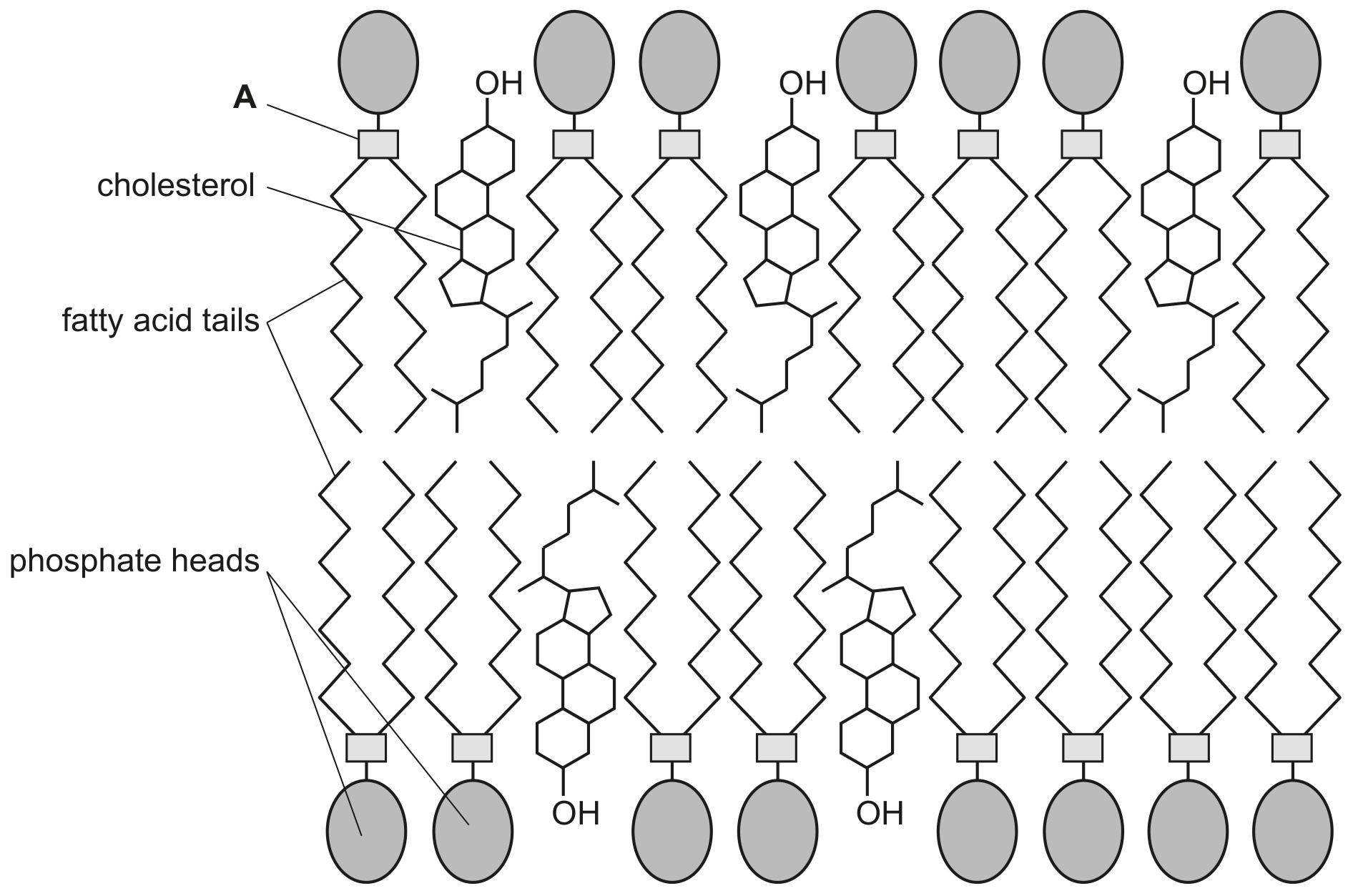
Fig. 1.1
Identify the part of a phospholipid molecule, labelled A in Fig. 1.1, that forms bonds with the phosphate heads and with the fatty acid tails.
Table 1.1 shows some features of four biological molecules that are all polymers.
Complete Table 1.1 by using a tick to indicate the features that apply to each polymer.
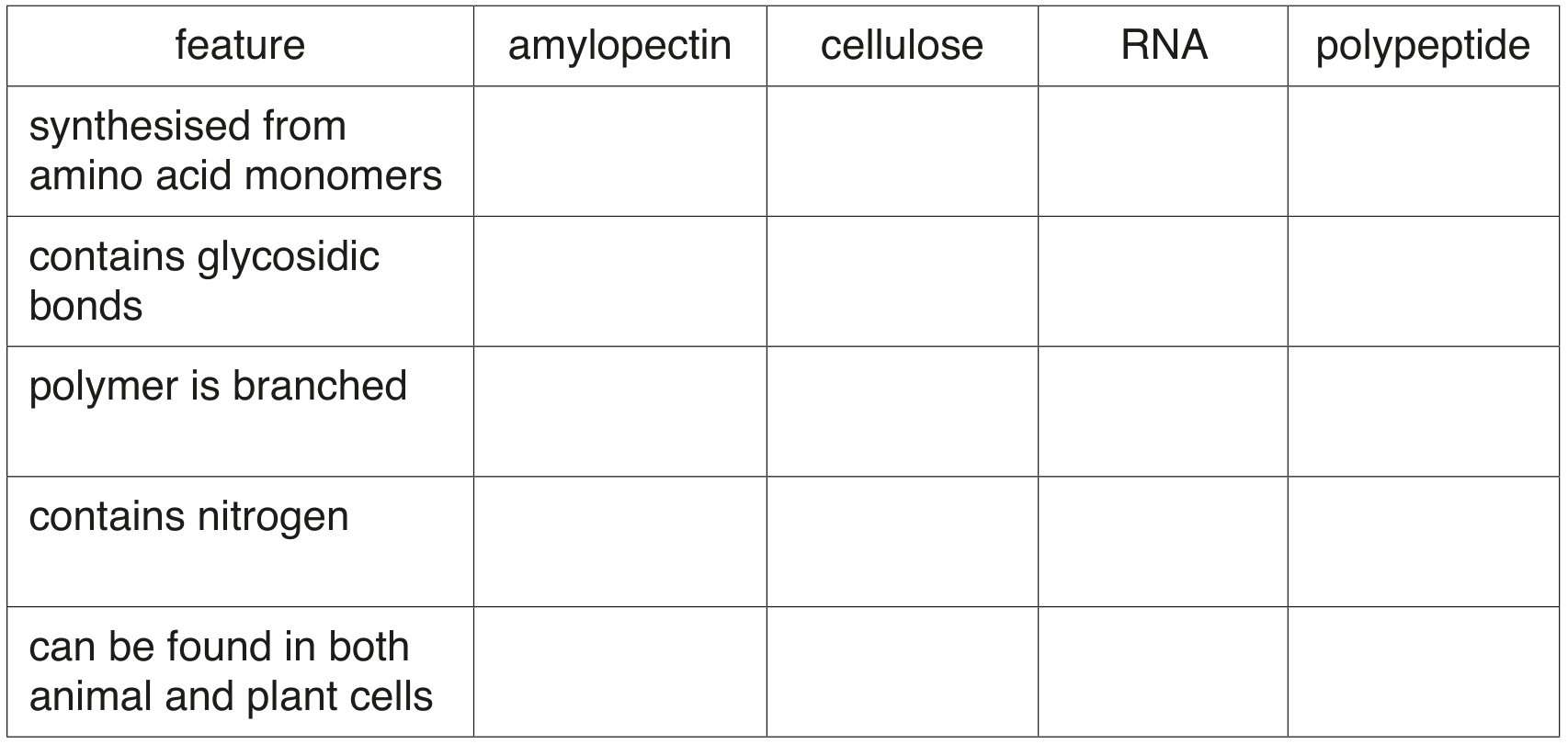
Table 1.1
Fig. 1.1 is a simple diagram of a phospholipid molecule.
Explain how the structure of a phospholipid molecule makes it suitable for its function in cell membranes. You may label and annotate Fig. 1.1 as part of your answer.
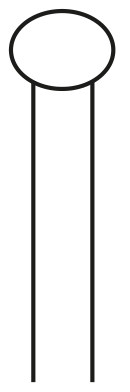
Fig. 1.1
Fig. 1.1 shows five biological molecules.
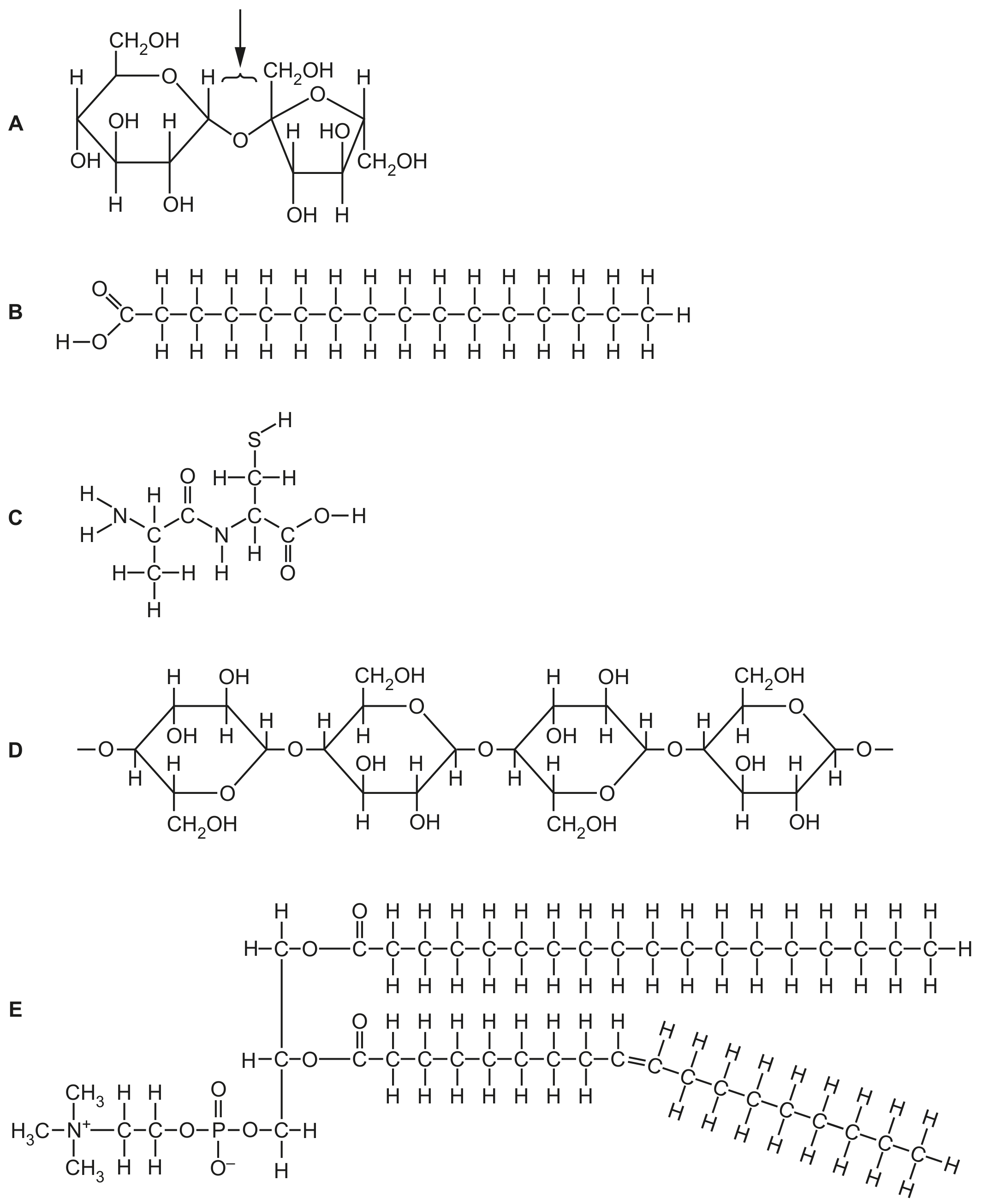
Fig. 1.1
State the name of the bond in molecule A indicated by the arrow.
Molecule B is described as a saturated fatty acid.
State why molecule B is described as a saturated fatty acid.
Molecule D is a polymer.
State the name of the monomer that is used to synthesise this polymer.
Molecule A and molecule C dissolve in water. Molecule B does not dissolve in water.
Explain why molecule A and molecule C dissolve in water, but molecule B does not dissolve in water.