EduNinja

A-Level CAIE Biology AS5.1 Replication and DivisionQuestion Bank

Question 1

[Maximum number: 2]

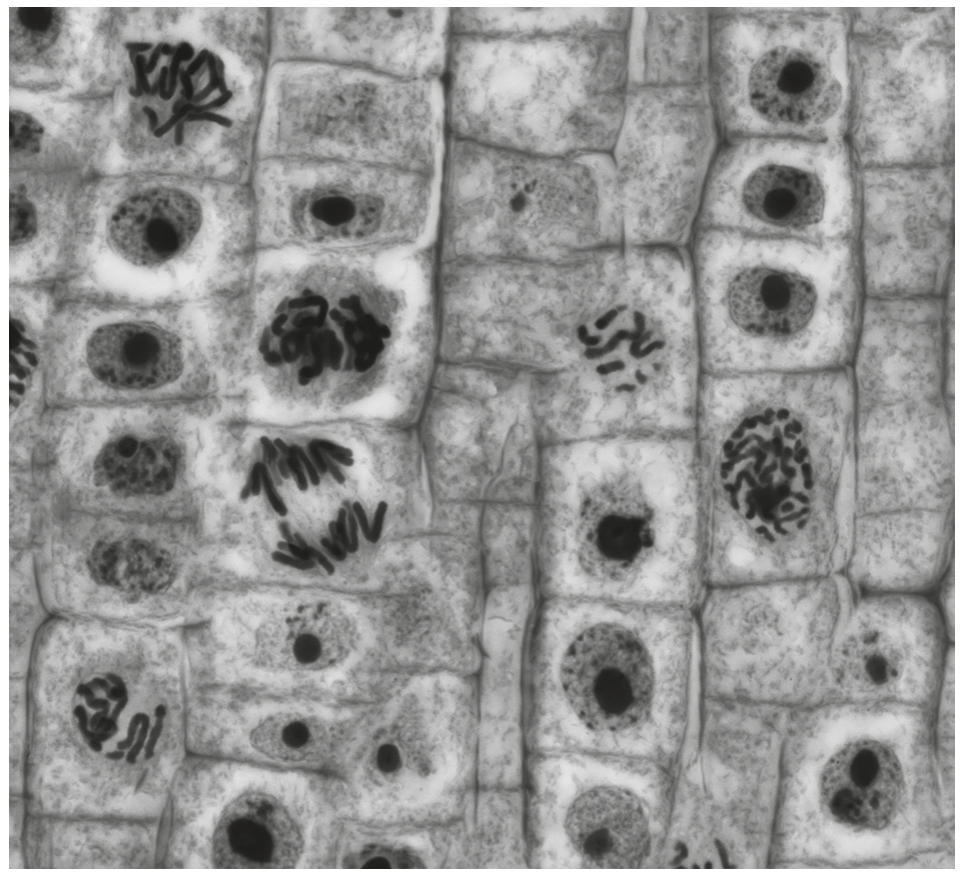
A student investigated growth in the roots of broad bean, Vicia faba. The student cut sections of the root tip of this plant and viewed them with a light microscope.

Fig. 1.1 is a photomicrograph of one of the sections. The cell labelled D is in interphase.
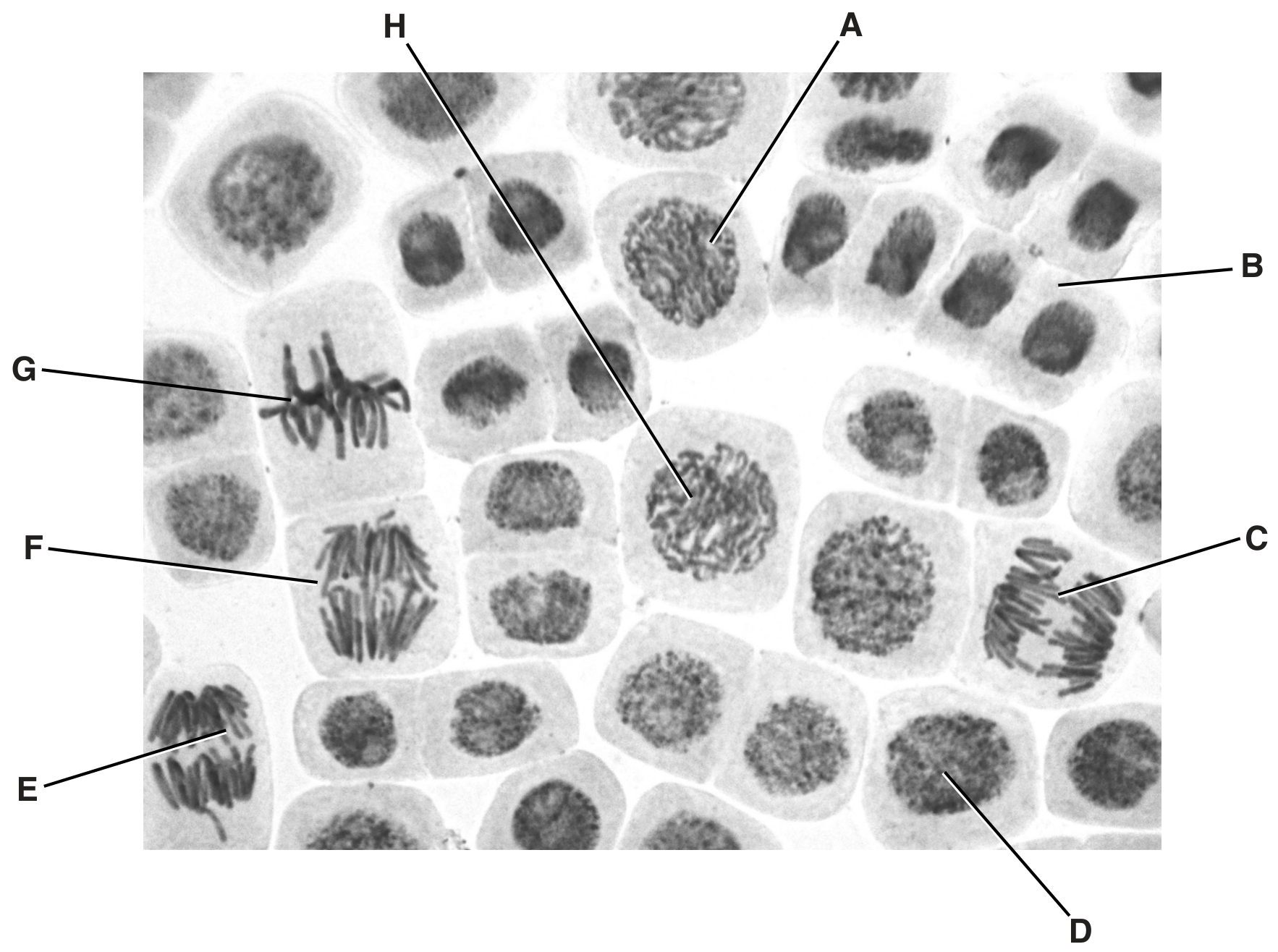
Fig. 1.1

Fig. 1.1

Question 1(c)

(a)

State two roles of mitosis in plants and animals other than growth.

1
2

[ 2 ]
Question 1

[Maximum number: 2]

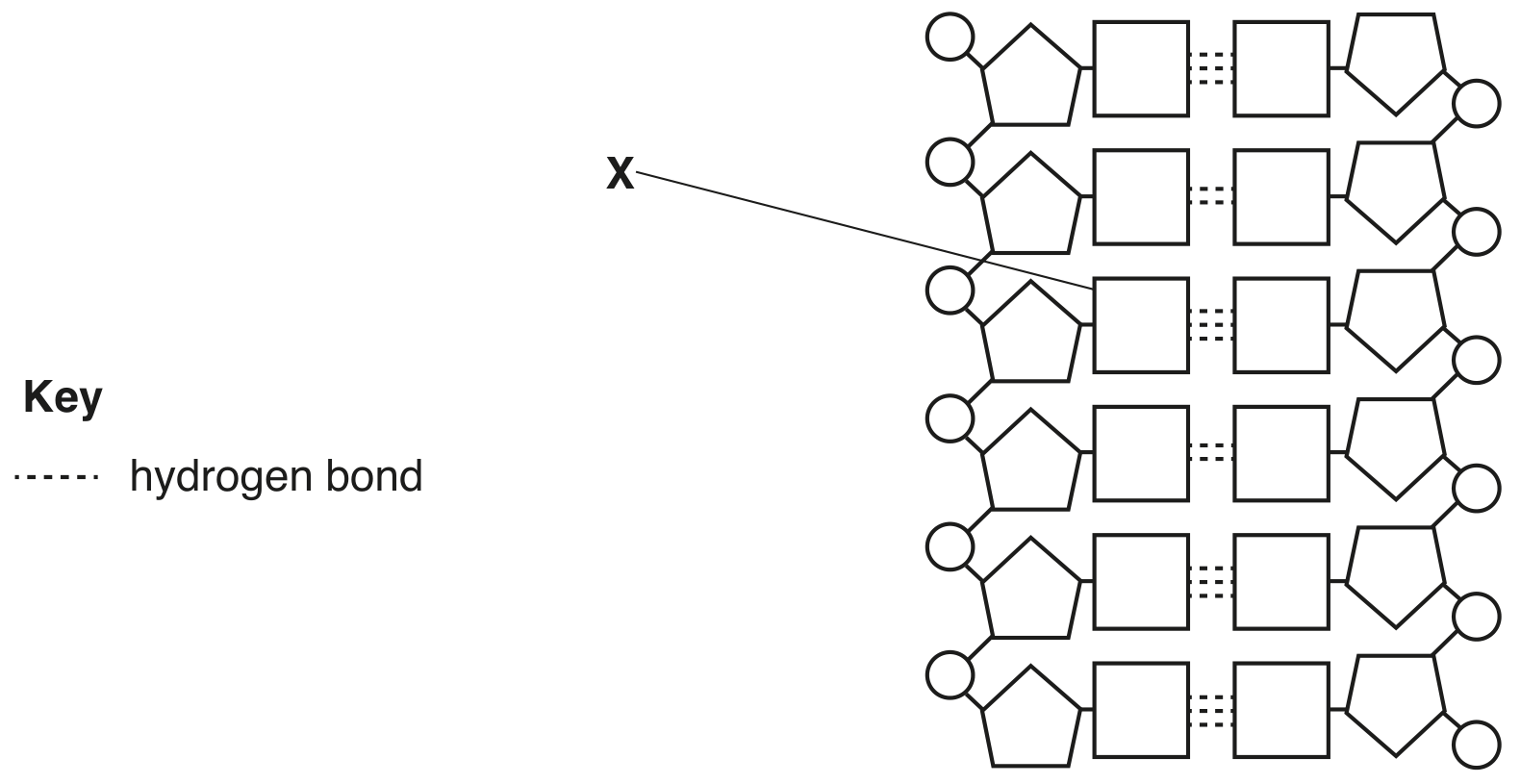
Fig. 1.1 is a diagram showing the structure of a section of a DNA molecule.

Fig. 1.1

Fig. 1.1

Question 1(d)

(a)

The telomere is a region found at the end of a chromosome.

Outline the function of telomeres.

[ 2 ]

Question 1

[Maximum number: 2]

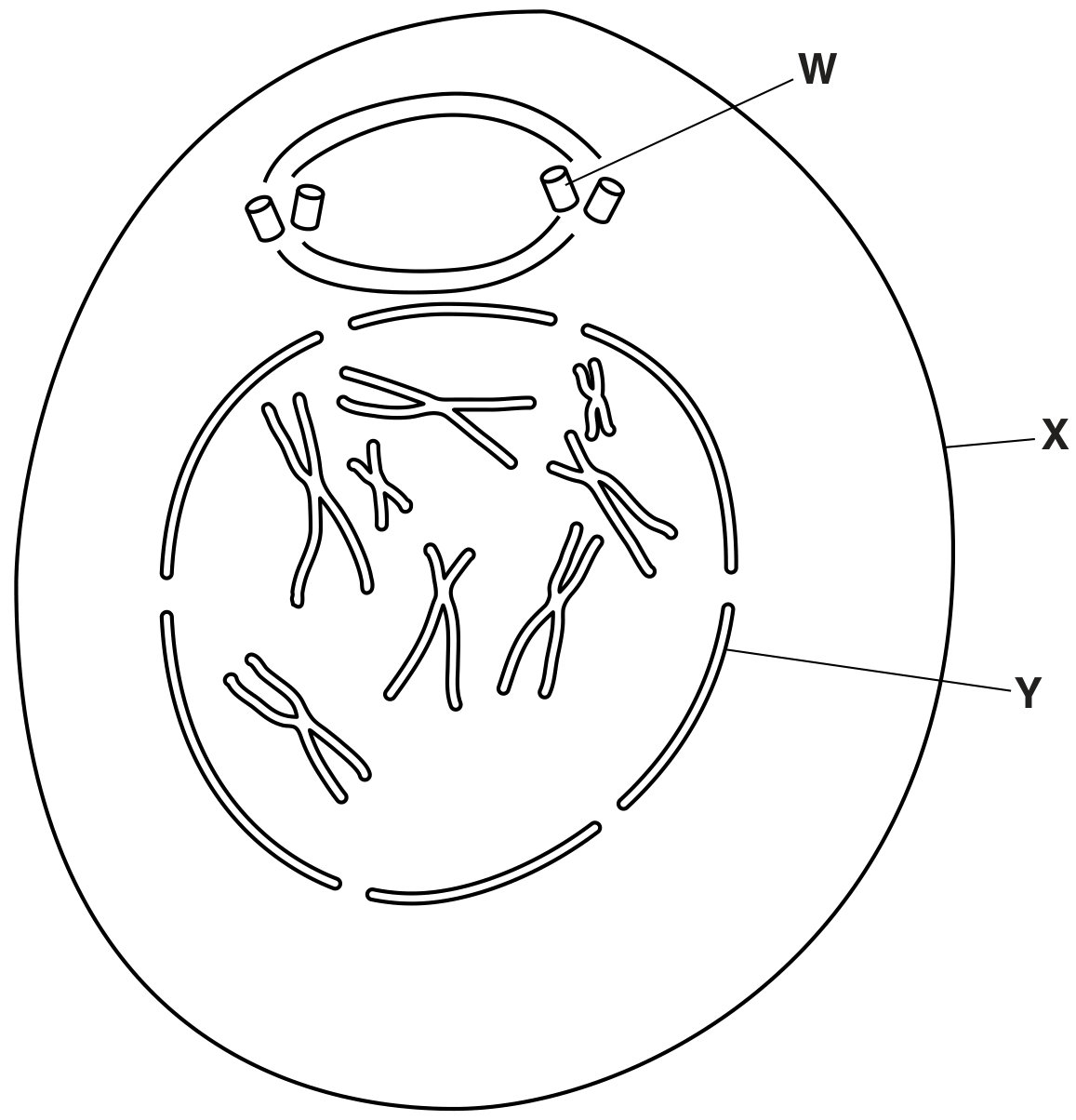
Fig. 1.1 shows a cell of a female fruit fly, Drosophila melanogaster, during a stage of mitosis.

Fig. 1.1

Fig. 1.1

Question 1(a)

Question 1(a)(iii)

(a)
(i)

Name the structure labelled W and state its function.

[ 2 ]

Question 1

[Maximum number: 1]

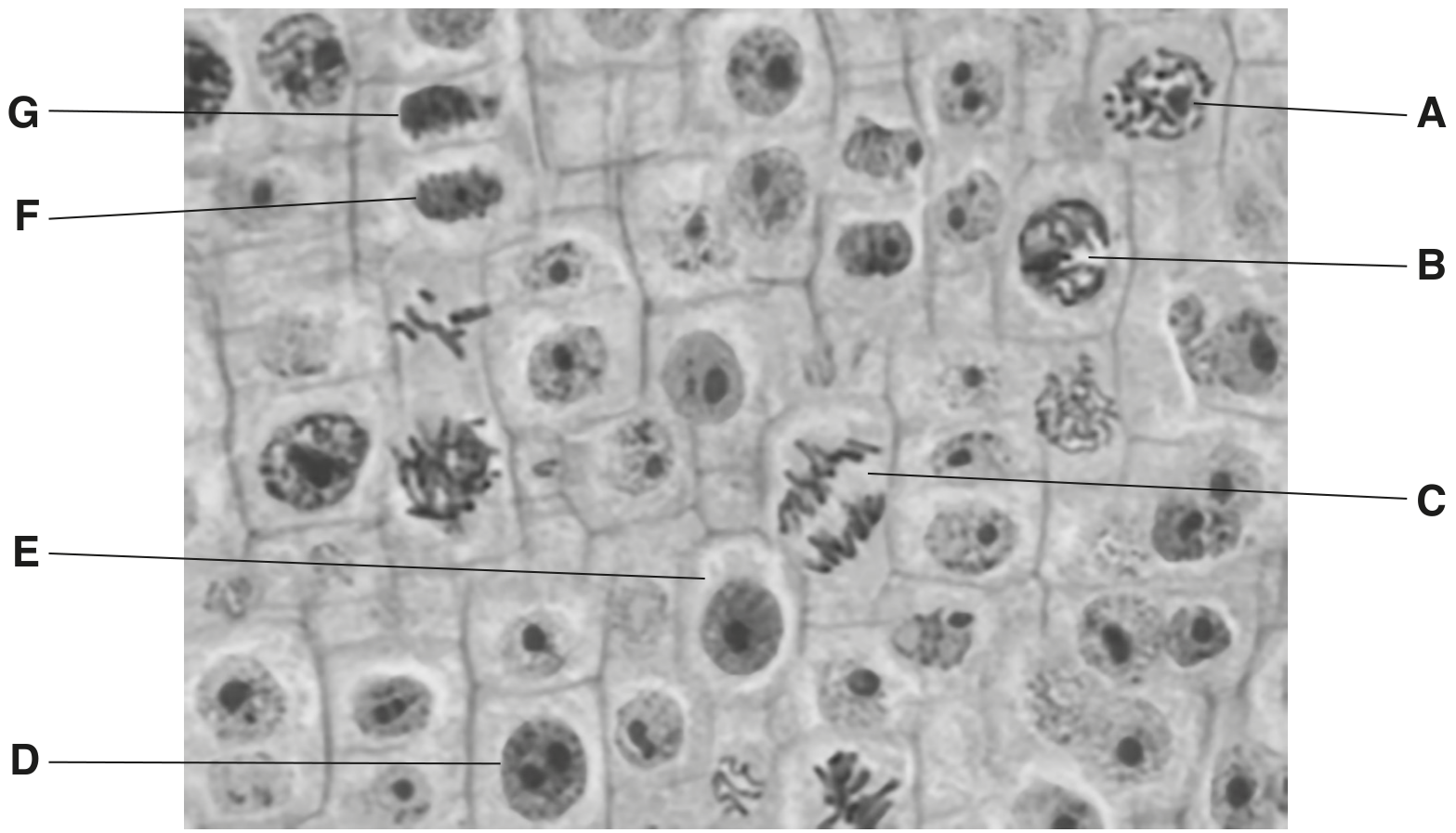
Fig. 1.1 is a photomicrograph of root tip meristem. Different stages of the cell cycle are visible. Some cells are in the same stage of the cell cycle and some are in the same stage of mitosis.

Fig. 1.1

Fig. 1.1

Question 1(a)

(a)

Cell D and cell E are in the same stage of the cell cycle.

State the difference between the nucleus of cell D and cell E.

[ 1 ]

Question 1

[Maximum number: 4]

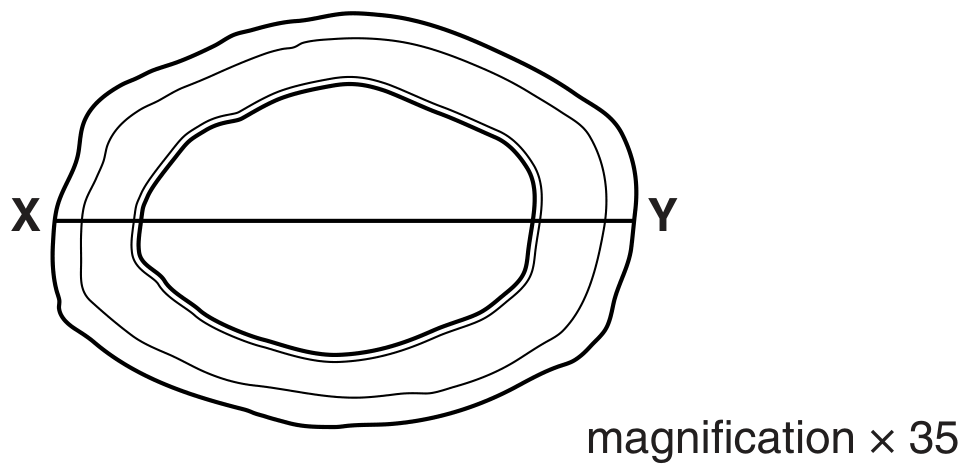
Fig. 1.1 is a diagram of a transverse section through a vein.

Fig. 1.1

Fig. 1.1

Question 1(d)

(a)

The inner lining of arteries and veins is composed of a layer of epithelial cells supported by a layer of elastic and connective tissue. The epithelial cells are capable of cell division by mitosis.

[ 4 ]

Question 1(d)(i)

(i)

State the role of mitosis in cell division of epithelial cells.

[ 2 ]

Question 1(d)(ii)

(ii)

Explain why the epithelial cells undergo mitosis and not meiosis.

[ 2 ]

Question 1

[Maximum number: 2]

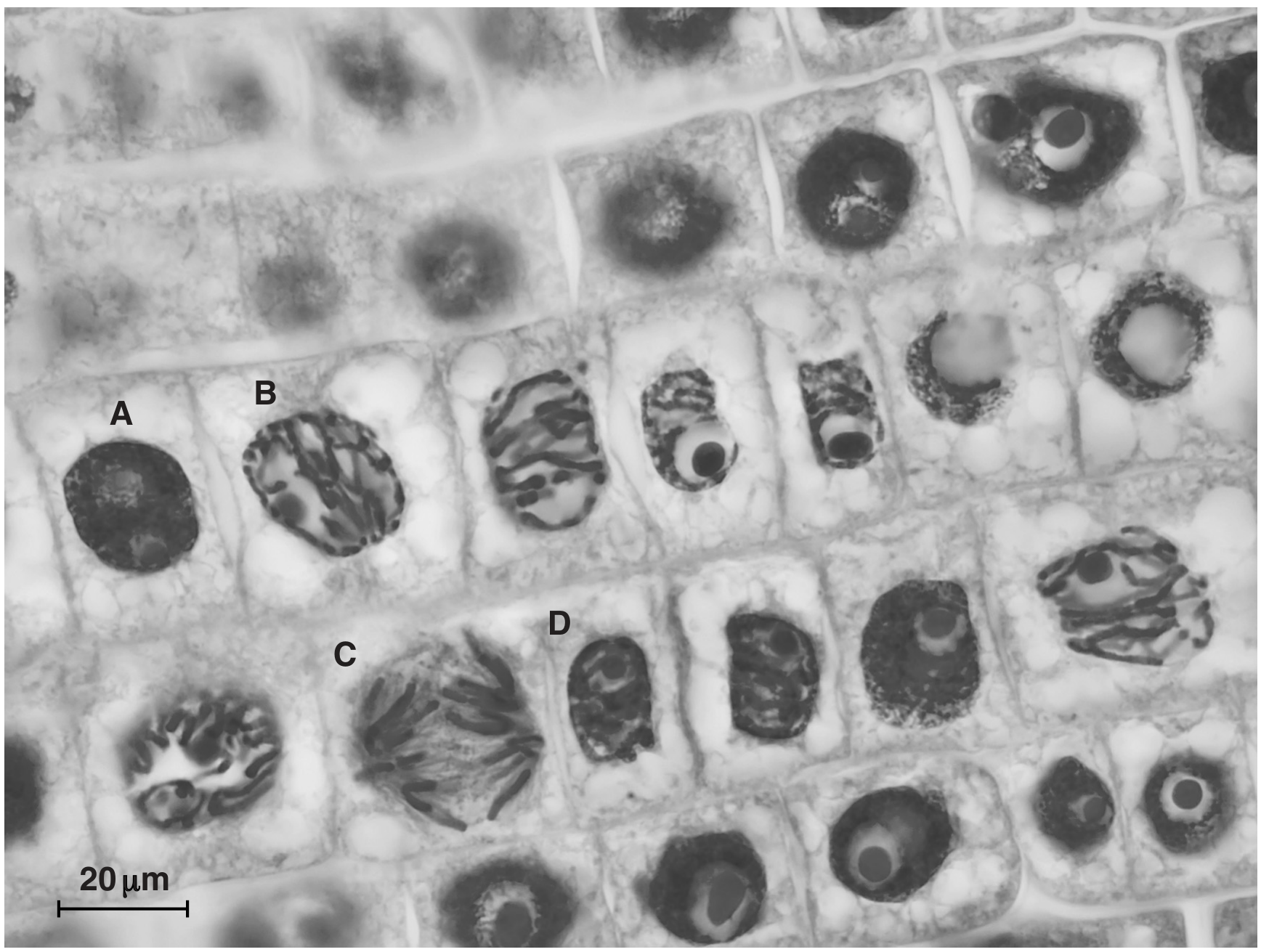
Fig. 1.1 is a photomicrograph of plant root cells near the growing tip. Some of the cells are undergoing mitosis.

Fig. 1.1

Fig. 1.1

Question 1(d)

Question 1(d)(i)

(a)
(i)

Describe the role of mitosis in a growing plant root tip.

[ 2 ]

Question 1

[Maximum number: 3]

Fig. 1.1 is a photomicrograph of plant cells showing stages in cell division.

Fig. 1.1

Fig. 1.1

Question 1(c)

(a)

Mitosis is important in producing more cells for plant growth.

Describe three other ways in which mitosis is important in plants.

[ 3 ]

Question 1

[Maximum number: 2]

A diagram of a chromosome from a dividing cell is shown in Fig. 1.1.

Fig. 1.1

Fig. 1.1

Question 1(a)

(a)

A dividing cell is at risk of losing genetic material each time DNA replication occurs.

On Fig. 1.1, add a label line and the letter G to show the location on the chromosome of an area that helps to prevent the loss of genes.

[ 1 ]

Question 1(c)

(b)

Name the stage in the mitotic cell cycle during which the cytoplasm and the cell divide to produce two genetically identical daughter cells.

[ 1 ]

Question 1

[Maximum number: 1]

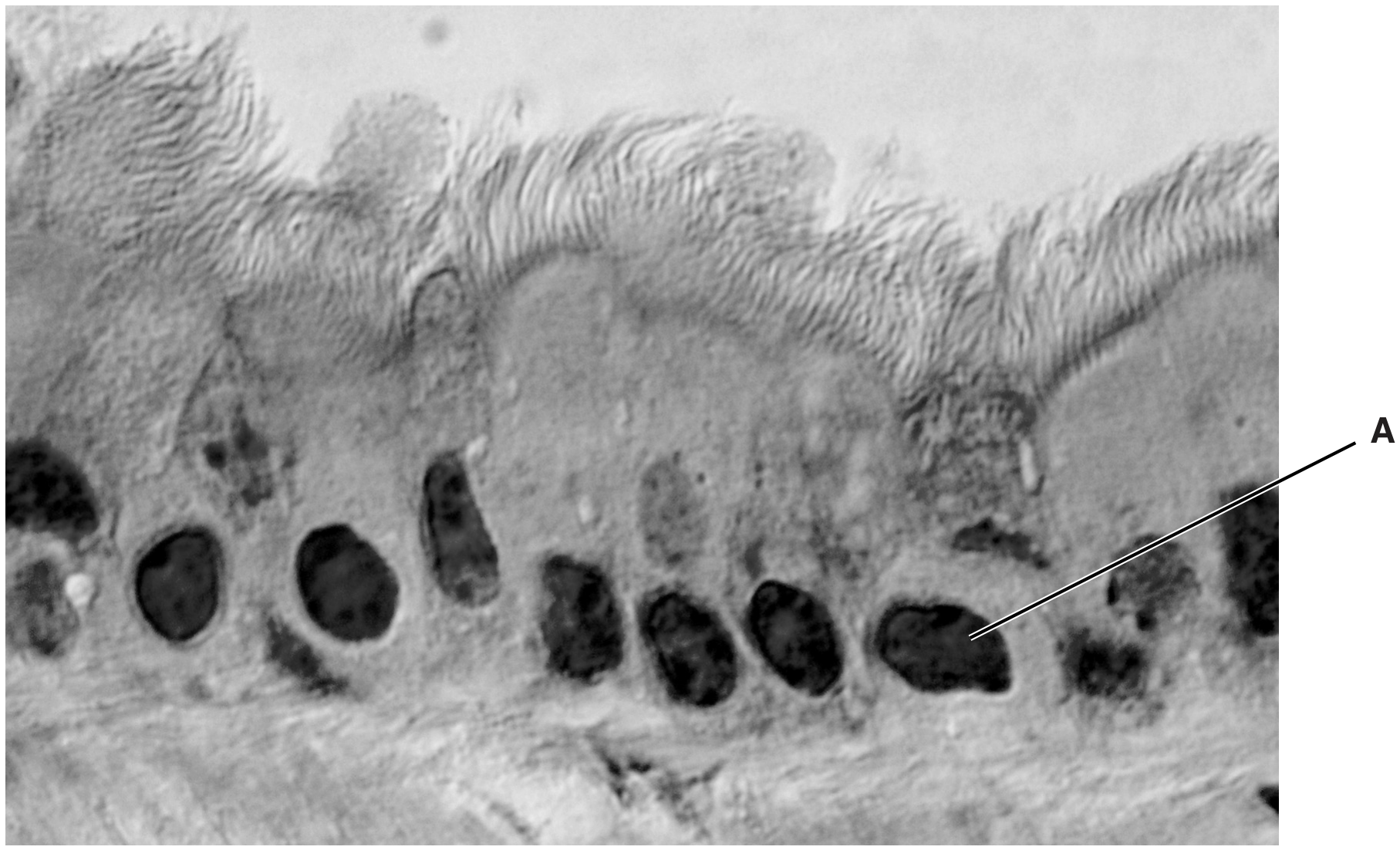
Fig. 1.1 is a photomicrograph of epithelial cells in the bronchus.

Fig. 1.1

Fig. 1.1

Question 1(b)

(a)

Epithelial cells are replaced when they are damaged.

[ 1 ]

Question 1(b)(i)

(i)

Name the type of cell division used to replace damaged epithelial cells.

[ 1 ]

Question 1

[Maximum number: 3]

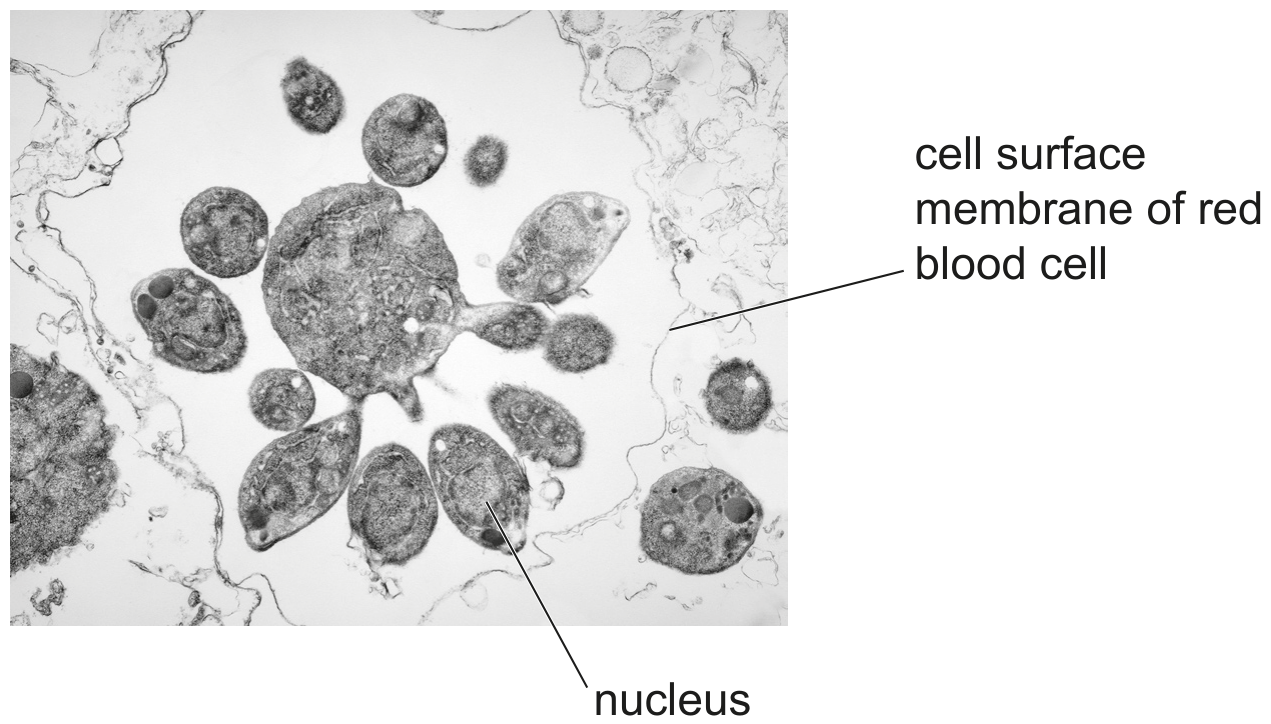
The malarial pathogen, Plasmodium falciparum, enters red blood cells after a person becomes infected. After some time, each cell of P. falciparum divides to form daughter cells.

Fig. 1.1 shows a cell of P. falciparum that is forming many daughter cells.

Fig. 1.1

Fig. 1.1

Question 1(b)

(a)

When P. falciparum divides there is unequal division of the cytoplasm to form small, genetically identical daughter cells.

Outline the events that occur in the cell of P. falciparum to form the daughter cells shown in Fig. 1.1.

In 2013, the World Health Organization (WHO) set a target for researchers to create a vaccine for malaria. WHO required the vaccine to show 75\% efficacy and be ready for use by 2030 .

Efficacy is a measure of the effectiveness of a vaccine in reducing the number of new cases of malaria.

A trial of the R21/Matrix-M TM{ }^{\mathrm{TM}} vaccine in Burkina Faso in 2020 achieved a 77 % efficacy over a 12-month period. A control group received a vaccine for rabies.

Vaccines stimulate an immune response with the production of antibodies.

[ 3 ]
0 selected