Question 1
Question 1(b)
(a)
Describe the effects on the cell wall of many hydrogen ions moving into the cell wall.
[ 3 ]
Question 1(c)
(b)
Explain the consequences of an influx of potassium ions into the cell.
[ 2 ]
 EduNinja
Describe the effects on the cell wall of many hydrogen ions moving into the cell wall.
Explain the consequences of an influx of potassium ions into the cell.
The Golgi body, rough endoplasmic reticulum (RER) and smooth endoplasmic reticulum (SER) form part of the internal membrane system of a cell. The membranes have a fluid mosaic structure.
Fig. 1.1 is a transmission electron micrograph of one area of a liver cell showing a region with RER and a region with SER. Mitochondria are also visible in the image.
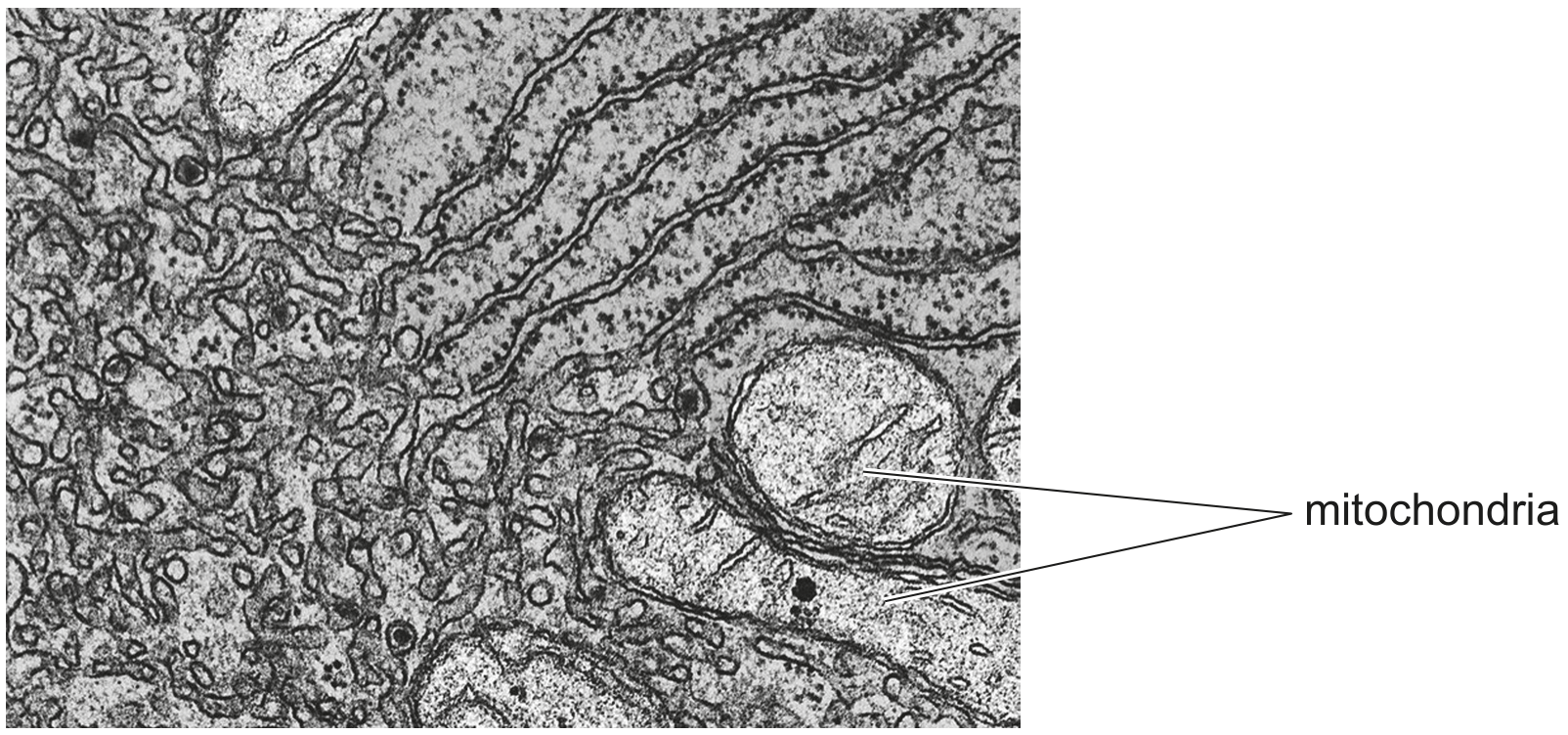
Fig. 1.1
One function of a Golgi body is to package molecules into Golgi vesicles.
Some Golgi vesicles contain secretory proteins for release from the cell.
Describe the sequence of events that occurs following the packaging of a secretory protein into a Golgi vesicle to its release from the cell.
Fig. 1.2 summarises the reactions that take place after glucose has entered a certain type of cell.
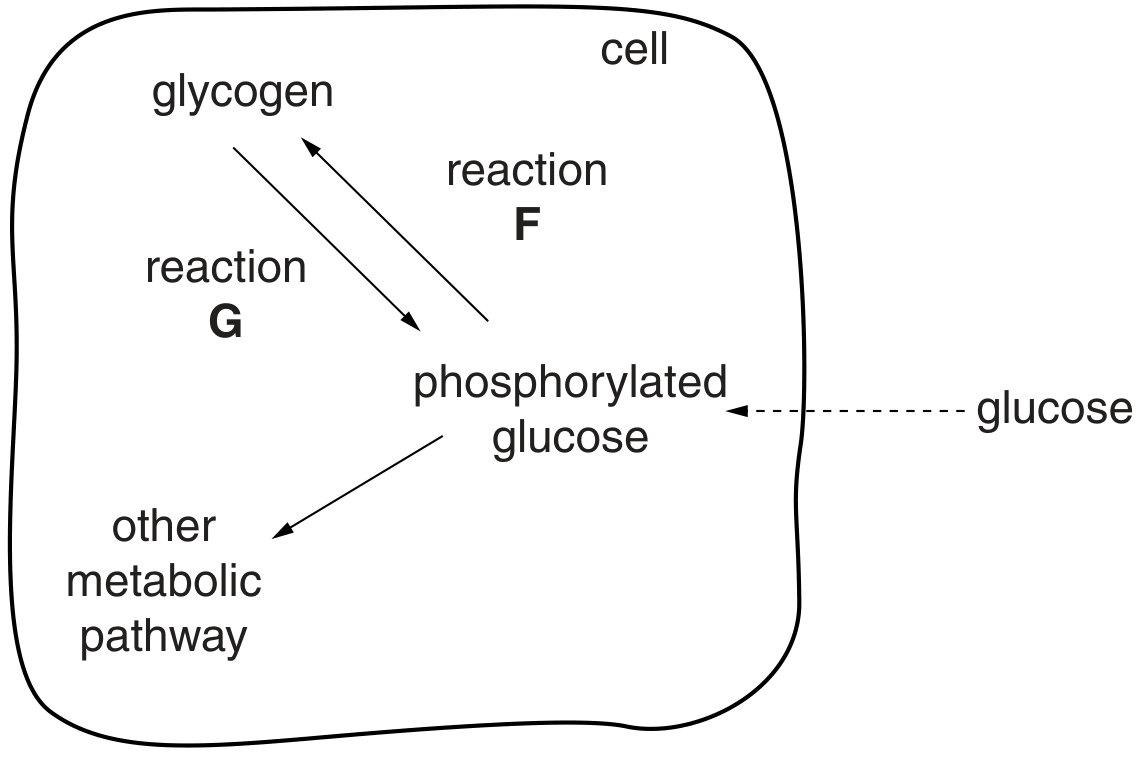
Fig. 1.2
Suggest one type of cell in which the reactions shown in Fig. 1.2 could occur.
State the mechanism by which glucose enters the cell.
Capillaries are known as exchange vessels. Substances are exchanged between blood and tissue fluid as the blood flows through the capillaries.
Fig. 1.1 is an electron micrograph of a section through a capillary with two red blood cells.
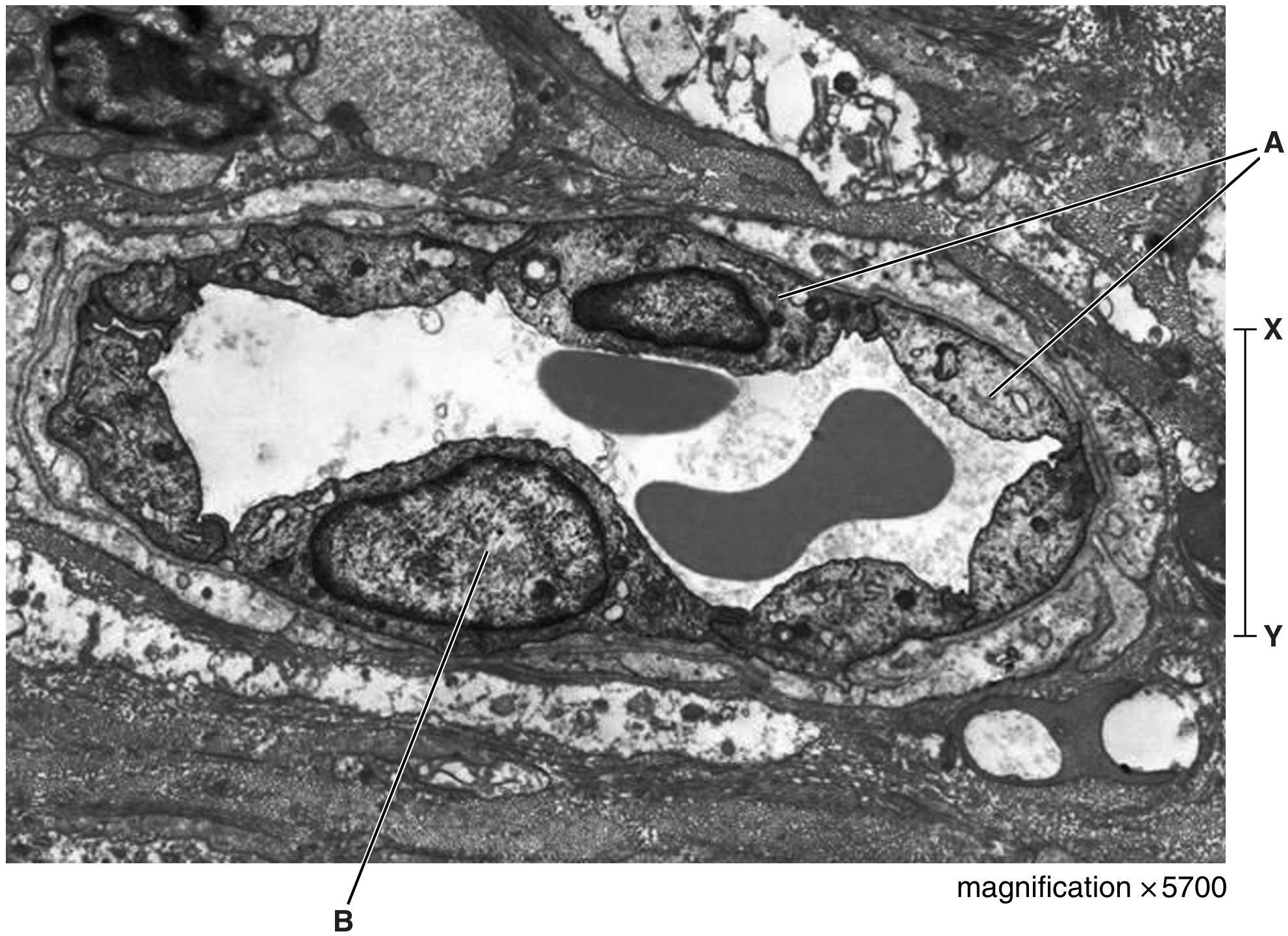
Fig. 1.1
Explain how capillaries are adapted for their function as exchange vessels.
There are two types of cell, prokaryotic and eukaryotic. Bacterial cells are prokaryotic and plant cells are eukaryotic.
One role of the cell surface membrane of bacterial cells and plant cells is the transport of substances into and out of cells.
Explain how membrane carrier proteins and membrane channel proteins are involved in the transport of substances into and out of cells.
Table 1.1 shows three of the processes by which substances in solution can move across cell membranes. It also lists five statements that may apply to each of these three processes.
Complete Table 1.1 to show which of the statements apply to each of the three processes shown.
Use a tick to show that the statement applies or a cross (X) to show that the statement does not apply.
Each box must contain a tick or a cross.
The first row has been completed for you.
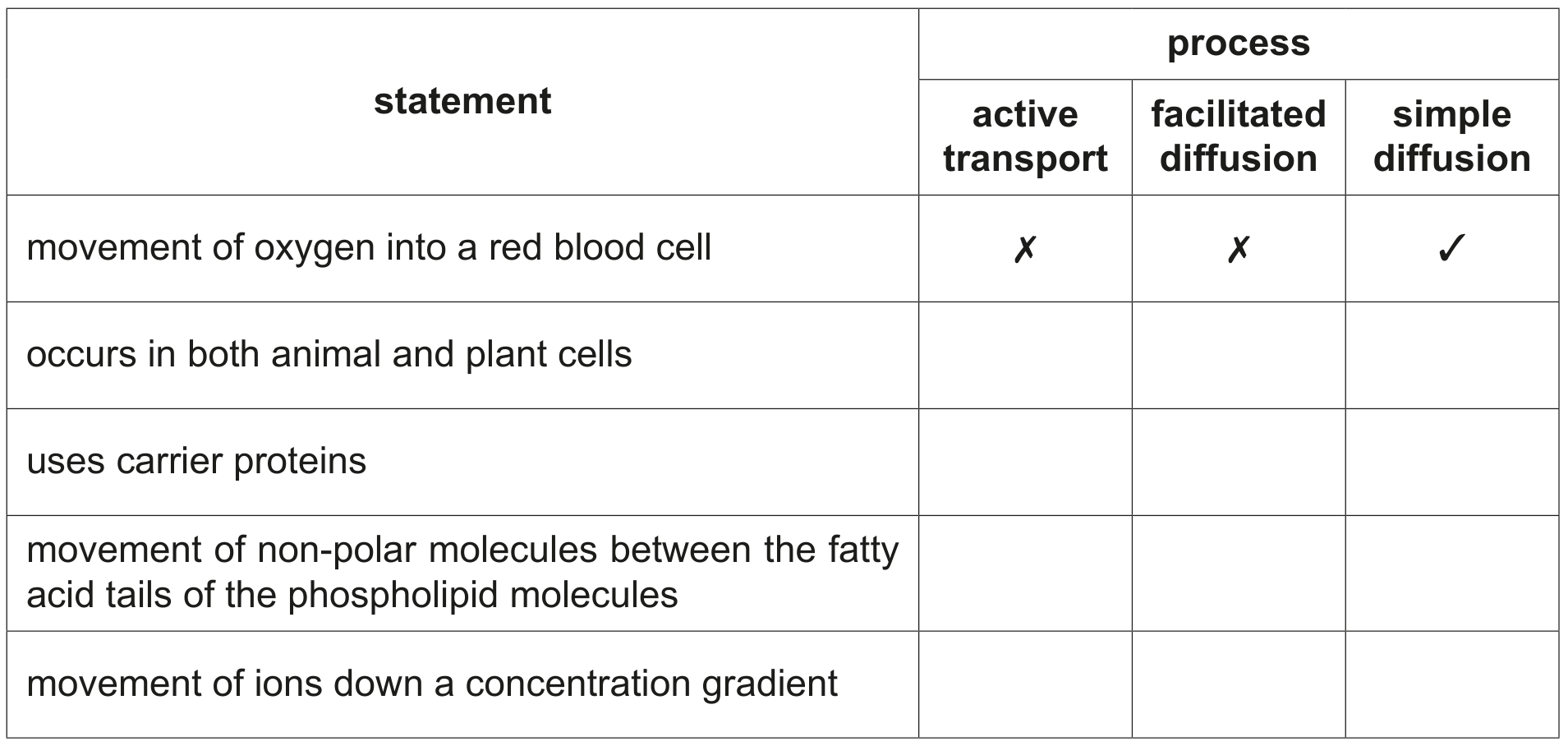
Table 1.1
One role of the cell surface membrane is to control the entry and exit of substances.
Complete Table 1.1 to show the transport mechanisms across cell surface membranes and examples of materials transported.
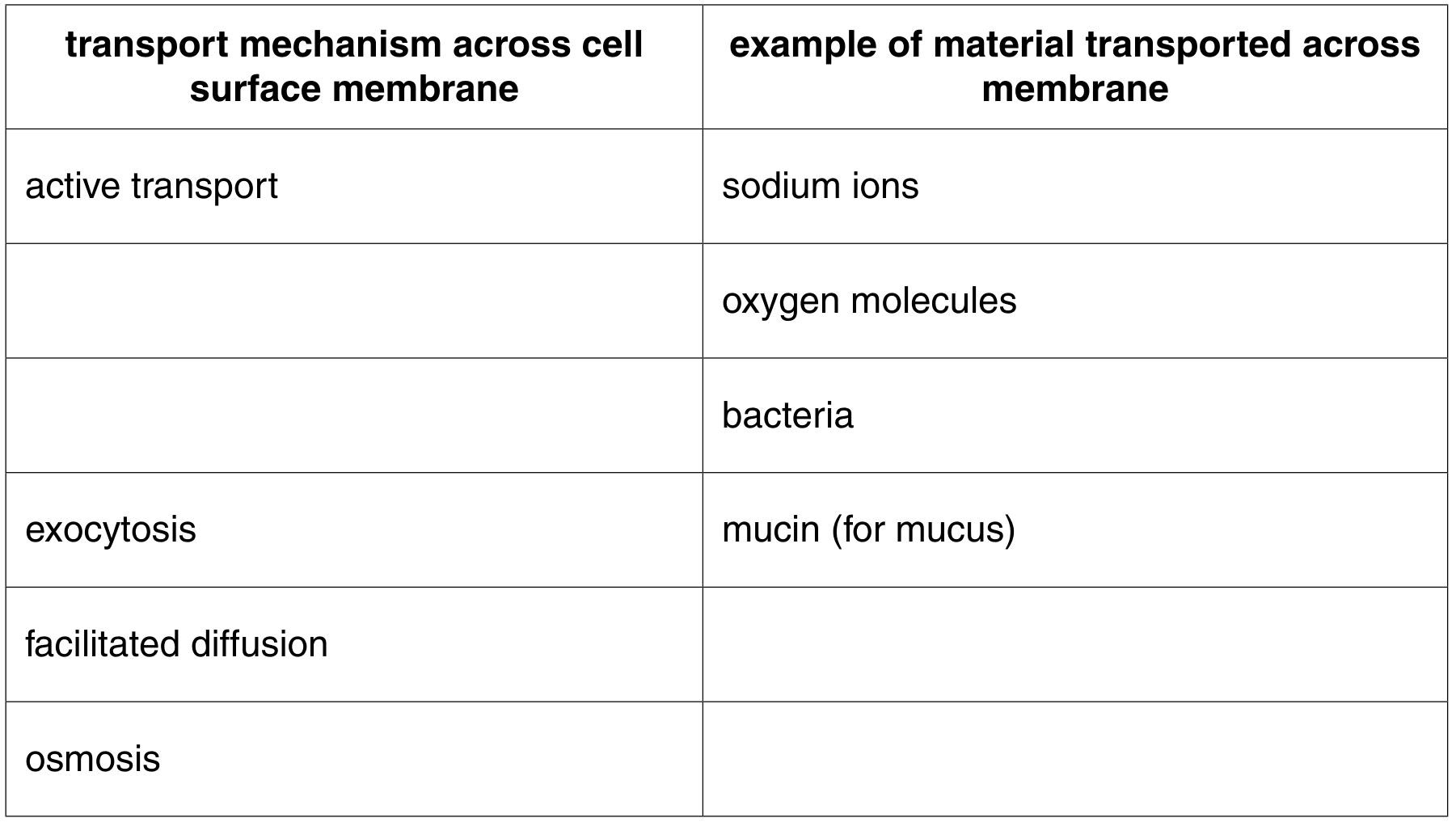
Table 1.1
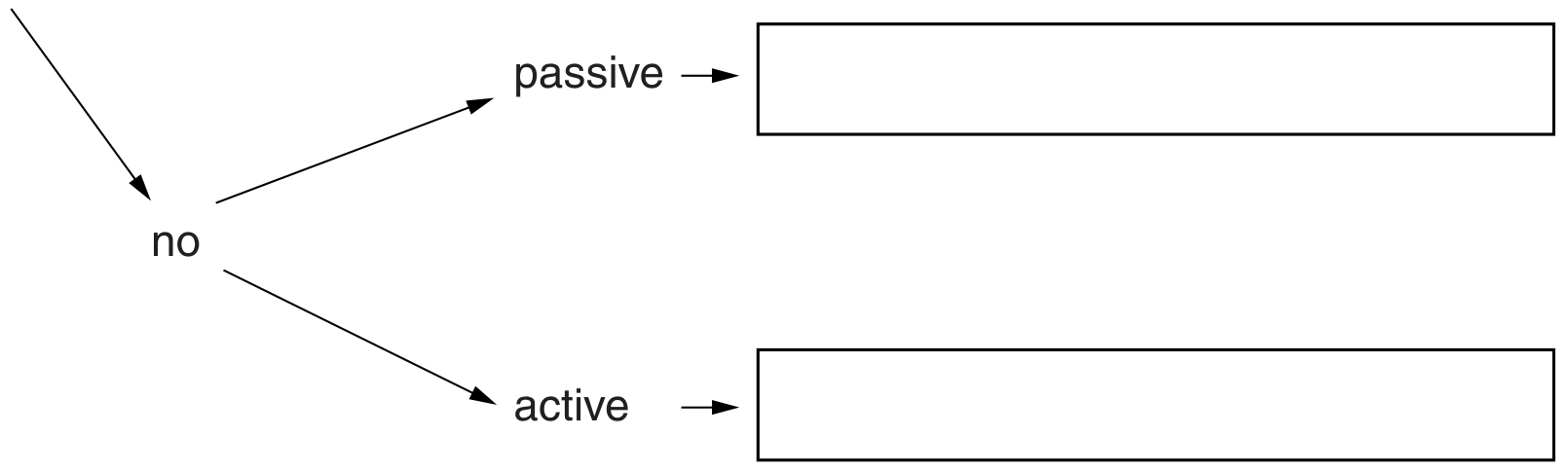
Each transport mechanism across cell surface membranes has a characteristic set of features.
In each of the boxes below, state one example of a transport mechanism that matches the pathway shown.
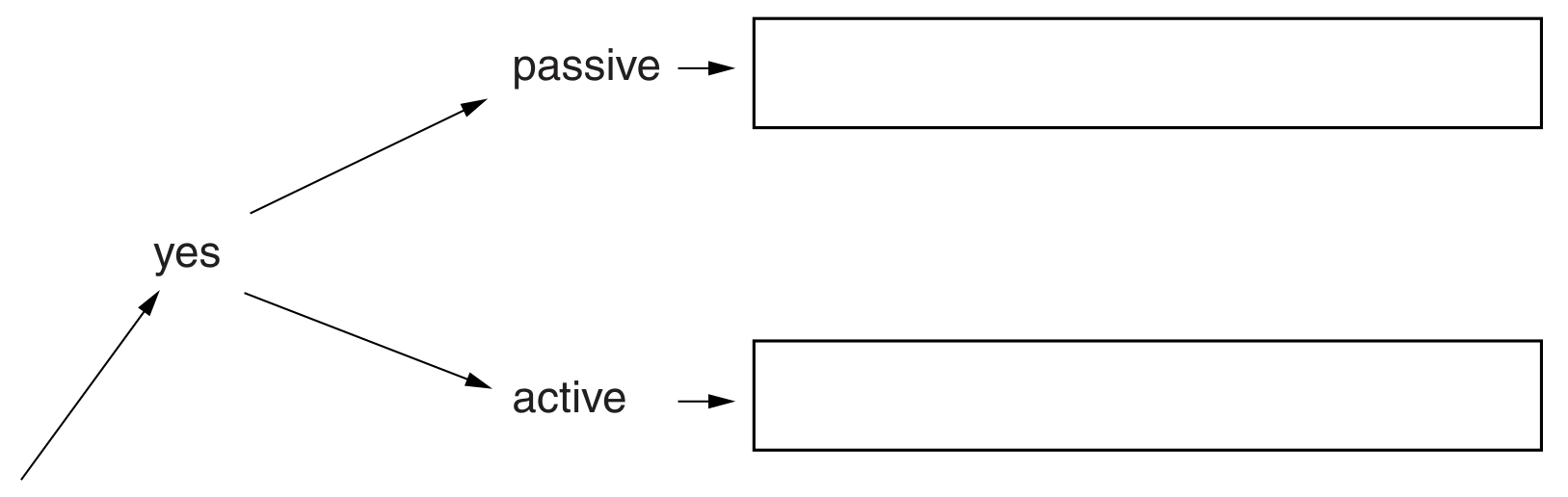
specific transport protein involved
Protein production involves a complex sequence of events and a number of cell structures.
Describe the process of exocytosis.
Explain why sodium ions cannot cross phospholipid bilayers by simple diffusion.
Ions and some molecules move across cell surface membranes by facilitated diffusion and active transport.
Compare facilitated diffusion and active transport by stating one way in which they are similar and two ways in which facilitated diffusion is different from active transport.
similarity
difference 1
difference 2
Fig. 1.1 represents part of the wall of a proximal convoluted tubule (pct) in a kidney nephron.
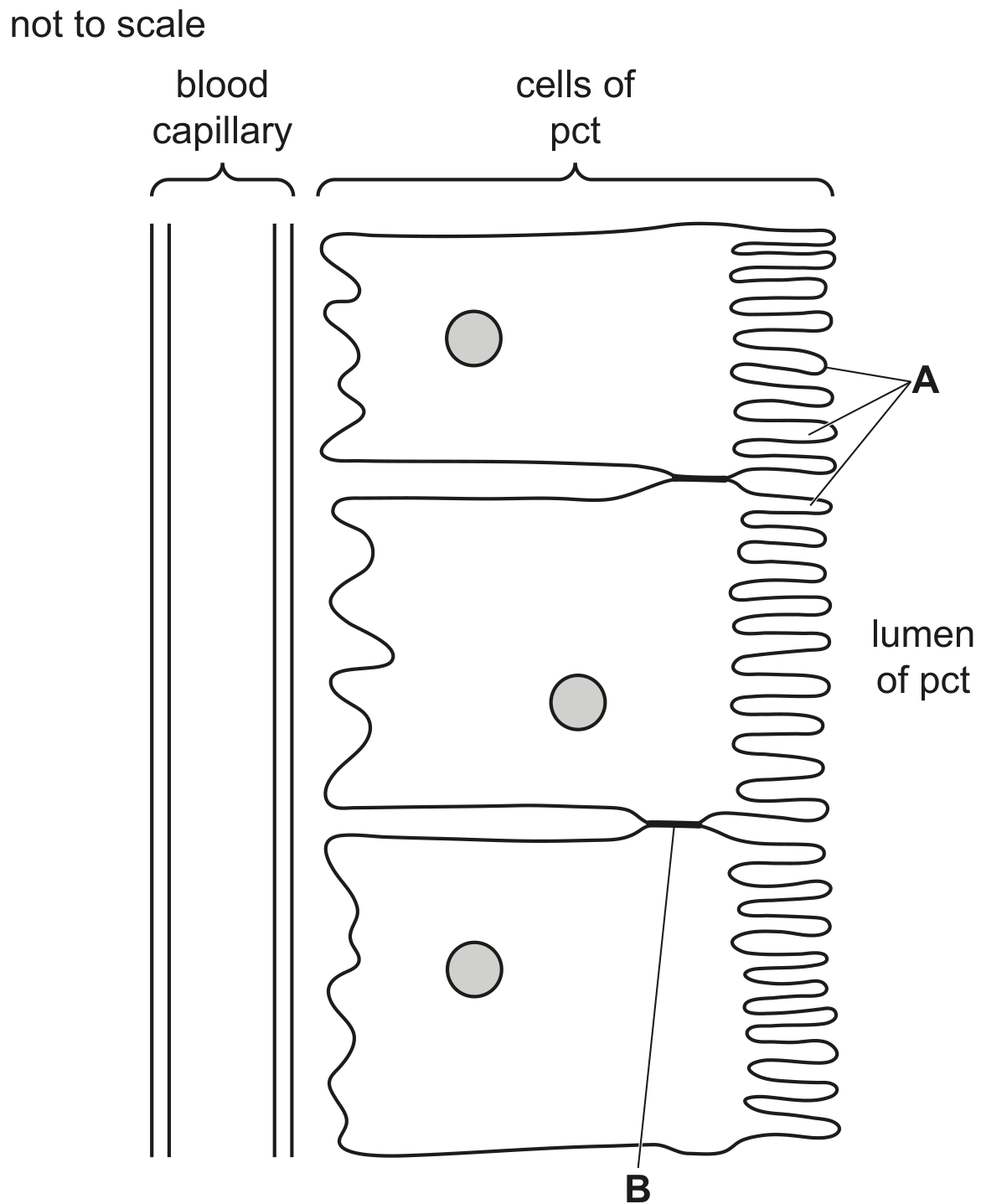
Fig. 1.1
On Fig. 1.1:
- use the letter C with a label line to show where co-transport of glucose with sodium ions occurs
- use the letter D with a label line to show where active transport of sodium ions occurs.