2.2.8—Intermolecular forces (IMF)
- Syllabus
- First assessment 2025
- Objective
- 2.2.8
- Level
- SL
| Force | Evidence used to identify it |
|---|---|
| London dispersion | Present; increases with molecular size and electron count |
| Dipole-induced dipole | A permanent dipole induces a dipole in a neighbour |
| Dipole-dipole | Permanent dipoles attract |
| Hydrogen bonding | Hydrogen bonded to a strongly electronegative atom creates the required interaction |
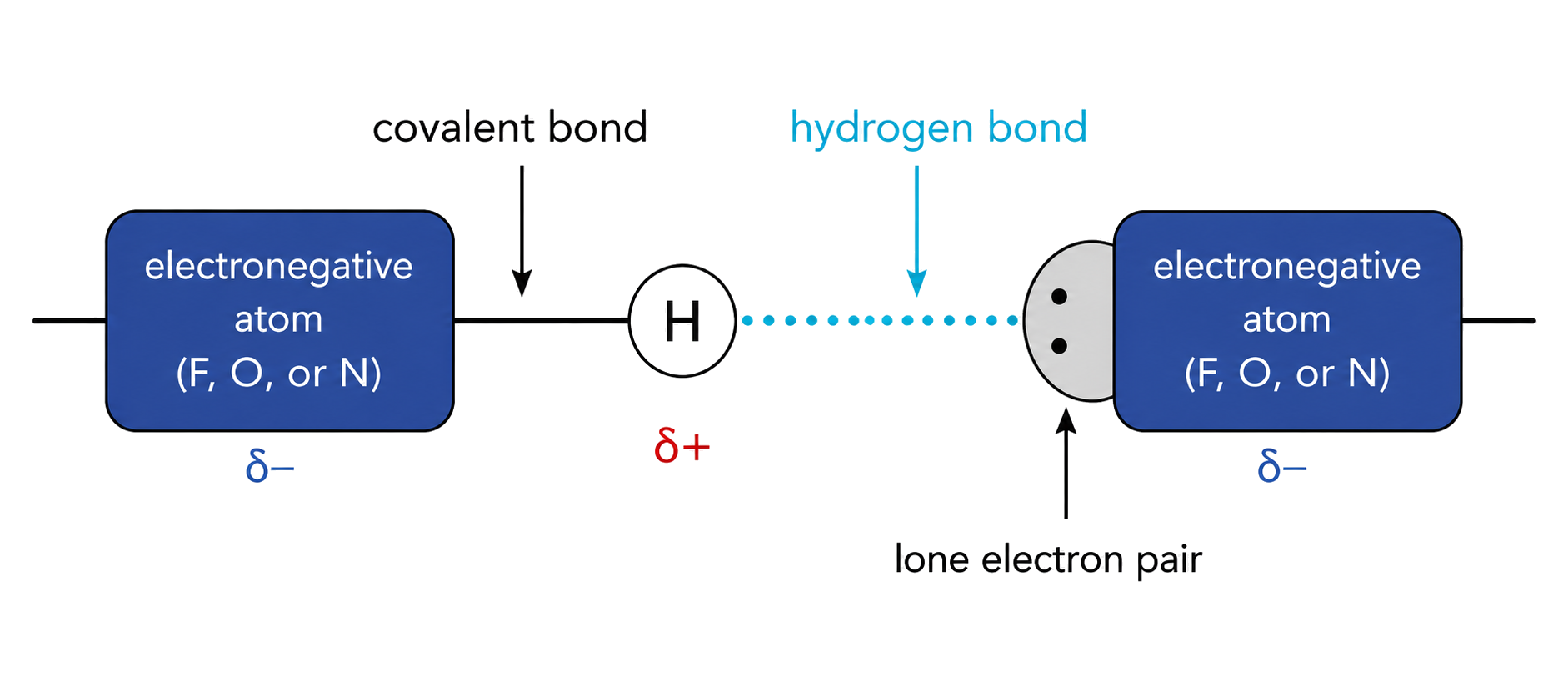
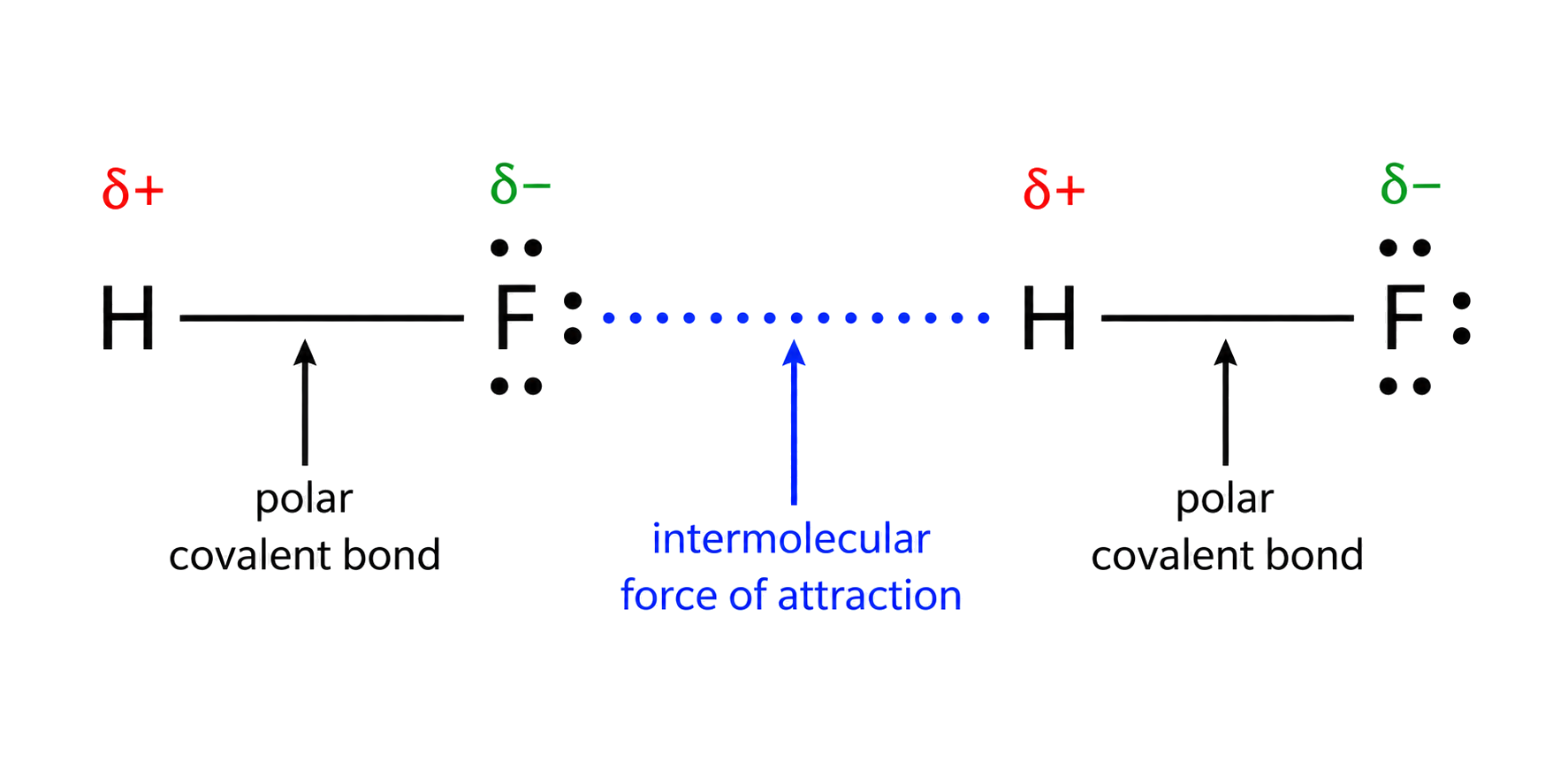
Start with molecular size and polarity, then check for the structural requirement for hydrogen bonding. More than one IMF can be present.
All molecules have London dispersion forces. Add permanent dipole–dipole attraction when a net molecular dipole exists, and add hydrogen bonding only when the required H–N, H–O or H–F environment and an acceptor lone pair are present. Name every relevant force before deciding which dominates.