2.2.4—VSEPR model
- Syllabus
- First assessment 2025
- Objective
- 2.2.4
- Level
- SL
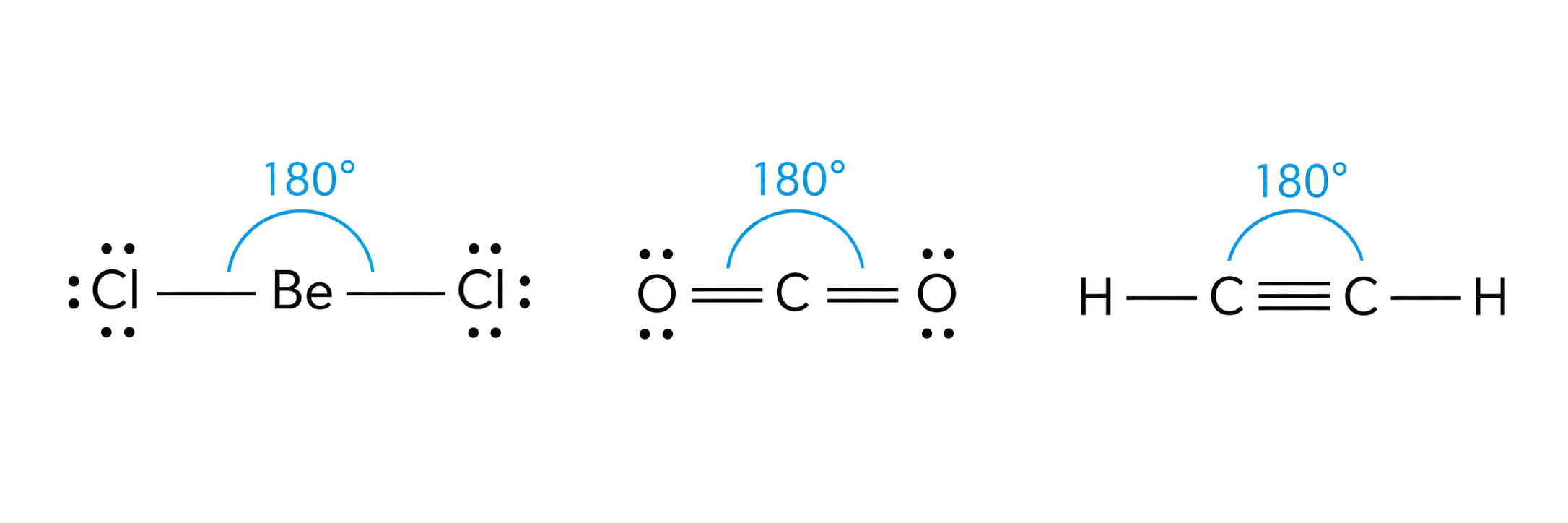
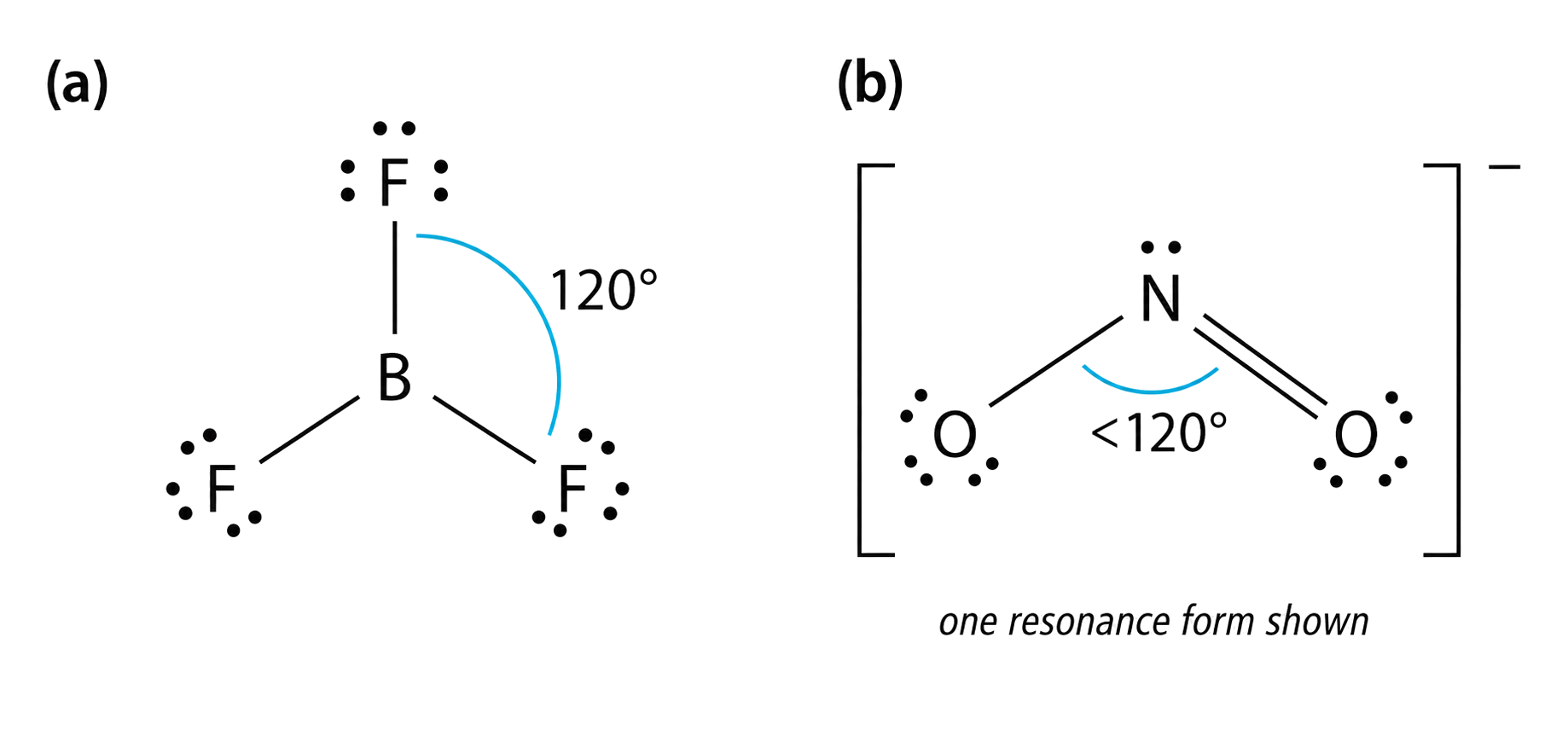
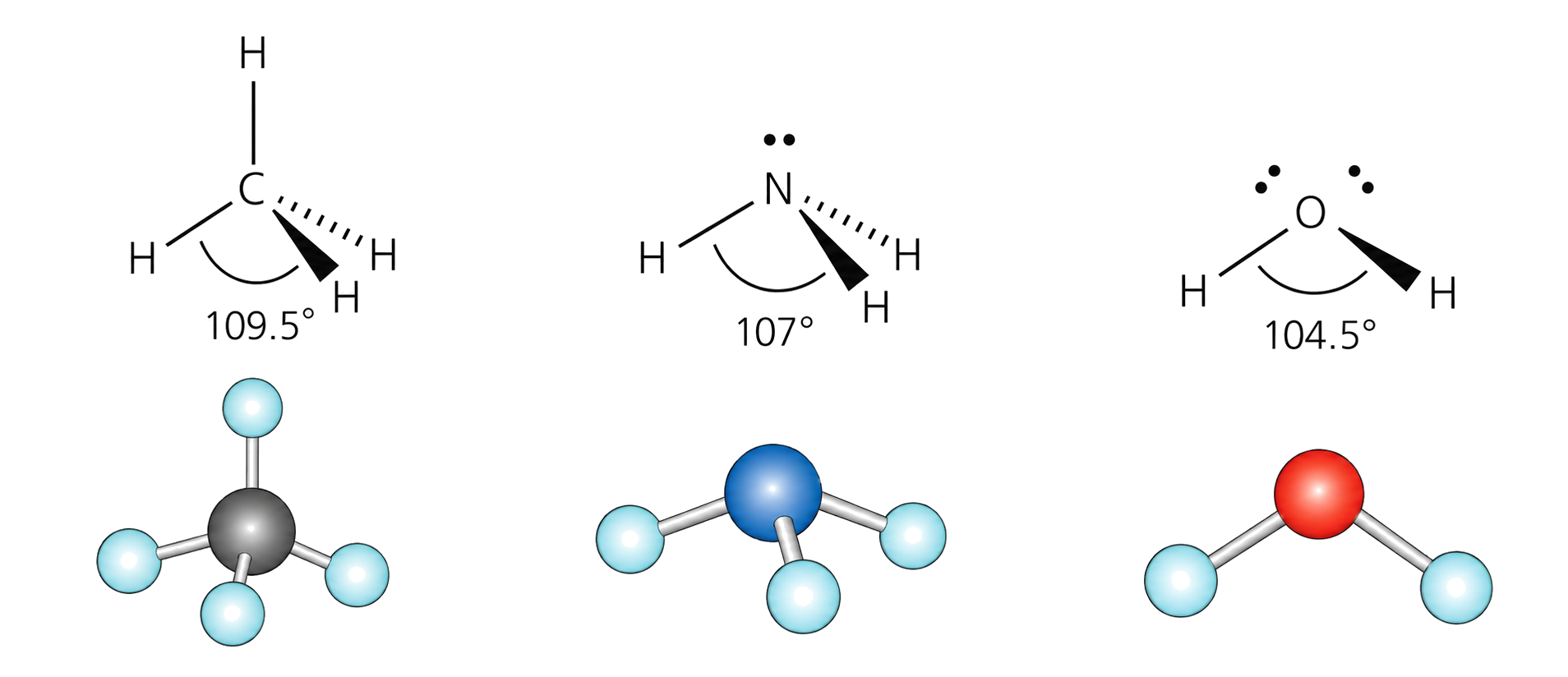
VSEPR predicts molecular shape by arranging electron domains around a central atom to minimize repulsion. Lone pairs repel more strongly than bonding pairs and therefore alter common bond angles.
| Step | Decision |
|---|---|
| 1 | Count bonding and lone-pair electron domains |
| 2 | Assign electron-domain geometry |
| 3 | Ignore lone pairs when naming molecular geometry |
| 4 | Adjust expected bond angles for lone-pair repulsion |
NH₃ has four electron domains around N, so its electron-domain geometry is tetrahedral but its molecular shape is trigonal pyramidal; the lone pair compresses the H–N–H angle below 109.5°. Count a double bond as one domain and distinguish electron geometry from the shape named using atoms only.