2.2.3—Coordination bonds
- Syllabus
- First assessment 2025
- Objective
- 2.2.3
- Level
- SL
In a coordination bond, both electrons in the shared pair come from the same atom. The bond can be represented by an arrow from the electron-pair donor to the acceptor.
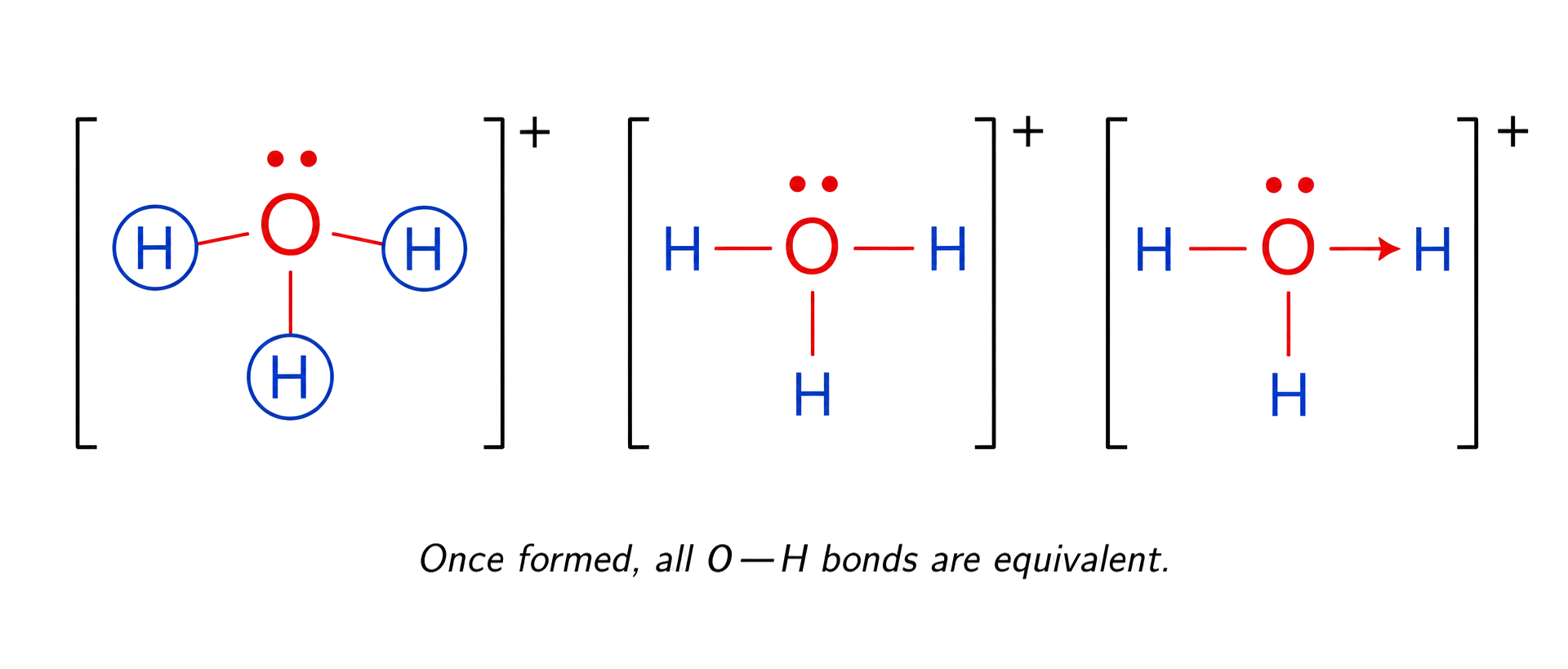
Identify the donor atom or ligand and the acceptor, including coordination bonds in transition-element complexes at HL.
In NH₃→BF₃ the nitrogen lone pair supplies both bonding electrons, so the arrow starts at N and ends at B. The arrow records how the pair originated; after formation it is a shared covalent pair, and in a complex the same donor logic identifies each ligand–metal bond.