Q BankQuestion BankDocsDocuments

B4.1.6—Terrestrial biome distribution

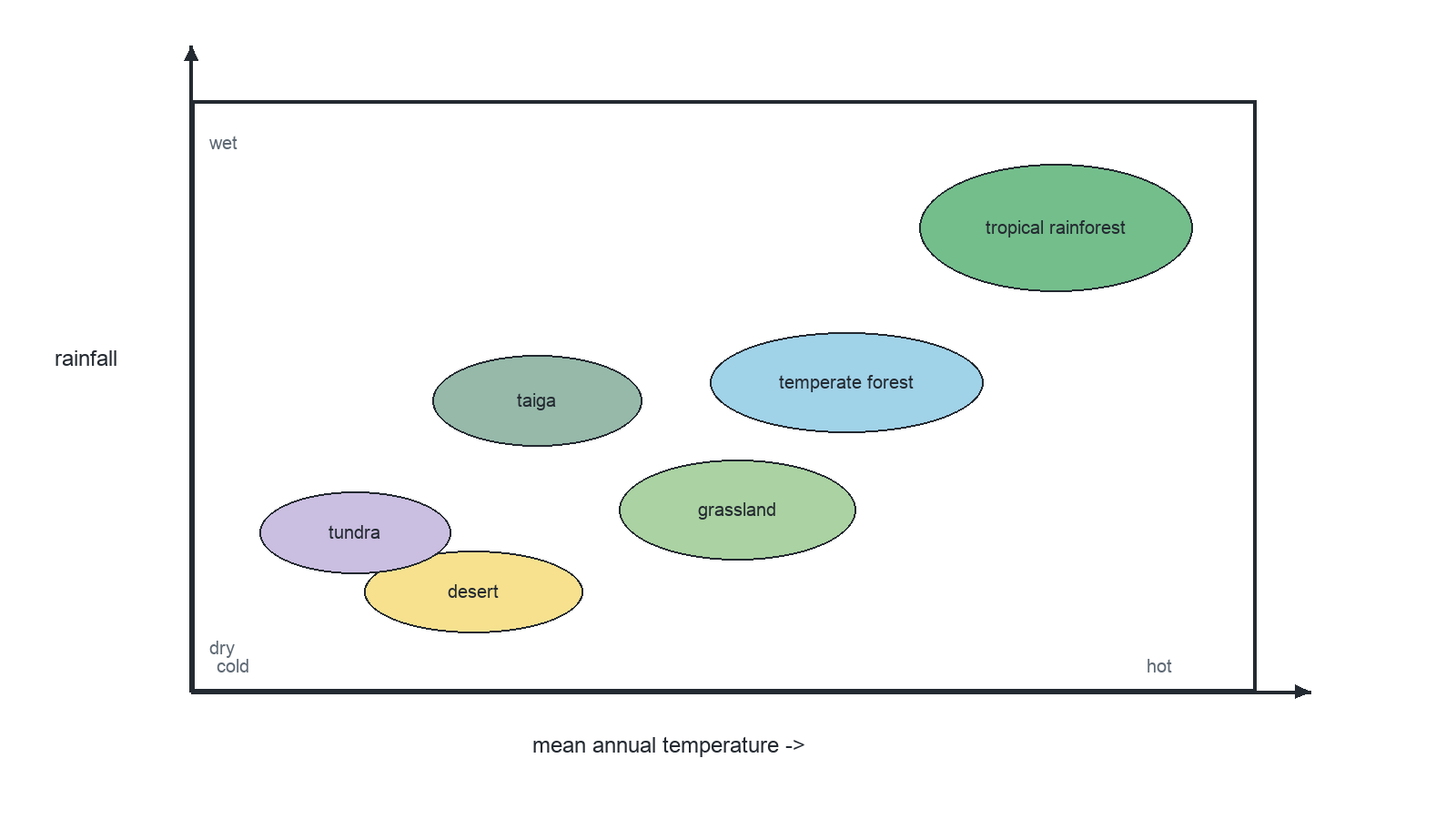
Terrestrial biome distribution is predicted mainly from temperature, rainfall and insolation, which shape productivity, vegetation and seasonal ecosystem patterns globally.

Syllabus
First assessment 2025
Objective
B4.1.6
Level
SL

Exam analysis

Chance of appearing5%of analysed past papers
Latest appearanceMay 2025
Most common paperPaper3
Typical marks1–3

Common command terms

  • Outline
  • Identify
  • Suggest
  • State

Scoring notes

Common mistake
Identifying a biome from one climate variable while ignoring rainfall-temperature combinations.

Recent exam appearances

May 2025Paper1A ["SL"] · TZ324[ 1 ]B4.1.6—Terrestrial biome distribution
November 2024Paper3 ["SL"] · TZ215(a)(ii)[ 1 ]B4.1.6—Terrestrial biome distribution
November 2024Paper3 ["SL"] · TZ215(a)(i)[ 1 ]B4.1.6—Terrestrial biome distribution
May 2024Paper3 ["SL"] · TZ212(b)[ 1 ]B4.1.6—Terrestrial biome distribution
November 2016Paper3 ["SL"] · TZ012(a)[ 2 ]B4.1.6—Terrestrial biome distribution
Practice this objective

Coverage 2010–2025 · Updated 15 Jul 2026

Concept essentials

  • Temperature and rainfall are major predictors of terrestrial biomes.
  • Water availability strongly affects productivity and vegetation structure.
  • Latitude and seasonality influence insolation, daylength and growing season.
  • Climographs can be used to identify biome types from climate data.
ConceptIB Biology SL