B3.1 Gas exchange
Gas exchange links animal ventilation, alveolar diffusion, leaf stomata, transpiration and haemoglobin affinity to oxygen supply and carbon dioxide removal.
- Syllabus
- First assessment 2025
- Topic
- B3.1
- Level
- SL
Gas exchange links animal ventilation, alveolar diffusion, leaf stomata, transpiration and haemoglobin affinity to oxygen supply and carbon dioxide removal.
Fick’s law predicts faster gas transfer with greater surface area and partial-pressure difference, and with a thinner diffusion barrier. A moist, permeable surface lets gases dissolve before crossing.
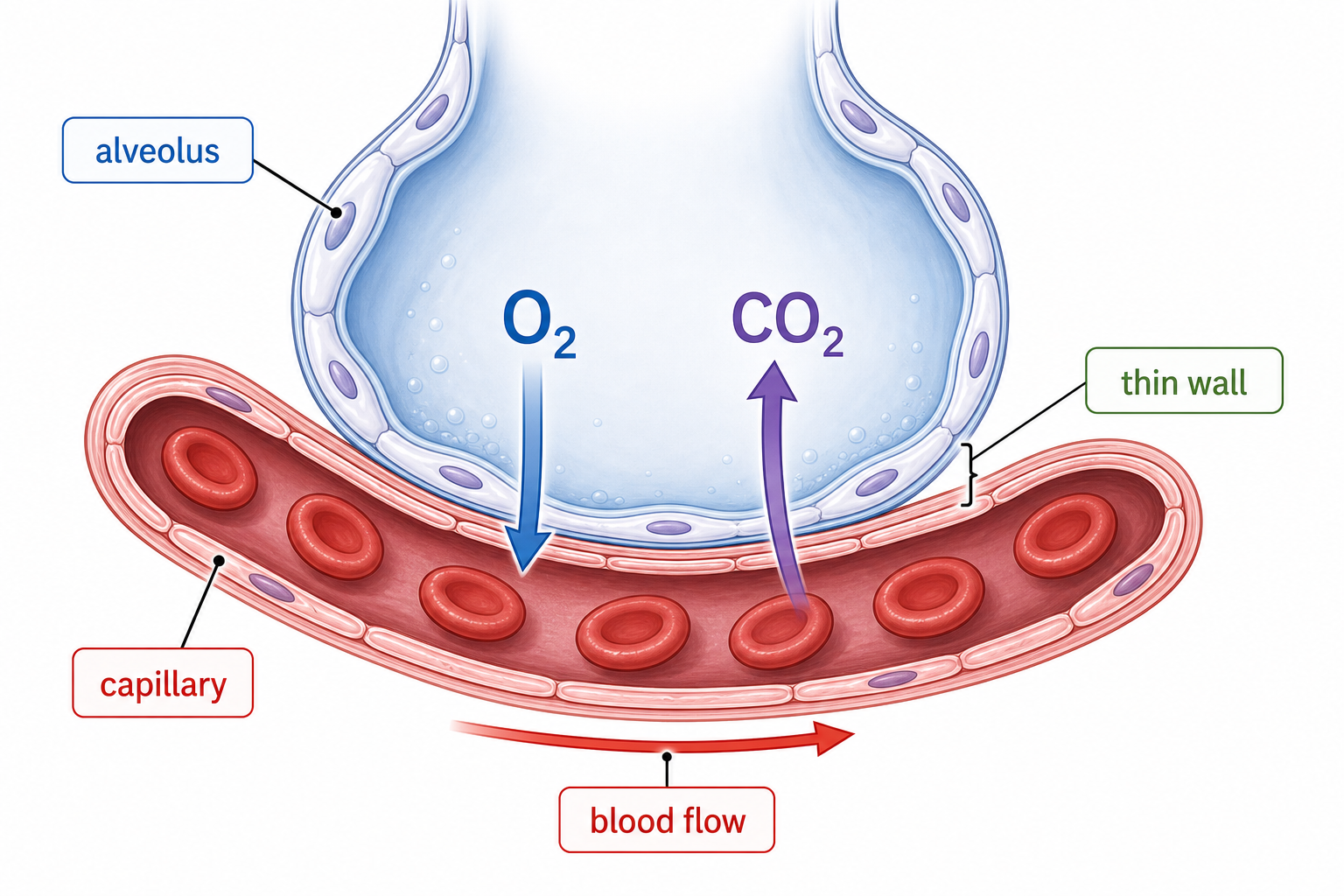
For every claimed adaptation, name the changed variable: area, gradient, distance or permeability. Then connect it to faster O₂ or CO₂ diffusion.
Air moves because thoracic volume changes alter lung pressure. Inspiration is active: diaphragm and external intercostals contract, increasing volume and lowering pressure below atmospheric.
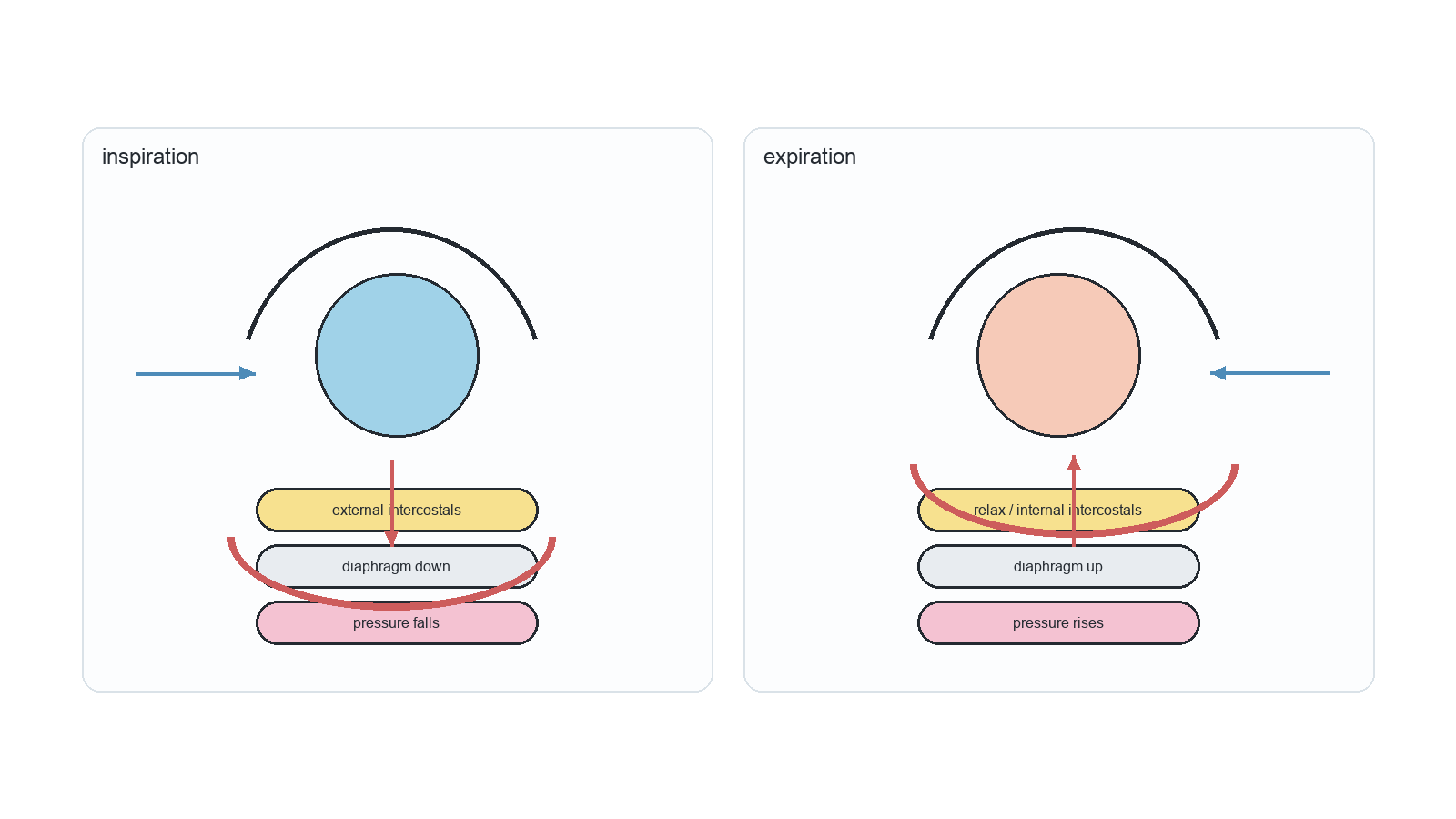
inspiration: muscles contract → thorax expands → pressure falls → air enters
quiet expiration: muscles relax + elastic recoil → volume falls → pressure rises → air leaves
CO₂ enters and water vapour exits mainly through stomata. Guard cells change pore width, balancing photosynthetic demand against dehydration risk.
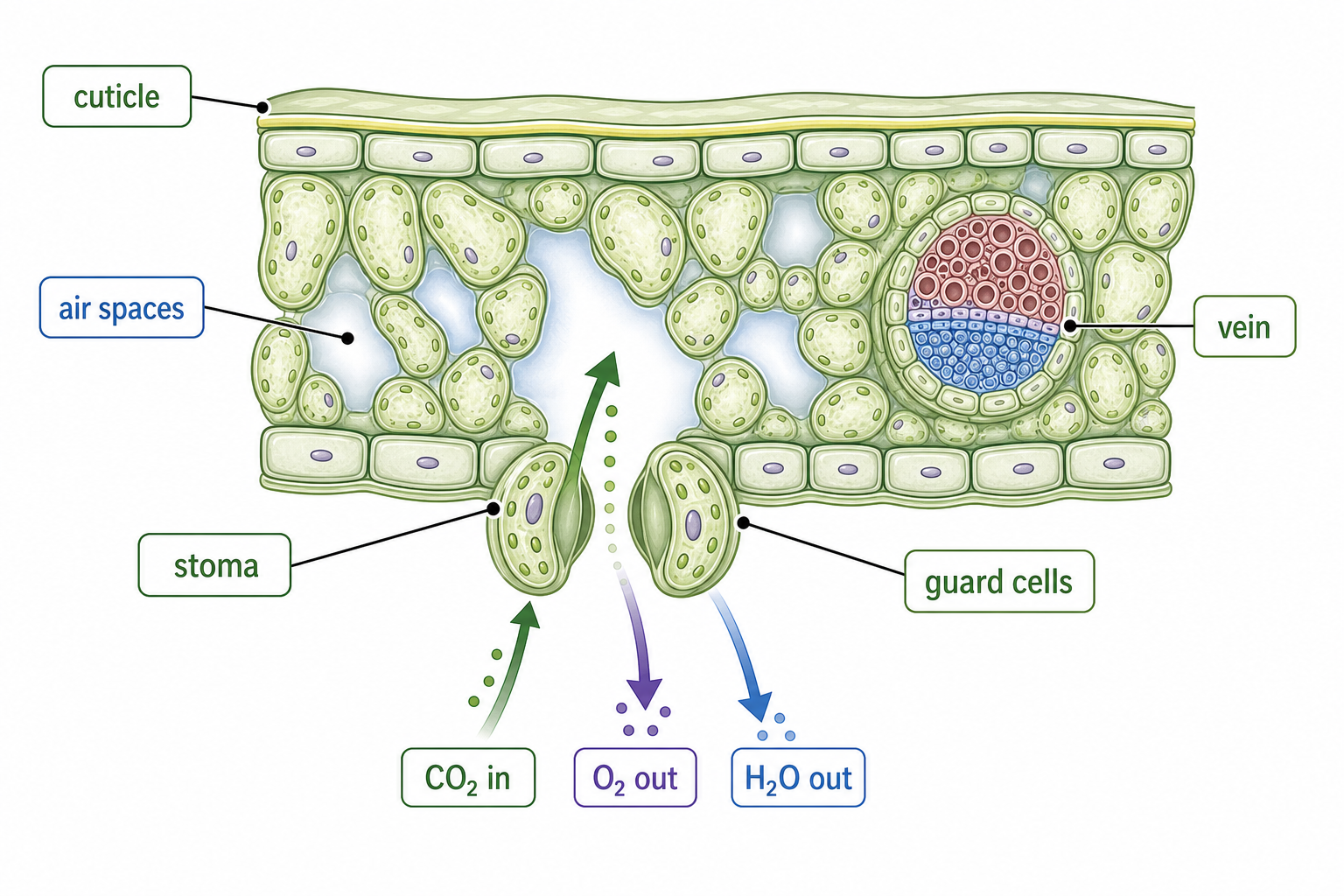
CO₂: atmosphere → stoma → substomatal air space → moist mesophyll wall → photosynthetic cell
H₂O: xylem → mesophyll wall → evaporation → air spaces → diffusion through stoma
Leaf tissue distribution places palisade cells near light, spongy mesophyll beside interconnected air spaces, stomata in epidermis and vascular bundles within diffusion range of cells.
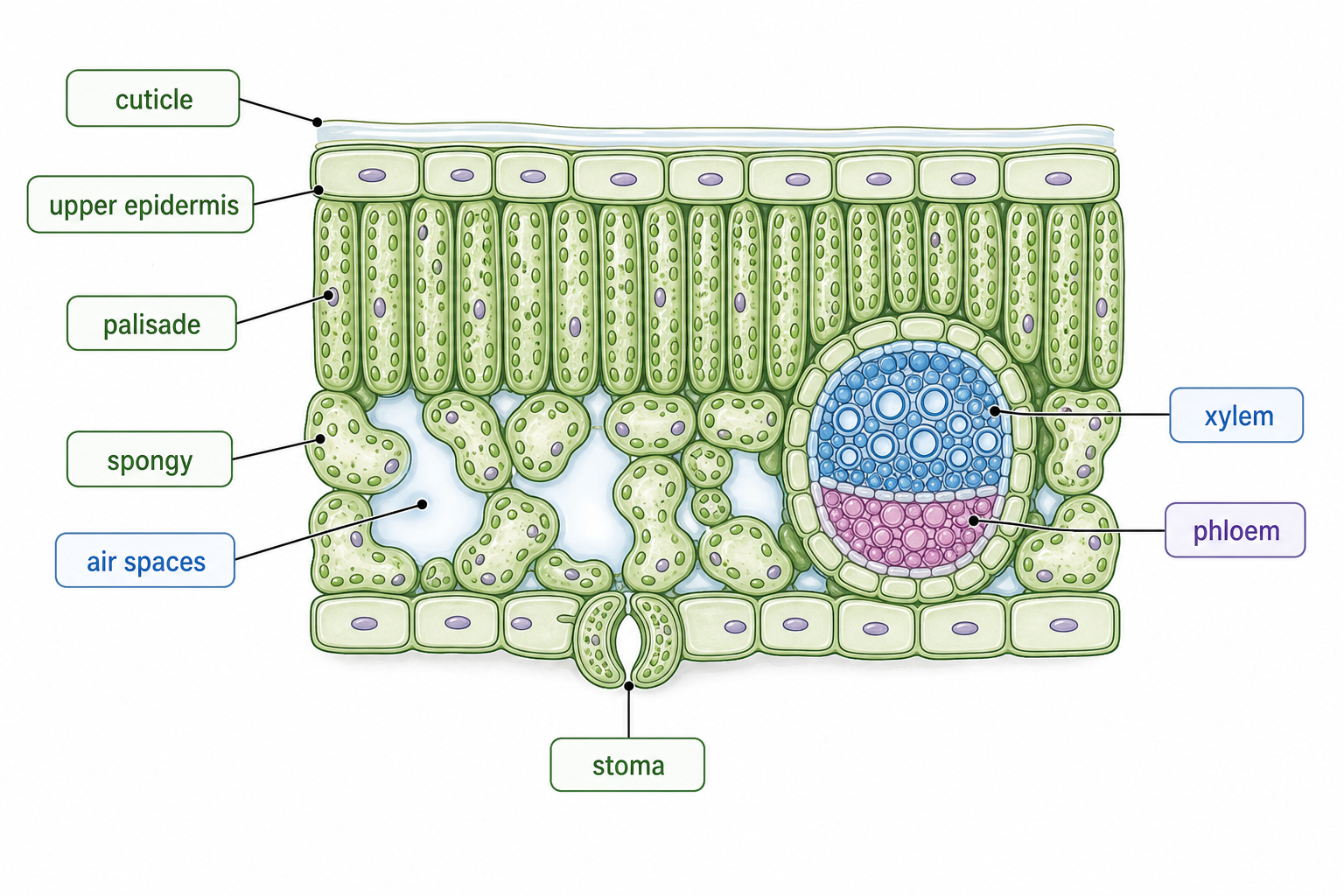
upper epidermis/cuticle → light entry + water conservation
palisade → chloroplast-rich light capture
spongy mesophyll → moist exchange area + air spaces
xylem/phloem → water supply + assimilate export
Stomatal density = number of stomata counted ÷ sampled epidermal area. It estimates potential pore abundance, while aperture determines how open those pores are at a given moment.

clear nail-varnish impression → peel and mount → calibrate field area → count stomata in random fields → calculate each density → repeat and report variation