Q BankQuestion BankDocsDocuments

B2.2 Organelles and compartmentalization

Organelles and compartmentalization explain how eukaryotic cells divide work among specialized structures, controlled internal spaces, and directed vesicle transport routes.

Syllabus
First assessment 2025
Topic
B2.2
Level
SL

Organelles as functional compartments

Cell compartment overview.

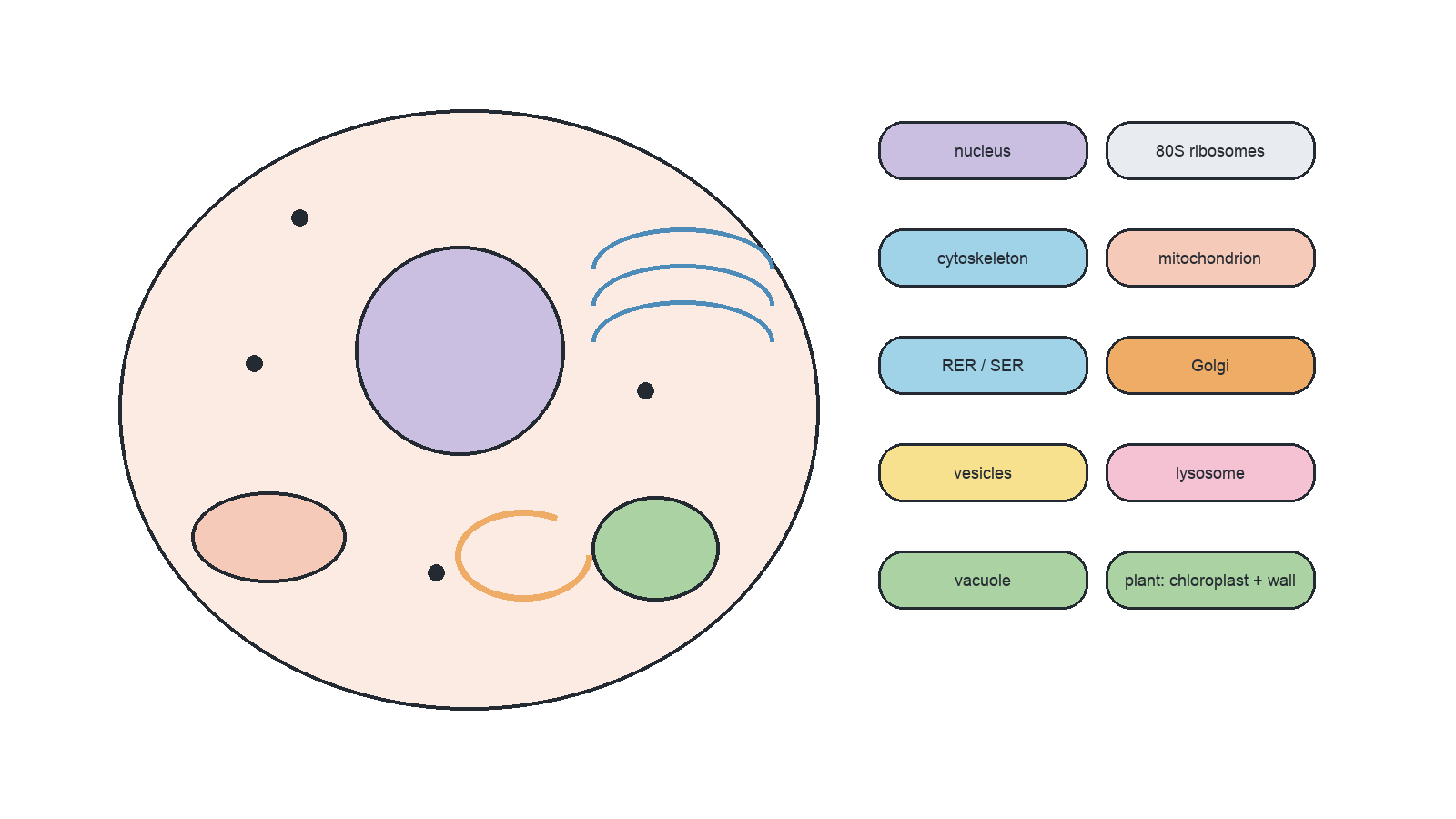
An organelle is a discrete subunit of a cell adapted to perform a specific function. In the IB Biology scope, nuclei, chloroplasts, mitochondria, endoplasmic reticulum, Golgi apparatus, vesicles, ribosomes and the plasma membrane are treated as organelles; the cell wall, cytoskeleton and cytoplasm are not. Compartmentalization allows enzymes and substrates to be concentrated, suitable conditions to be maintained and incompatible reactions to be separated. Cell fractionation using ultracentrifugation made it possible to study organelles individually.

  • Organelles are discrete cell subunits adapted for specific functions.
  • Nuclei, vesicles, ribosomes and the plasma membrane count as organelles in this syllabus.
  • Cell wall, cytoskeleton and cytoplasm are not classified as organelles here.
  • Compartments concentrate reactants, maintain conditions and separate incompatible reactions.

Organelles as discrete subunits

Assessment in practice

1–2 marks
How it is assessed

This objective is assessed through structured response, commonly using Identify / State / Describe.

Command terms

Identify / State / Describe

What earns marks

Build the answer around this relationship: Organelles are discrete cell subunits adapted for specific functions.

Watch for

Giving an unqualified name such as Golgi when the evidence requires Golgi apparatus, complex, or body.

Representative question

Question 1

[Maximum number: 7]

Describe the organelles and other structures in animal cells that are visible in electron micrographs.

The Nucleus Separates Gene Expression Stages

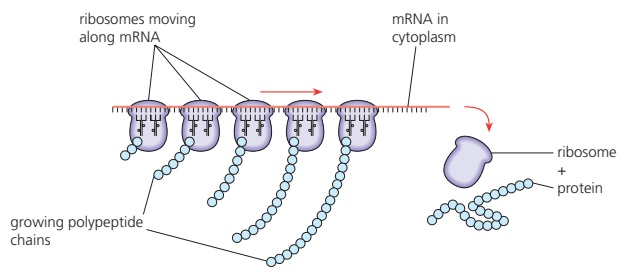
The nucleus keeps DNA and transcription separate from cytoplasmic translation, allowing RNA to be processed before it reaches ribosomes.

DNA remains protected while transcription occurs inside the nuclear compartment. Messenger RNA can then be modified and exported through pores, adding control between making RNA and making protein.

Trace the route: DNA transcription in nucleus; RNA processing and export; translation on cytoplasmic ribosomes.

A newly transcribed mRNA is processed in the nucleus before a ribosome translates it in the cytoplasm.

The nucleus does not make protein itself; it separates transcription from translation.

Advantages of compartmentalization

Assessment in practice

4 marks
How it is assessed

This objective is assessed through essay response, commonly using Discuss.

Command terms

Discuss

What earns marks

Build the answer around this relationship: Internal membranes divide eukaryotic cells into functional compartments.

Representative question

Question 1

[Maximum number: 4]

Discuss the use of membranes for compartmentalization in eukaryotic cells.

SL Transfer: Explain Why Compartments Matter

A strong answer does not say only “organelles make cells efficient.” It gives a concrete reason: compartments concentrate enzymes and substrates, maintain suitable pH, separate incompatible reactions, and let the nucleus process RNA before translation.

  • For compartmentalization, name the controlled condition or separated process.
  • For the nucleus, say transcription and RNA processing happen before cytoplasmic translation.
  • For organelle classification, use discrete functional subunit.
ConceptIB Biology SL