B1.1 Carbohydrates and lipids

Carbohydrates and lipids connect carbon chemistry, condensation and hydrolysis reactions, molecular structure, solubility, membrane formation, and energy storage functions in organisms.

Syllabus
First assessment 2025
Topic
B1.1
Level
SL

Carbon's Four Bonds Create Biological Variety

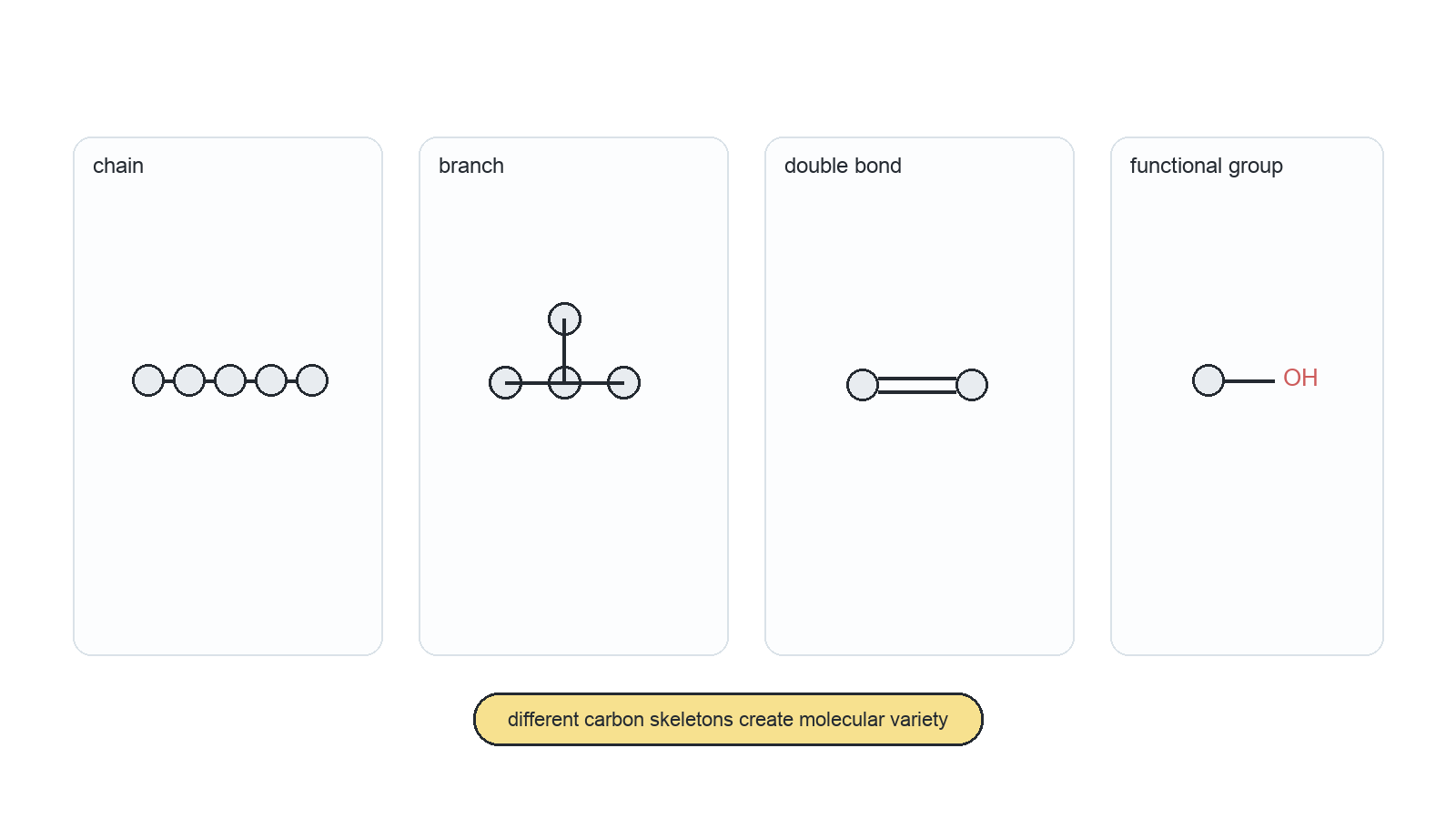
Carbon is central to biological molecules because one carbon atom can form four covalent bonds, allowing stable chains, branches and rings.

Its four outer-shell electrons can be shared with carbon, hydrogen, oxygen, nitrogen or sulfur. Changing the carbon skeleton or attached groups changes shape and chemical behaviour, so structure can produce different biological functions.

Useful consequences:

  • carbon atoms link into chains, branches and rings
  • single and double bonds change shape and reactivity
  • large molecules can contain many different carbon arrangements

Glycogen and cellulose both contain glucose units, but their bonding arrangement gives glycogen a compact storage form and cellulose strong fibres.

Four bonds explain carbon's versatility; they do not make every carbon compound chemically identical. Always connect the particular structure to the claimed function.

Carbon atom properties

Assessment in practice

1–4 marks
How it is assessed

This objective is assessed through structured response, commonly using Outline / Identify.

Command terms

Outline / Identify

What earns marks

Build the answer around this relationship: Carbon can form four covalent bonds with carbon and other non-metal elements.

Representative question

Question 1

[Maximum number: 4]

Outline the chemical properties of carbon that allow it to form diverse compounds.

Condensation Builds Macromolecules

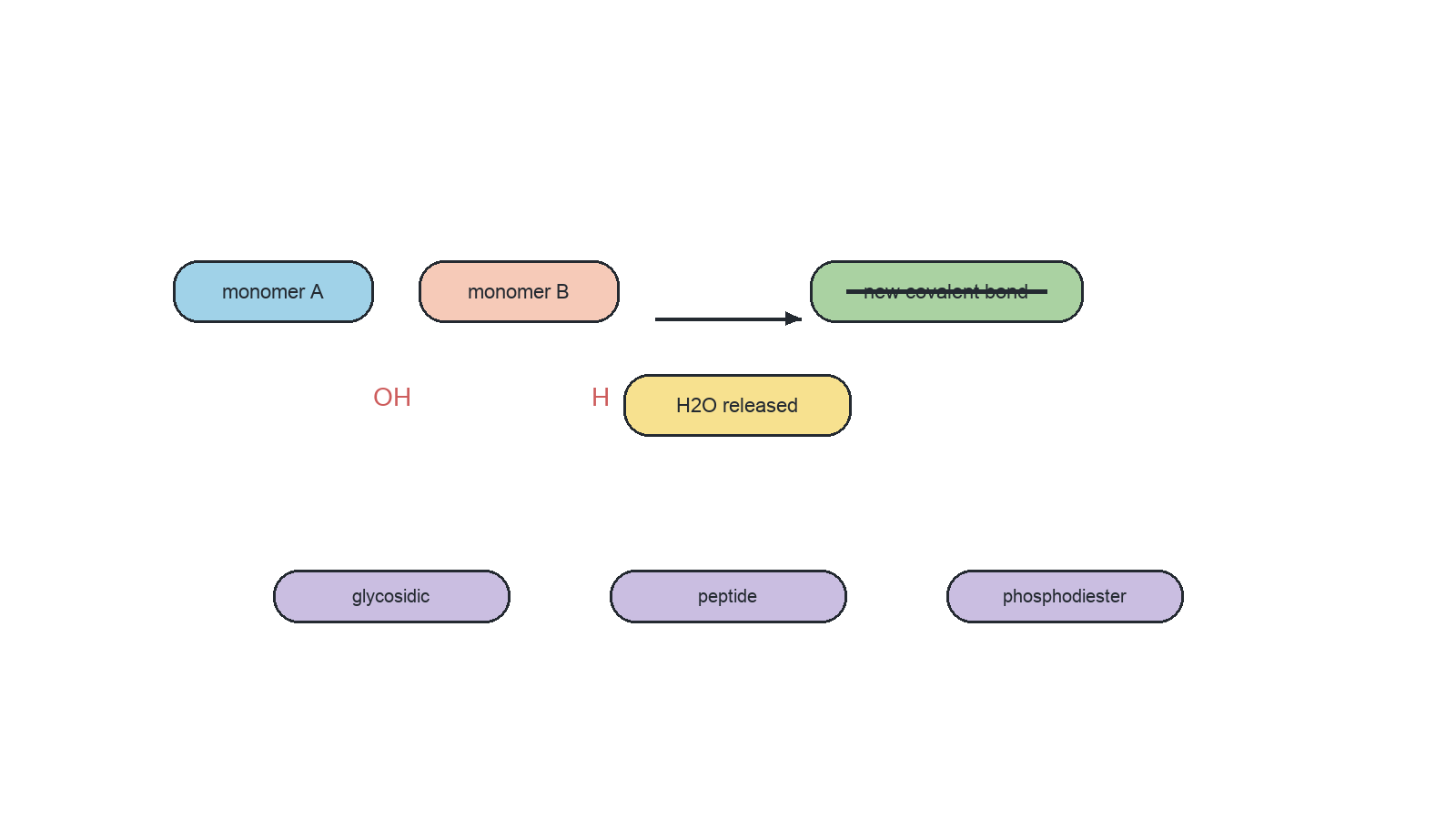
A condensation reaction links monomers with a new covalent bond while an H and an OH are removed to form water.

Repeating condensation builds macromolecules: monosaccharides form polysaccharides through glycosidic bonds, amino acids form polypeptides through peptide bonds, and nucleotides form nucleic acids through phosphodiester bonds.

For each step identify the two reacting groups, the new covalent bond and the water released. Polymerization repeats the same bond-forming logic many times, although not every biological macromolecule is a polymer.

When two monosaccharides condense, one supplies H and the other OH; water is released and the remaining atoms are joined by a glycosidic bond.

Condensation is not merely mixing monomers. A covalent bond must form and water must be produced; hydrolysis is the reverse bond-breaking reaction.

Macromolecules by condensation

Assessment in practice

1 marks
How it is assessed

This objective is assessed through structured response, commonly using Outline / State / Identify.

Command terms

Outline / State / Identify

What earns marks

Build the answer around this relationship: Condensation reactions build larger molecules from smaller subunits.

Watch for

Reversing condensation and hydrolysis in reaction equations.

Representative question

Question 1

[Maximum number: 5]

Outline the production of a dipeptide by a condensation reaction, showing the structure of a generalized dipeptide.

Hydrolysis Splits Biological Polymers

Hydrolysis breaks a covalent bond in a larger biological molecule by using water.

The water molecule separates into H and OH, which attach to the two products. This reverses the bond-forming logic of condensation and lets digestive enzymes release absorbable smaller molecules.

Trace the reaction as:

  • water enters the reaction
  • a polymer bond is cleaved
  • H and OH cap the two products

Hydrolysing a disaccharide produces two monosaccharides: one receives H and the other OH. The products are smaller than the starting molecule and can be transported for metabolism.

Hydrolysis is not the same as physically dissolving a food. It changes a covalent bond; water alone may be present, but enzymes usually control the biological rate.

Digestion by hydrolysis

Assessment in practice

1–3 marks
How it is assessed

This objective is assessed through structured response, commonly using State / Outline / Describe.

Command terms

State / Outline / Describe / Explain / Identify

What earns marks

Build the answer around this relationship: Hydrolysis breaks covalent bonds by adding water.

Watch for

Confusing hydrolysis with condensation when identifying reaction type.

Representative question

Question 1

[Maximum number: 6]

Describe the importance of hydrolysis in digestion.

Recognize Monosaccharides and Explain Glucose Function

Monosaccharides are single sugar units. Pentoses such as ribose have five carbon atoms, whereas hexoses such as glucose have six; both can be recognized in ring-form molecular diagrams.

Glucose is polar enough to dissolve in water, so it can be transported in blood or plant sap. It is chemically stable enough for transport yet can be oxidized directly in respiration to release usable energy.

Alpha- and beta-glucose have the same formula but differ in the orientation of the hydroxyl group at carbon 1. That small structural difference determines which glycosidic bonds and polysaccharide shapes they can form.

A glucose molecule can move in an aqueous transport fluid and then enter respiratory pathways; many alpha-glucose units can also be condensed into starch or glycogen for storage.

Do not identify a monosaccharide from the word 'sugar' alone. Use carbon number and ring structure, and do not assume molecules with the same formula have the same arrangement or role.

Form and function of monosaccharides

Assessment in practice

1–3 marks
How it is assessed

This objective is assessed through structured response, commonly using State / Draw / Identify.

Command terms

State / Draw / Identify / Outline

What earns marks

Build the answer around this relationship: Glucose, fructose, galactose and ribose are monosaccharides.

Watch for

Classifying disaccharides or polysaccharides as monosaccharides.

Representative question

Question 1

[Maximum number: 5]

Outline how the properties of glucose are linked to their uses in organisms.

Polysaccharides Store Glucose Compactly

Starch stores alpha-glucose in plants, while glycogen stores alpha-glucose in animals and fungi. Their large, compact molecules are relatively insoluble and therefore have little osmotic effect.

Starch contains coiled amylose and branched amylopectin; glycogen is more highly branched. Coiling and branching make the stores compact, and branch ends provide many sites where glucose can be added by condensation or removed by hydrolysis.

Feature Starch Glycogen
Main location Plants Animals and fungi
Organization Amylose coils plus branched amylopectin More highly branched polymer
Shared advantage Compact, relatively insoluble and readily mobilized alpha-glucose store Compact, relatively insoluble and readily mobilized alpha-glucose store

Between meals, enzymes can hydrolyze glucose units from many glycogen branch ends at once, allowing rapid mobilization without storing a large pool of osmotically active free glucose.

Cellulose is also a glucose polymer but uses beta-glucose and forms structural fibres; monomer identity alone does not determine function.

Polysaccharides as energy storage

Assessment in practice

1–3 marks
How it is assessed

This objective is assessed through structured response, commonly using Outline / Describe / Distinguish.

Command terms

Outline / Describe / Distinguish / Compare

What earns marks

Build the answer around this relationship: Starch stores glucose energy in plants as amylose and amylopectin.

Watch for

Confusing glycogen with glucagon or glucose.

Representative question

Question 1

[Maximum number: 4]

Outline how and where energy is stored in plants.

Cellulose Fibres Gain Strength from Parallel Chains

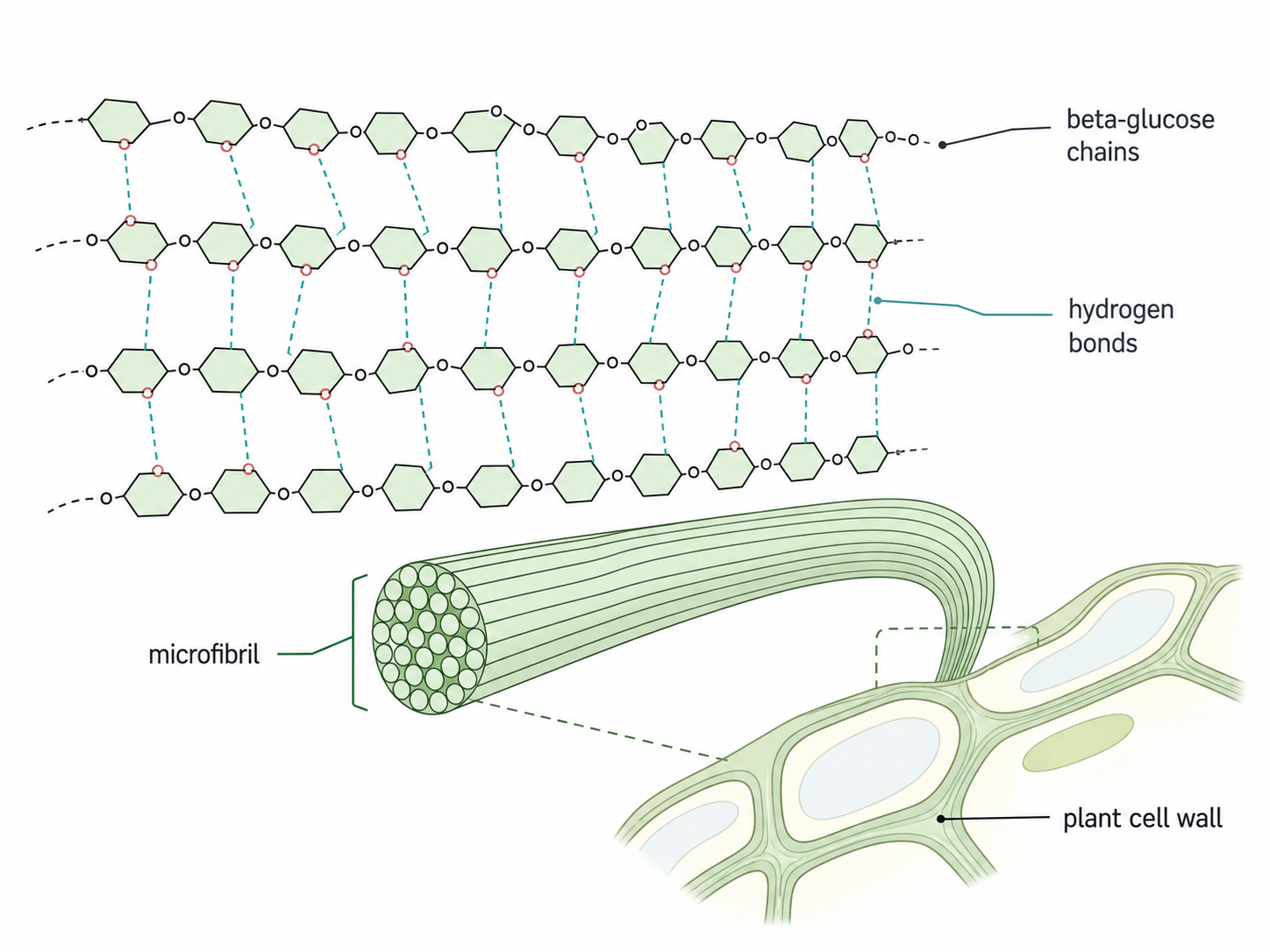
Cellulose is a structural polysaccharide made from beta-glucose joined by beta-1,4 glycosidic bonds. Alternate monomers are inverted, producing straight, unbranched chains.

Straight chains align in parallel. Many hydrogen bonds form between hydroxyl groups on neighbouring chains, cross-linking them into microfibrils and larger fibres with high tensile strength.

Structure-to-function chain: beta-glucose → alternating orientation → straight chains → parallel bundles → many interchain hydrogen bonds → strong plant cell walls.

When water enters a plant cell, the cellulose wall resists stretching, helping prevent excessive expansion while still allowing the cell to remain turgid.

The chains themselves contain covalent glycosidic bonds, but neighbouring cellulose chains are not covalently joined; their collective strength comes largely from many hydrogen bonds.

Cellulose structure and function

Assessment in practice

1–2 marks
How it is assessed

This objective is assessed through structured response, commonly using Label / Describe / Outline.

Command terms

Label / Describe / Outline / Identify

What earns marks

Build the answer around this relationship: Cellulose is made from beta-glucose monomers joined by 1,4 glycosidic bonds.

Watch for

Describing cellulose as branched or made from alpha-glucose.

Representative question

Question 1

[Maximum number: 3]

Describe how cellulose is formed from monosaccharides.

Glycoproteins make cell identity readable

Glycoproteins are membrane proteins with exposed carbohydrate chains whose shapes act as cell-surface identity and recognition markers.

A receptor, antibody or neighbouring cell can bind a matching carbohydrate pattern. This supports self/non-self recognition, cell adhesion and signalling; the membrane anchor presents the marker in the correct location.

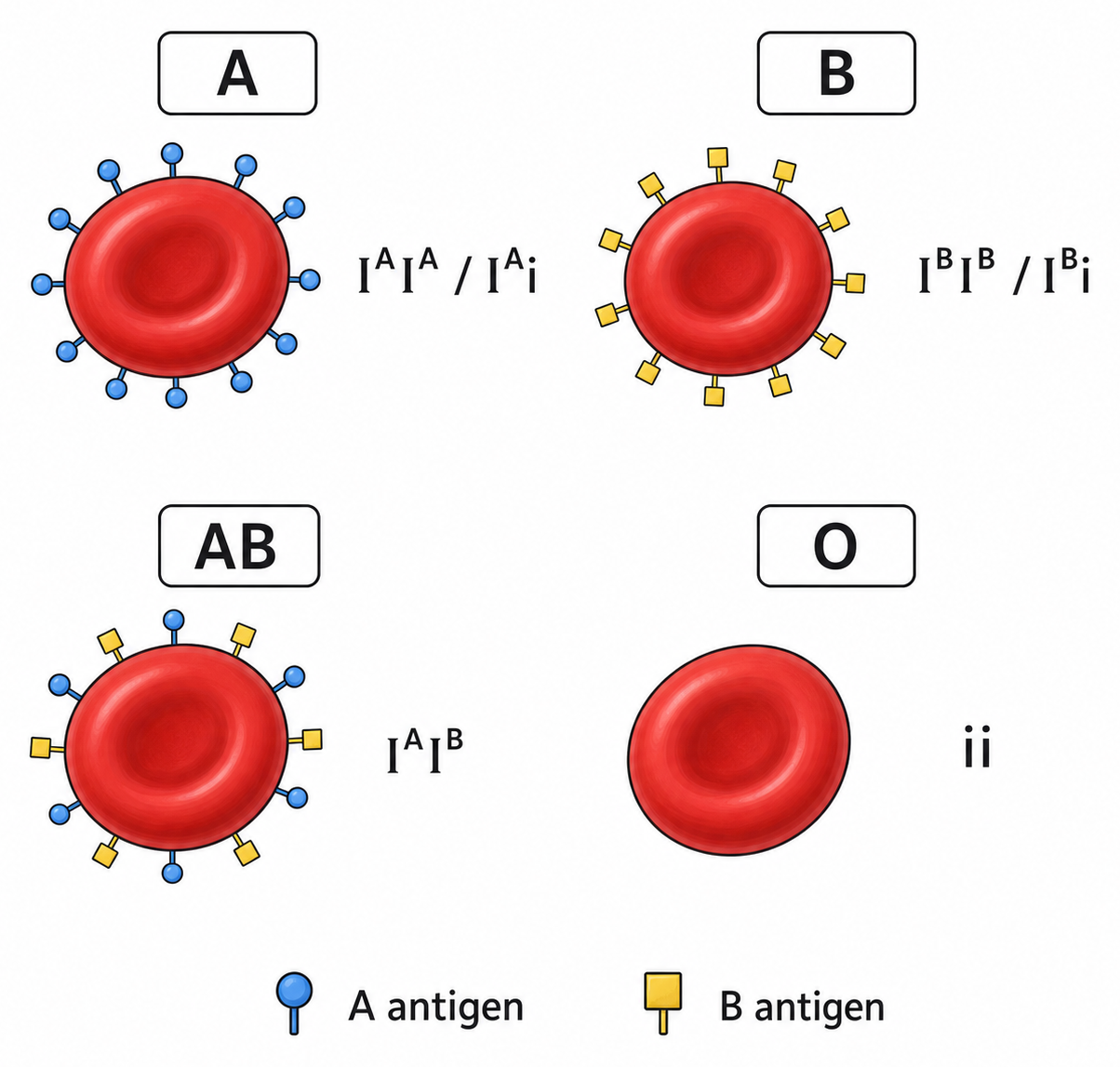
ABO blood-group antigens are cell-surface carbohydrate patterns carried on glycoproteins and glycolipids. Type A and B cells display different terminal sugars; type O lacks those A/B additions, affecting antibody compatibility.

If red cells bearing an unfamiliar A or B antigen meet matching antibodies in incompatible plasma, antibody cross-linking can cause agglutination.

Recognition is specific to molecular shape and a compatible binding partner. Do not describe ABO identity as a free sugar floating outside the cell or as the protein sequence alone.

Non-Polar Lipids Avoid Water

Lipids are hydrophobic substances that dissolve in non-polar solvents but are only sparingly soluble in aqueous solvents.

Their structures contain large non-polar hydrocarbon regions that cannot form favourable interactions with water, so lipids cluster away from water or form separate phases.

Fats, oils, waxes, phospholipids and steroids are lipid examples. Lipids are grouped by solubility and hydrophobic behaviour rather than as one true polymer family built from repeating identical monomers.

Oil forms a separate layer on water but dissolves in a non-polar solvent because substances mix most readily when their intermolecular interactions are compatible.

Hydrophobic does not mean 'contains no oxygen' or 'is repelled by every substance'. Judge the whole molecule's polarity and its interaction with water.

Hydrophobic properties of lipids

Assessment in practice

1–4 marks
How it is assessed

This objective is assessed through multiple choice, commonly using Explain.

Command terms

Explain

What earns marks

Build the answer around this relationship: Lipids are generally hydrophobic because large parts of their molecules are non-polar.

Watch for

Calling oils insoluble without linking this to non-polar hydrocarbon chains and lack of hydrogen bonding.

Representative question

Question 1

[Maximum number: 1]

Which substance must be transported in the blood by lipoprotein complexes?

A

Cholesterol

B

Oxygen

C

Sodium chloride

D

Amino acids

Ester Bonds Assemble Triglycerides and Phospholipids

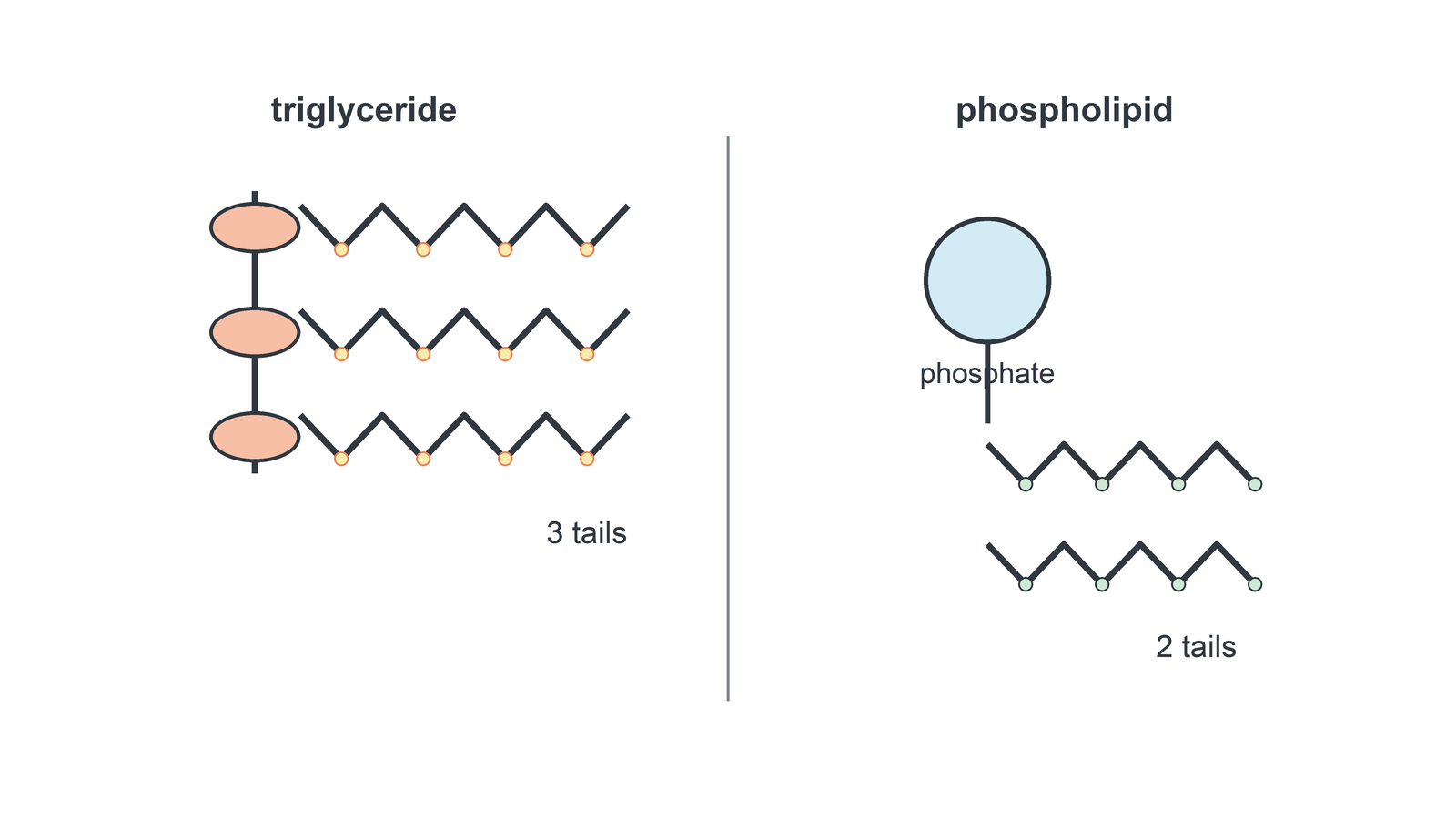
Triglycerides and phospholipids form when glycerol reacts with fatty acids in condensation reactions that create ester bonds.

Each ester bond joins a hydroxyl group of glycerol to a carboxyl group of a fatty acid and releases water. The number and type of attached groups then determine whether the molecule is mainly for storage or membrane structure.

For a synthesis diagram, count:

  • glycerol backbone
  • fatty-acid tails attached
  • ester bonds and water molecules released

Attaching three fatty acids to glycerol forms a triglyceride and releases three water molecules; replacing one tail with a phosphate-containing group gives a phospholipid.

A phospholipid is not simply a triglyceride with fewer tails. Its phosphate-containing head changes polarity and therefore its behaviour in water.

Formation of triglycerides and phospholipids

Assessment in practice

1 marks
How it is assessed

This objective is assessed through structured response, commonly using State / Identify / Describe.

Command terms

State / Identify / Describe

What earns marks

Build the answer around this relationship: Triglycerides contain glycerol joined to three fatty acids.

Watch for

Naming hydrolysis instead of condensation when fatty acids join glycerol.

Representative question

Question 1

[Maximum number: 1]

Identify the molecule that was used to form part Y of the triglyceride.

Fatty-Acid Double Bonds Change Chain Shape

A saturated fatty acid has no carbon-carbon double bonds, a monounsaturated fatty acid has one, and a polyunsaturated fatty acid has more than one.

Cis double bonds introduce bends that prevent close packing and weaken intermolecular attractions, generally lowering melting point. Straight saturated chains pack more tightly and tend to melt at higher temperatures.

Type C=C bonds Packing and usual state
Saturated 0 Straighter, tighter packing; common in solid fats
Monounsaturated 1 One cis kink; lower melting point
Polyunsaturated 2 or more Multiple kinks; often liquid oils

Plants commonly store energy in oils rich in unsaturated fatty acids, which remain fluid at typical plant temperatures; endotherms can store more saturated fats while maintaining body temperature.

Double-bond number is important but not the only influence: chain length and cis/trans geometry also affect packing and melting point.

Fatty acids

Assessment in practice

1–2 marks
How it is assessed

This objective is assessed through structured response, commonly using Outline / State / Draw.

Command terms

Outline / State / Draw / Distinguish / Compare / Identify

What earns marks

Build the answer around this relationship: Saturated fatty acids have no carbon-carbon double bonds in the hydrocarbon chain.

Watch for

Calling saturated fatty acids unsaturated because they contain a carboxyl group.

Representative question

Question 1

[Maximum number: 4]

Distinguish between the structures of the different types of fatty acids in food.

Triglycerides Store Energy Efficiently

Triglycerides in adipose tissue provide concentrated long-term energy storage and thermal insulation.

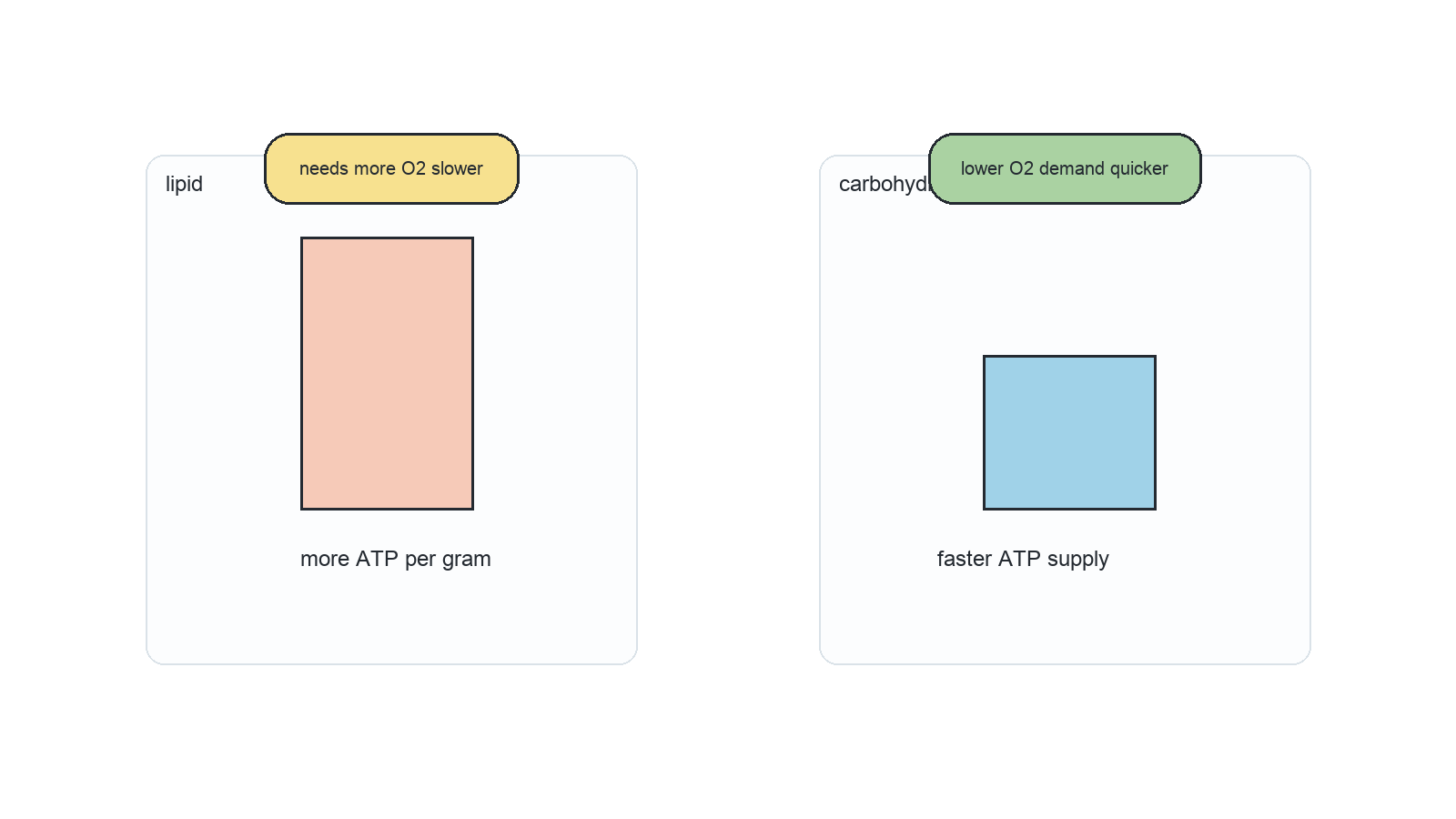
Their many reduced C–H bonds yield more energy per unit mass than carbohydrate when oxidized. Hydrophobic triglycerides are stored without a large hydration shell and have little osmotic effect; oxidation also produces metabolic water.

Adipose tissue beneath the skin slows heat transfer, helping an endotherm maintain a stable body temperature. Thick fat layers are especially useful in cold or aquatic habitats and can also cushion organs or aid buoyancy.

A marine mammal can carry a compact energy reserve in blubber while the same adipose layer reduces heat loss to cold water.

Triglycerides form storage droplets, not bilayers: three hydrophobic tails and no strongly polar phosphate head make them unsuitable as the basic membrane sheet.

Triglycerides functions

Assessment in practice

1–2 marks
How it is assessed

This objective is assessed through structured response, commonly using Explain / Outline / State.

Command terms

Explain / Outline / State

What earns marks

Build the answer around this relationship: Triglycerides store more energy per gram than carbohydrates.

Watch for

Saying lipids are more efficient because they are easier to transport than carbohydrates.

Representative question

Question 1

[Maximum number: 4]

Outline the use of lipids to store energy in humans.

Phospholipids Self-Assemble into Bilayers

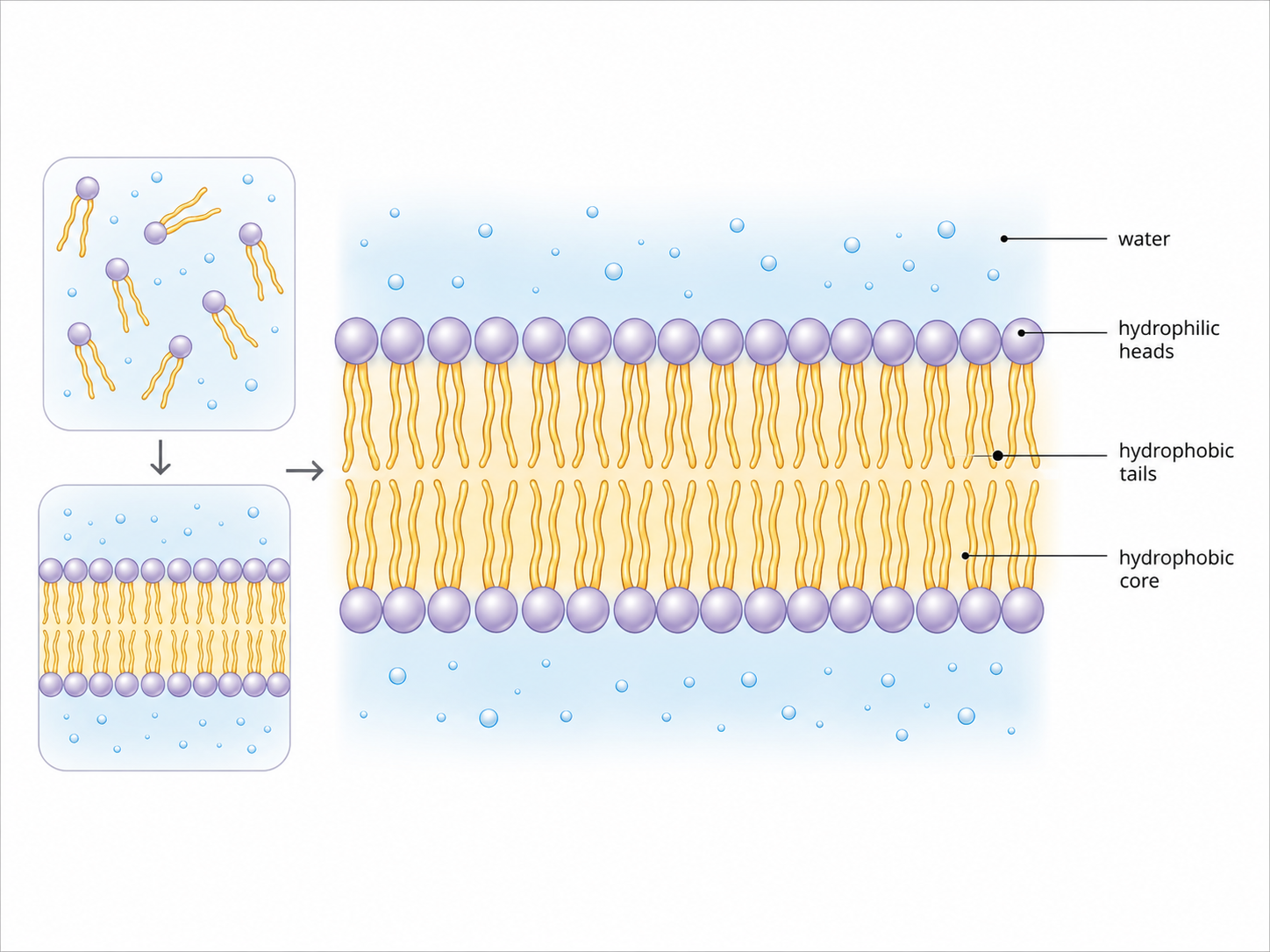
Phospholipids are amphipathic: a polar phosphate-containing head interacts with water while non-polar tails avoid it, so they self-assemble into bilayers.

In water, heads face the aqueous environments and tails pack away from water in the interior. This arrangement creates a flexible hydrophobic barrier that separates compartments while allowing selected molecules to cross.

A bilayer requires:

  • hydrophilic heads facing water
  • hydrophobic tails facing inward
  • a continuous, dynamic sheet rather than a solid wall

In a cell membrane, water contacts both outer and inner head surfaces, while the tail core makes it difficult for many ions and polar molecules to pass without transport proteins.

The bilayer is not formed with tails facing water. Reversing the orientation would expose the least water-compatible part and would not create a stable membrane barrier.

Phospholipid bilayers

Assessment in practice

1–2 marks
How it is assessed

This objective is assessed through structured response, commonly using Outline / Annotate.

Command terms

Outline / Annotate

What earns marks

Build the answer around this relationship: Phospholipid heads are hydrophilic and phosphate-containing.

Watch for

Reversing the hydrophilic phosphate head and hydrophobic fatty-acid tails.

Representative question

Question 1

[Maximum number: 2]

Annotate the diagram to illustrate the amphipathic nature of phospholipids.

Steroids Have a Non-Polar Hydrocarbon Core

Steroids have four fused carbon rings. Mostly non-polar steroids can dissolve in the hydrophobic core of a phospholipid bilayer and diffuse through it.

The fused-ring skeleton is dominated by C–C and C–H bonds, so it interacts more favourably with lipid tails than with water. Attached polar groups modify, but do not necessarily remove, this lipid solubility.

Oestradiol and testosterone are steroid hormones derived from cholesterol. Their bilayer permeability allows them to enter target cells, where their receptors are intracellular rather than exposed only on the cell surface.

A testosterone molecule can partition into the membrane's hydrophobic core, cross the bilayer and bind an intracellular receptor that changes cell activity.

Steroid identifies a four-ring structural family. Not every steroid is completely non-polar, and membrane passage does not mean diffusion is equally rapid for every attached functional group.

Non-polar steroids

Assessment in practice

1 marks
How it is assessed

This objective is assessed through multiple choice, commonly using Identify.

Command terms

Identify

What earns marks

Build the answer around this relationship: Steroids are lipids with four fused carbon rings.

Representative question

Question 1

[Maximum number: 1]

Testosterone is a hormone that is important for male reproductive development.

To which group of compounds does testosterone belong?

A

Nucleotides

B

Carbohydrates

C

Lipids

D

Amino acids

Structure To Function

B1.1 becomes easy when every answer follows structure -> property -> function. Carbon skeletons and functional groups create molecular diversity. Condensation builds larger molecules and hydrolysis breaks them. Alpha-glucose stores energy as starch and glycogen; beta-glucose forms strong cellulose. Surface carbohydrates enable recognition. Lipids are hydrophobic, triglycerides store energy, phospholipids self-assemble into bilayers, and steroids cross membranes because they are mostly non-polar.

  • Carbon bonding and functional groups explain molecular diversity.
  • Condensation releases water; hydrolysis uses water.
  • Carbohydrates can store energy, build cell walls, and mark cell surfaces.
  • Lipids are hydrophobic and not true polymers.
  • Triglycerides store energy; phospholipids form membranes; steroids signal across membranes.

Objective notes

13 learning objectives
B1.1.1Carbon atom properties• Carbon forms four strong covalent bonds with C, H, O, N, S, and P• Carbon skeletons form chains, branches, rings, and single or double bonds• Functional groups give carbon compounds distinctive chemical properties1% of analysed papers 1 paper · 1 questionViewB1.1.2Macromolecules by condensation• Condensation links monomers with covalent bonds and releases water• Polysaccharides, polypeptides, and nucleic acids are polymers made this way• Glycosidic, peptide, and phosphodiester bonds are key examples9% of analysed papers 12 papers · 12 questionsViewB1.1.3Digestion by hydrolysis• Hydrolysis breaks covalent bonds in polymers using water• Water provides -H and -OH groups to form monomers• Amylases, proteases, and nucleases catalyse hydrolysis of major biomolecules11% of analysed papers 16 papers · 16 questionsViewB1.1.4Form and function of monosaccharides• Pentoses such as ribose and hexoses such as glucose are monosaccharides• Glucose is soluble, transportable, chemically stable, and a direct respiratory substrate• Alpha- and beta-glucose differ at carbon 1 and form different polysaccharides6% of analysed papers 9 papers · 9 questionsViewB1.1.5Polysaccharides as energy storage• Starch stores energy in plants as amylose and amylopectin• Glycogen stores energy in animals and fungi and is more highly branched• Insolubility, compactness, and easy hydrolysis make both effective glucose stores6% of analysed papers 9 papers · 9 questionsViewB1.1.6Cellulose structure and function• Cellulose is made from beta-glucose joined by 1,4 glycosidic bonds• Alternating glucose orientation makes straight, unbranched chains• Hydrogen bonds form fibrils and fibres that strengthen plant cell walls4% of analysed papers 6 papers · 8 questionsViewB1.1.7Glycoproteins in cell-cell recognition• Glycoproteins and glycolipids form the external glycocalyx of membranes• Cell-surface carbohydrates enable self/non-self recognition, adhesion, and signalling• ABO blood group antigens show how surface sugars affect immune compatibility0% of analysed papers ViewB1.1.8Hydrophobic properties of lipids• Lipids are hydrophobic, sparingly soluble in water, and soluble in non-polar solvents• Fats, oils, waxes, phospholipids, and steroids are lipid examples• Lipids are not true polymers because they are not built from repeating identical monomers2% of analysed papers 3 papers · 3 questionsViewB1.1.9Formation of triglycerides and phospholipids• Condensation forms ester bonds between glycerol and fatty acids• Triglycerides contain glycerol plus three fatty acids• Phospholipids contain glycerol, two fatty acids, and an ionized phosphate group4% of analysed papers 5 papers · 5 questionsViewB1.1.10Fatty acids• Saturated fatty acids have no carbon-carbon double bonds• Monounsaturated and polyunsaturated fatty acids have one or multiple double bonds• Double bonds create kinks, lower melting points, and affect membrane and storage properties11% of analysed papers 15 papers · 15 questionsViewB1.1.11Triglycerides functions• Triglycerides in adipose tissue store concentrated long-term energy• Insoluble fat stores avoid osmotic effects and can provide insulation, protection, and buoyancy• Fat oxidation releases more energy and metabolic water than carbohydrate of the same mass5% of analysed papers 7 papers · 7 questionsViewB1.1.12Phospholipid bilayers• Phospholipids are amphipathic with hydrophilic phosphate heads and hydrophobic tails• In water they form monolayers or bilayers with tails away from water• Bilayers are stable barriers and the basic structure of cell membranes1% of analysed papers 2 papers · 2 questionsViewB1.1.13Non-polar steroids• Steroids are mostly non-polar lipids with four fused carbon rings• Non-polar steroids pass through the hydrophobic core of phospholipid bilayers• Oestradiol and testosterone are cholesterol-derived steroid hormone examples0% of analysed papers View