EduNinja

IGCSE Math B6 GeometryTopic Practice

6 Geometry

Edexcel IGCSE Math B 6 Geometry question practice helps you revise this syllabus point with the course map in view. Use this page to focus on one topic, check the style of questions available, and connect each attempt back to the knowledge area it is testing.

EduNinja keeps Math B practice aligned to Edexcel, so you can move from topic review into exam-style question bank work without losing the syllabus structure. Start with a small set, mark the weak steps, then return to nearby topic links when a definition, graph, calculation, or explanation needs repair.

Question 1(b)

[Maximum number: 2]

The scale drawing opposite shows the positions, A, B and C, of three lighthouses. The points A, B and C lie at sea level in the same horizontal plane with B due north of A.

The scale of the drawing is 1 cm represents 50 km.

A ship S is equidistant from A and C and 225 km from B.

Showing all your construction lines, find and mark each of the two possible positions of S on the scale drawing with a cross (×).
Question 1(a)

[Maximum number: 2]

Find the size of each interior angle of a regular 10-sided polygon.

Question 1

[Maximum number: 2]
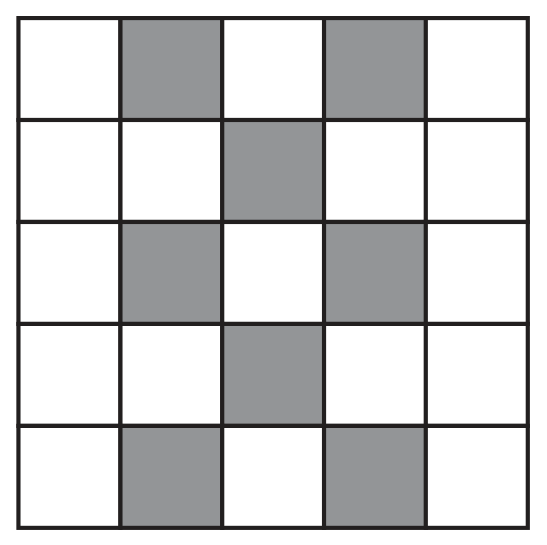
Question image

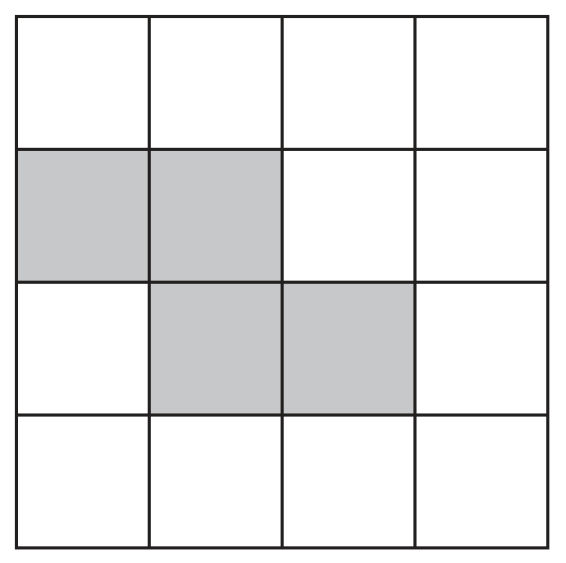
A pattern is made with grey and white squares.

Question 1(a)

(a)

Write down the order of rotational symmetry for this pattern.

[ 1 ]

Question 1(b)

(b)
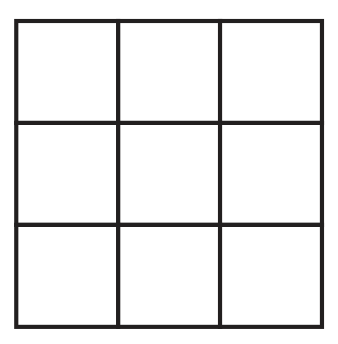
Question image

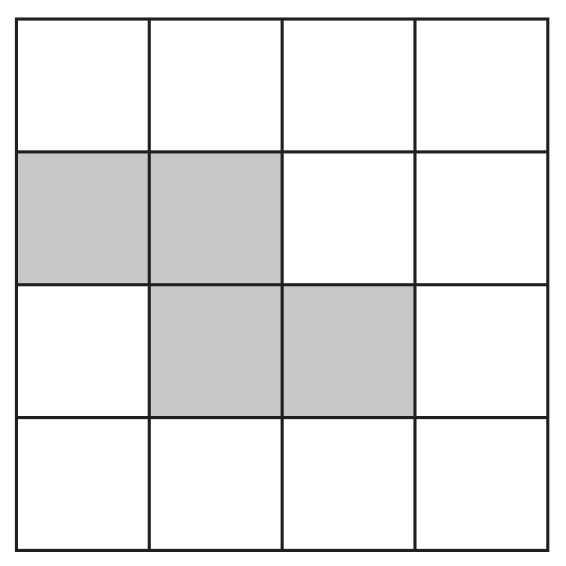
Shade, on the grid below, exactly 5 squares to make a pattern with 4 lines of symmetry.

[ 1 ]

Question 2

Diagram NOT accurately drawn

The diagram shows triangle ABC with AB=50 cmAB=50\text{ cm}, AC=25 cmAC=25\text{ cm} and ACB=90\angle ACB=90^\circ.

Calculate the length, in cm to 3 significant figures, of BC.

Question 2

[Maximum number: 2]

A pattern is made using a four by four grid with both grey squares and white squares.

Question 2(a)

(a)
Question image

Shade one more square to make a pattern with exactly one line of symmetry.

[ 1 ]

Question 2(b)

(b)
Question image

Shade two more squares to make a pattern that has rotational symmetry of order 2.

[ 1 ]

Question 2

[Maximum number: 2]
Question image

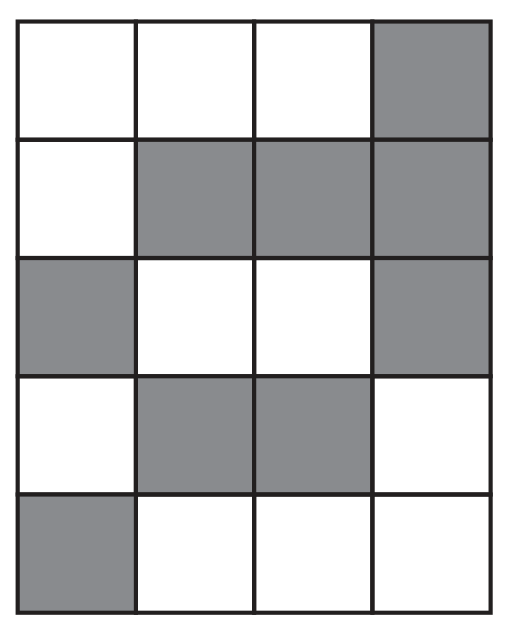
A pattern is made with white squares and shaded squares.

Question 2(a)

(a)

Shade one more square to make a pattern with rotational symmetry of order 2.

[ 1 ]

Question 2(b)

(b)
Question image

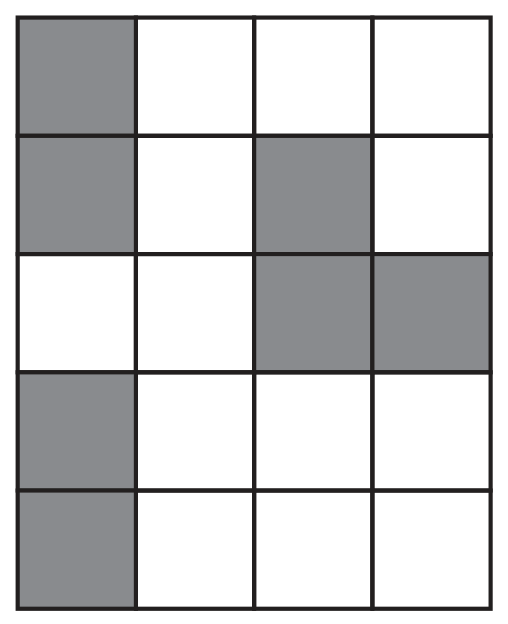
Here is a different pattern made from white squares and shaded squares.

Shade one more square to make a pattern with exactly one line of symmetry.

[ 1 ]

Question 2

[Maximum number: 4]
Question image

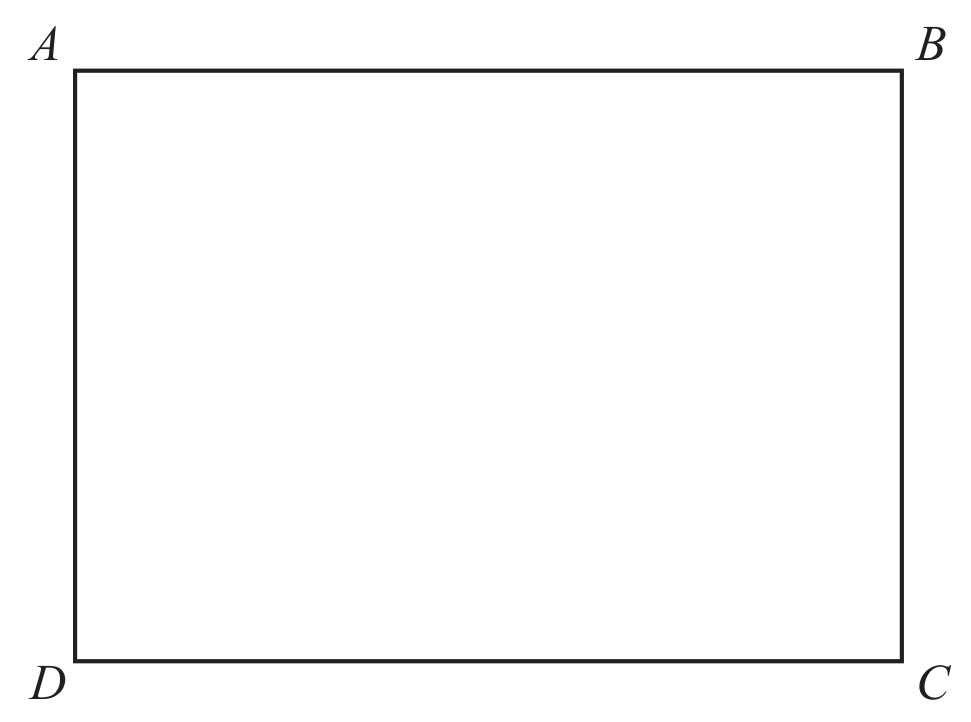
The diagram shows quadrilateral ABCD.

Question 2(a)

(a)

Construct the locus of all points that are 4 cm from C.

[ 1 ]

Question 2(b)

(b)

Using ruler and compasses only and showing all your construction lines, construct the perpendicular bisector of AD.

[ 2 ]

Question 2(c)

(c)

The region R\mathbf R consists of all the points inside the quadrilateral that are less than 4 cm from C and nearer to A than to D.
Show, by shading, the region R\mathbf R.
Label the region R\mathbf R.

[ 1 ]

Question 2

[Maximum number: 5]
Question image

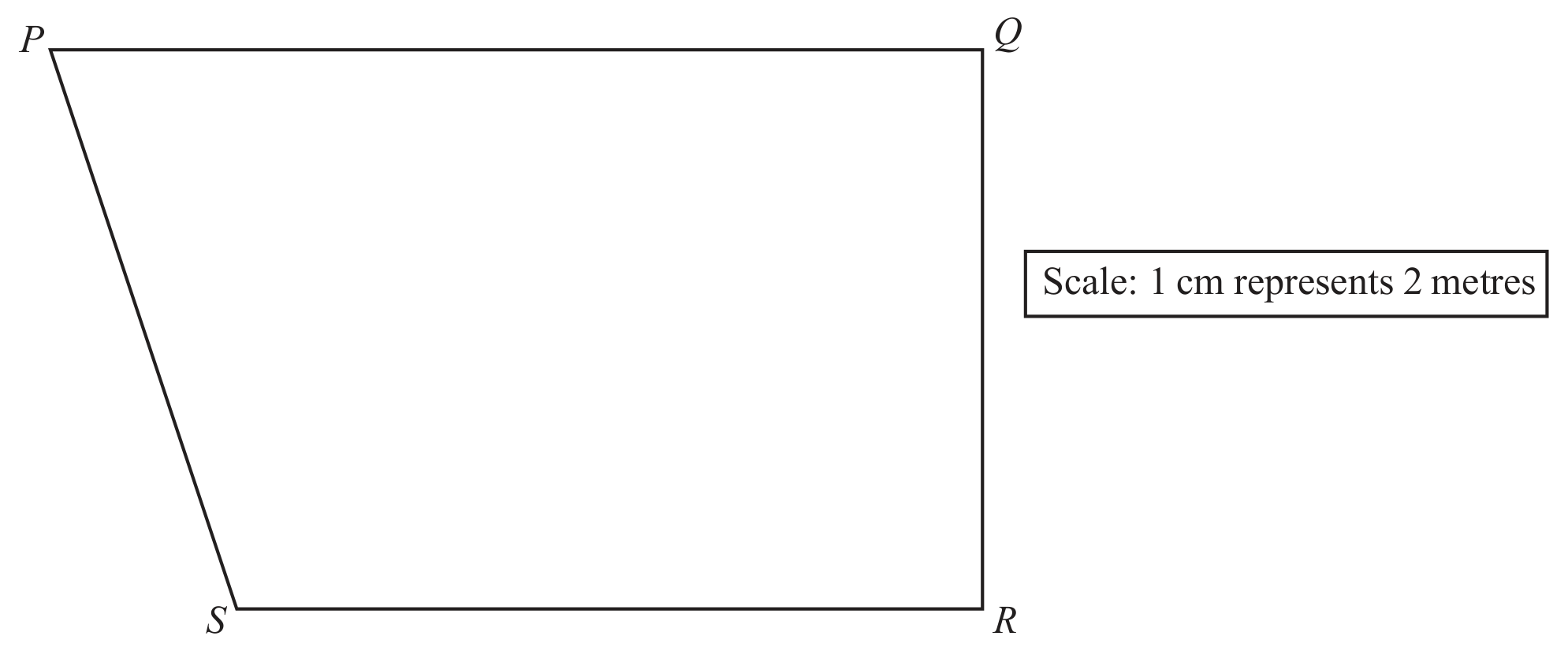
The trapezium PQRS is a scale drawing of Abdul's garden.

Question 2(a)

(a)

Construct the locus of all points inside the trapezium that are 6 metres from P.

[ 1 ]

Question 2(b)

(b)

Construct the locus of all points inside the trapezium that are 12 metres from QR.

[ 1 ]

Question 2(c)

(c)

Using ruler and compasses only and showing all your construction lines, construct the locus of all points inside the trapezium that are equidistant from PS and RS.

[ 2 ]

Question 2(d)

(d)

Abdul is going to put a fountain in his garden.
The fountain must be:
- greater than 6 metres from P
- greater than 12 metres from QR
- closer to PS than to RS

Show, by shading, the region in which Abdul can place the fountain.
Label the region R.

[ 1 ]

Question 3

Diagram NOT accurately drawn

Diagram NOT accurately drawn

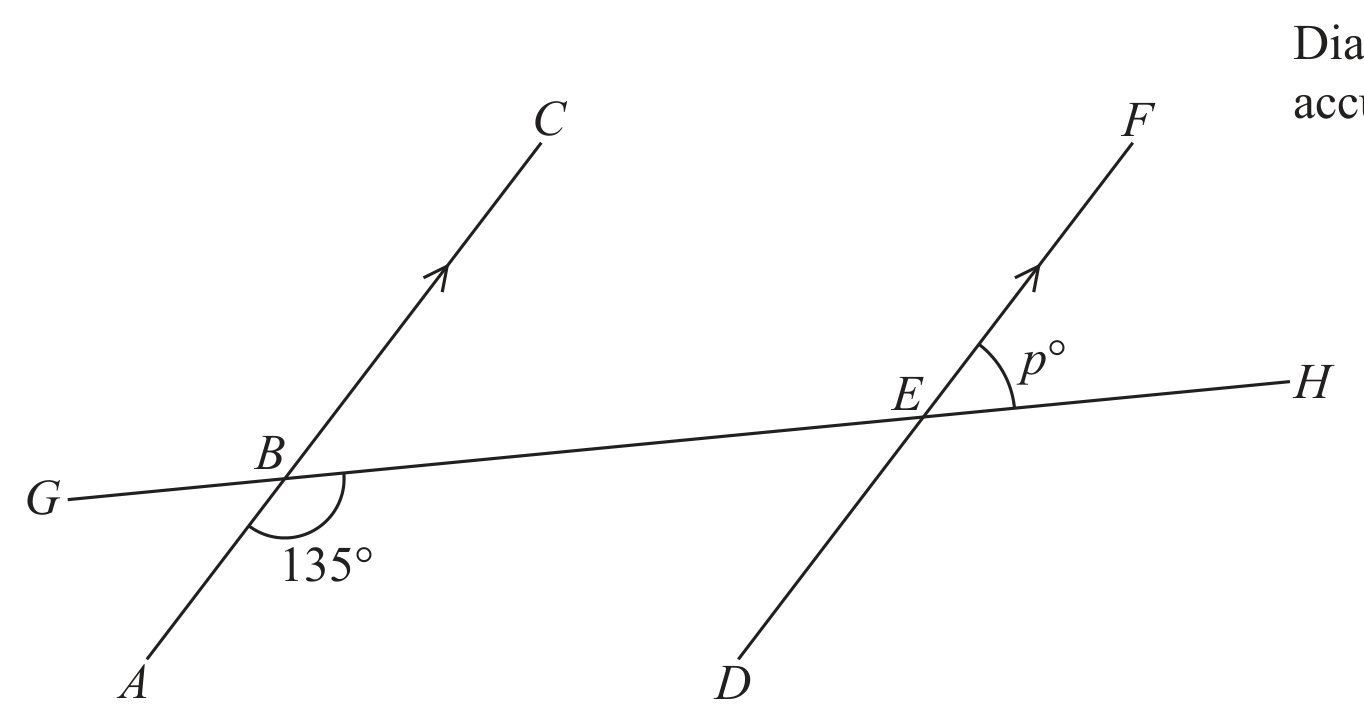
ABC and DEF are parallel straight lines and GBEH is a straight line.
ABE=135\angle ABE=135^\circ and FEH=p\angle FEH=p^\circ.

Find the value of p.

Question 3

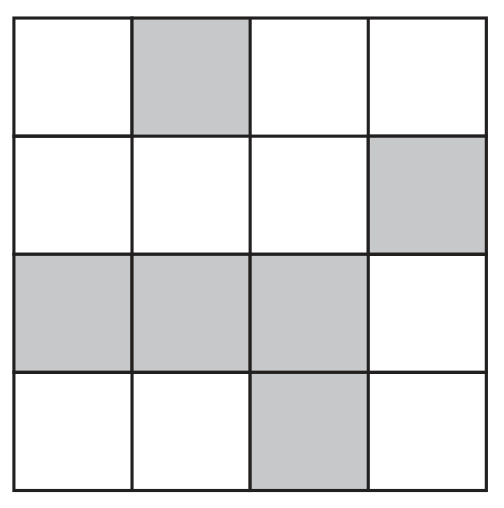
A pattern on a white grid is made from 6 shaded squares.

Question image

Shade exactly 2 more squares so that the 8 shaded squares will make a pattern with rotational symmetry of order 4

0 selected