Question 2
Diagram NOT accurately drawn
The diagram shows triangle ABC with , and .
Calculate the length, in cm to 3 significant figures, of BC.
 EduNinja
Use of Pythagoras’ theorem in 2D and 3D Including its use in any acute–angled triangle where an altitude is given or constructed The angle bisector theorems are excluded
Diagram NOT accurately drawn
The diagram shows triangle ABC with , and .
Calculate the length, in cm to 3 significant figures, of BC.
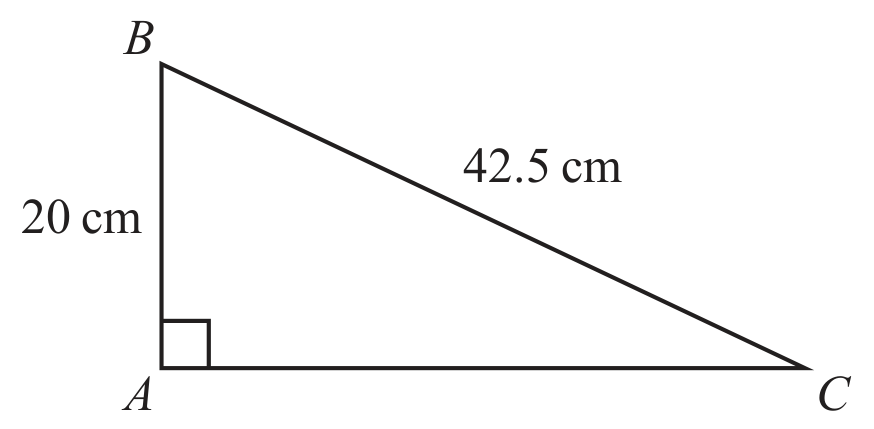
Diagram NOT accurately drawn.
The diagram shows the right-angled triangle ABC.
, and .
Calculate the length of AC.
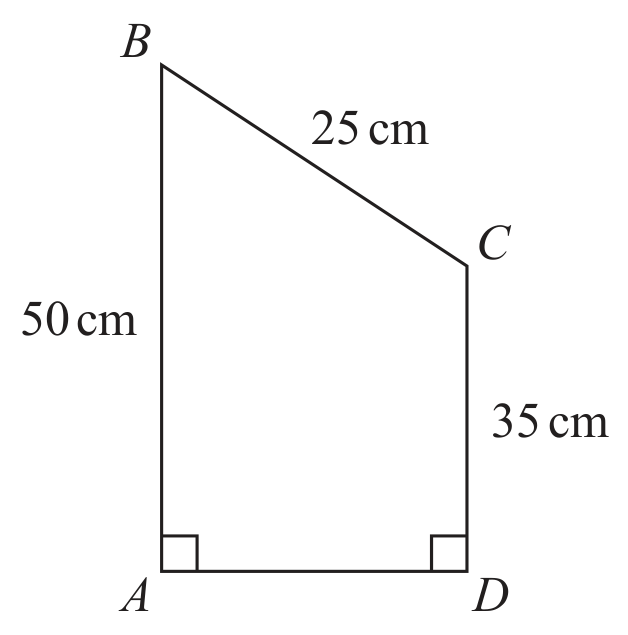
The diagram shows a quadrilateral ABCD in which
Calculate the perimeter, in cm, of quadrilateral ABCD.
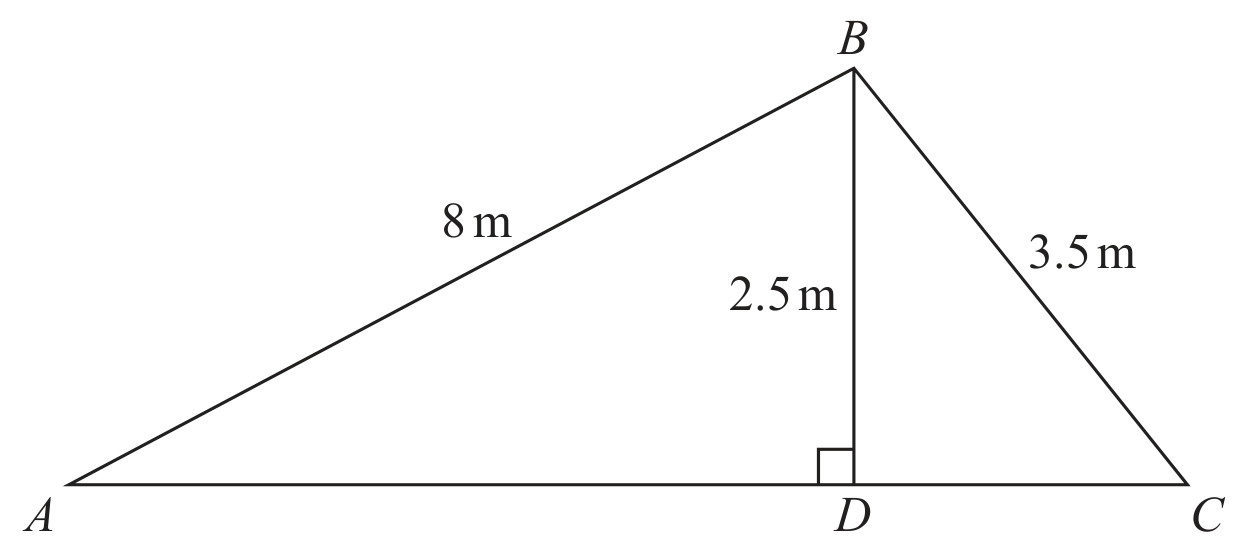
Diagram NOT accurately drawn.
Figure 1 shows a framework of wooden beams, with ADC a straight line.
Calculate, giving your answer to the nearest metre, the length of AC
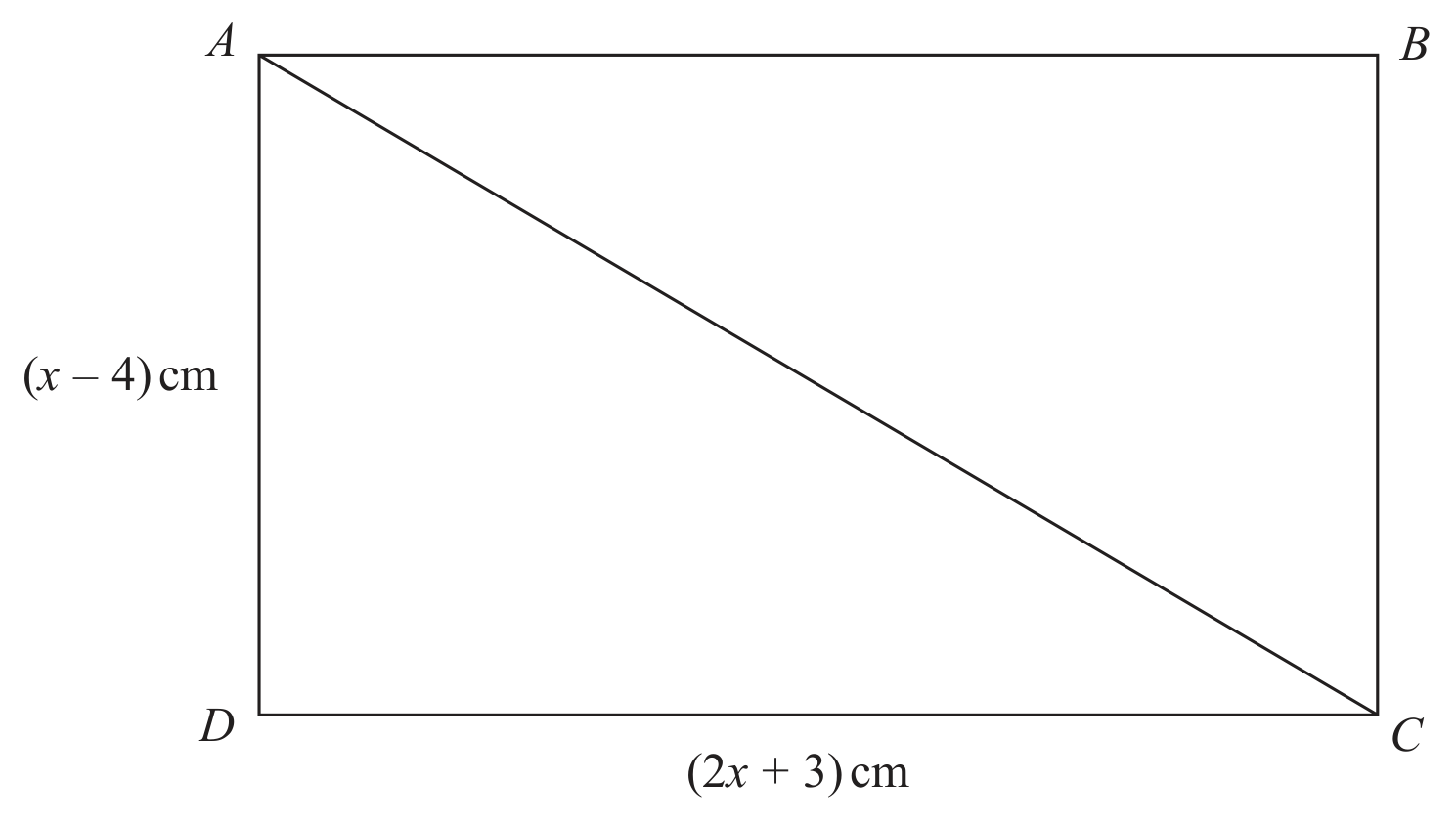
Diagram NOT accurately drawn
The diagram shows quadrilateral ABCD.
Using algebra, show that ABCD is a rectangle.
ABCD is a rectangle with perimeter 28 m.
The length of AB is 8 m.
Calculate the length, in m, of the diagonal AC of the rectangle.
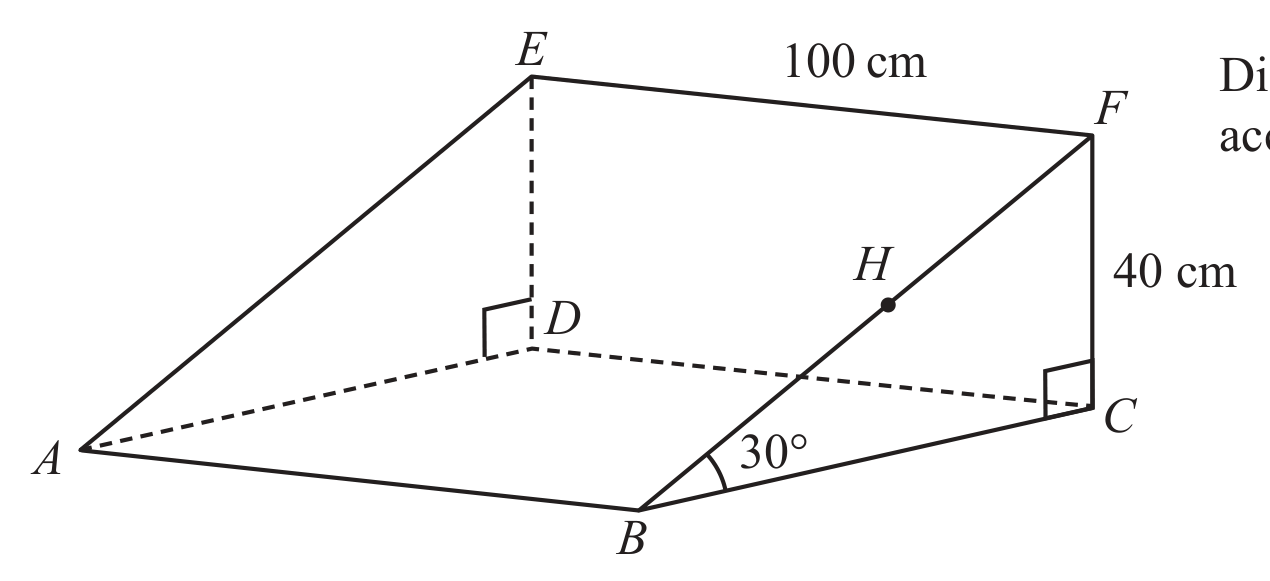
The diagram shows a prism ABCDEF.
BCFE is a rectangle and ABC and DEF are congruent triangles.
CF=DE=40 cm, EF=DC=AB=100 cm, .
H is the point on BF such that BH=57.5 cm.
Calculate EH.
A rhombus has diagonals of length 10 cm and 24 cm .
Find the perimeter of the rhombus.
The points A and B are such that the coordinates of A are (3,-2) and
The point C has coordinates (m,n), where m>3.
Given that , find an expression for m in terms of n.
m=
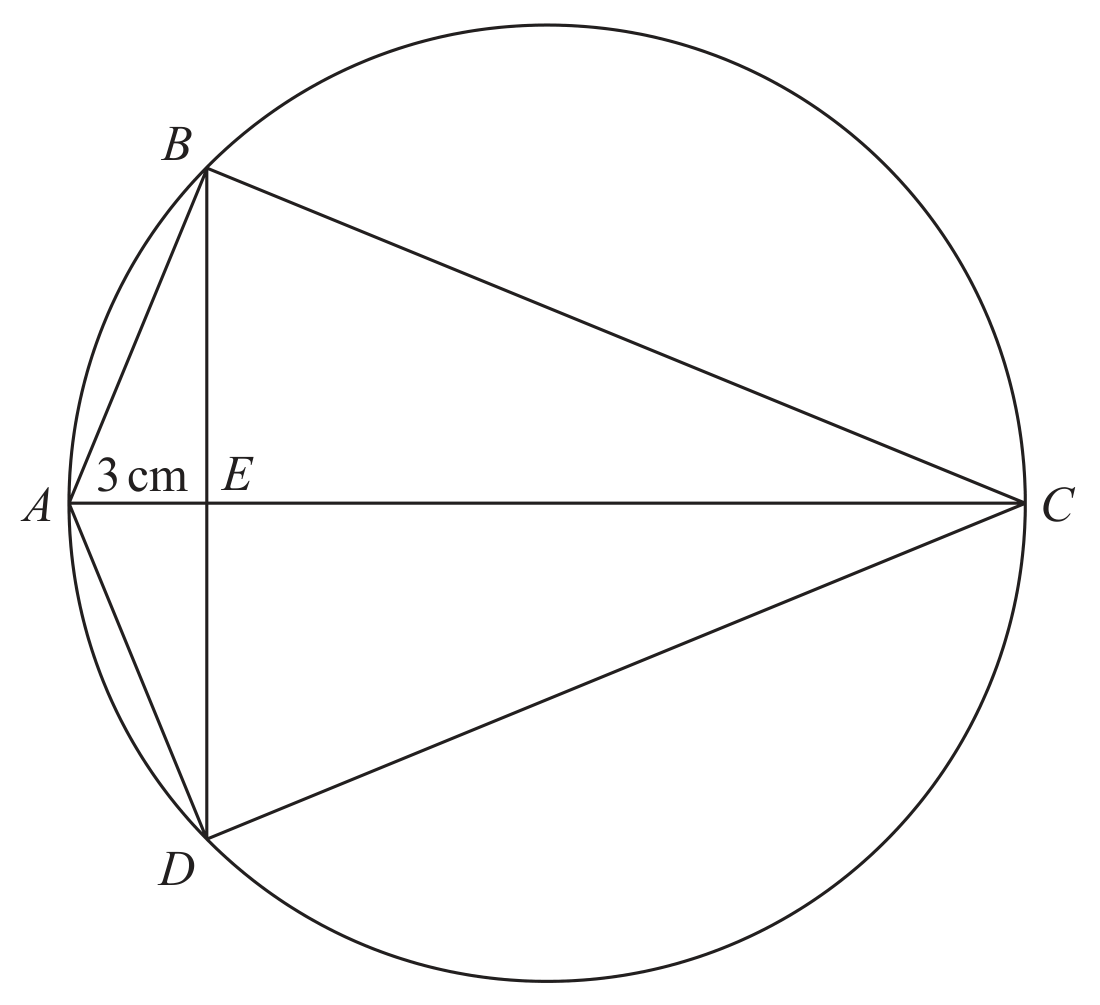
Diagram NOT accurately drawn
ABCD is a kite so that the points A, B, C and D lie on a circle with radius 7.5 cm. The diagonals, AC and BD, of the kite intersect at point E, so that . The line AEC is a diameter of the circle.
Find the area of the kite ABCD