IB Physics SL S2.2.3 Data Quality

Practise distinguishing accuracy, precision, reliability and validity by using repeats, uncertainty ranges, graph intercepts and independent checks to diagnose data quality.

Syllabus
First assessment 2025
Objective
S2.2.3
Level
SL

Exam points

  • identify systematic error when a fitted relationship misses its predicted intercept beyond uncertainty
  • explain how repeats reveal random variation and improve reliability of the mean, not guaranteed accuracy
  • compare uncertainty ranges or independent methods to judge whether a measurement is accurate or valid

S2.2.3—Data quality question 1

[Maximum number: 1]

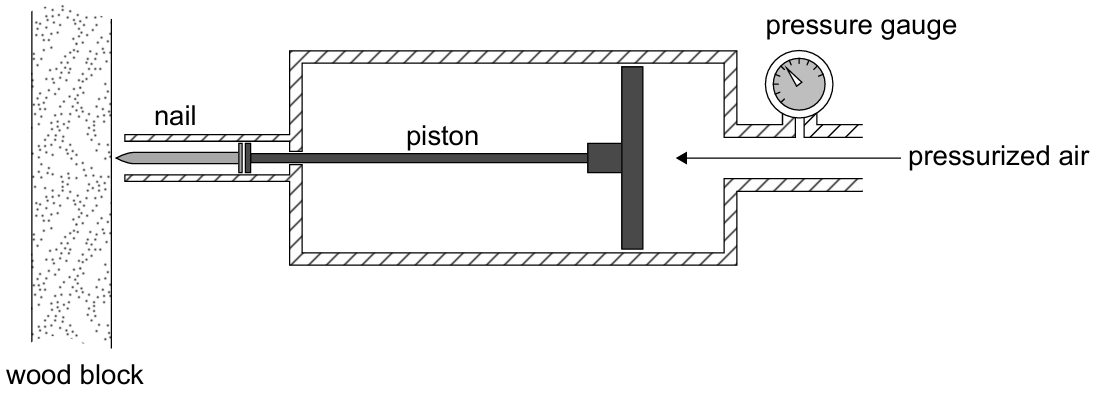
A group of students uses pressurized air to move a piston that forces a nail into a block of wood. A gauge is used to measure the pressure P of compressed air above atmospheric pressure. The nail enters the wood perpendicular to its surface.

Figure for Question S2.2.3—Data quality question 1 — IB Physics SL

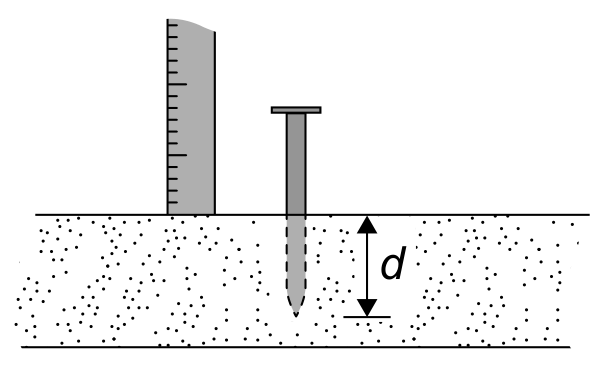
The students use a ruler to measure the length of the nail which remains above the surface of the wood as shown. The depth of the nail inside the wood is d. All necessary length measurements are recorded using a ruler with uncertainty ±1 mm\pm 1 \mathrm{~mm}.

Figure for Question S2.2.3—Data quality question 1 — IB Physics SL

The students collect only one value of d for each value of P. Suggest why this is a poor method.

All question bank results loaded