IB Physics SL E.3.11 Activity, Count Rate & Half-Life
Practise extracting half-life from graphs or tables and separating source activity from background count rate.
- Syllabus
- First assessment 2025
- Objective
- —
- Level
- SL
Practise extracting half-life from graphs or tables and separating source activity from background count rate.
This section consists of three questions: B1, B2 and B3.
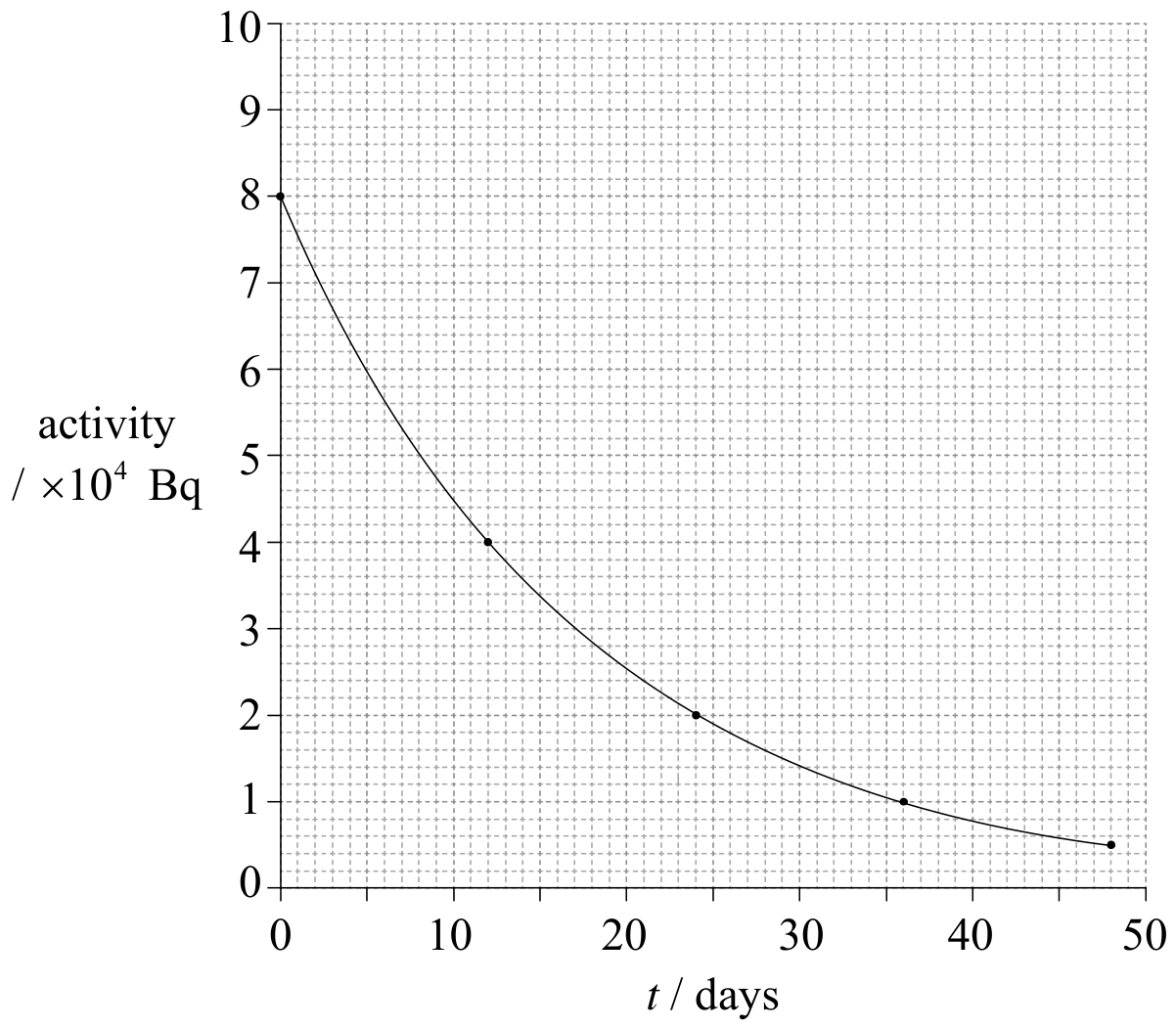
The isotope tritium (hydrogen-3) has a radioactive half-life of 12 days.
Define radioactive half-life.
A sample of tritium has an activity of at time t=0. The half-life of tritium is 12 days.
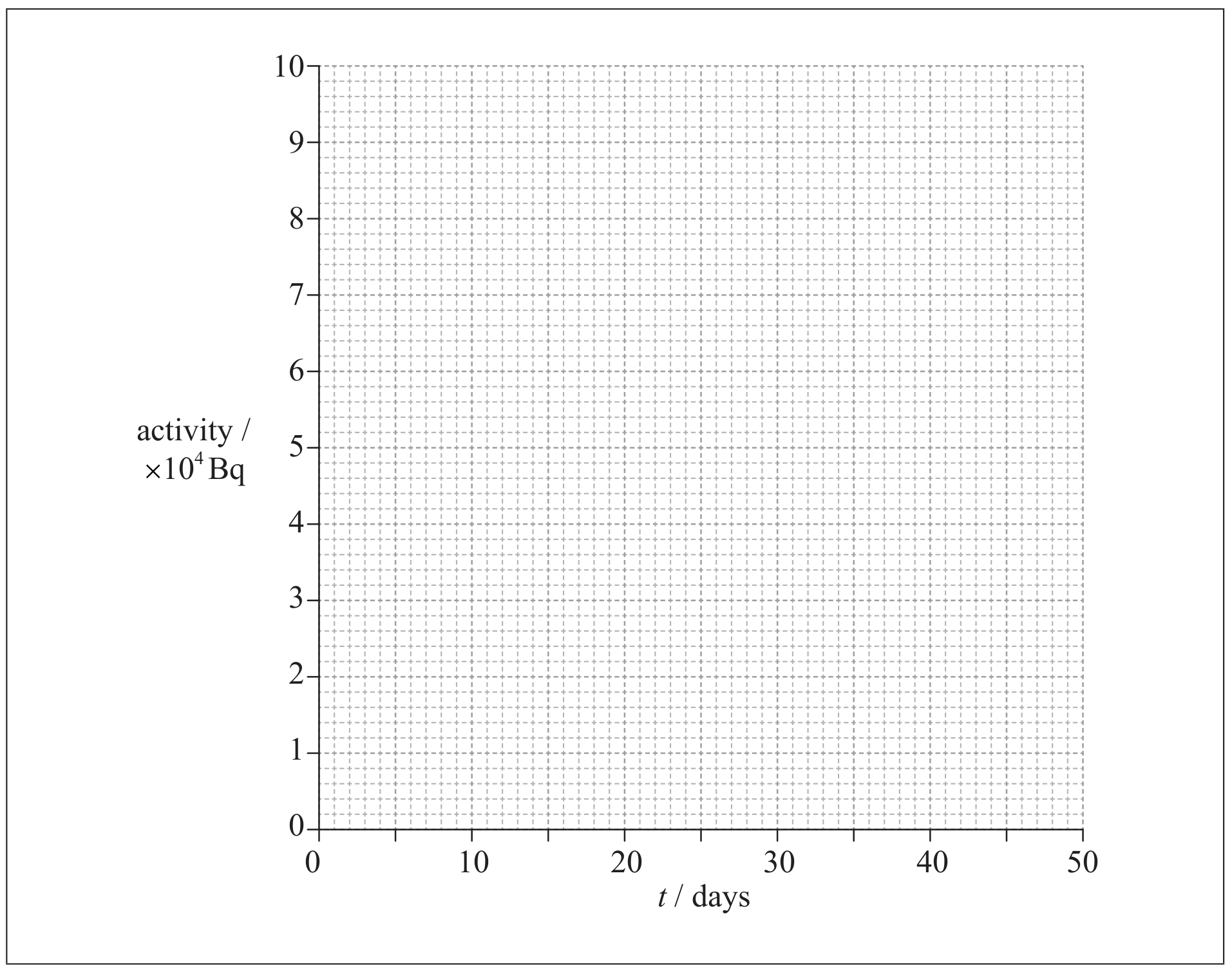
Using the axes below, construct a graph to show how the activity of the sample varies with time from t=0 to t=48 days.