IB Physics SL D.1.1 Kepler’s three laws of orbital motion
Apply Kepler’s laws to orbital data and diagrams, linking period, radius and changing speed in elliptical motion.
- Syllabus
- First assessment 2025
- Objective
- —
- Level
- SL
Apply Kepler’s laws to orbital data and diagrams, linking period, radius and changing speed in elliptical motion.
A satellite powered by solar cells directed towards the Sun is in a polar orbit about the Earth.
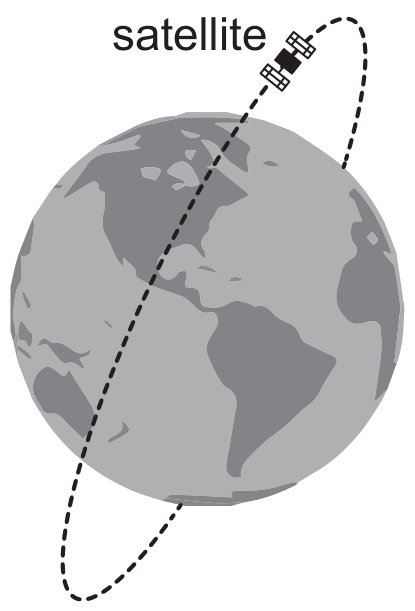
The satellite is orbiting the Earth at a distance of 6600 km from the centre of the Earth.
Determine the orbital period for the satellite.
Mass of Earth