IB Chemistry SL Reactivity 3.2.5 Anodes and Cathodes

Practise assigning oxidation to the anode and reduction to the cathode in both voltaic and electrolytic cells. Determine electrode polarity from the cell type rather than…

Syllabus
First assessment 2025
Objective
3.2.5
Level
SL

Exam points

  • label the anode from oxidation and the cathode from reduction in either cell type
  • assign negative/positive polarity separately for voltaic and electrolytic cells
  • use electrode reactions and charge balance to show the required direction of ion movement

3.2.5—Electrodes in electrochemical cells question 1

[Maximum number: 2]

Iron(II) sulfide can be produced by heating powdered iron and sulfur together.

A student hypothesised that iron(II) sulfide is ionic and therefore can be converted back to iron and sulfur by electrolysis of the molten salt, using inert electrodes.

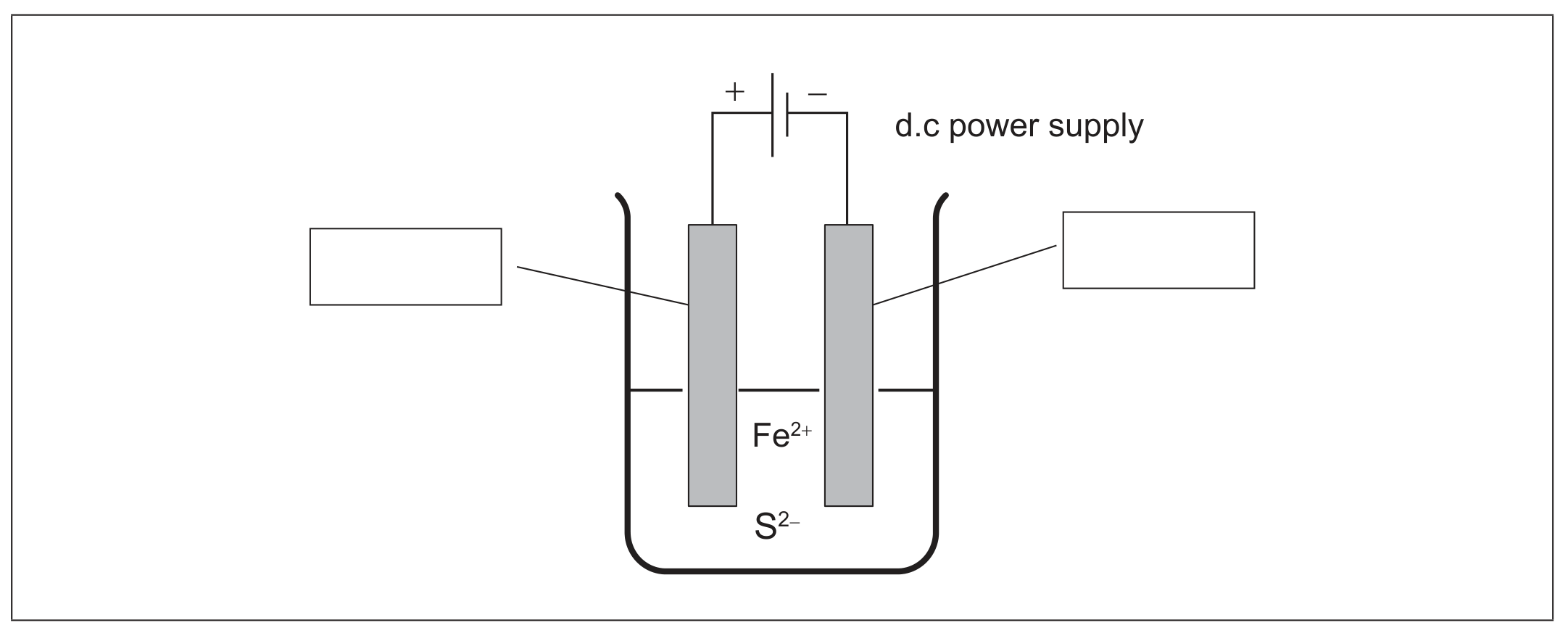
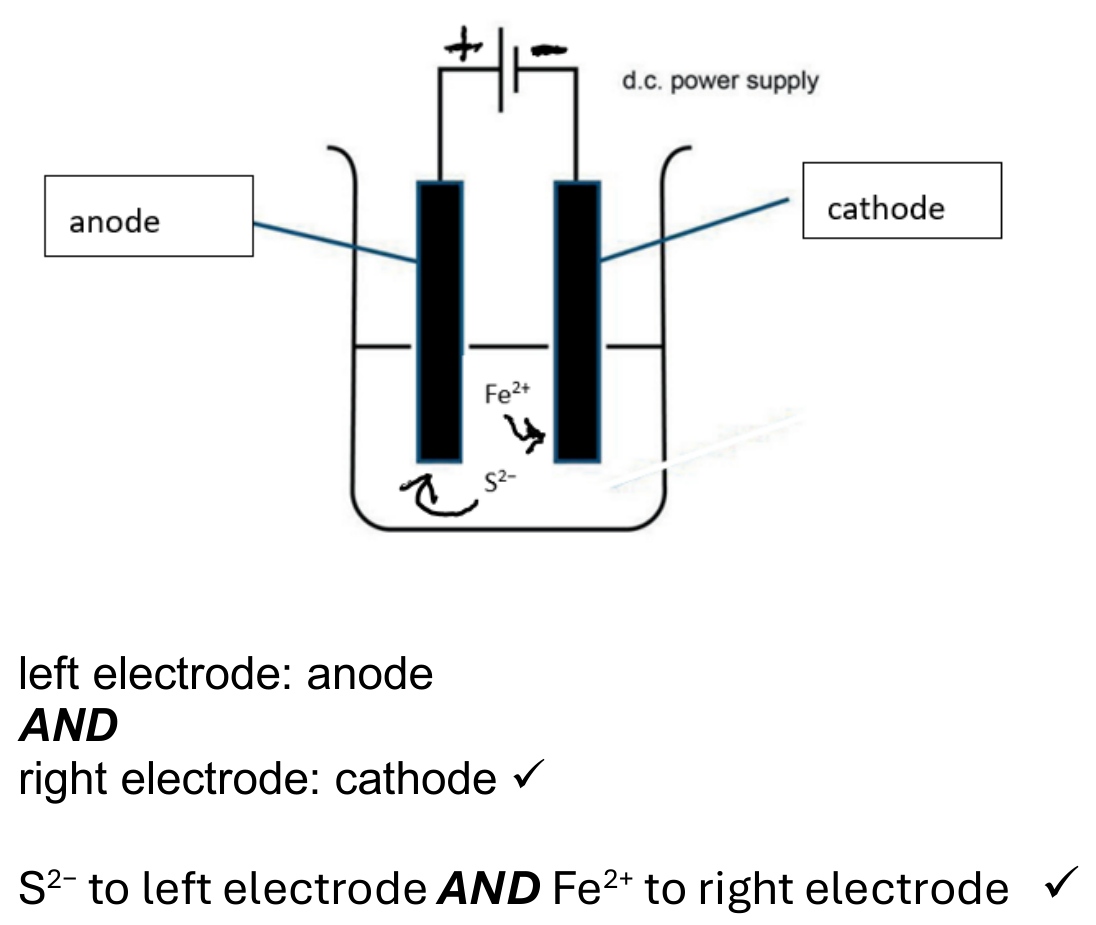
Annotate the electrolytic cell with the terms anode and cathode, and show the direction of ion movement.

Figure for Question 3.2.5—Electrodes in electrochemical cells question 1 — IB Chemistry SL
All question bank results loaded