IB Chemistry SL Reactivity 3: Mechanisms of Chemical Change

Explore how proton transfer, electron transfer and electron-pair movement explain chemical change. Practise acid–base and redox calculations, electrochemical cells and organic…

Syllabus
First assessment 2025
Topic
Level
SL

Reactivity 3. What are the mechanisms of chemical change? question 1

[Maximum number: 1]

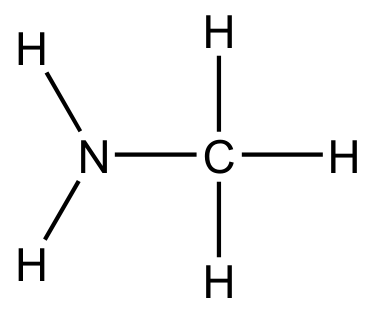
Two hydrides of nitrogen are ammonia and hydrazine, N2H4\mathrm{N}_{2} \mathrm{H}_{4}. One derivative of ammonia is methanamine whose molecular structure is shown below.

Figure for Question Reactivity 3. What are the mechanisms of chemical change? question 1 — IB Chemistry SL

Hydrazine reacts with water in a similar way to ammonia. Deduce an equation for the reaction of hydrazine with water.

Reactivity 3. What are the mechanisms of chemical change? question 2

[Maximum number: 7]

Chlorine undergoes many reactions.

Question (a)

(a)

2.67 g of manganese(IV) oxide was added to 200.0 cm3200.0 \mathrm{~cm}^{3} of 2.00moldmm3HCl2.00 \mathrm{moldm} \mathrm{m}^{-3} \mathrm{HCl}.

MnO2( s)+4HCl(aq)Cl2( g)+2H2O(l)+MnCl2(aq)\mathrm{MnO}_{2}(\mathrm{~s})+4 \mathrm{HCl}(\mathrm{aq}) \rightarrow \mathrm{Cl}_{2}(\mathrm{~g})+2 \mathrm{H}_{2} \mathrm{O}(\mathrm{l})+\mathrm{MnCl}_{2}(\mathrm{aq})
[ 1 ]

Question (i)

(i)

Deduce, referring to oxidation states, whether MnO2\mathrm{MnO}_{2} is an oxidizing or reducing agent.

[ 1 ]

Question (b)

(b)

Chlorine gas reacts with water to produce hypochlorous acid and hydrochloric acid.

Cl2( g)+H2O(l)HClO(aq)+HCl(aq)\mathrm{Cl}_{2}(\mathrm{~g})+\mathrm{H}_{2} \mathrm{O}(\mathrm{l}) \rightleftharpoons \mathrm{HClO}(\mathrm{aq})+\mathrm{HCl}(\mathrm{aq})
[ 3 ]

Question (i)

(i)

Hypochlorous acid is considered a weak acid. Outline what is meant by the term weak acid.

[ 1 ]

Question (ii)

(ii)

State the formula of the conjugate base of hypochlorous acid.

[ 1 ]

Question (iii)

(iii)

Calculate the concentration of H+(aq)\mathrm{H}^{+}(\mathrm{aq}) in a HClO(aq) solution with a pH=3.61.

[ 1 ]

Question (c)

(c)

State the type of reaction occurring when ethane reacts with chlorine to produce chloroethane.

[ 1 ]

Question (d)

(d)

Write the equation for the reaction of chloroethane with a dilute aqueous solution of sodium hydroxide.

[ 1 ]

Question (e)

(e)

Deduce the nucleophile for the reaction in d(iii).

[ 1 ]

Reactivity 3. What are the mechanisms of chemical change? question 3

[Maximum number: 3]

Antioxidants are a type of food additive.

Question (a)

(a)

Define the term antioxidant.

[ 1 ]

Question (b)

(b)

Antioxidants such as BHT and 3-BHA prevent the unwanted reactions of free radicals. State what a free radical is.

[ 1 ]

Question (c)

(c)

Antioxidants can also prevent rancidity in foods such as butter. Describe what is meant by rancidity.

[ 1 ]

Reactivity 3. What are the mechanisms of chemical change? question 4

[Maximum number: 4]

Question (a)

(a)

Ethanol is a primary alcohol that can be oxidized by acidified potassium dichromate(VI). Distinguish between the reaction conditions needed to produce ethanal and ethanoic acid.

Ethanal:
Ethanoic acid:

[ 2 ]

Question (b)

(b)

Deduce the half-equation for the oxidation of ethanol to ethanal.

[ 1 ]

Question (c)

(c)

Deduce the overall redox equation for the reaction of ethanol to ethanal with acidified potassium dichromate(VI) by combining your answer to part (c) (iii) with the following half-equation:

Cr2O72(aq)+14H+(aq)+6e2Cr3+(aq)+7H2O(l)\mathrm{Cr}_{2} \mathrm{O}_{7}^{2-}(\mathrm{aq})+14 \mathrm{H}^{+}(\mathrm{aq})+6 \mathrm{e}^{-} \rightarrow 2 \mathrm{Cr}^{3+}(\mathrm{aq})+7 \mathrm{H}_{2} \mathrm{O}(\mathrm{l})
[ 1 ]
All question bank results loaded