IB Chemistry SL Reactivity 3.2.11 Reduction of Unsaturated Compounds

Practise recognising catalytic hydrogenation as reduction by addition of hydrogen across carbon–carbon multiple bonds. Deduce alkene and alkyne products from the amount of…

Syllabus
First assessment 2025
Objective
3.2.11
Level
SL

Exam points

  • add hydrogen across a carbon–carbon multiple bond while retaining the carbon skeleton
  • distinguish partial or complete hydrogenation from the hydrogen amount and target product
  • state an accepted metal catalyst and suitable heating conditions when the question asks

3.2.11—Reduction of unsaturated compounds question 1

[Maximum number: 1]

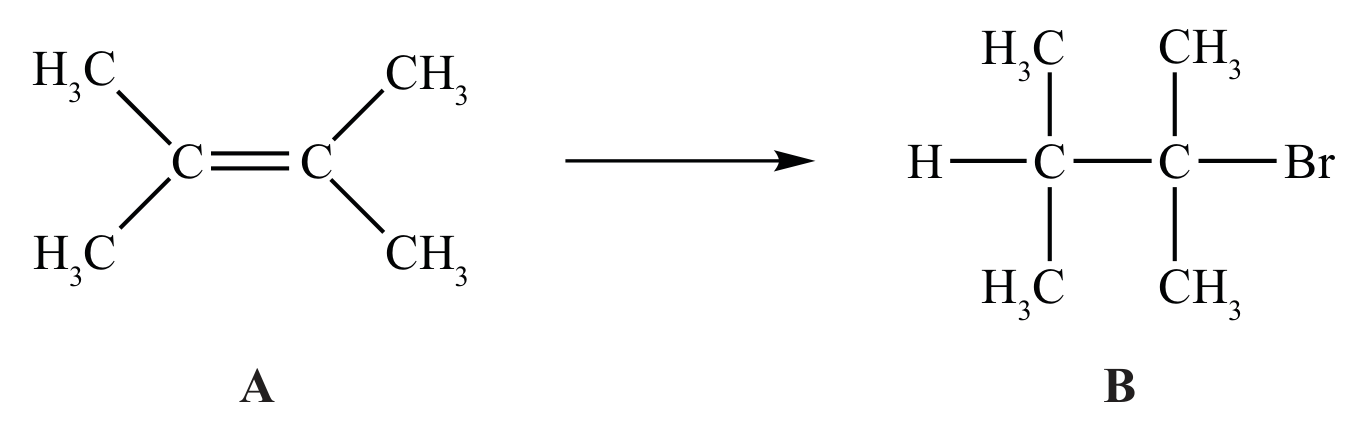
Alkenes, such as A (shown below), are important intermediates in the petrochemical industry because they undergo addition reactions to produce a wide variety of products, such as the conversion shown below.

Figure for Question 3.2.11—Reduction of unsaturated compounds question 1 — IB Chemistry SL

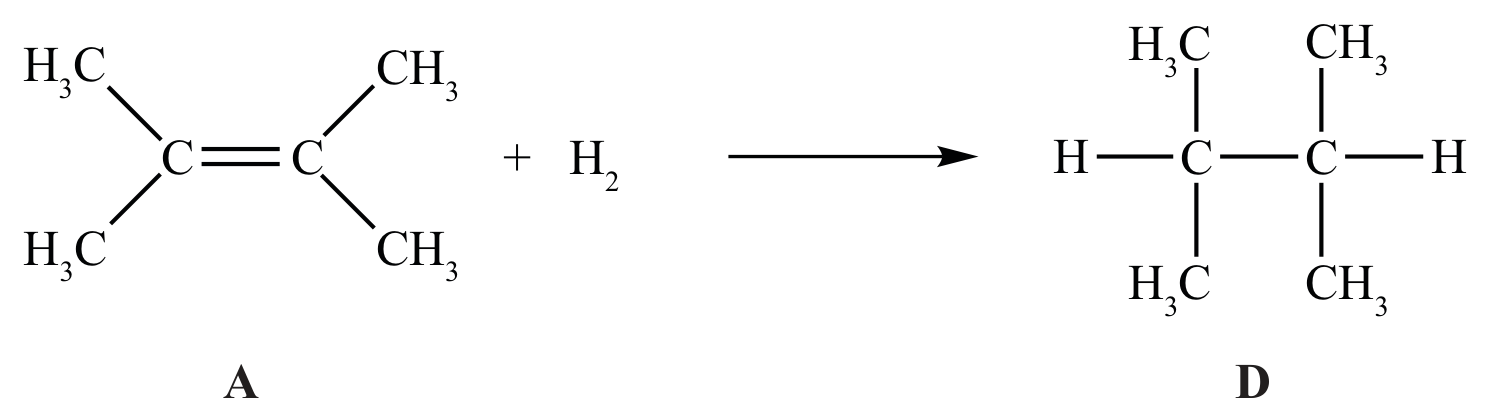
In the gas phase, A reacts with hydrogen to form D.

Figure for Question 3.2.11—Reduction of unsaturated compounds question 1 — IB Chemistry SL

State the conditions required for this reaction to occur.

All question bank results loaded