
Question 19(c)(iii)
In recent years, there have been health and safety concerns over "liquitabs". These are capsules which contain concentrated liquid detergents.
The soluble packaging breaks down upon contact with water during a laundry cycle to release the detergent.
Some liquitabs are small and colourful, which makes them attractive to young children who may be tempted to put them in their mouth or play with them. When moist, liquitabs can burst in a child's hand, potentially irritating the eyes and skin. They can also dissolve quickly and may burst in a child's mouth in a very short period of time. This allows the contents to escape quickly and if swallowed can cause severe breathing difficulties.
In liquitab detergents, glycerol is added to the poly(ethenol).
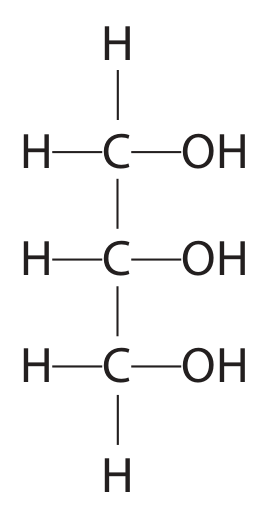
glycerol
Glycerol is added to the polymer at 0.110%, by volume.
Calculate the number of moles of glycerol added to 1 tonne of poly(ethenol).
Data: 1 tonne
density of glycerol:
density of poly(ethenol):