D3.1.9—Insect-pollinated flower features

Insect-pollinated flowers use traits such as odour, nectar, colour and suitable flower structure to attract animals that transfer pollen effectively.

Syllabus
First assessment 2025
Objective
D3.1.9
Level
SL

Flower Structures Place Pollen Production, Reception and Ovules

Whorl or organ Parts Reproductive function
sepals calyx protect the developing flower bud
petals corolla advertise to animal pollinators
stamen anther + filament produce and present pollen
carpel stigma + style + ovary receive pollen, guide tube and contain ovules

Anther produces pollen → filament presents anther → stigma receives pollen → style provides pollen-tube path → ovary contains ovules where fertilization occurs.
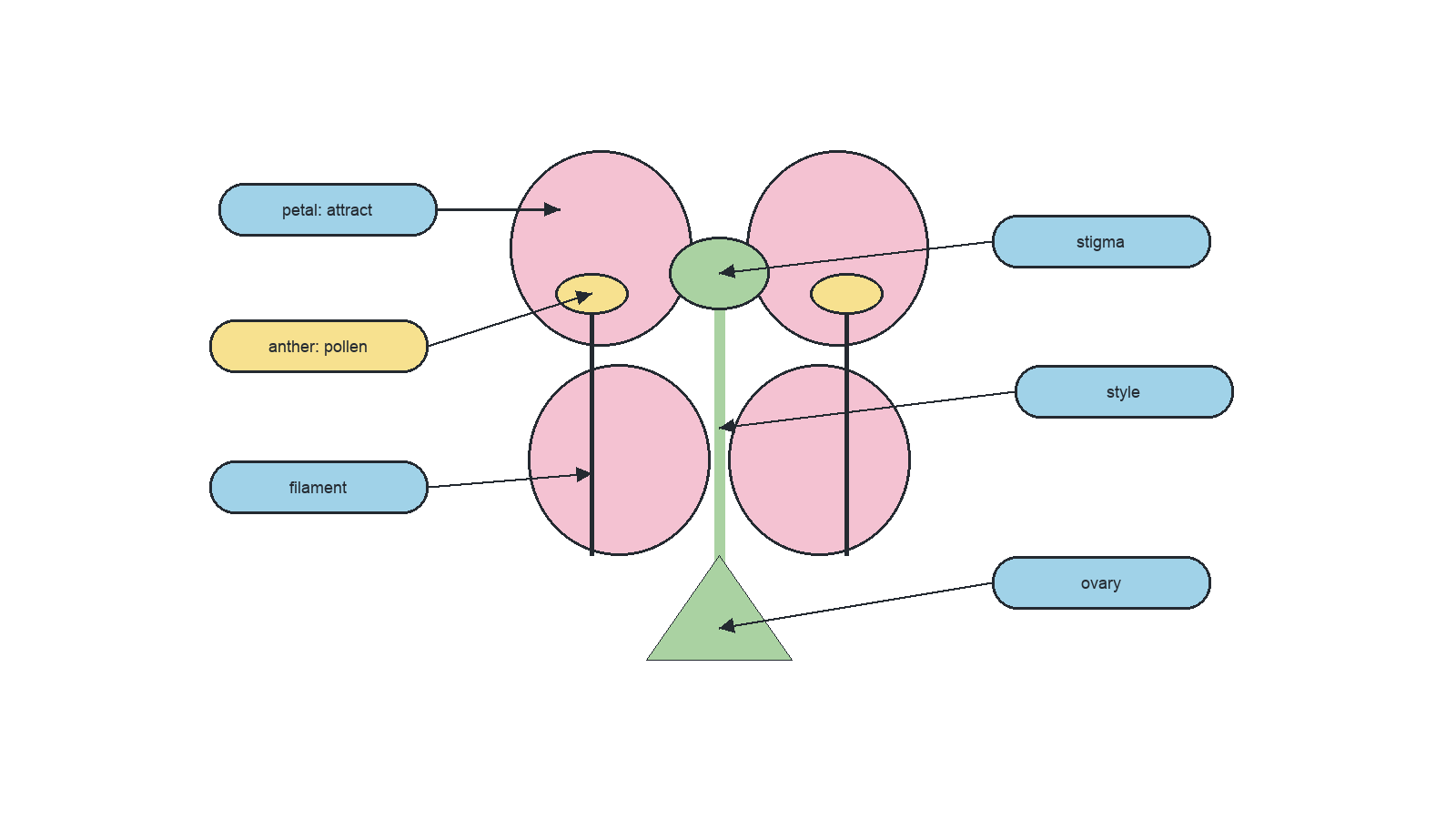
A labelled insect-pollinated flower shows petals, nectary, anther, filament, stigma, style, ovary and ovules along a pollinator's contact route.

An Insect-Pollinated Flower Controls the Pollinator's Contact Route

Feature Effect on pollination
conspicuous petals and scent attract insects from a distance
nectar rewards entry and repeated visits
anthers placed on the route dust visiting insect with pollen
sticky or sculptured pollen adheres to animal body
stigma placed on the route contacts pollen carried from another flower
sticky stigma retains deposited pollen

The features work as a system: attraction brings the insect, reward draws it into a predictable position, and flower geometry makes its body contact anthers or stigmas.

The plant gains gamete transfer; the pollinator gains nectar or pollen food. This mutualism increases transfer efficiency but does not guarantee that every visit causes cross-pollination.

Flowering-Plant Reproduction Links Transfer, Recognition and Establishment

pollen production → transfer to stigma → compatibility check → pollen-tube delivery → gamete fusion in ovule → seed and fruit formation → dispersal → dormancy release → germination and reserve mobilization

Transition problem Adaptation
pollen must reach a conspecific stigma pollinator attraction, wind transfer and flower geometry
selfing can reduce variation timing, spatial separation, separate sexes and self-incompatibility
offspring compete with parent seed dispersal
growth begins in poor conditions dormancy and environmental germination requirements

Pollination is gamete delivery, fertilization is nuclear fusion, and dispersal moves the resulting seed. Keep those transitions separate while explaining how each supports successful outcrossing and establishment.

Insect-pollinated flower features

[ 4 ]

Draw a half-view of an animal-pollinated flower.

Drawing canvas

Concept essentials

  • Nectar attracts animals that can transfer pollen between flowers.
  • Specific odours or other signals can improve animal pollination.
  • Flower structure matters because pollinators must contact anthers and stigmas.