D3.1.8—Sexual reproduction in flowering plants

Flowering plant reproduction uses flower structures for gamete production, pollination, fertilization, fruit formation and seed dispersal in sexual life cycles.

Syllabus
First assessment 2025
Objective
D3.1.8
Level
SL

Exam analysis

Chance of appearing1%of analysed past papers
Latest appearanceNovember 2025
Most common paperPaper1B
Typical marks1–2

Common command terms

  • Outline
  • Identify
  • State
  • Distinguish
  • Define

Scoring notes

Common mistake
Confusing pollination with fertilization or seed dispersal.

Recent exam appearances

November 2025Paper1A ["SL"] · TZ119[ 1 ]D3.1.8—Sexual reproduction in flowering plants
May 2025Paper1B ["SL"] · TZ24(d)(i)[ 1 ]D3.1.8—Sexual reproduction in flowering plants
May 2025Paper1B ["SL"] · TZ24(c)[ 2 ]D3.1.8—Sexual reproduction in flowering plants

Coverage 2025–2025 · Updated 16 Jul 2026

Pollination Delivers Pollen; Fertilization Fuses Gametes

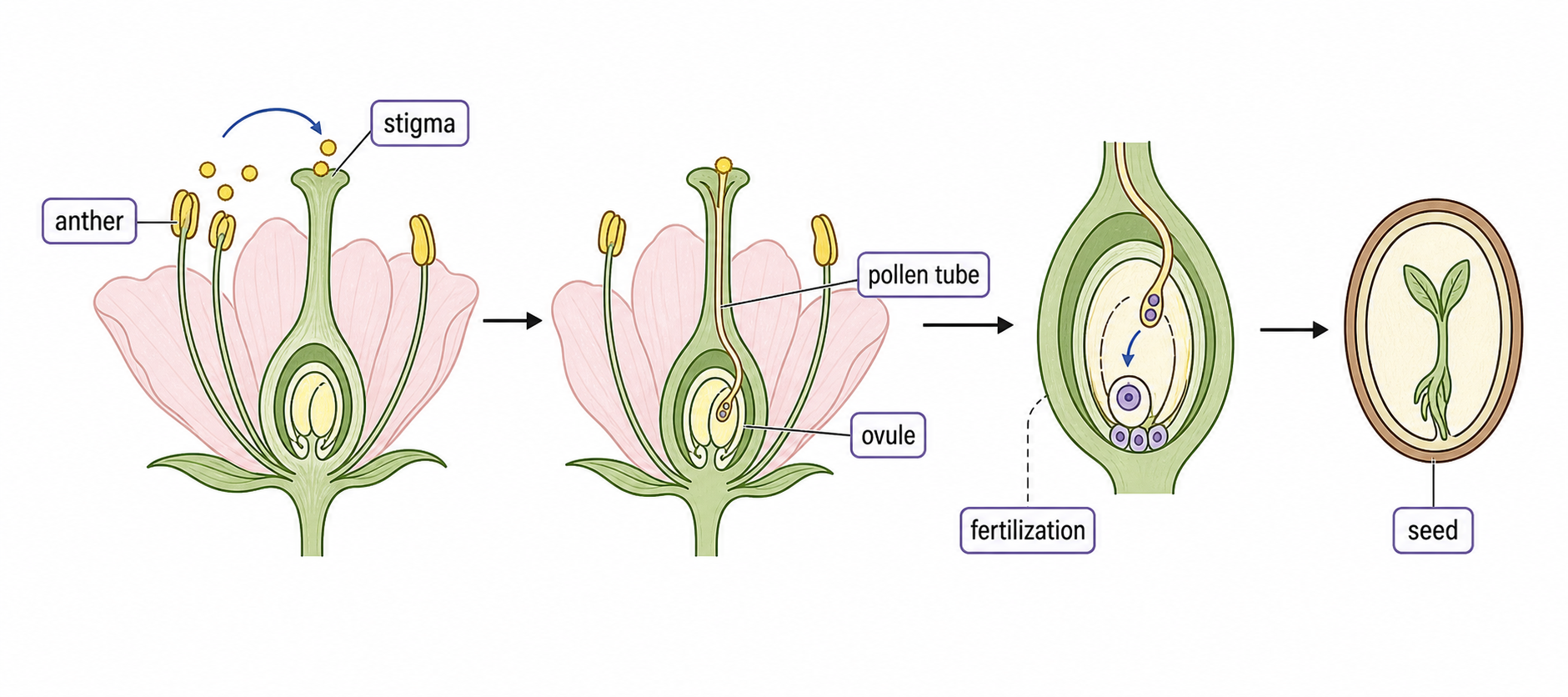
pollen transferred from anther to receptive stigma (pollination) → compatible pollen germinates → pollen tube grows through style → male nuclei enter ovule through micropyle → one male nucleus fuses with egg nucleus (fertilization) → diploid zygote develops into embryo

Before fertilization After fertilization
ovule contains female gamete ovule develops into seed
ovary contains one or more ovules ovary develops into fruit
egg nucleus is haploid zygote nucleus is diploid

Pollination ends at the stigma. Pollen does not travel intact to the ovary; a pollen tube carries male nuclei from the stigma through the style.

A pollen grain germinates on the stigma and grows a pollen tube through the style into an ovule where male and female nuclei fuse.

Flowering-Plant Reproduction Links Transfer, Recognition and Establishment

pollen production → transfer to stigma → compatibility check → pollen-tube delivery → gamete fusion in ovule → seed and fruit formation → dispersal → dormancy release → germination and reserve mobilization

Transition problem Adaptation
pollen must reach a conspecific stigma pollinator attraction, wind transfer and flower geometry
selfing can reduce variation timing, spatial separation, separate sexes and self-incompatibility
offspring compete with parent seed dispersal
growth begins in poor conditions dormancy and environmental germination requirements

Pollination is gamete delivery, fertilization is nuclear fusion, and dispersal moves the resulting seed. Keep those transitions separate while explaining how each supports successful outcrossing and establishment.

Sexual reproduction in flowering plants

[ 4 ]

Outline pollination, fertilization and seed dispersal.

Concept essentials

  • Pollination is transfer of pollen from anther to stigma.
  • Fertilization is fusion of male and female gametes, usually after pollen tube growth.
  • The ovary can develop into fruit and fertilized ovules can become seeds.