B2.1.6—Channel proteins

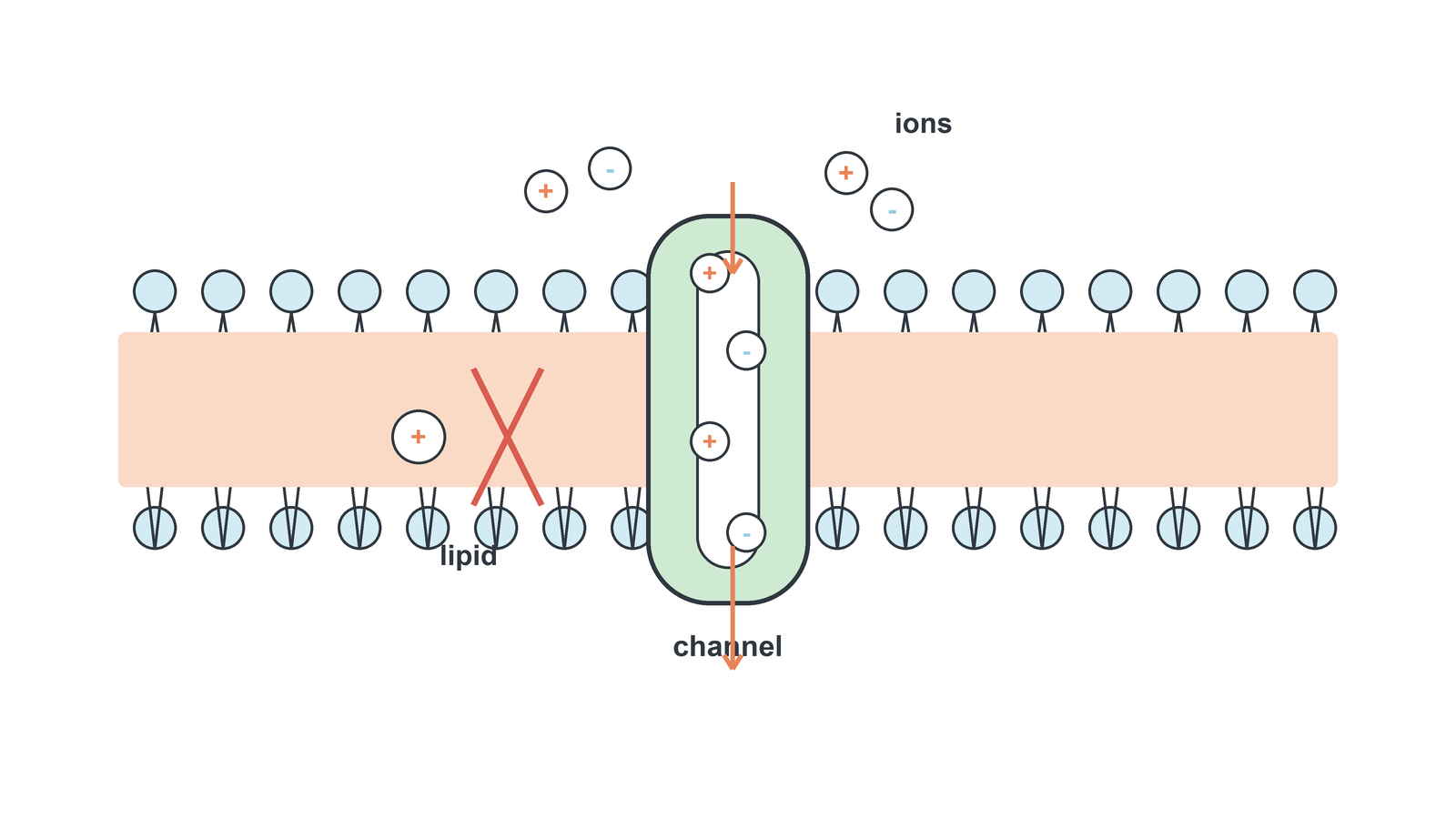
Channel proteins provide selective hydrophilic pathways for facilitated diffusion of ions and polar molecules down concentration gradients without ATP; Selectivity comes from channel structure and the chemical nature of the transported particle.

Syllabus
First assessment 2025
Objective
B2.1.6
Level
SL

Exam analysis

Chance of appearing7%of analysed past papers
Latest appearanceMay 2025
Most common paperPaper1
Typical marks1–2

Common command terms

  • Identify
  • Explain
  • Describe
  • Outline

Scoring notes

Common mistake
Adding ATP to facilitated diffusion even when the movement is passive.

Recent exam appearances

May 2025Paper2 ["SL"] · TZ14(c)[ 2 ]B2.1.6—Channel proteins
November 2024Paper2 ["SL"] · TZ16(b)[ 4 ]B2.1.6—Channel proteins
May 2024Paper1 ["SL"] · TZ24[ 1 ]B2.1.6—Channel proteins
May 2022Paper1 ["SL"] · TZ13[ 1 ]B2.1.6—Channel proteins
May 2021Paper1 ["SL"] · TZ24[ 1 ]B2.1.6—Channel proteins
Practice this objective

Coverage 2010–2025 · Updated 15 Jul 2026

Channels Give Certain Solutes a Hydrophilic Route

Channel proteins form selective hydrophilic pores through the bilayer, allowing particular ions or polar molecules to cross down an electrochemical gradient.

The pore exposes a compatible interior while the surrounding lipid tails remain excluded. Size, charge and binding sites determine which solutes pass; channels do not normally supply the energy for uphill movement.

For a channel claim, name the solute, pore selectivity and gradient direction.

An ion channel can let potassium move rapidly down its gradient while excluding a larger or differently charged ion.

A channel is not automatically an active pump. If movement is against a gradient, another energy-coupled mechanism is required.

Channel proteins

Assessment in practice

1 marks
How it is assessed

This objective is assessed through structured response, commonly using Identify / Explain / Describe.

Command terms

Identify / Explain / Describe / Outline

What earns marks

Build the answer around this relationship: Channel proteins form hydrophilic pathways through the membrane.

Watch for

Adding ATP to facilitated diffusion even when the movement is passive.

Representative question

Question 1

[Maximum number: 3]

Explain facilitated diffusion.

SL Transfer: Choose The Transport Route

The SL membrane model is a decision system. The bilayer forms because phospholipids are amphipathic, and the hydrophobic core creates selective permeability. Small non-polar molecules diffuse directly; water moves by osmosis and often through aquaporins; ions and polar molecules use channels or transporters; pumps use ATP for movement against gradients. Proteins and glycocalyx components add transport, recognition, and model evidence.

  • Bilayers self-assemble from amphipathic phospholipids.
  • The hydrophobic core blocks ions and large or hydrophilic molecules.
  • Simple diffusion, osmosis, facilitated diffusion, and active transport are chosen by molecule type and gradient.
  • Integral/peripheral proteins and the glycocalyx add transport and recognition roles.
  • The fluid mosaic model explains mobile mixed membrane components.

Concept essentials

  • Channel proteins form hydrophilic pathways through the membrane.
  • Facilitated diffusion moves substances down gradients without ATP.
  • Specific channels are needed for many ions and polar solutes.
  • The rate of facilitated diffusion can depend on the number of transport proteins.