Question 1(h)
Read the source material carefully before answering Question 1.
Source material: The Swiss economy
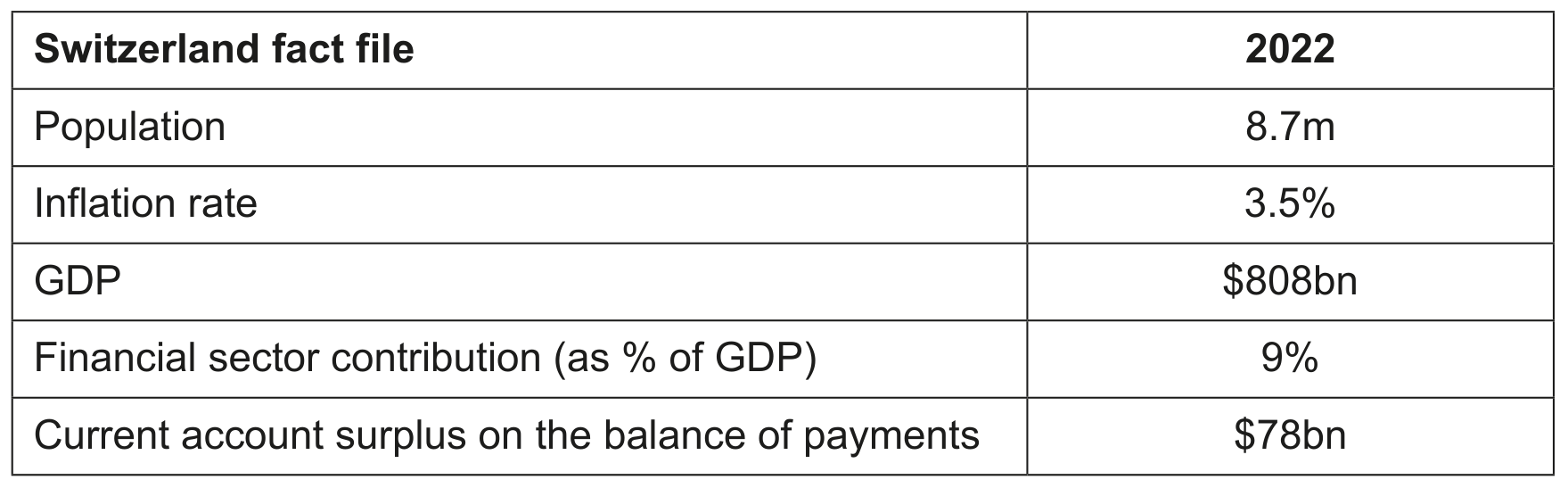
Although inflation in Switzerland in 2022 was above its target of , it was below the inflation rate of other high-income economies, such as the US ( ), the UK ( ) and Germany ( ). Price levels are more stable because of a combination of microeconomic and macroeconomic policy measures. These include maximum prices, subsidies and a contractionary monetary policy.
To encourage the production of solar energy, the Swiss Government has provided more than million in subsidies to producers. This is part of the government's plan to move away from non-renewable sources of energy which are mainly imported. Overdependence on foreign markets could lead to the economy becoming more exposed to external shocks.
Switzerland's current account of the balance of payments has been in surplus from 2015 to 2022. Low inflation, along with the production of very high-quality products, may have contributed to this surplus. A strong currency has also kept the cost of imported raw materials low in Switzerland.
The Swiss franc is one of the more stable currencies in the world. During times of economic uncertainty, the Swiss franc usually strengthens. Fig. 1.1 shows global growth rate (\% change in GDP) and the percentage change in the value of the Swiss franc, against the USD($), from 2018-2022.
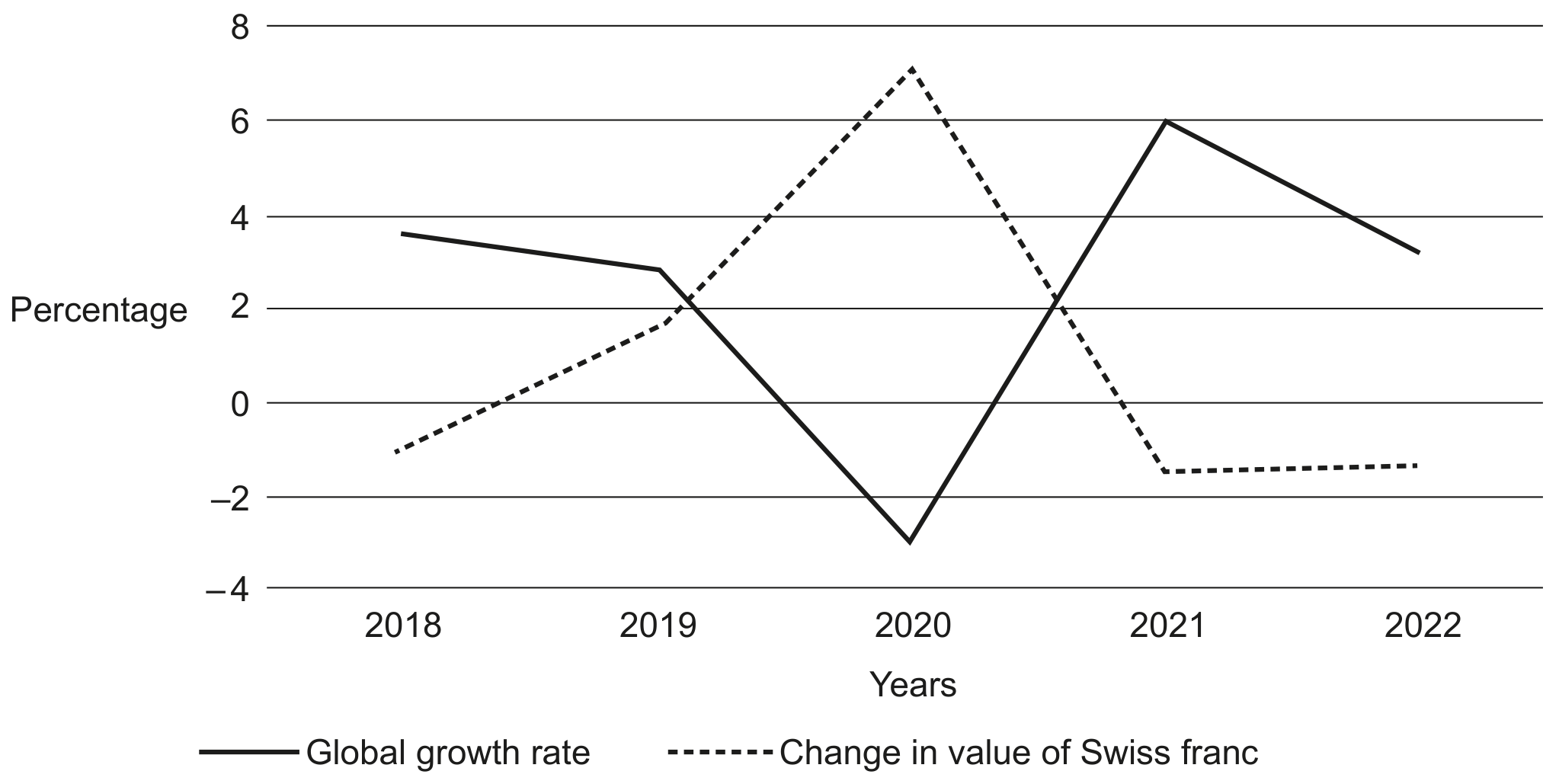
Fig. 1.1 Global growth rate (\% change in GDP) and the percentage change in the value of the Swiss franc against the USD(\$) from 2018-2022
Although inflation was not high compared to other countries, the Swiss central bank increased interest rates in 2022. This was done to reduce inflationary pressures. However, there was a risk that higher interest rates might increase unemployment.
The rise in interest rates affected some firms negatively. The Swiss Government had to organise a merger between the two largest banks in Switzerland. This was to avoid one of them collapsing which would have reduced confidence in the whole banking system. A merger might also have helped the merged bank to gain greater economies of scale. However, the merger resulted in some workers losing their jobs and gave the merged bank greater monopoly power.
Discuss whether or not a bank merger will benefit Swiss consumers and workers.
Answer any three questions.
Each question is introduced by stimulus material. In your answers you may refer to the material and/or other examples you have studied.