EduNinja

IGCSE Economics3.2. HouseholdsTopic Practice

3.2. Households

CAIE IGCSE Economics 3.2. Households question practice helps you revise this syllabus point with the course map in view. Use this page to focus on one topic, check the style of questions available, and connect each attempt back to the knowledge area it is testing.

EduNinja keeps Economics practice aligned to CAIE, so you can move from topic review into exam-style question bank work without losing the syllabus structure. Start with a small set, mark the weak steps, then return to nearby topic links when a definition, graph, calculation, or explanation needs repair.

Question 1(g)

[Maximum number: 6]

Read the source material carefully before answering Question 1.
Source material: Labour shortages in Japan

Source material: Labour shortages in Japan

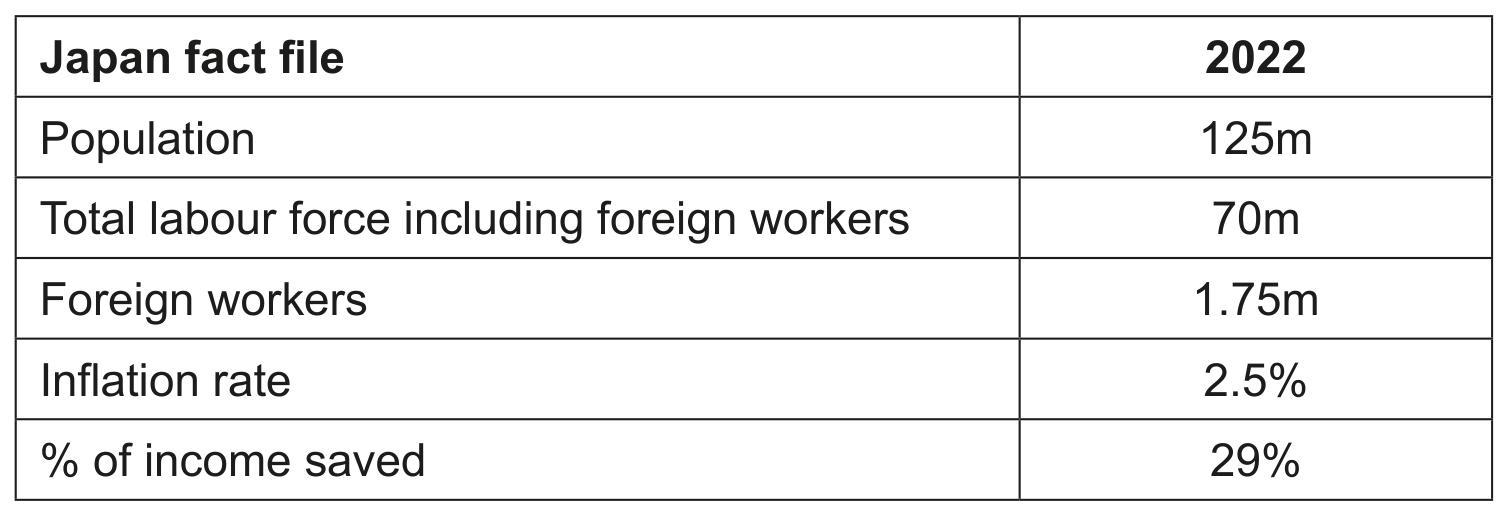
Japan has a high average age of population and a varied economic performance. It has a low birth rate, low inflation rate, good healthcare, high life expectancy and low unemployment rate. Fewer Japanese people enter the labour force each year. It is predicted that Japan's labour force will fall by 10 million by 2040. Many young Japanese people emigrate to Australia, Canada and the US in search of higher wages. However, Japan now experiences net immigration although foreign workers are currently only a small proportion of Japan's labour force.

To achieve an annual economic growth rate of 1.2%1.2 \%, it has been estimated that the number of foreign workers would have to increase to 7 million by 2040. Some foreign workers are discouraged from working in Japan due to the requirement to pass a Japanese language test. Only the most skilled are allowed to stay for more than 5 years and to bring their families with them.

Many Japanese industries are affected by labour shortages and the country's decline in population. For example, the fall in population has affected the quantity of furniture traded. It has also influenced the country's air transport industry. Air travel is the most important method of transport in Japan for foreign travel and long-distance internal travel. Japan's air passenger numbers follow a similar pattern to global air passenger numbers. Table 1.1 shows global GDP per head and global air passenger numbers between 2016 and 2022.
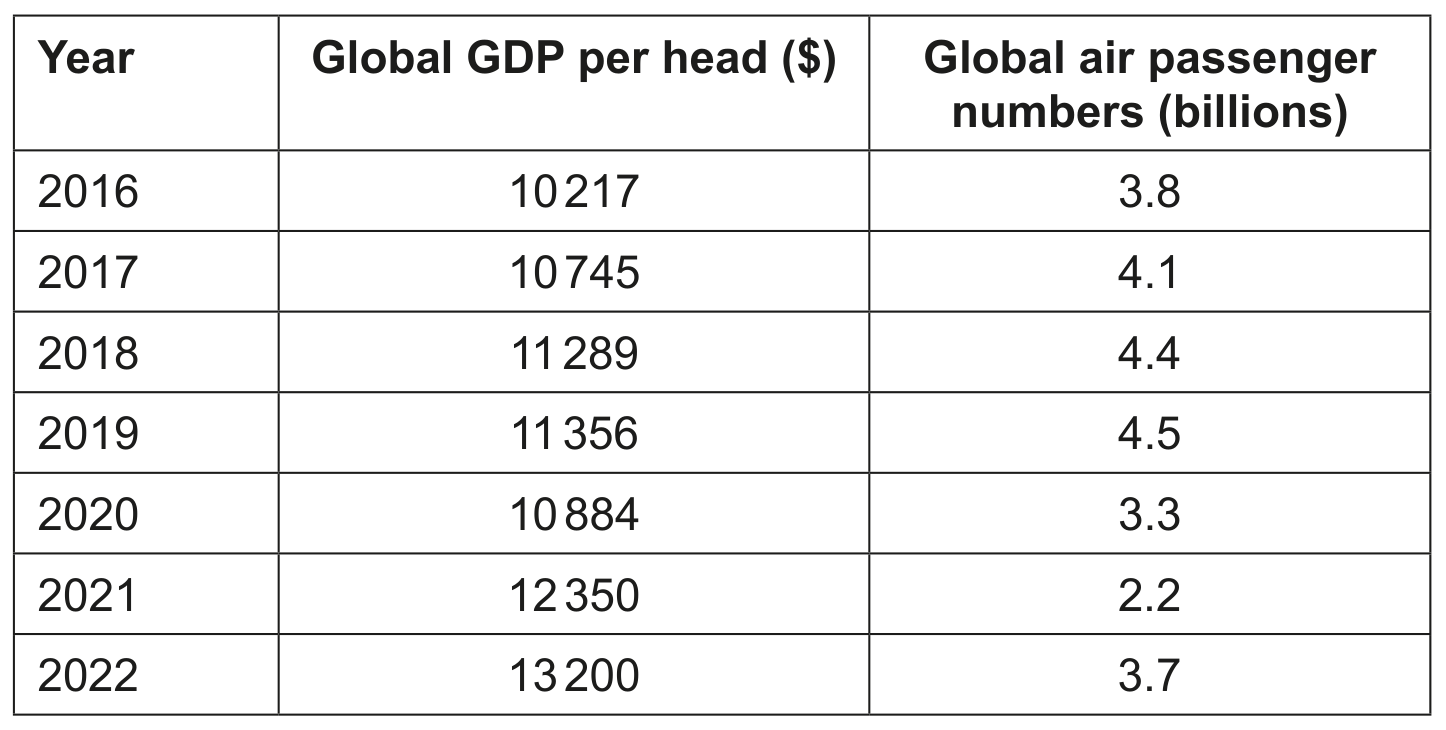
Table 1.1 Global GDP per head and global air passenger numbers 2016-2022

Table 1.1 Global GDP per head and global air passenger numbers 2016-2022

Demand for goods and services, including air travel, is influenced by how much people save. Japanese people save a relatively high proportion of their income. This has affected the country's inflation rate, current account balance of the balance of payments and its economic growth rate.

Japan's macroeconomic performance is also influenced by the mobility of its labour force. There are several reasons why the mobility of Japan's labour force may change in the future. These include its ageing labour force and possible changes in education and training, house prices and the quality and price of transport.

Discuss whether or not a high savings rate is likely to benefit Japan.
Question 1(d)

[Maximum number: 4]

Read the source material carefully before answering Question 1.

Source material: Population, household spending and poverty in Romania

Source material: Population, household spending and poverty in Romania

Between 1990 and 2022, Romania's population fell from 23 million to 19 million. The country's birth rate and death rate both fell over this period. Some workers from other countries, including Sri Lanka and Vietnam, came to live in Romania. However, more Romanian workers left the country to work and live mostly in other European countries.

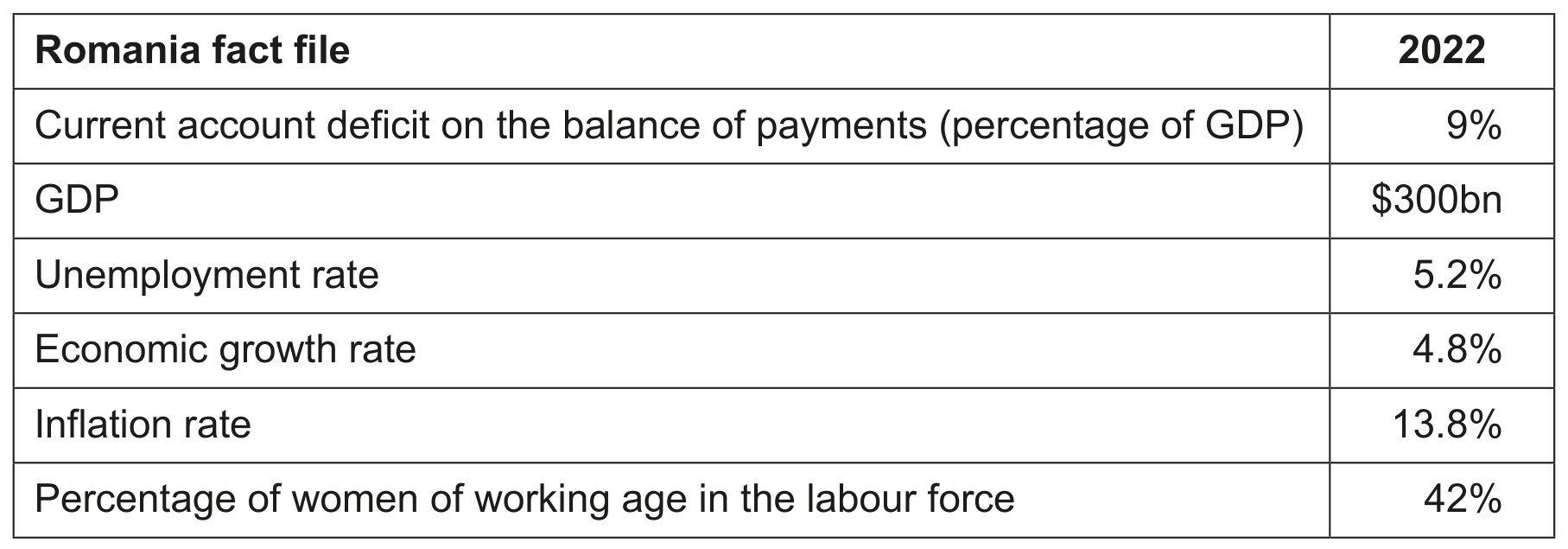
If the Romanian economy continues to grow at its relatively high rate, fewer of its people may emigrate and more immigrants may be attracted. Recent economic growth has been driven largely by increases in household spending. Romanians have become wealthier, more confident about their future and have experienced low interest rates.

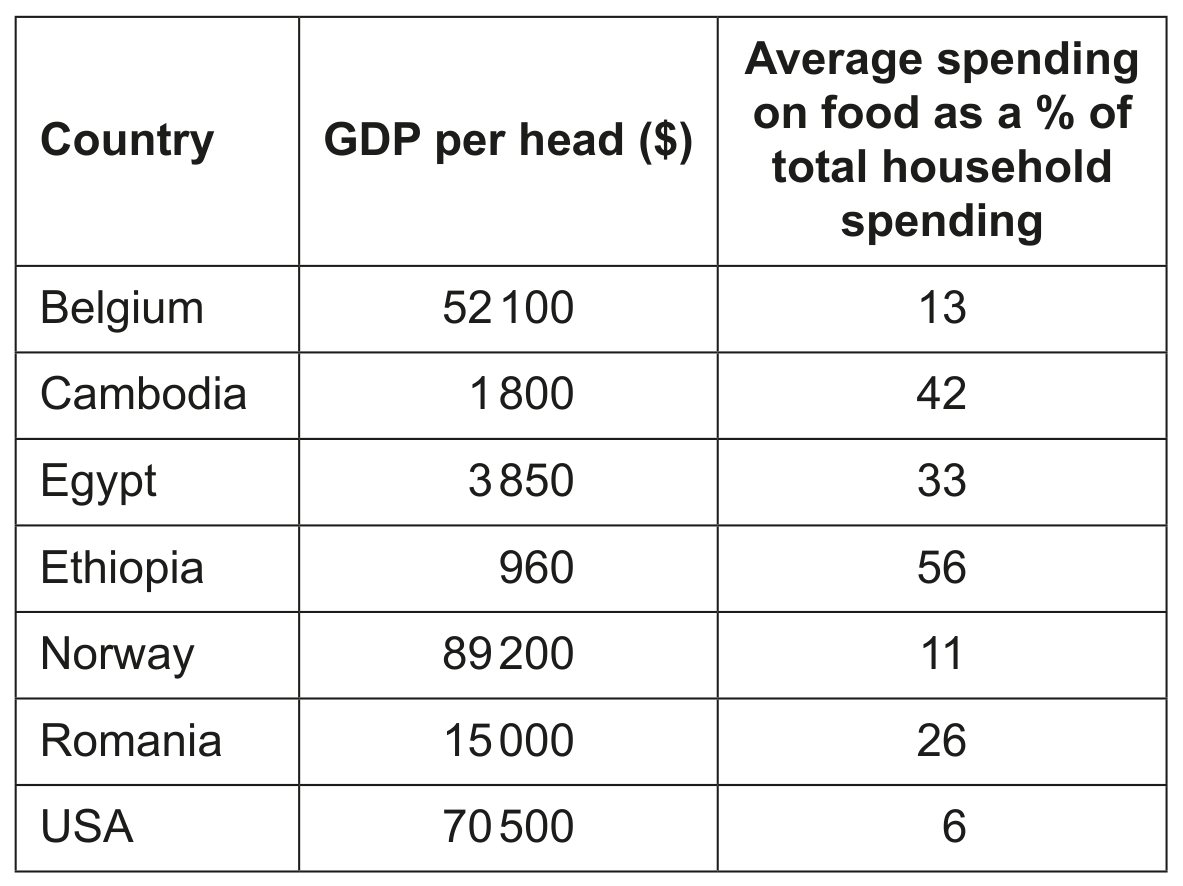
In April 2022, the Romanian Government placed a maximum price on electricity. Romanians spend a relatively high proportion of their income on electricity and on food. Table 1.1 shows selected countries' GDP per head and average spending on food as a percentage of total household spending.

Table 1.1 GDP per head and average spending on food as a percentage of total household spending in 2022

Table 1.1 GDP per head and average spending on food as a percentage of total household spending in 2022

The poor are particularly affected by changes in electricity prices and food prices. Romania has a relatively high level of poverty. To reduce poverty, some economists have suggested that the government should attract more foreign multinational companies (MNCs) to Romania. More MNCs may affect poverty because of the possible effects on unemployment and prices.

Another way to reduce poverty would be to encourage more women to work. The proportion of women in Romania who work or seek work has fallen in recent years. There is a range of influences on whether women enter the labour force. These include social attitudes, female education and whether childcare facilities and part-time work are available.

Explain two reasons why household spending has increased in Romania.

Question 1(b)

[Maximum number: 2]

Read the source material carefully before answering Question 1.

Source material: Istanbul's geographical advantage

Source material: Istanbul's geographical advantage

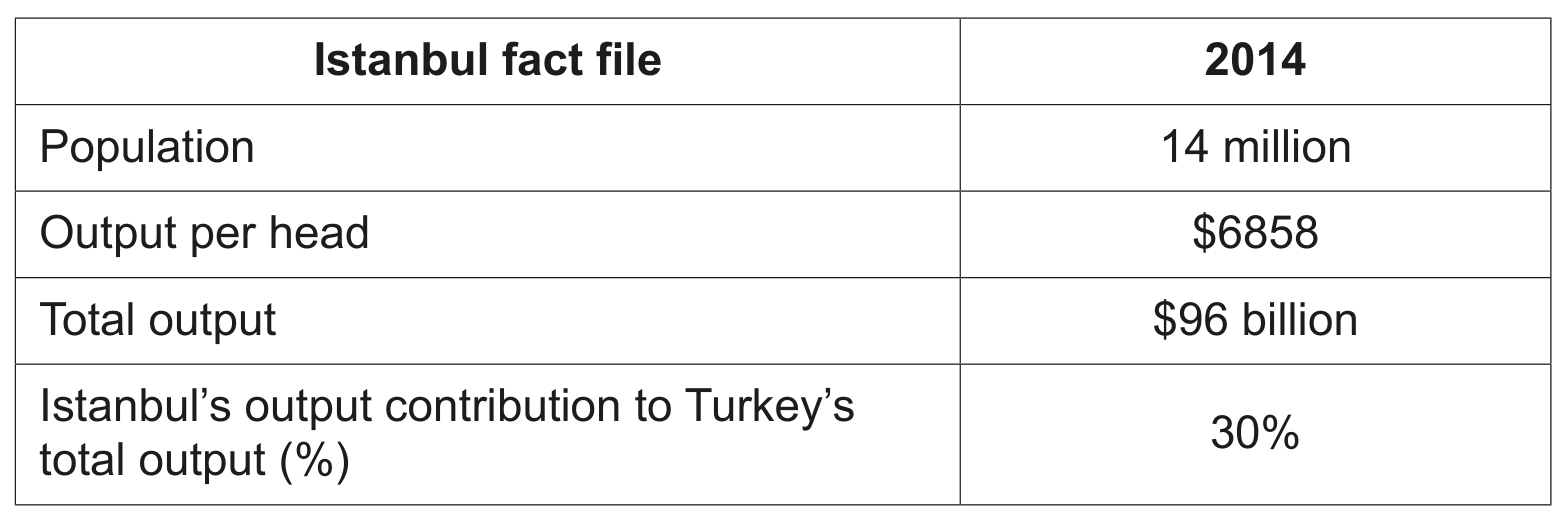
Istanbul is Turkey's largest city by population size. In 2014, its population was approximately 14 times more than it was in 1955. This could be due to increased migration from rural areas to cities and improved healthcare. Istanbul also has the highest output per head of all regions in Turkey.

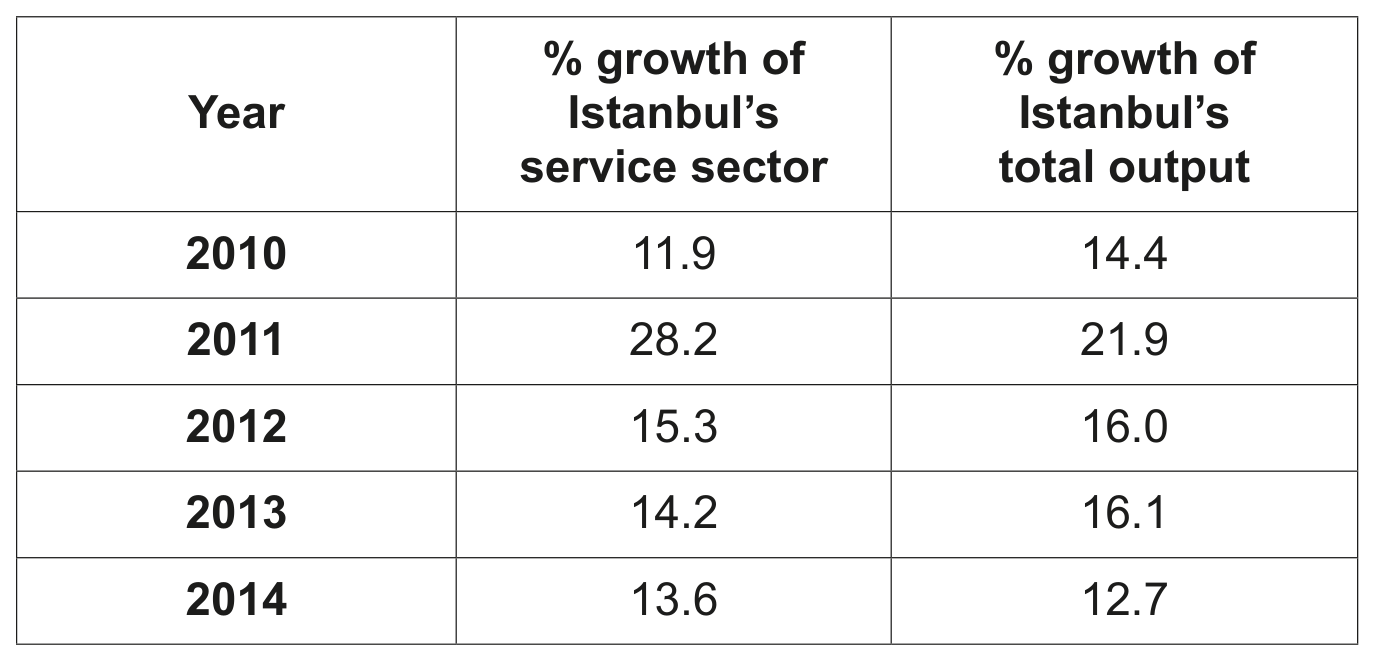
Good transport links have contributed to Istanbul's economic growth. In addition to good land transport, Istanbul is also home to the 14th 14^{\text {th }} largest airport in the world, measured by passenger numbers. From Istanbul, there is access to a market of $24\$ 24 trillion with 1.5 billion people within a flight time of 4 hours. In addition to affordable international air travel to and from Istanbul, domestic air travel is also very affordable. This is most likely due to economies of scale. There is also a high level of competition in this industry which influences prices and quality of service. The growth in transport industries, along with growth of financial services, has contributed greatly to Istanbul's growth rate as shown in Table 1.1.

Table 1.1 The percentage growth of Istanbul's service sector and the percentage growth of Istanbul's total output 2010-2014

Table 1.1 The percentage growth of Istanbul's service sector and the percentage growth of Istanbul's total output 2010-2014

Foreign investment is flowing into Istanbul. Multinational companies (MNCs) are finding Istanbul an attractive city to invest in because of the low cost of living. These MNCs are affecting employment, the level of technology and wages in Istanbul.

However, there is worry that such confidence in the Turkish economy may not last. Many companies have depended on borrowing for expansion. Increased interest rates around the world may make it harder for such companies to continue borrowing and also to attract new customers. If there are greater worries about safety for tourists in Turkey in the future, this may cause fewer people to book flights to Turkey.

Identify two factors that affect borrowing in an economy.

Question 1

[Maximum number: 9]

Read the source material carefully before answering Question 1.

Source material: the challenges facing Pakistan

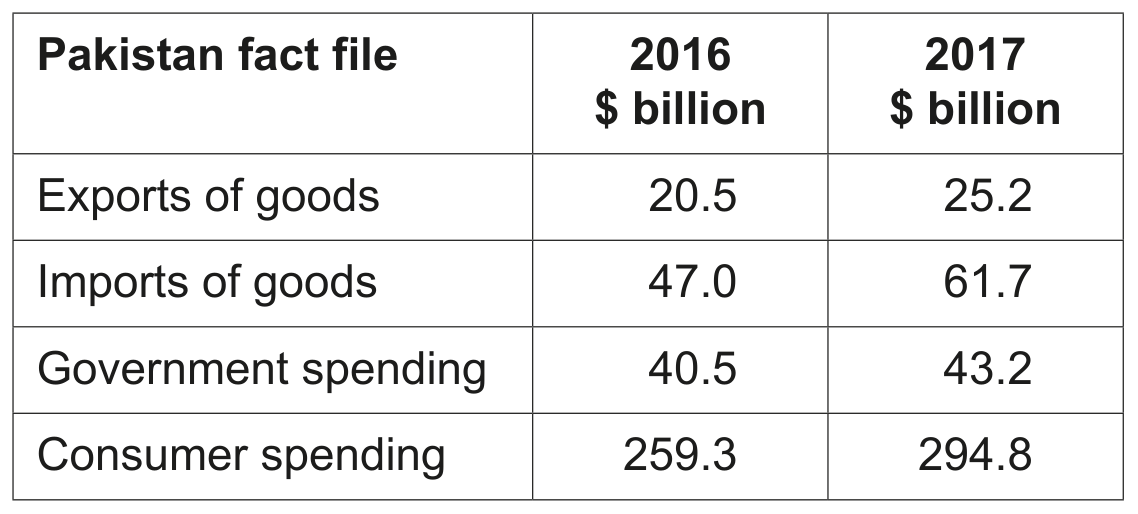
Table

Pakistan faces a number of economic challenges. These include responding to a rising population, improving its trade in goods balance, controlling the country's inflation rate and increasing the country's economic growth rate. To overcome these challenges, the Pakistani government is trying to increase investment. Currently, a high proportion of the country's resources are used to produce consumer goods.

The government is subsidising entrepreneurs and charities to open low-cost schools. It wants to reduce the dropout rate from schools and to raise educational standards. Some parents do not recognise the advantages that a merit good such as education can give their children, for example better health and better job opportunities. Some of the poor need their children to work from a young age to support the family. Government reforms have not yet led to a significant rise in teachers' wages but have improved school buildings and the number of children attending. The qualifications required to teach may be increased in the future.

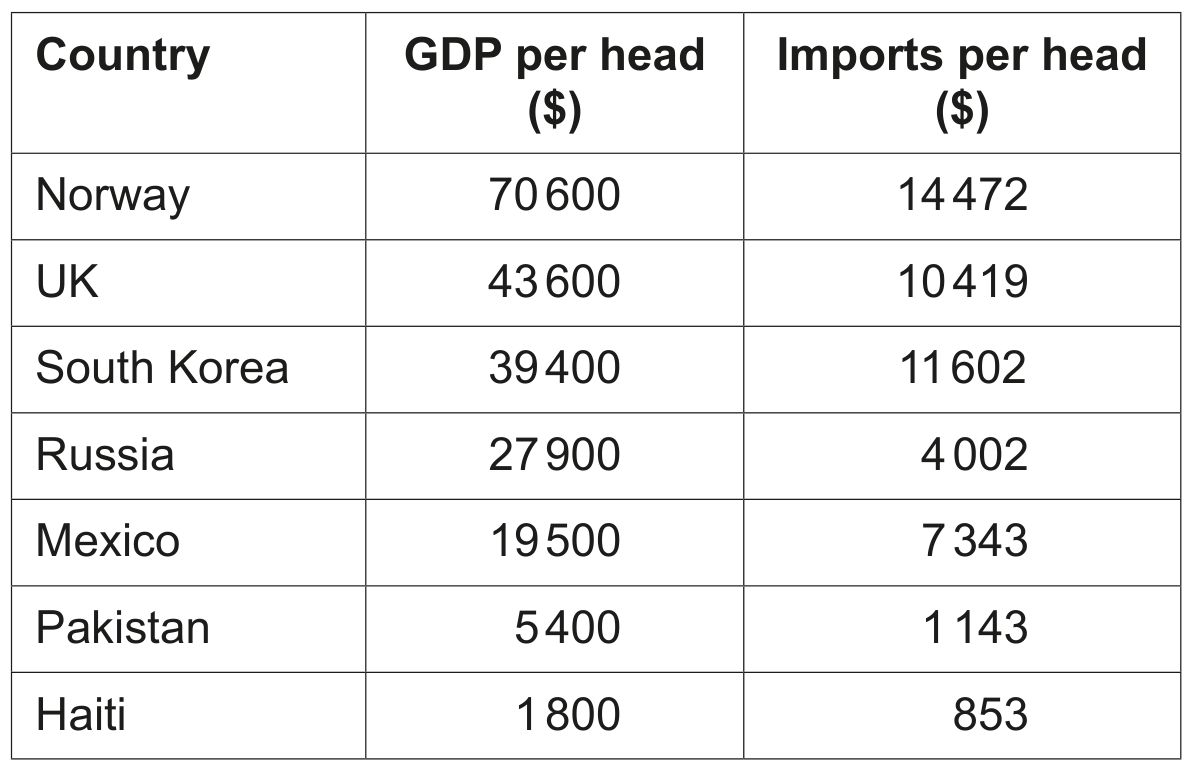
Improved education may affect the number of skilled workers who emigrate and may raise the quantity and quality of goods and services produced. Any resulting higher income may influence the value of imports purchased, as shown in Table 1.

Table 1 GDP per head and imports per head in selected countries in 2017.

Table 1 GDP per head and imports per head in selected countries in 2017.

Pakistan has relatively high import tariffs. Revenue from import tariffs is 45%45 \% of total tax revenue. The tariffs on vehicles, some of which have inelastic demand, are particularly high. Future Pakistani tariffs may be influenced by changes in other countries' trade policies, as well as other factors.

Answer all parts to Question 1. Refer to the source material in your answers.

Question 1(e)

(a)

Analyse why the children of poor families tend to receive less education than the children of rich families.

[ 4 ]

Question 1(f)

(b)

Analyse the relationship between GDP per head and imports per head.

[ 5 ]

Question 9

[Maximum number: 1]

What may cause an individual to save a higher proportion of their income?

A

a belief that the price of goods will rise in the future

B

a fall in the rate of interest paid by the country's banks

C

a fear that income will fall in the future

D

a rise in the individual's wish to enjoy higher consumption immediately

Question 9

[Maximum number: 1]

What would most likely cause a person to increase their savings?

A

a decision to plan for retirement

B

a fall in income

C

a fall in interest rates

D

a reduction in tax-free saving schemes

Question 9

[Maximum number: 1]

Which combination of influences would increase the level of borrowing by a household?

influence 1

influence 2

becoming pensioners

higher rate of inflation

greater wealth

lower consumer confidence

higher consumer confidence

lower rate of interest

higher rate of interest

greater availability of credit

Question 10

[Maximum number: 1]

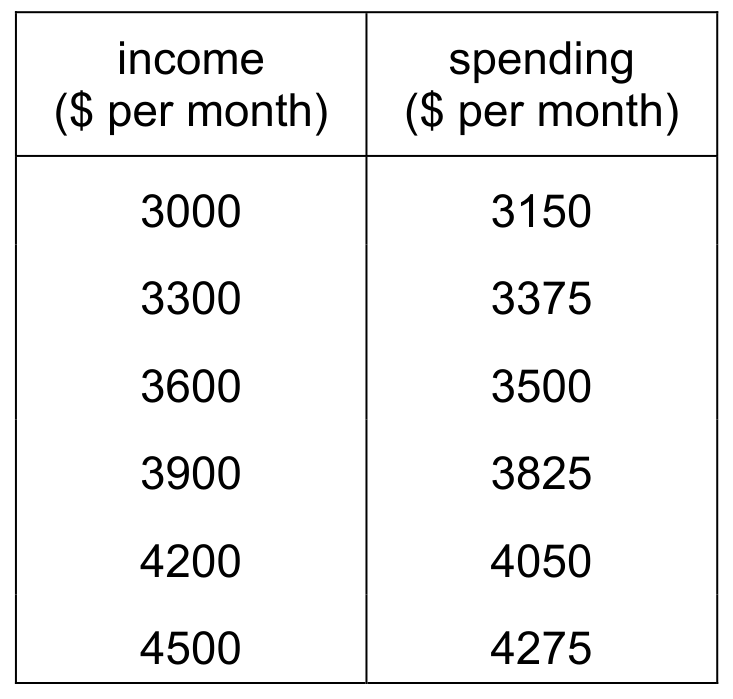
The table shows how household spending changes with income.

Table

What is the lowest level of income at which savings are positive?

A

$ 3000

B

$ 3600

C

$ 3900

D

$ 4200

Question 10

[Maximum number: 1]

A country's central bank raised the rate of interest from 1% to 4% per year.
How would this change have affected the amount saved and the cost of borrowing by individuals?

amount saved

cost of borrowing

decreased

decreased

decreased

increased

increased

decreased

increased

increased

Question 10

[Maximum number: 1]

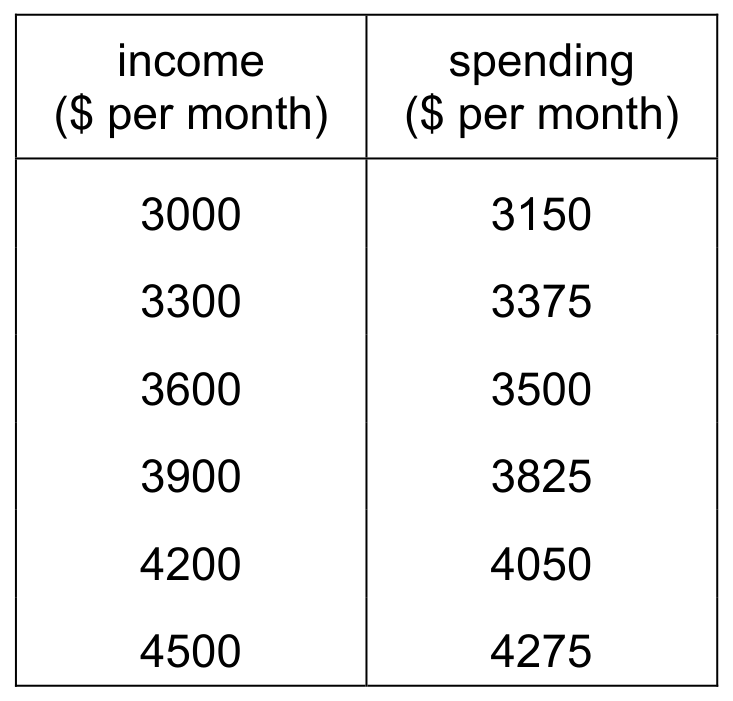
The table shows how household spending changes with income.

Table

What is the lowest level of income at which savings are positive?

A

$ 3000

B

$ 3600

C

$ 3900

D

$ 4200

0 selected