EduNinja

IGCSE Economics4.2. Fiscal policyTopic Practice

4.2. Fiscal policy

CAIE IGCSE Economics 4.2. Fiscal policy question practice helps you revise this syllabus point with the course map in view. Use this page to focus on one topic, check the style of questions available, and connect each attempt back to the knowledge area it is testing.

EduNinja keeps Economics practice aligned to CAIE, so you can move from topic review into exam-style question bank work without losing the syllabus structure. Start with a small set, mark the weak steps, then return to nearby topic links when a definition, graph, calculation, or explanation needs repair.

Question 1(e)

[Maximum number: 4]

Read the source material carefully before answering Question 1.
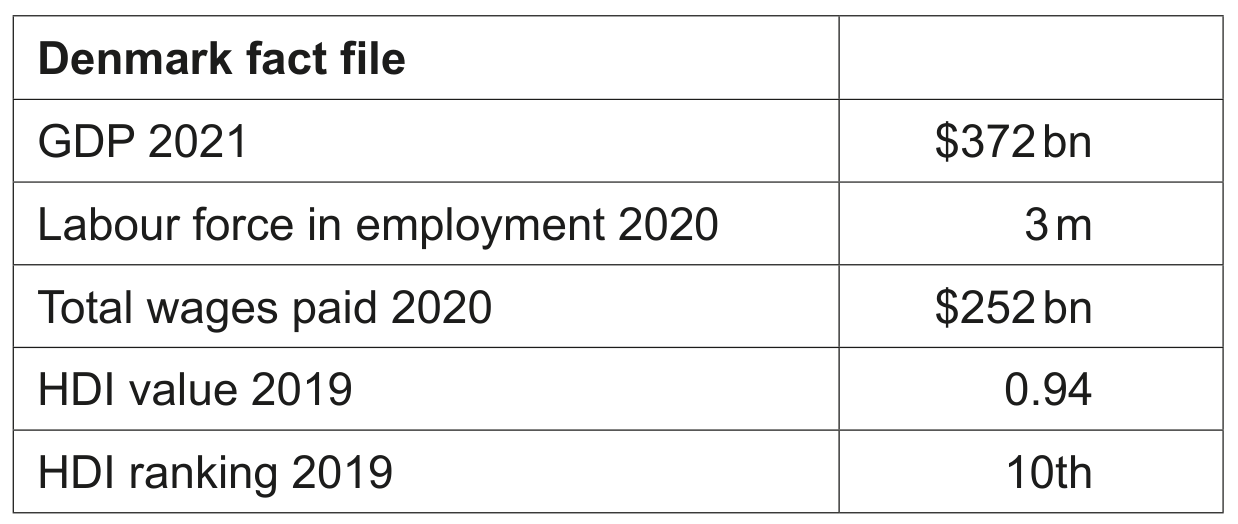
Source material: Changes in the Danish economy

Source material: Changes in the Danish economy

Denmark is a high-income, North European country. The Danish population have high living standards and enjoy relatively long hours of leisure time. They spend this time in a variety of ways including cycling, jogging and playing golf.

Danish workers are employed in a range of industries. Denmark used to be a leading shipbuilding country but now the industry is in decline. Ships have substitutes in other forms of transport. Also, it may be possible to postpone the purchase of ships, they take a long time to produce and they are expensive to store. In contrast to the shipbuilding industry, the Danish toy industry has grown in recent years.

Denmark's shipbuilding and toy industries are in the private sector. Denmark's economic performance is also influenced by changes in the public sector. Table 1.1 shows Danish government spending and GDP over the period 2015 to 2021.
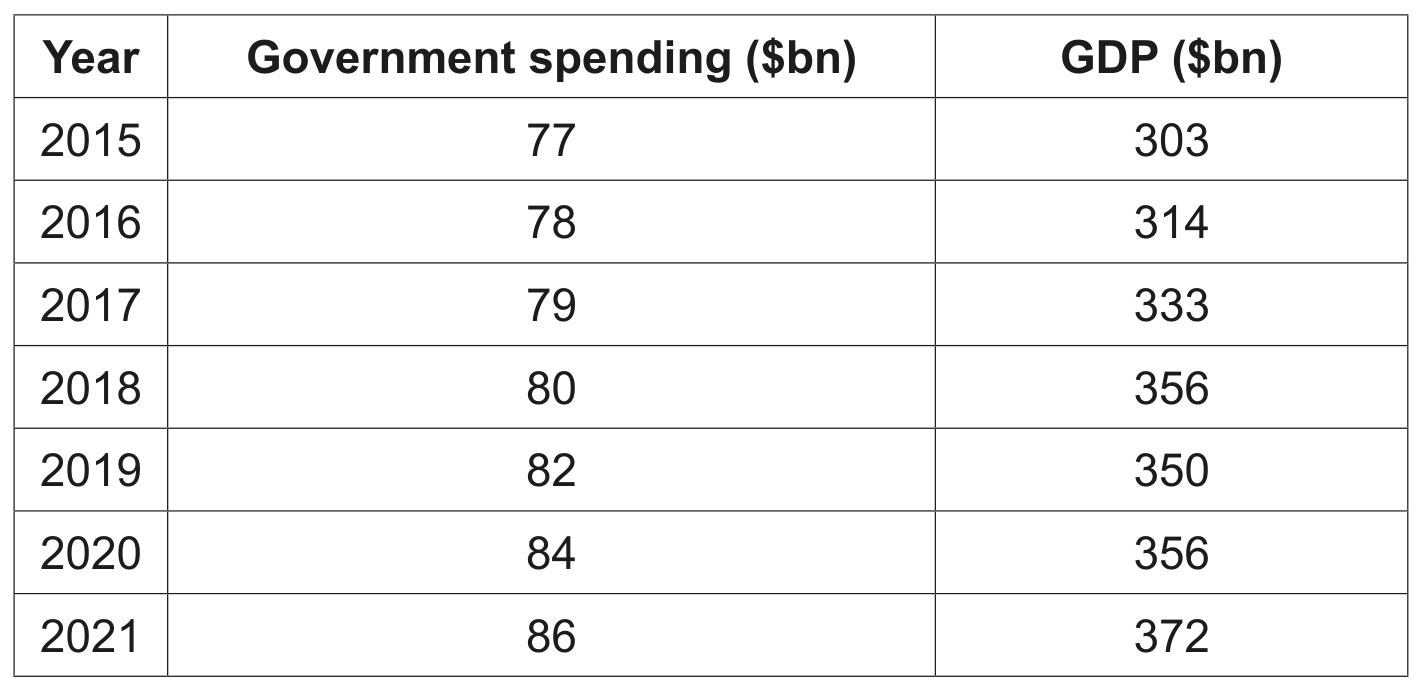
Table 1.1 Danish government spending and GDP 2015-2021

Table 1.1 Danish government spending and GDP 2015-2021

Denmark is heavily involved in international trade. It usually has a surplus on the current account of its balance of payments. International trade affects the availability of products in the country and the country's foreign exchange rate. It also affects the country's GDP and level of employment.

How people work in Denmark, as in most countries, has changed in recent years. More people now spend at least some of their working hours working from home. This change is expected to affect productivity and help firms keep their workers. Households may be encouraged to move out of cities and to buy larger homes. There may also be changes in demand for transport, demand for food sold in city centres and firms' need for office space.

Analyse the relationship between government spending and GDP in Denmark.
Question 1(f)

[Maximum number: 5]

Read the source material carefully before answering Question 1.

Source material: Changes in US macroeconomic performance and policies

Source material: Changes in US macroeconomic performance and policies

Between 2009 and 2019, US real GDP increased every year. This was the result of, among other causes, low interest rates, land reclamation and an increase in the labour force. The higher US output brought a number of benefits but some workers lost their jobs. This was because while some industries expanded, others closed down. Income also became more unevenly distributed and pollution increased.

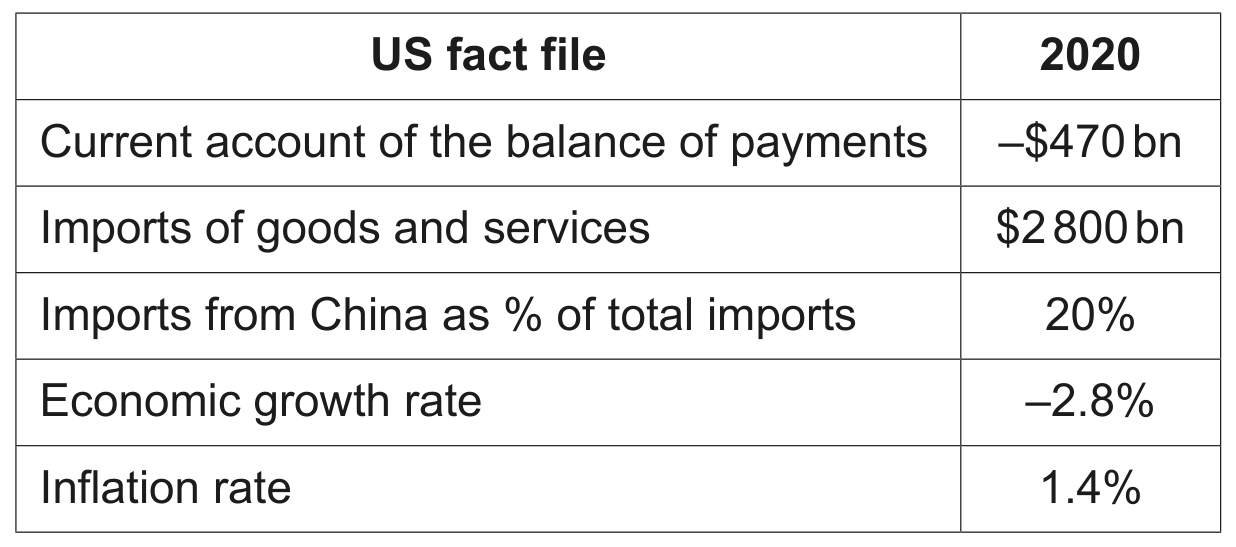
US exports and imports rose over this period. The growth of trade with China, a major trading partner of the US, was affected later in the period by increases in US tariffs on some Chinese imports. These increases were expected to change the US current account balance, output and tax revenue.

The US exports a range of products to China, including ice cream. China is the world's largest consumer of ice cream, buying a third of all ice cream consumed. Chinese consumers sometimes buy chocolate to eat with ice cream. In 2019, the price of chocolate increased.

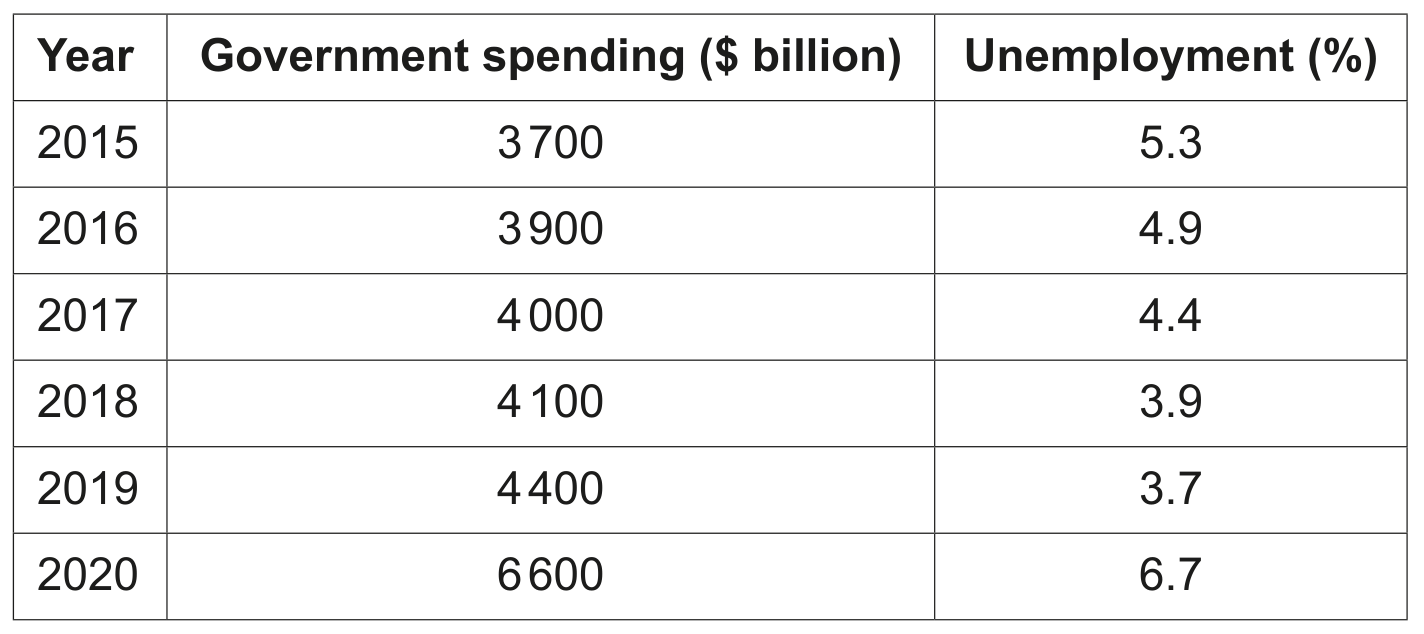
In 2020, US macroeconomic performance changed. The country's price level rose more slowly, largely due to a decrease in consumer expenditure and a reduction in workers' bargaining power. The country's real GDP fell and unemployment rose. These changes influenced US macroeconomic policy. US government spending rose significantly as shown in Table 1.1.

Table 1.1 US Government spending and unemployment rate 2015-2020

Table 1.1 US Government spending and unemployment rate 2015-2020

The US central bank, the Federal Reserve, announced in September 2010 that it would allow the inflation rate to rise and would not increase the interest rate. In the past, central banks have aimed to keep the inflation rate low because of the effects that inflation can have on, for example, investment, exports, the distribution of income and tax revenue. The Federal Reserve stated that it wanted to raise economic growth which can increase income per head, employment and tax revenue.

Analyse the relationship between government spending and unemployment.

Question 1

[Maximum number: 8]

Read the source material carefully before answering Question 1.

Source material: Happiness

Table

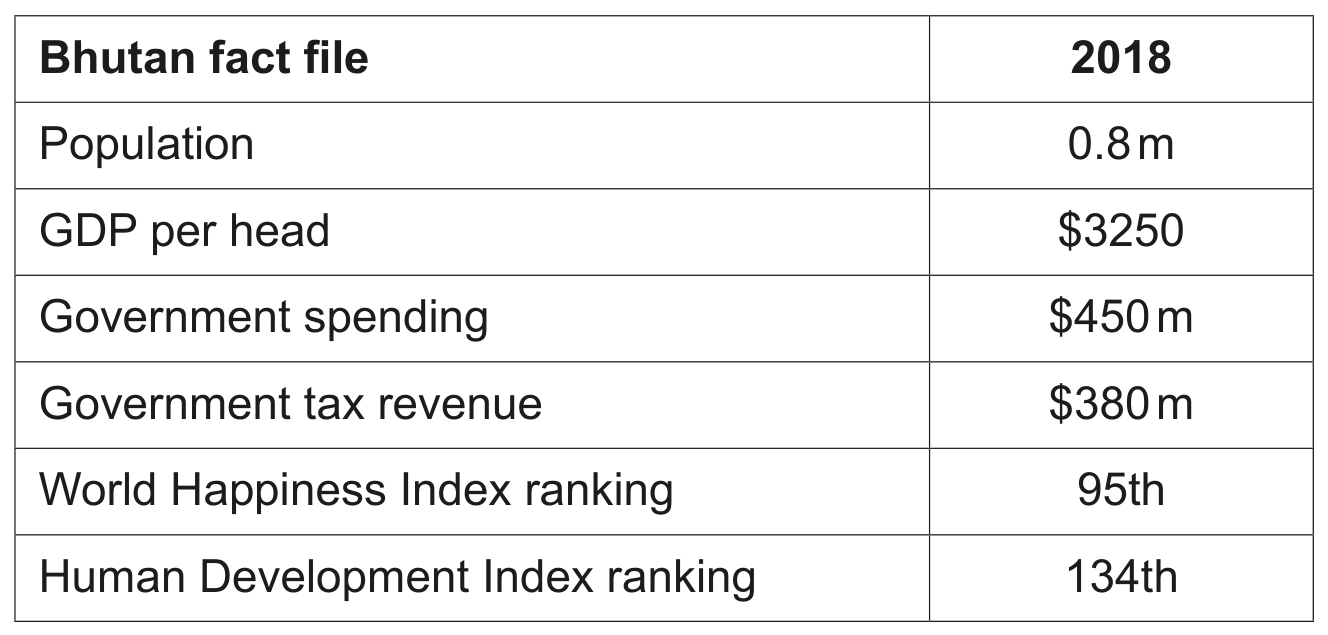
The United Nations has published a World Happiness Index every year since 2012. This index ranks countries according to life expectancy, freedom, social support, trust, generosity and GDP per head. New Zealand was ranked 8th in the World Happiness Index in 2019. The governments of both Bhutan and New Zealand now consider a number of influences on the happiness of their populations.

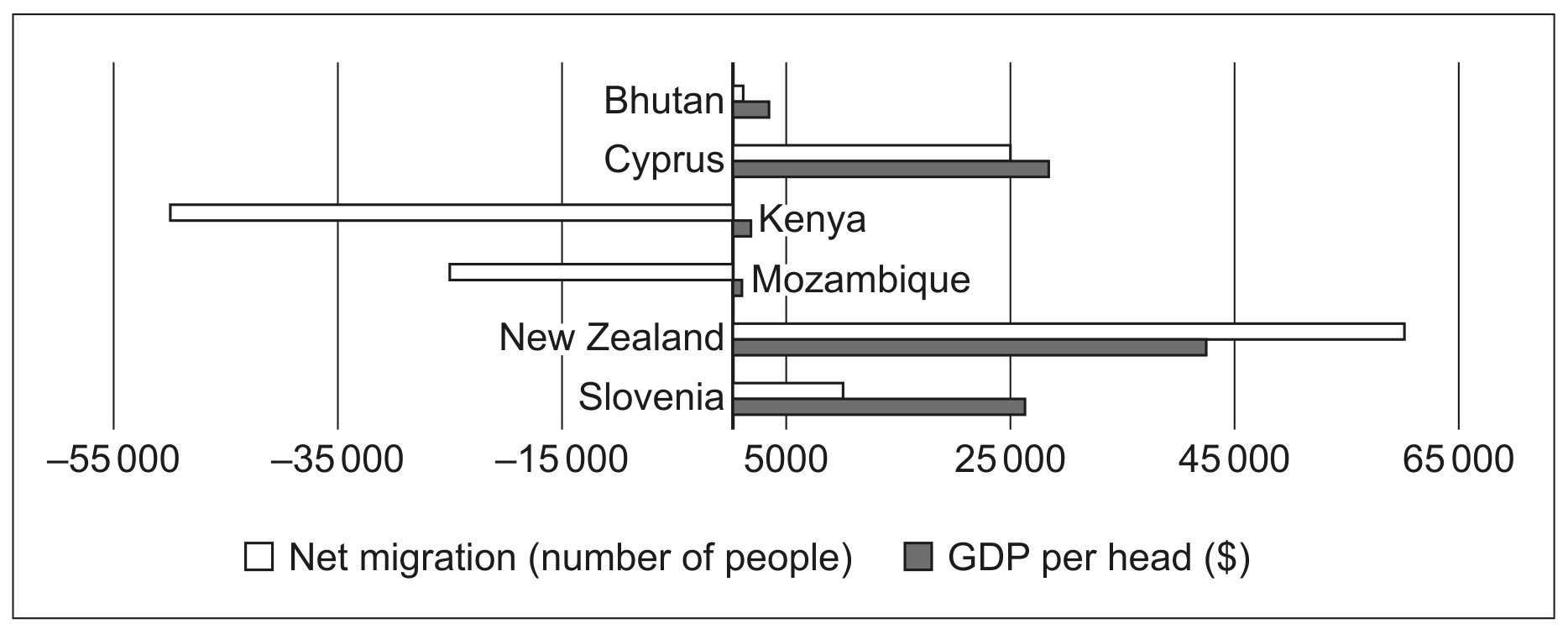
While more than half of Bhutan's labour force is employed in agriculture, most people in New Zealand are employed in the tertiary sector. Working conditions, working hours, the type of work and pay vary between the primary and tertiary sectors. Productivity is higher in all sectors in New Zealand than in Bhutan. This is partly the result of higher investment in capital goods and education in New Zealand. New Zealand also has a higher GDP per head. GDP per head ($) can influence net migration (number of people) as shown for selected countries in 2017 in Fig. 1.1.

Fig. 1.1 GDP per head (\$) and net migration (number of people) of selected countries 2017

Fig. 1.1 GDP per head (\$) and net migration (number of people) of selected countries 2017

In its 2019 budget, the New Zealand government said it would measure its progress not by increases in GDP but by increases in the quality of people's lives. To achieve this, it announced increased spending on some areas including mental health, child poverty and pollution. Some economists criticised this approach. They argued that the best way the government could improve living standards is to reduce income tax rates. This reduction could change government spending and the quantity of products that people buy, including cars.

Tax revenue had increased in New Zealand in 2019, partly because of a rise in revenue from corporation tax. It was, however, difficult to predict firms' future profits. This was because of uncertainty about what would happen to its GDP and its corporation tax rates.

Answer all parts to Question 1. Refer to the source material in your answers.

Question 1(c)

(a)

State why Bhutan's 2018 government budget is likely to have increased total demand in Bhutan.

[ 2 ]

Question 1(h)

(b)

Discuss whether or not a cut in income tax rates will increase living standards.

Answer any three questions.

Each question is introduced by stimulus material. In your answer you may refer to this material and/or to other examples that you have studied.

[ 6 ]

Question 1(h)

[Maximum number: 6]

Read the source material carefully before answering Question 1.
Source material: Is there a future for Australian coal?

Table

Australia is a major producer of coal. Most coal is used to produce electricity. In this process, carbon dioxide is emitted. Global demand for coal has declined in recent years as countries have tried to reduce pollution. There has been a switch to, for example, gas, offshore wind and solar power.

Coal is mined in each of Australia's six states but most is mined in Queensland and in New South Wales. In Queensland, some of the firms are very large. These firms employ both low-paid, unskilled workers and high-paid, specialist mining engineers, site managers and accountants. The firms use the latest excavators, mining drills, crushing equipment, earth movers and drones to detect maintenance issues.

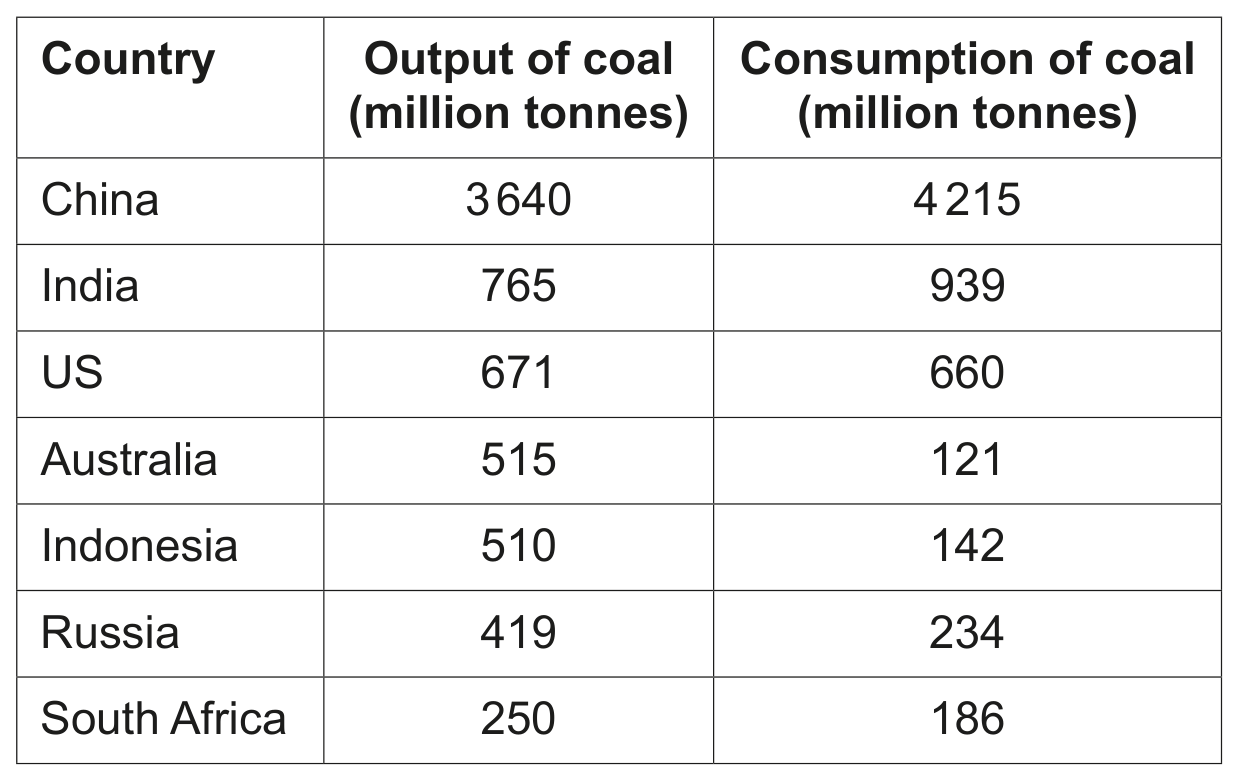
Coal can be stored to meet changes in market conditions but storage costs can be high. It can also take years to construct a new coal mine. Table 1.1 shows the output and consumption of the seven largest producers in 2020.

Table 1.1 The output and consumption of the seven largest producing countries 2020

Table 1.1 The output and consumption of the seven largest producing countries 2020

Global coal production has fallen in recent years with most countries switching to renewable sources of energy. However, there are some countries where coal production is set to increase. There are plans in both Australia and India, for example, to open new coal mines. The Indonesian government sets a maximum price on coal to encourage the country's power stations to use it.

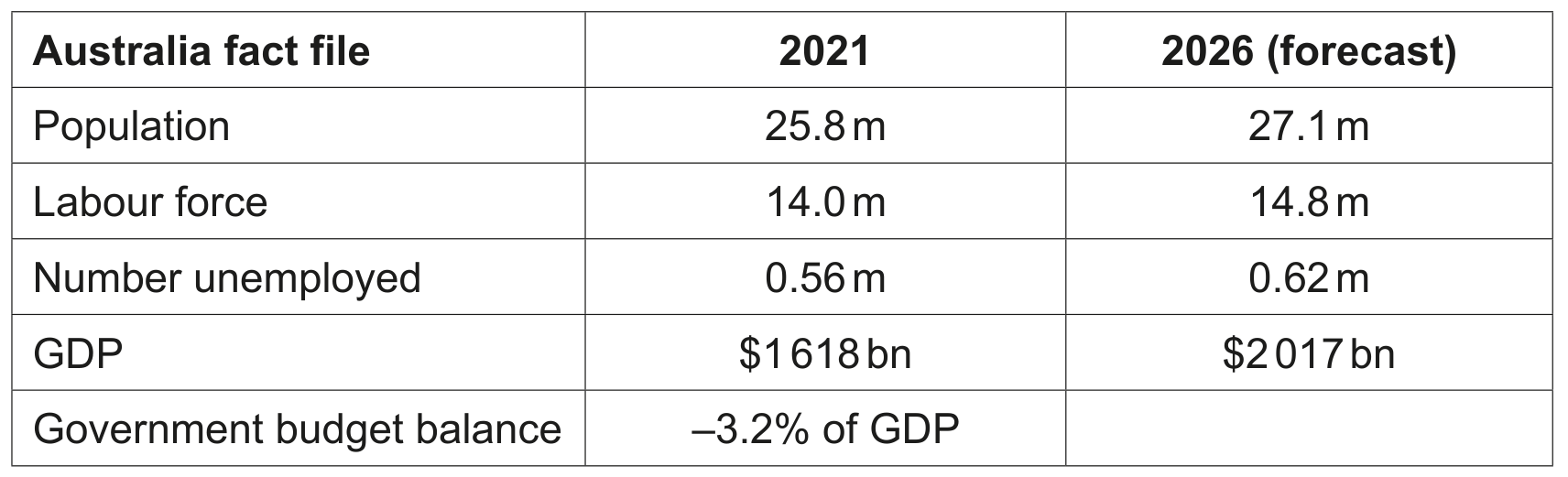
The Australian coal industry contributes to its government's tax revenue. There are, however, other influences on Australia's government's budget balance including changes in tax rates and state support for some of the country's industries.

Discuss whether or not Australia is likely to have a budget deficit in 2026.

Answer any three questions.

Each question is introduced by stimulus material. In your answer you may refer to this material and/or to other examples that you have studied.

Question 1(e)

[Maximum number: 4]

Read the source material carefully before answering Question 1.

Source material: Bank mergers

Source material: Bank mergers

In 2019, there was a merger between three Nigerian commercial banks to form Nigeria's largest commercial bank. In 2019, two US commercial banks merged to form the US's 6th largest commercial bank. In the US, the three largest banks controlled 32%32 \% of the market. In the US and Nigeria, large banks have opened more branches, carried out advertising campaigns and improved online banking.

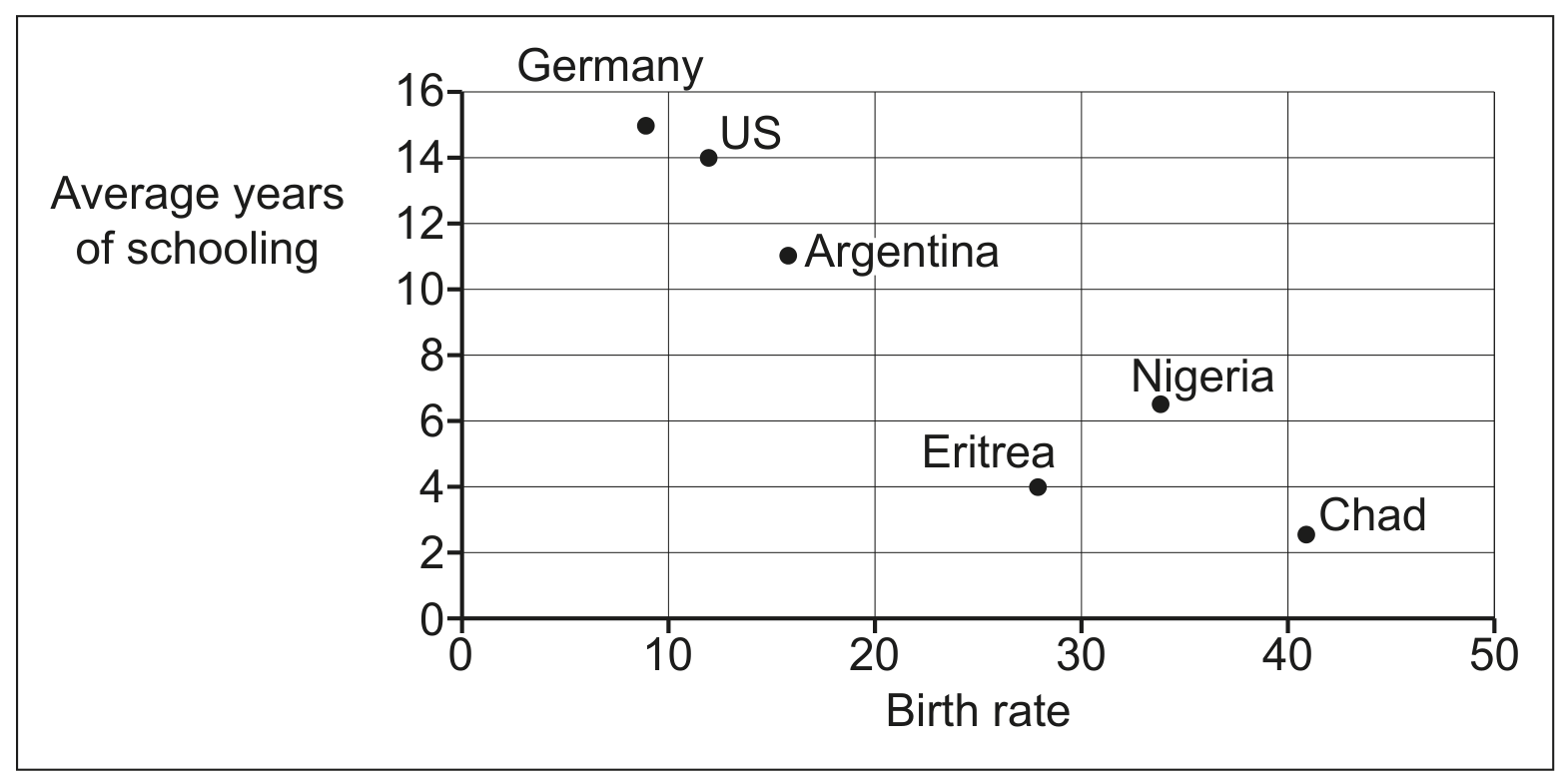
Bank mergers can result in some bank employees losing their jobs. Unemployment did rise in Nigeria in 2019. This is likely to have affected the government's budget as both government tax revenue and government spending will have changed. Most commercial bank workers are well-educated. The number of years of education people receive can affect a country's birth rate. Fig. 1.1 shows average years of schooling and the birth rate in selected countries in 2019.

Fig. 1.1 Average years of schooling and birth rate in selected countries 2019

Fig. 1.1 Average years of schooling and birth rate in selected countries 2019

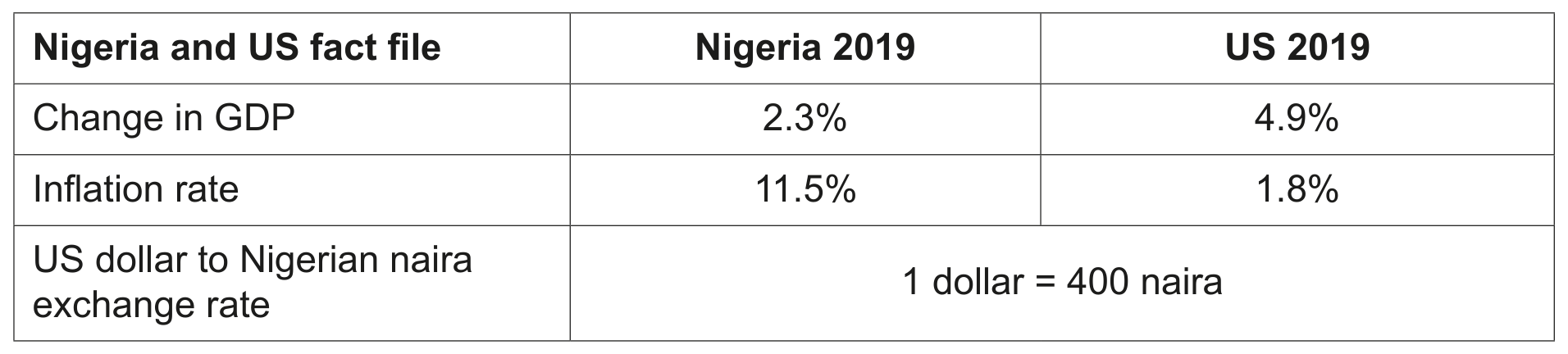
Some households in both Nigeria and the US, who spend more than they earn, borrow from commercial banks. Some children in Nigeria, in low-income households, do not have enough to eat due to the high price of food. A government subsidy to farmers could be used to help low-income Nigerian households. The subsidy could also help to reduce the deficit on the current account of its balance of payments. This will depend on Nigeria's inflation rate compared with other countries and incomes at home and abroad.

In the US, nearly 35%35 \% of children are overweight. One cause of this is the consumption of high-sugar food and drinks. The US government could impose a minimum price on such products, including chocolate. A minimum price could move the market closer to where social benefit equals social cost. However, some consumers think it would be unfair and some firms think it would reduce profits. A minimum price may also impose a cost on the government and its success would be influenced by how high the minimum price is set.

Analyse how an increase in unemployment may affect the Nigerian government's budget.

Question 1(a)

[Maximum number: 1]

Read the source material carefully before answering Question 1.

Source material: The future of the economy of St. Kitts and Nevis

Source material: The future of the economy of St. Kitts and Nevis

St. Kitts and Nevis is a small, two-island country in the Caribbean. The country's three main industries are tourism, financial services and agriculture. Tourists are attracted by the country's beaches, coral reefs, forts, rainforests and shipwrecks. However, if rainforests continue to be cut down and soil erosion continues to pollute the coral reefs, killing off marine life, tourism may be discouraged. The St. Kitts and Nevis Government is also concerned that the social costs of tourism exceed the private costs.

St. Kitts and Nevis's financial services include a growing banking sector. Among the country's commercial banks are a few foreign multinational companies (MNCs). These MNCs are attracted by the country's relatively high incomes, the absence of personal income tax and a relatively high literacy rate.

Some of the country's main agricultural products are carrots, onions, peanuts and sweet potatoes. In 2017, the St. Kitts and Nevis Government introduced a training scheme to raise the productivity of onion farmers.

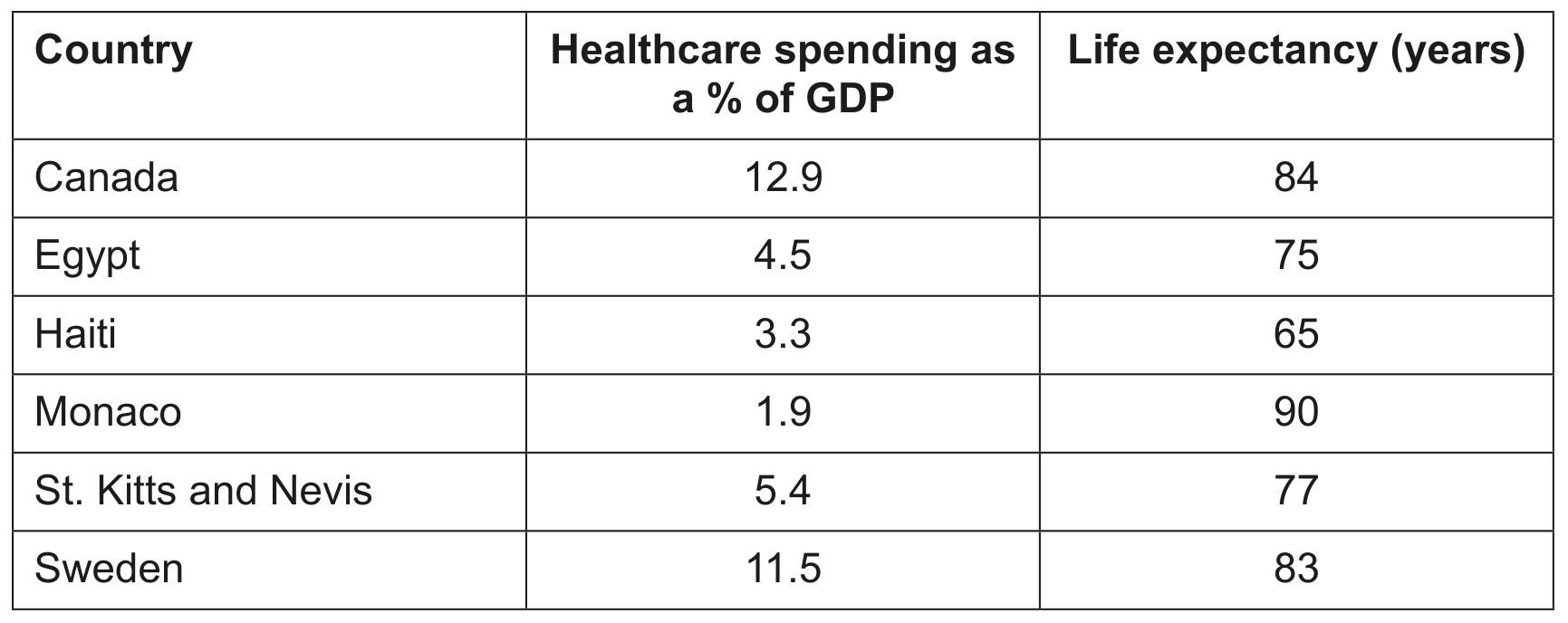
Other important industries in St Kitts and Nevis include healthcare and fishing. Table 1.1 shows healthcare spending as a percentage of GDP and life expectancy in six selected countries in 2022.

Table 1.1 Healthcare spending as a percentage of GDP and life expectancy in selected countries in 2022

Table 1.1 Healthcare spending as a percentage of GDP and life expectancy in selected countries in 2022

The small size of St. Kitts and Nevis's fishing industry means that it imports large quantities of fish. The country's fishing boats are small and some lack up-to-date equipment. A larger fishing industry, with bigger boats, may bring a number of benefits to the country.

Changes in the structure and performance of industries in St. Kitts and Nevis may alter the country's price level. Between 2018 and 2020, the country experienced deflation. This affected people's purchasing power, saving and debts. It also affected the country's exports and firms' investment decisions.

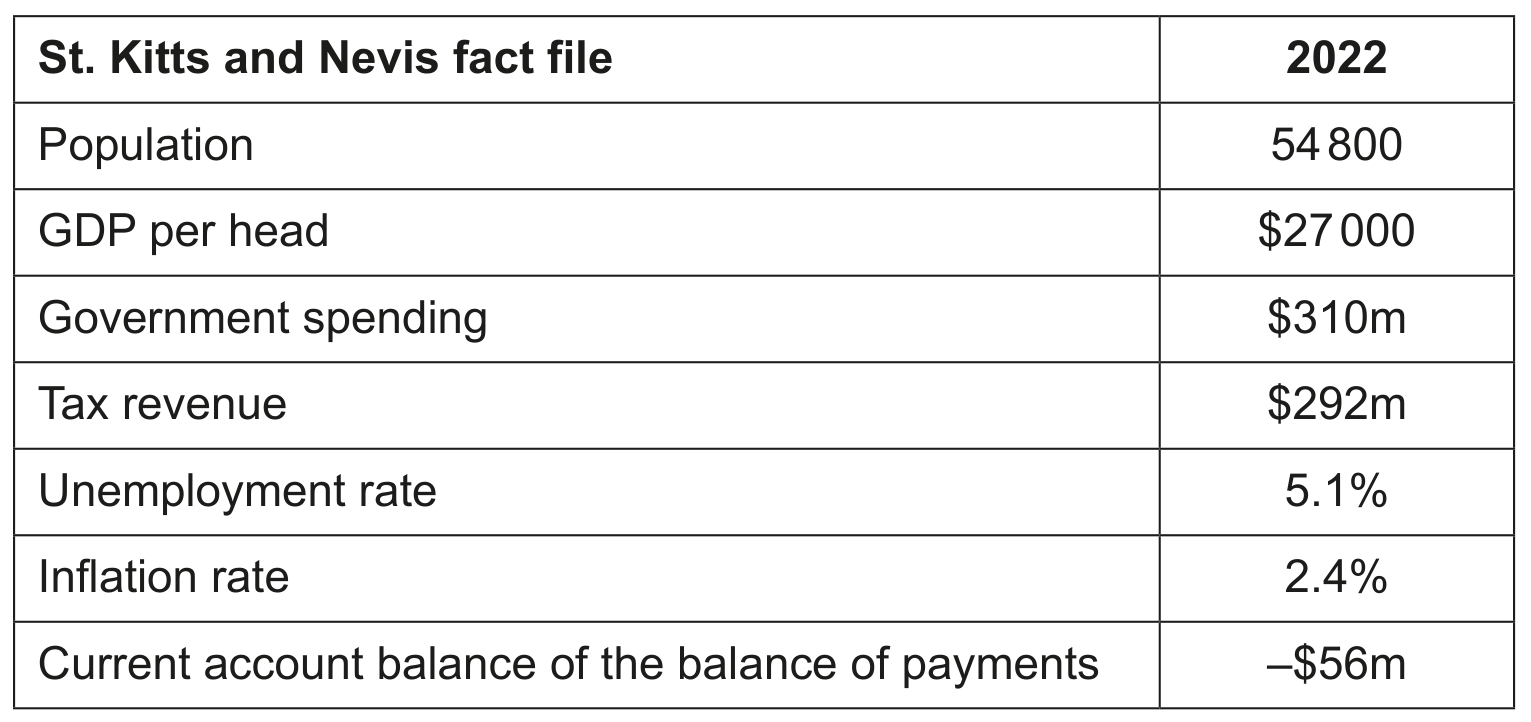
Calculate St. Kitts and Nevis's government budget deficit in 2022.

Question 1

[Maximum number: 11]

Read the source material carefully before answering Question 1.

Source material: Indonesia and climate change

Source material: Indonesia and climate change

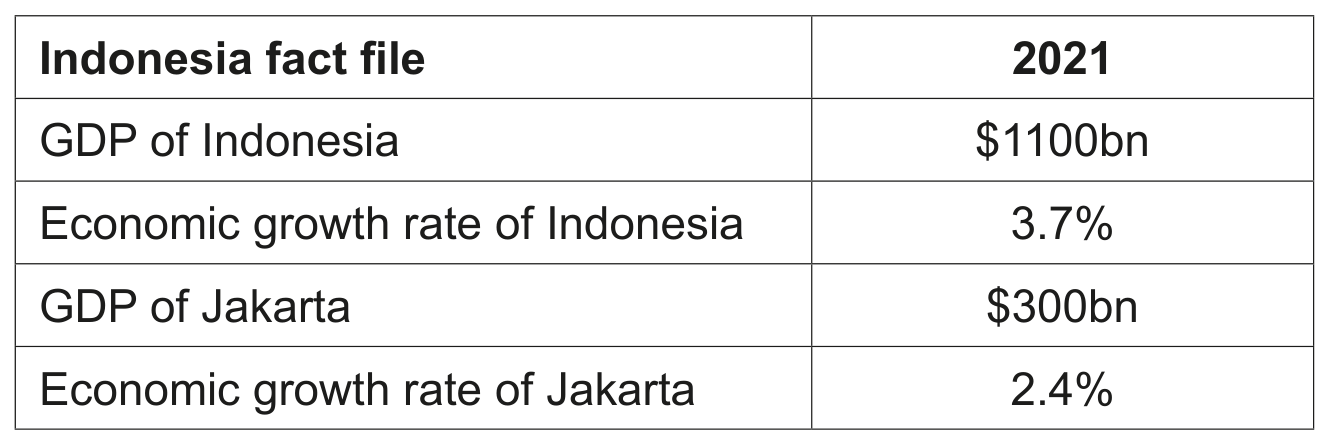
Jakarta, Indonesia's capital city from 1945 to 2024, is one of the world's fastest sinking and most polluted cities. The city is expected to record a large decrease in real Gross Domestic Product (GDP) per head which could lead to a fall in living standards.

The free market can be blamed for air pollution and rising sea levels across some areas of Indonesia. Schools and other buildings have been flooded and roads have been destroyed. Floods have also led to an increase in diseases transmitted through water and mosquitoes which breed in water.

Farmland has been submerged, cutting off a vital source of income for many farmers. This has led to internal migration (people moving between regions of the same country). For example, some farmers have moved to areas where climate change has led to the production of different crops. There has been less pressure on both natural and local government resources in areas which people have left. However, these movements could lead to the collapse of entire communities and increase the inequality between workers who are more mobile and those who are less mobile.

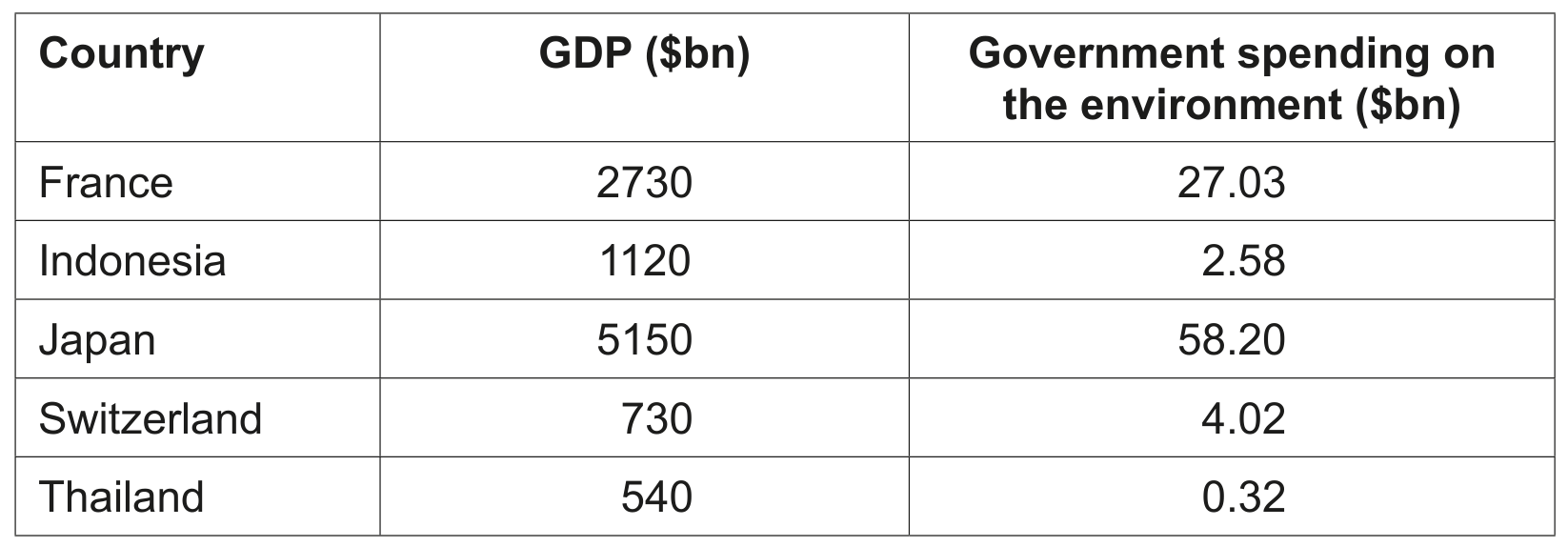
Governments around the world have reacted to climate change by spending more on the environment. Table 1.1 shows the GDP and government spending on the environment of selected countries in 2019.

Table 1.1 GDP and government spending on the environment of selected countries in 2019

Table 1.1 GDP and government spending on the environment of selected countries in 2019

The Indonesian government has also reacted to environmental issues by relocating its capital city. The city of Nusantara will replace Jakarta as the capital city in 2024. The cost of building this new city is expected to be $32.5\$ 32.5 billion. This city will not only provide job opportunities but could also reduce the inequality between the different regions of Indonesia. Jakarta is located on the island of Java which is a wealthier region than Kalimantan. The new city, Nusantara, will be located in Kalimantan region. In addition, the government intends for the new capital city to be carbon-neutral. However, opponents of this project have said that the cost is too high. They also claimed that the project will only benefit a small number of wealthy and powerful people.

Question 1(f)

(a)

Analyse the relationship between GDP and government spending on the environment.

[ 5 ]

Question 1(h)

(b)

Discuss whether or not relocating the capital city from Jakarta will benefit the Indonesian economy.

Answer any three questions.

Each question is introduced by stimulus material. In your answer you may refer to this material and/or to other examples that you have studied.

[ 6 ]

Question 1(a)

[Maximum number: 1]

Read the source material carefully before answering Question 1.

Source material: Changes in the economy of Montenegro

Table

Montenegro is a European country that has seen an increase in the role of its private sector. By 2020, 90%90 \% of state-owned firms had been privatised. All commercial banking, telecommunications and aluminium production has been transferred to the private sector. The country's banks now have more computers, more workers and more office buildings.

Most years, Montenegro attracts three times as many tourists as the number of people who live in the country. Tourism is a very competitive market. Demand for holidays is price-elastic which has implications for the pricing strategy of firms in the industry. The proportion of workers employed in tourism and other tertiary sector industries has increased. In 2020, 75\% of Montenegro's labour force were employed in the tertiary sector.

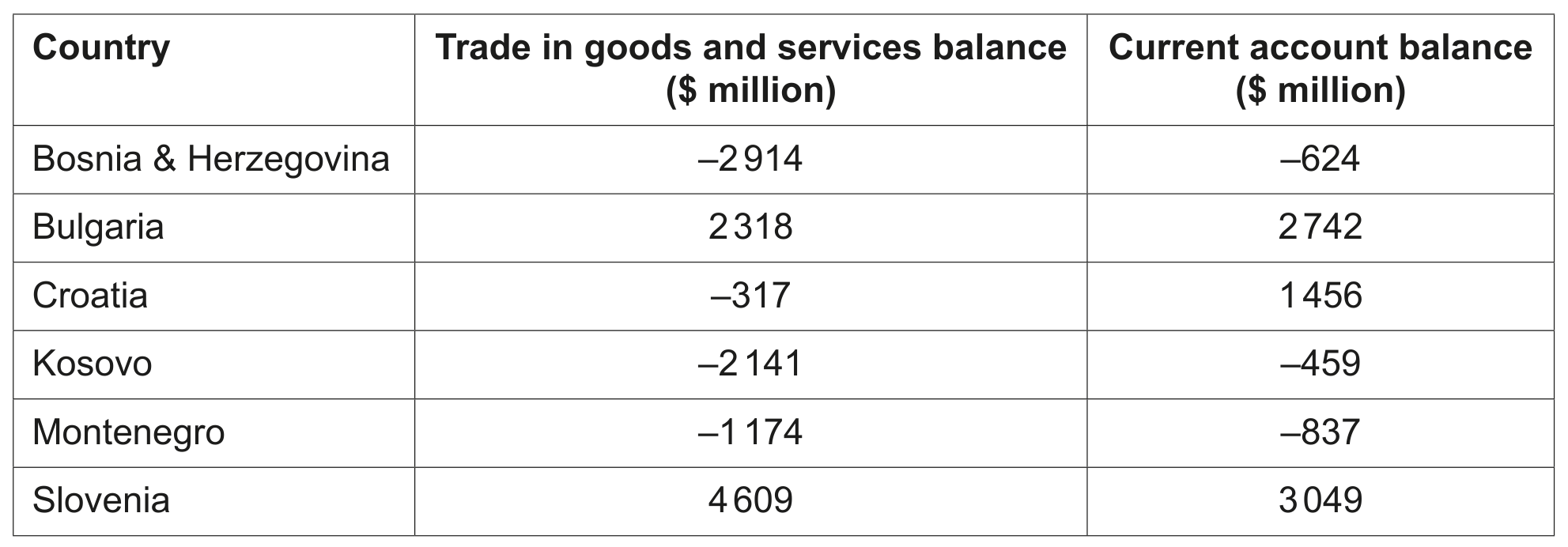
Some of the workers employed in the primary sector help in the growth and export of oranges. It has been suggested that a minimum price should be set for oranges and some other crops. Changes in the price of a country's exports can affect both the trade in goods and services balance and the current account balance of its balance of payments. Table 1.1 gives selected details of six East European countries' balance of payments in 2020.

Table 1.1 Trade in goods and services balance and current account balance of six East European countries 2020

Table 1.1 Trade in goods and services balance and current account balance of six East European countries 2020

A country's international trade position is influenced by the amount and pattern of consumer spending. Privatisation has had an influence on consumer spending. Moving to the private sector has affected investment, the number of workers employed and competition in those industries. It has also affected firms' objectives, prices and their responsiveness to changes in consumer demand. In 2020, Montenegro experienced very low inflation. It was expected that this could turn into deflation. A fall in the price level could affect the country's output, employment and balance of payments.

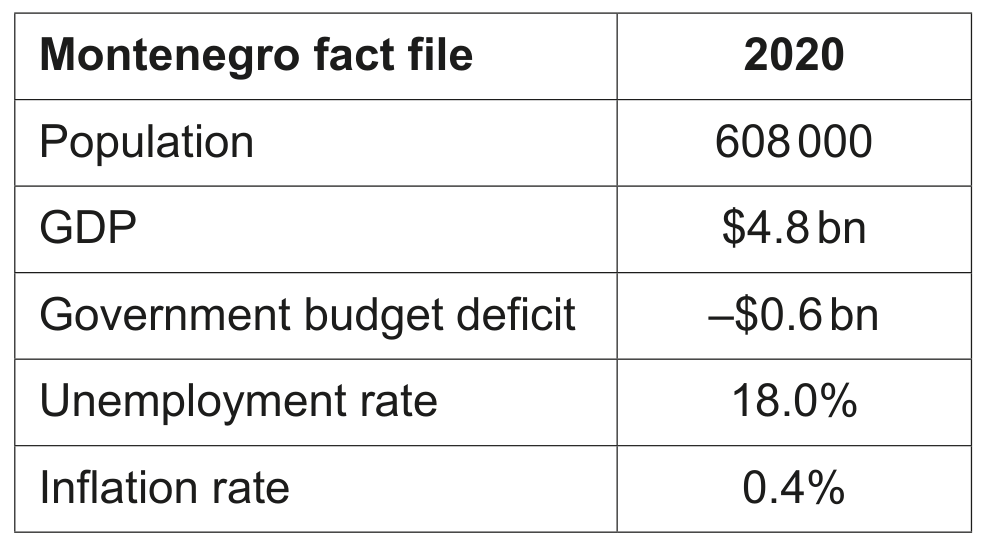
Calculate Montenegro's budget deficit as a percentage of its GDP.

Question 1(h)

[Maximum number: 6]

Read the source material carefully before answering Question 1.
Source material: Will Germany continue to be a strong economy?

Table

Germany is a country with a trade surplus and a high GDP per head. It also has a budget surplus (government tax revenue greater than expenditure), a high HDI and a low inflation rate.

In recent years, German firms have exported a higher value of goods and services. This has contributed to the growth of world trade, caused partly by a fall in transport costs. A relatively large number of German firms produce both in Germany and in other countries, helped by better communications.

Germany is a major producer and exporter of luxury cars. Demand for luxury cars was influenced in 2018 by increases in incomes in Germany and abroad, a rise in the price of US luxury cars and, in some countries, a fall in the price of petrol.

Improvements in the quality of education and information on job vacancies have made it easier for workers to change jobs in Germany. This greater ability to change jobs has helped to reduce unemployment and to increase the country's output.

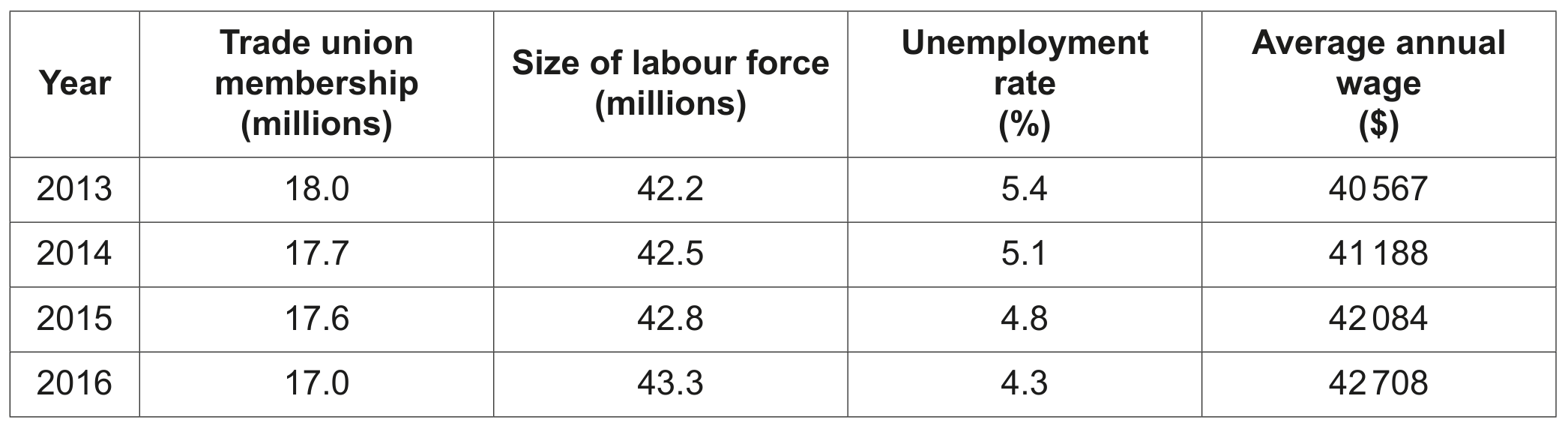
Fewer workers in the German car industry are now members of a trade union. As shown in Table 1.1, trade union membership in Germany has declined in recent years.

Table 1.1 selected data on the German labour market 2013-2016

Table 1.1 selected data on the German labour market 2013-2016

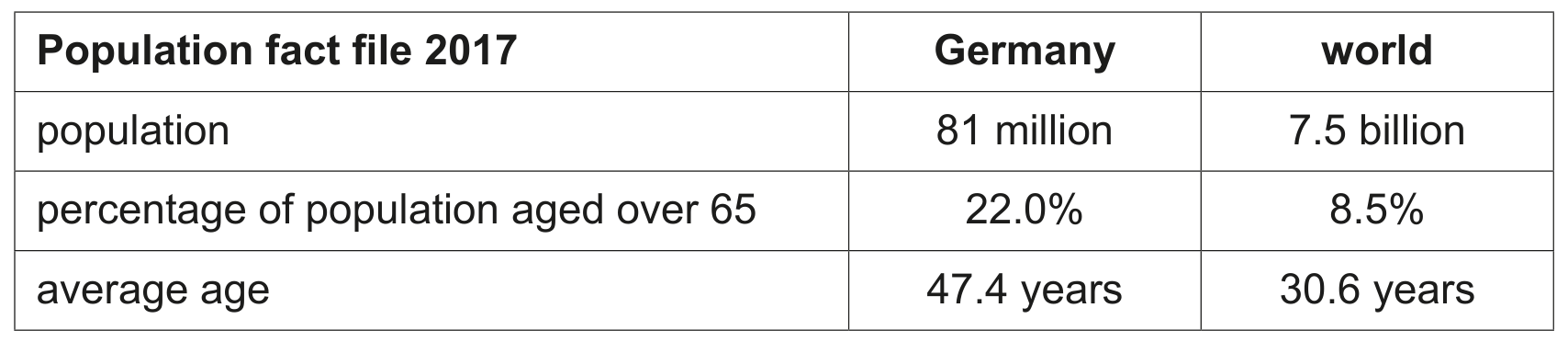
A challenge facing Germany is its ageing population. The effect of an older labour force is uncertain. It may mean firms become reluctant to invest in new technology, but a shortage of young workers may encourage firms to buy more capital goods.

Germany's population may fall and there will soon be fewer Germans aged under 30 than over 60 unless immigration continues at a relatively high rate. Immigration might increase both the country's labour force and its government's spending on education.

Discuss whether or not immigration will increase a country's budget surplus.

Answer any three questions.

Each question is introduced by stimulus material. In your answer you may refer to this material and/or to other examples that you have studied.

Question 1(g)

[Maximum number: 6]

Read the source material carefully before answering Question 1.

Source material: Changes in Jordan's economy and population

Source material: Changes in Jordan's economy and population

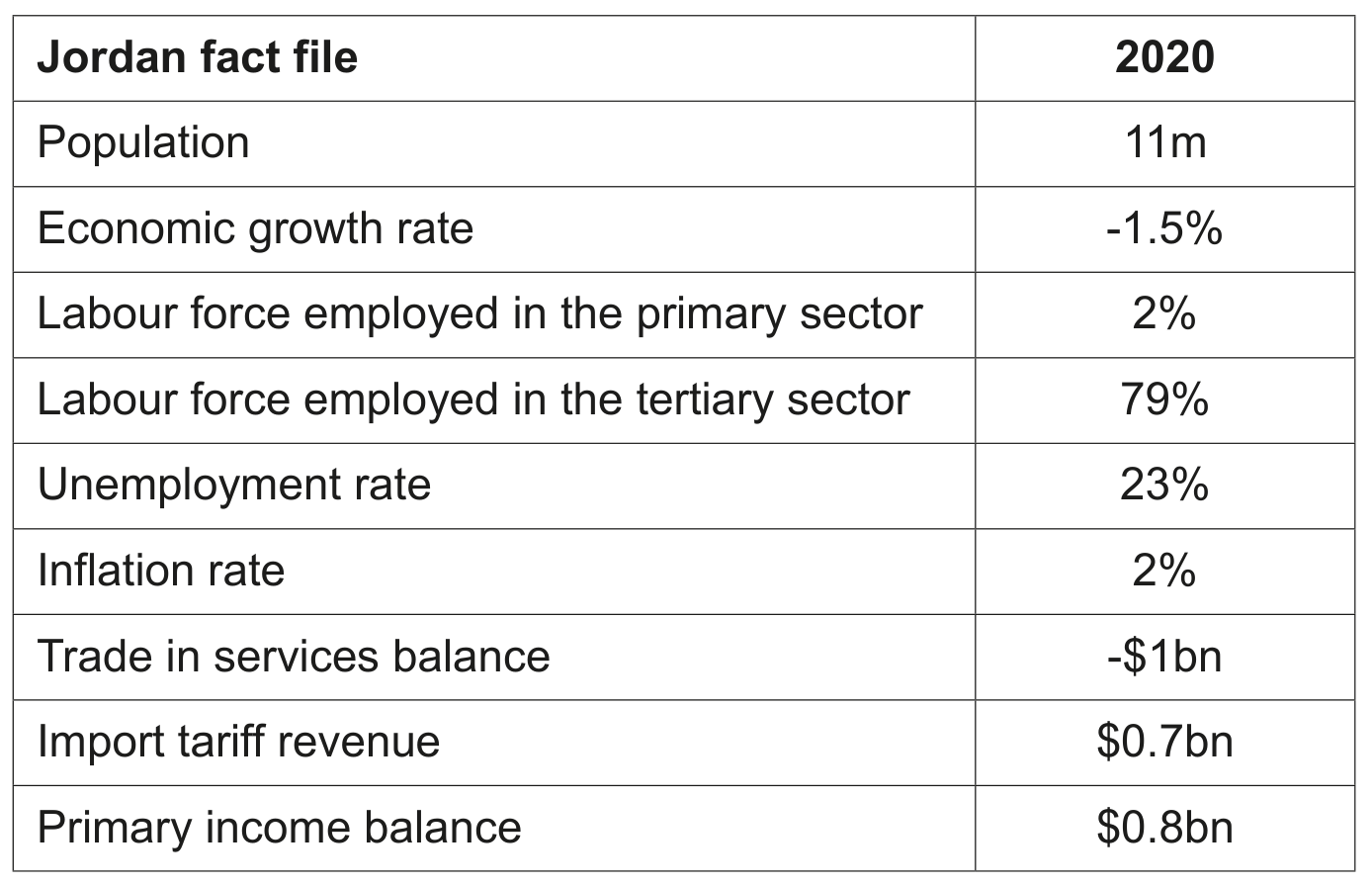
In 2020, Jordan had a deficit on the current account of its balance of payments. This deficit contributed to a decline in Jordan's total demand in that year. This lower total demand was the most important reason why the number of workers was greater than the number of jobs available. Employment fell in most of Jordan's industries.

One of Jordan's main industries is tourism. Recent years have seen mergers between some of Jordan's tourism firms. These mergers reduced the prices of some holidays and raised their quality.

Jordan's population continues to grow. This is mainly because of net immigration, but also because the country's birth rate exceeds its death rate. Table 1.1 shows the birth rate and average age in six countries in 2020.

Content removed due to copyright restrictions.

Changes in the size of a country's population affect the market for a range of products including clothing. An increase in population size also puts pressure on the country's sources of energy. The Jordanian government has several large renewable energy projects, and plans to spend even more on such projects. Greater reliance on renewable energy, including wind and solar power, can reduce environmental damage and can be relatively cheap in the long run. However, most renewable energy generators, including hydroelectric power stations, are expensive to build. Also, wind turbines and solar panels rely on favourable weather conditions.

Some of the spending by the Jordanian government is financed by borrowing. At the start of 2021, the Jordanian central bank was expected to raise the rate of interest. This was because total demand was predicted to increase and there would be a return to positive economic growth. A higher interest rate might affect Jordan's foreign exchange rate and investment.

Discuss whether or not the Jordanian government should spend more on renewable energy.

0 selected