EduNinja

IGCSE Economics5.4. Differences in economic development between countriesTopic Practice

5.4. Differences in economic development between countries

CAIE IGCSE Economics 5.4. Differences in economic development between countries question practice helps you revise this syllabus point with the course map in view. Use this page to focus on one topic, check the style of questions available, and connect each attempt back to the knowledge area it is testing.

EduNinja keeps Economics practice aligned to CAIE, so you can move from topic review into exam-style question bank work without losing the syllabus structure. Start with a small set, mark the weak steps, then return to nearby topic links when a definition, graph, calculation, or explanation needs repair.

Question 1(f)

[Maximum number: 5]

Read the source material carefully before answering Question 1.
Source material: Changes in the Malawian economy
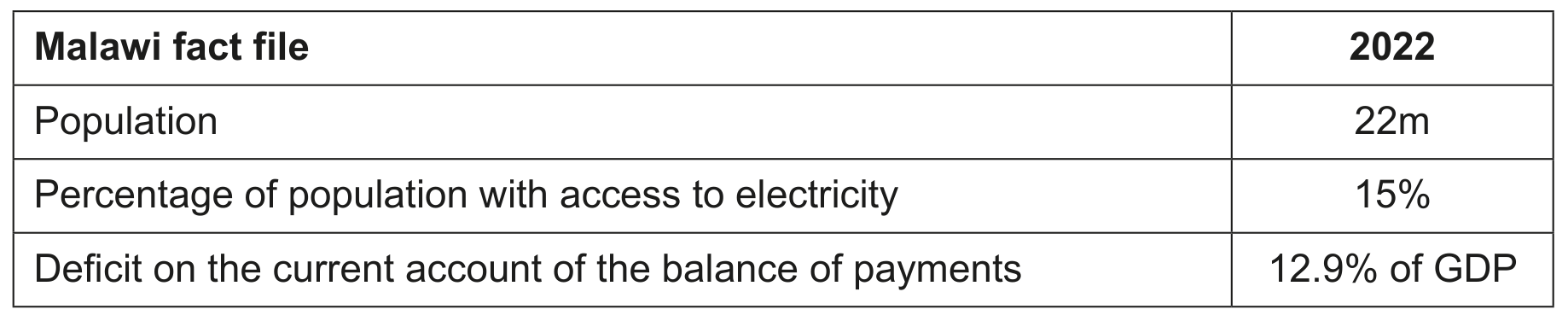
Table

Malawi is a low-income East African country. It is often affected by natural disasters including droughts, floods and storms. In January 2022, Malawi was hit by Storm Ana. This damaged agricultural crops, factories, forests and power stations.

More than three-quarters of Malawi's labour force are employed in agriculture. Two of the country's main crops are tea and sugar. The quantity of tea offered for sale is affected by weather conditions, government subsidies and the price of fertilisers. The global market for sugar has been affected by health reports which identified the possible harmful effects of consuming too much sugar.

Three of the priorities of the Malawian Government are to develop new industries, raise education standards and develop more sustainable sources of energy. The proportion of Malawian children who finish their primary education ( 5-11 years of age) is relatively low. Table 1.1 shows GDP per head and the percentage of children who complete primary education in selected countries in 2022.
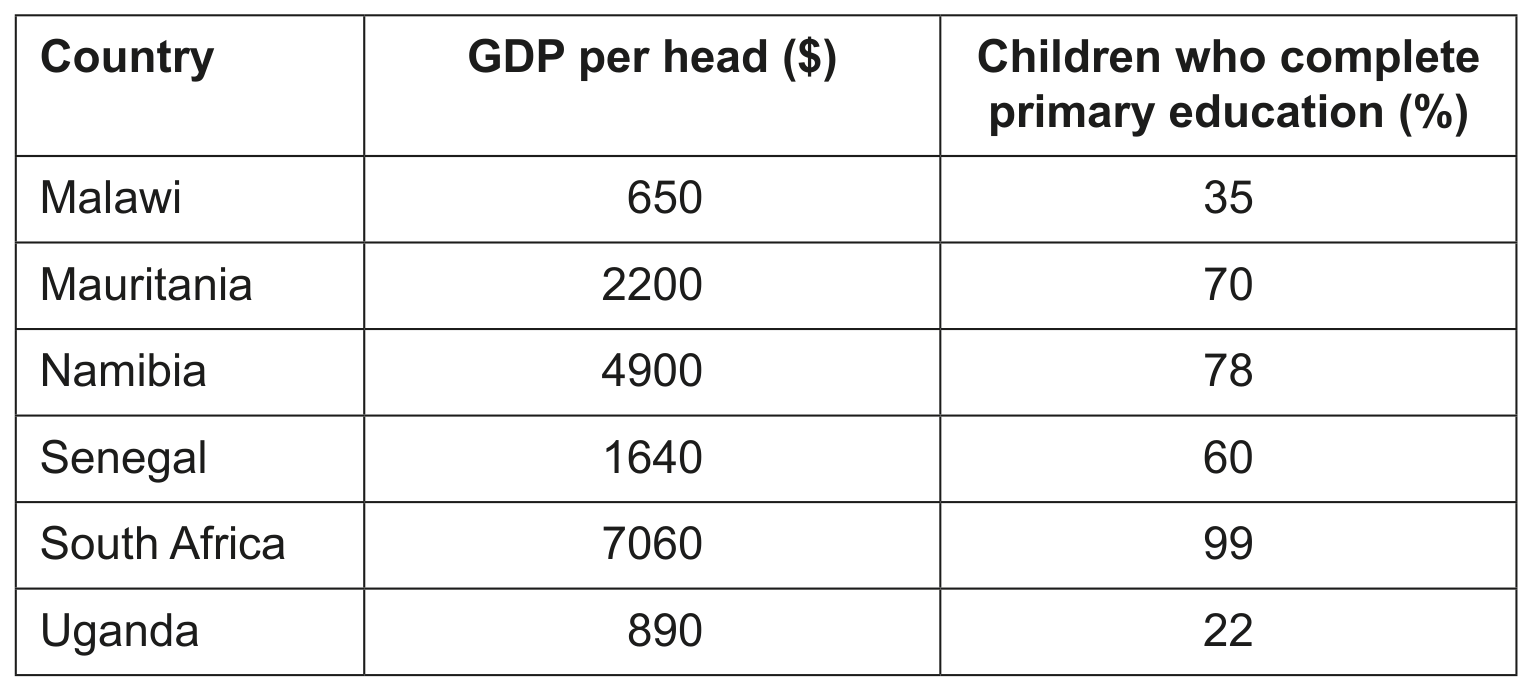
Table 1.1 GDP per head and the percentage of children who complete primary education in selected countries in 2022

Table 1.1 GDP per head and the percentage of children who complete primary education in selected countries in 2022

Only a small proportion of Malawi's population has access to electricity. Most households rely on wood and charcoal for cooking and heating. Using wood as a fuel contributes to the destruction of the country's forests and reduces air quality. The country does, however, get 3000 hours of sunshine a year. This means it could develop solar energy. There would be an initial cost to install solar panels and to reduce the risk of storm damage. Solar energy plants (also known as solar farms) can take up a large area and create visual pollution. However, a successful solar energy industry could decrease Malawi's imports of fuel and might affect its exchange rate.

Malawi's foreign exchange rate fell in 2022. The country's currency, the kwacha, bought fewer US dollars. This depreciation affected Malawi's current account of the balance of payment, its inflation rate and its economic growth rate. Some economists suggested that the Malawian Government should stop the kwacha falling further in value.

Analyse the relationship between GDP per head and the percentage of children who complete primary education.
Question 1(e)

[Maximum number: 4]

Read the source material carefully before answering Question 1.
Source material: What does the future hold for Nicaragua?

Table

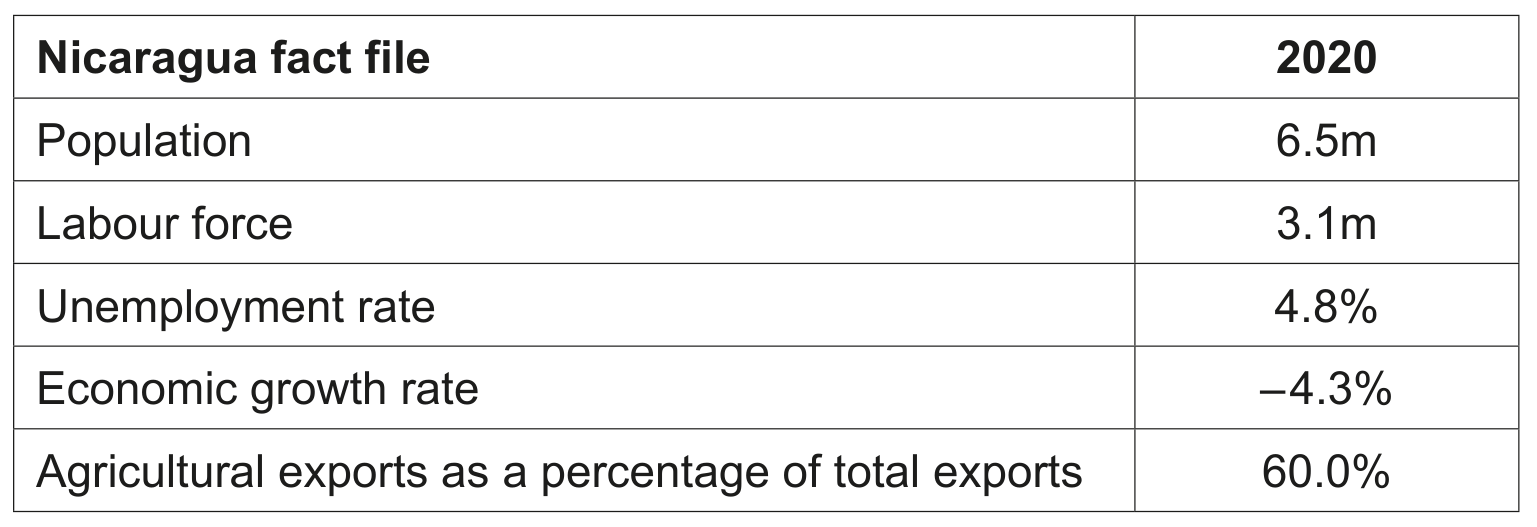
Nicaragua is the largest country in Central America. It has a large agricultural sector with one of its main exports being coffee. It has been estimated that a 10%10 \% change in the price of coffee will cause a 3%3 \% change in the quantity of coffee demanded. The country's agricultural output, including coffee, is often affected by natural disasters including droughts and earthquakes.

Nicaragua is the country with the lowest Gross Domestic Product (GDP) per head in Central America. Wages are particularly low in the rural areas of the country. There is a high degree of income inequality and firms tend to earn lower profits than in other Central American countries. The number of Nicaraguans who were willing and able to work but could not find a job increased as calculated by both the claimant count and the labour force survey in 2020.

The purchasing power of Nicaraguan consumers fell in 2020 as prices rose by more than incomes. However, the country's currency, the cordoba, was still generally acceptable. It continued to act as a medium of exchange and store of value.

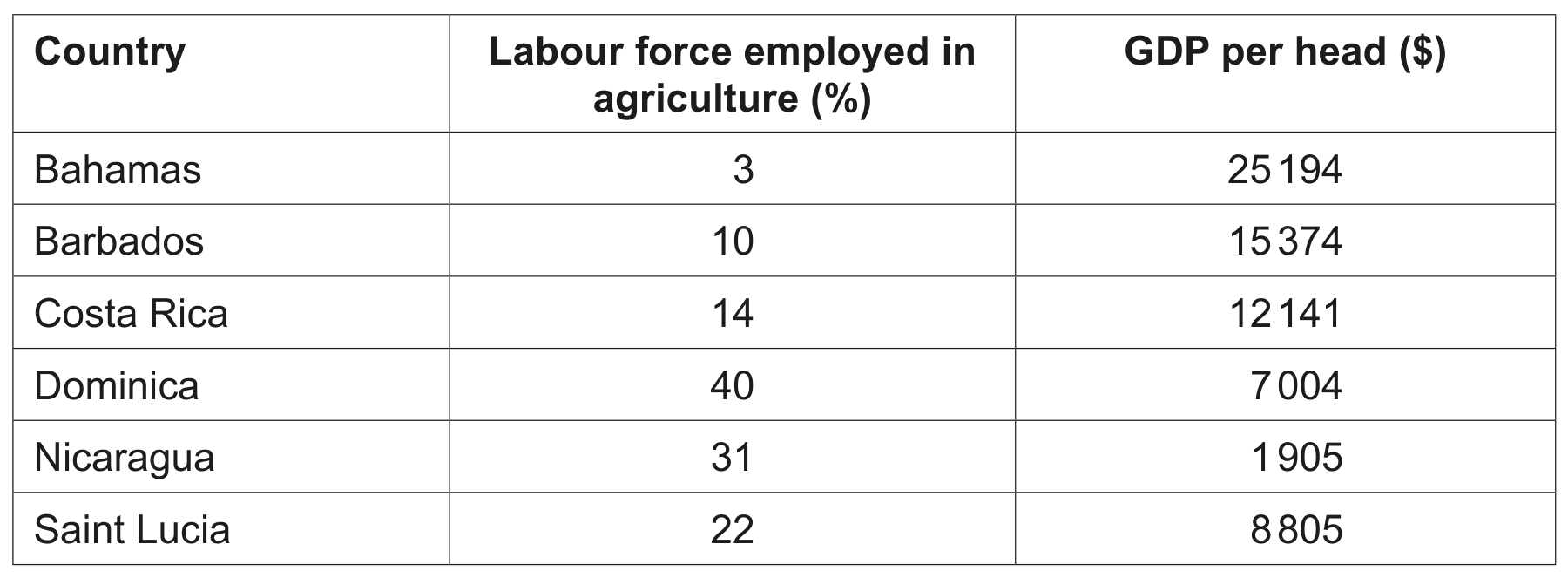
Nicaragua's future economic performance will be influenced by a number of factors. These include the proportion of the labour force employed in agriculture, the size of the country's firms and what the country produces. Table 1.1 shows the percentage of the labour force employed in agriculture and GDP per head in selected countries in 2020.

Table 1.1 The percentage of the labour force employed in agriculture and GDP per head in selected countries in 2020

Table 1.1 The percentage of the labour force employed in agriculture and GDP per head in selected countries in 2020

Nicaraguan firms tend to be relatively small. These firms often get to know their individual customers' requirements but many are not large enough to benefit from economies of scale. In recent years, there has been a boom in coffee shops in Nicaragua. Between 2015 and 2020, the number of coffee shops more than doubled in the country. These shops differentiate themselves through their customer service and the quality of the coffee they serve.

Nicaragua is the world's twelfth largest producer of coffee. Global coffee consumption continues to increase. This trend may increase Nicaragua's coffee output and exports.

Analyse the relationship between the percentage of the labour force employed in agriculture and GDP per head.

Question 1(a)

[Maximum number: 2]

Read the information carefully before you answer.

1 Changes in the Algerian economy

Table 1.1 Algeria fact file 2023

Table 1.1 Algeria fact file 2023

In July 2023, many countries, including Algeria, experienced very high temperatures. Evidence suggests this was caused by global warming. This is where the Earth's climate is getting warmer, largely due to carbon dioxide ( CO2\mathrm{CO}_{2} ) emissions, for example from the use of fossil fuels such as oil and gas. Scientists say global warming is causing extreme weather which has damaged buildings, destroyed agricultural crops and affected tourism.

Algeria uses drilling machinery to extract large quantities of oil and natural gas. The Algerian Government aims to reduce the use of oil and natural gas and to increase agricultural output and tertiary sector output. It provides loans to farmers to purchase land and to install watering equipment. Algeria's agricultural output has also been affected by climate change. This has caused soil erosion, water shortages and, on some days, severe heat which prevents farm workers from working outside. However, an increase in global vegetarianism (not eating meat) led to a rise in the output of tomatoes from 2010 to 2023. Algeria's tertiary sector output also increased over this period. Improvements in education, advances in technology and a rise in wages increased output per hour.

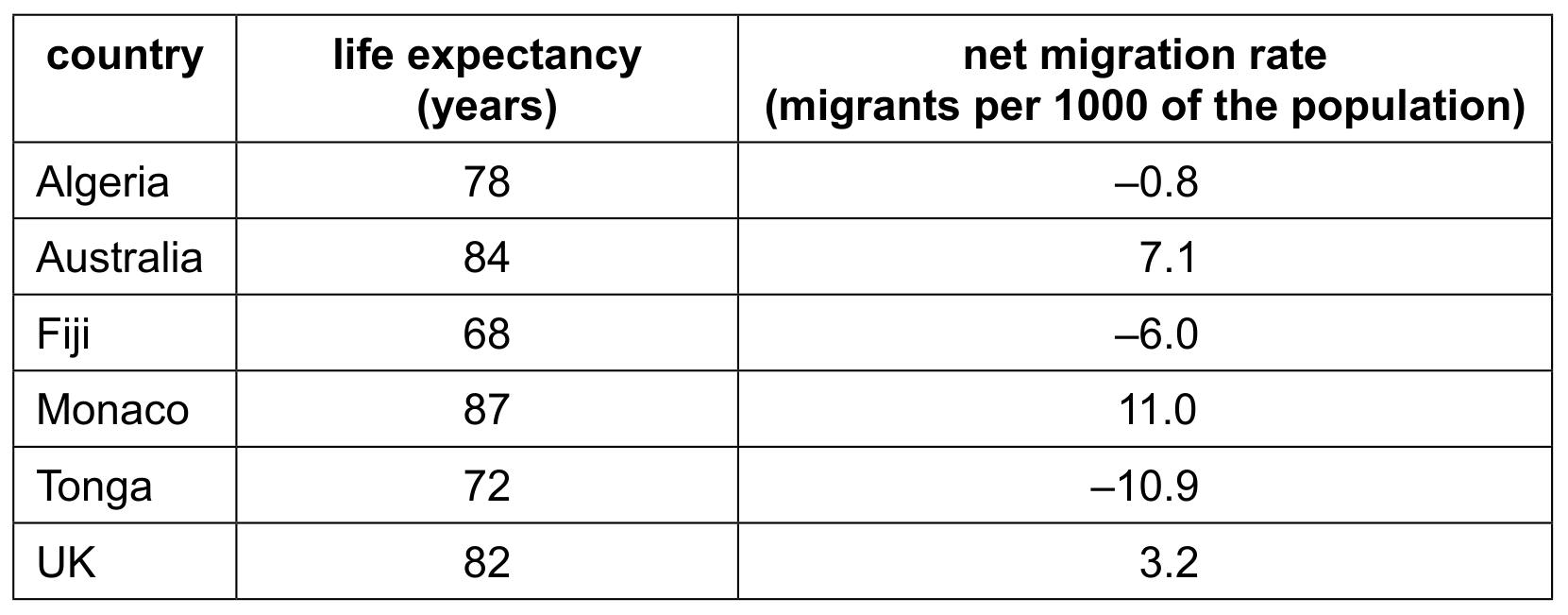
Life expectancy in Algeria rose from 74 years in 2010 to 78 years in 2023. Over this period, Algeria had negative net migration.

Table 1.2 Life expectancy and net migration rate in selected countries in 2023

Table 1.2 Life expectancy and net migration rate in selected countries in 2023

Climate change may influence life expectancy and output. Scientists have shown that CO2\mathrm{CO}_{2} emissions influence climate change. Some governments impose a 'carbon tax' on these emissions, providing an incentive for firms to reduce pollution. However, such a tax is likely to affect energy costs, be regressive and be complicated to operate. A carbon tax may also not be successful in reducing global CO2 emissions unless other countries impose such a tax.

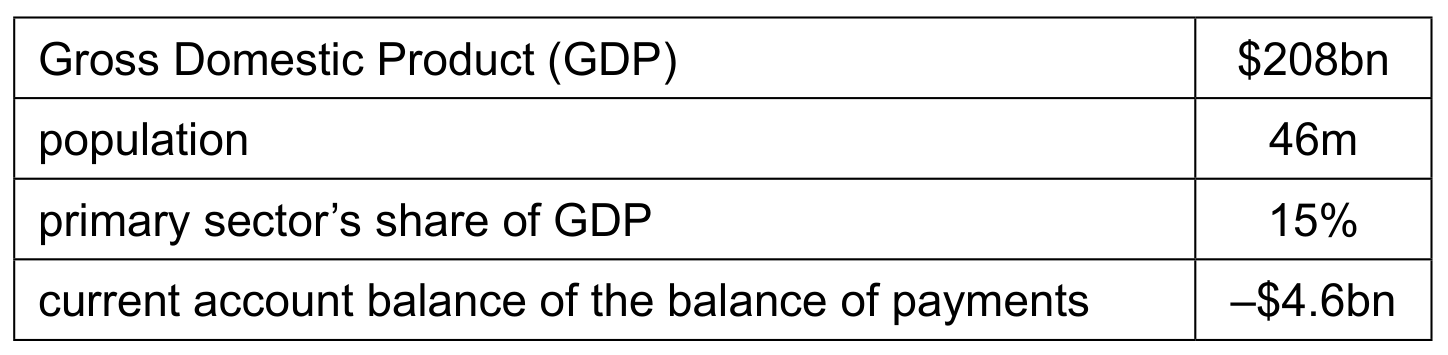
Calculate the value of Algeria's primary sector output in 2023. Show your working.

Question 1(d)

[Maximum number: 4]

Read the source material carefully before answering Question 1.

Source material: The advantages of visiting, producing and living in Bermuda

Source material: The advantages of visiting, producing and living in Bermuda

Bermuda is a well-known holiday destination. It offers luxury holidays which are expensive.
Bermuda bans foreign fast-food outlets. It does have one foreign outlet selling fried chicken in the island's capital, Hamilton. This was opened before the ban was introduced in 1997. Some foreign multinational companies (MNCs), which produce other goods and services, operate in Bermuda. Bermuda is considered a tax haven. It does not have any corporation tax, but it does charge high import tariffs particularly on demerit goods which are harmful to health.

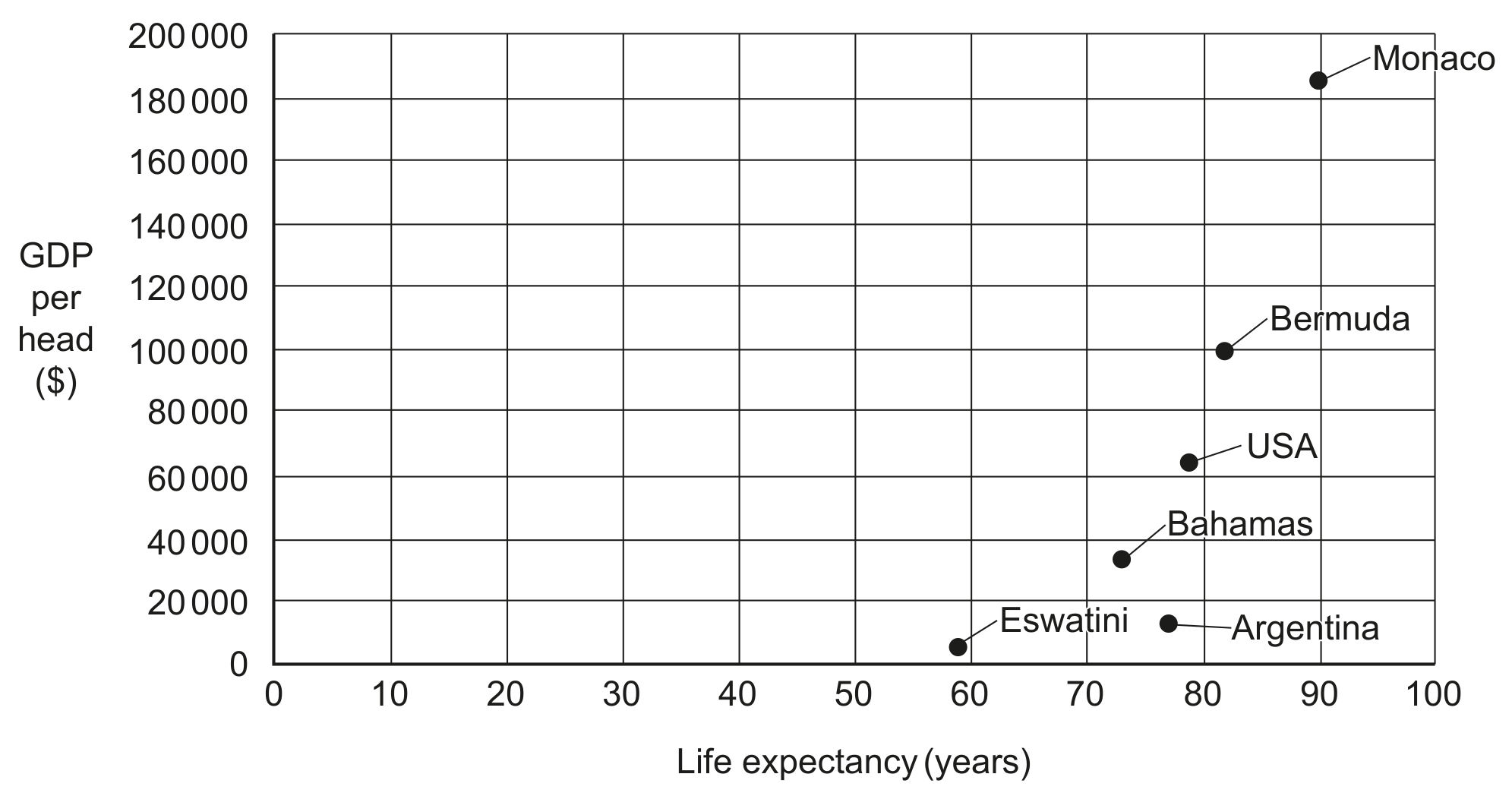
Bermuda has a higher literacy rate and a lower population growth rate than most other countries. Its GDP per head is high. Fig. 1.1 shows the relationship between GDP per head ($) and life expectancy (years) in selected countries in 2018.

Fig. 1.1 The relationship between GDP per head (\$) and life expectancy (years) in selected countries 2018

Fig. 1.1 The relationship between GDP per head (\$) and life expectancy (years) in selected countries 2018

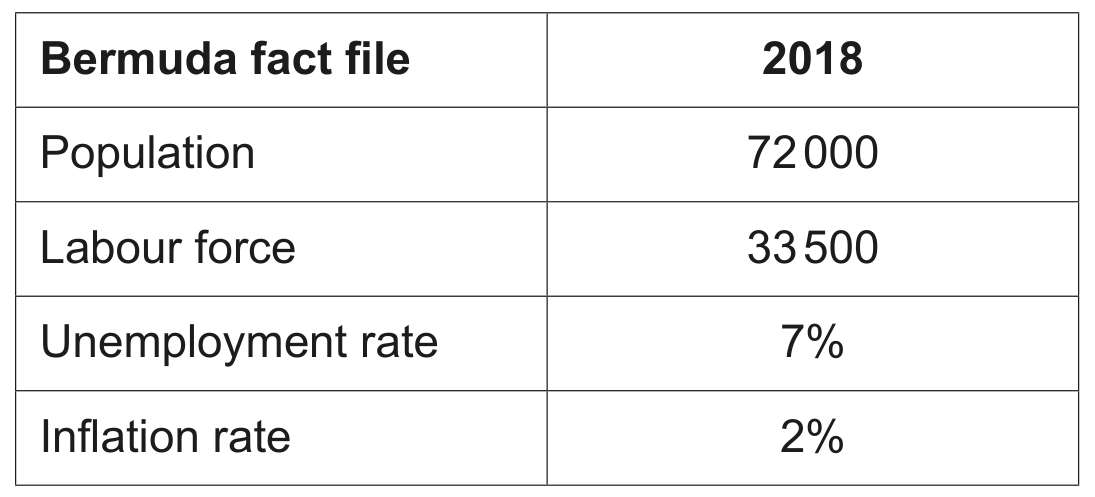
Bermuda also has a relatively larger tertiary sector than most other countries. Insurance and other financial services contributed 85%85 \% of its GDP in 2018. The Bermudian Monetary Authority (BMA) carries out most of the functions of a central bank. For example, it acts as banker to the government, holds the country's reserves of foreign currency and implements the government's monetary policy. The BMA has been relatively successful in keeping inflation low. However, government policy measures designed to reduce unemployment may affect the inflation rate. This is because policy measures can influence total demand, productivity and firms' costs of production.

Bermudian government policy may change, not only to cut unemployment, but also to reduce market failure. For example, higher indirect taxes on demerit goods may be used but it can be difficult to change people's spending patterns.

Explain two reasons why Bermuda has a higher level of economic development than many other countries.

Question 1(f)

[Maximum number: 5]

Read the source material carefully before answering Question 1.

Source material: Gabon's industries and labour force

Source material: Gabon's industries and labour force

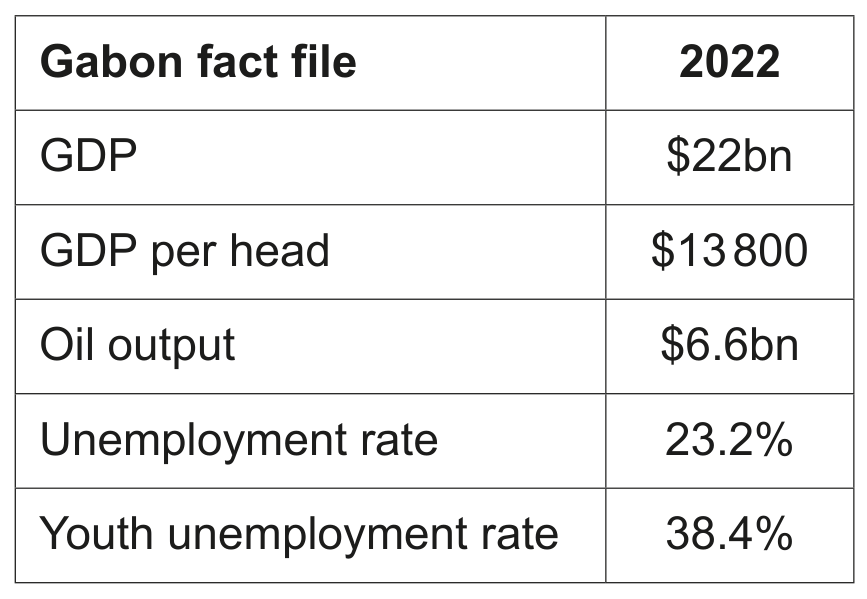
Gabon is a small West African country. Its rainforests reduce air pollution, provide wood for timber production, protect against floods and reduce soil erosion. The Gabonese Government wants to conserve the country's rainforests. It has created some national parks which has increased tourism, affecting the current account of the balance of payments.

The Gabonese Government wants to reduce the country's reliance on timber production, oil production and agriculture. The country is Africa's fifth-largest oil producer but its resources of oil are running out. The oil industry causes water pollution. The country has other natural resources, including gold. In 2022, new deposits of gold were found in Gabon.

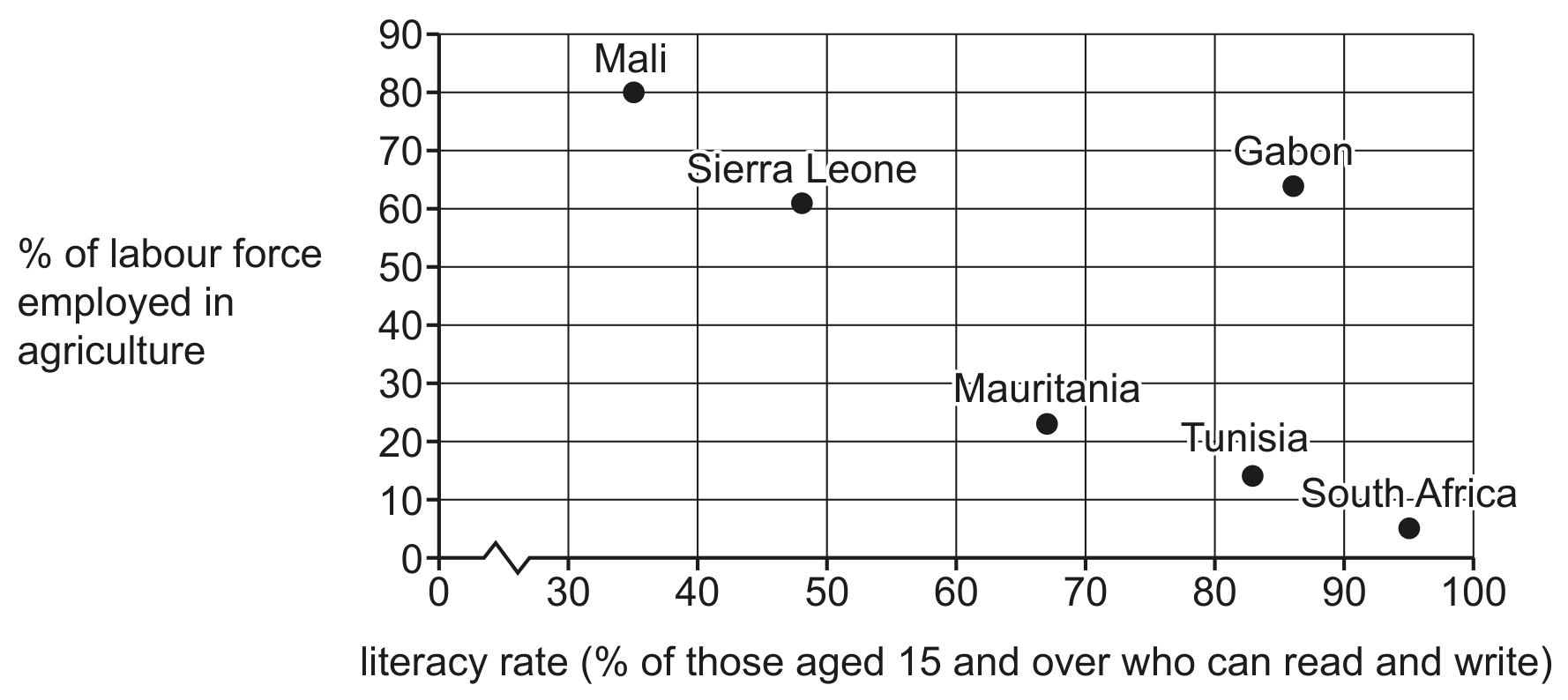
Gabon's agricultural industry employs a high proportion of the country's labour force. Fig. 1.1 shows the literacy rate and the percentage of the labour force employed in agriculture in six selected countries in 2022.

Fig.1.1 The literacy rate and the percentage of the labour force employed in agriculture in selected countries in 2022

Fig.1.1 The literacy rate and the percentage of the labour force employed in agriculture in selected countries in 2022

In recent years, Gabon has experienced a high rate of unemployment among 15-24 year olds. High rates of youth unemployment can result in young people not gaining the skills and experience needed to achieve high productivity. It can also have a harmful effect on their confidence. Some governments pay private sector firms to give work experience to unemployed young people. The quality of this experience can vary.

The Gabonese Government wants to develop its textile industry, encouraging firms to grow in size. The output of the industry will be affected not only by possible government support but also by its use of technology and specialisation of workers.

Analyse the relationship between the literacy rate and the percentage of the labour force employed in agriculture.

Question 1(f)

[Maximum number: 5]

Read the source material carefully before answering Question 1.

Source Material: Cambridge (UK) and Education

Source Material: Cambridge (UK) and Education

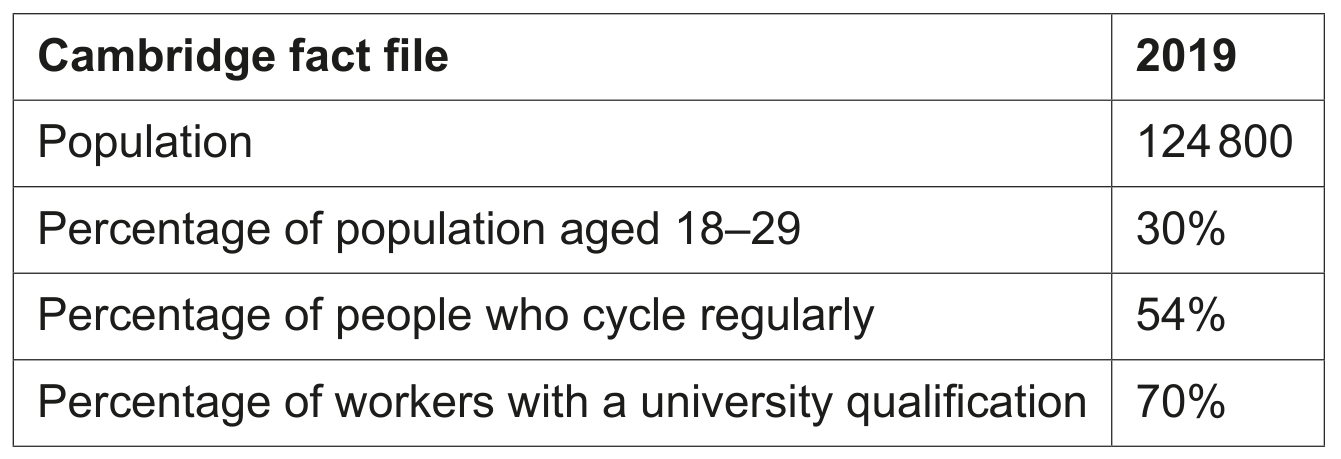
Cambridge ranks number one amongst all UK cities in terms of the percentage of workers with a university qualification. It is also ranked number two in the UK in terms of the percentage of people aged 18-29. This is due to the high number of university students in Cambridge. Although the city has a relatively small population, its contribution to the overall size of the UK economy is significant.

Many firms in Cambridge operate in the education, healthcare, research and development, and hi-tech manufacturing industries. Cambridge firms' exports are highly knowledge-intensive, making them highly priced and price-inelastic in demand. Increasing global incomes have also increased the demand for services such as education from Cambridge.

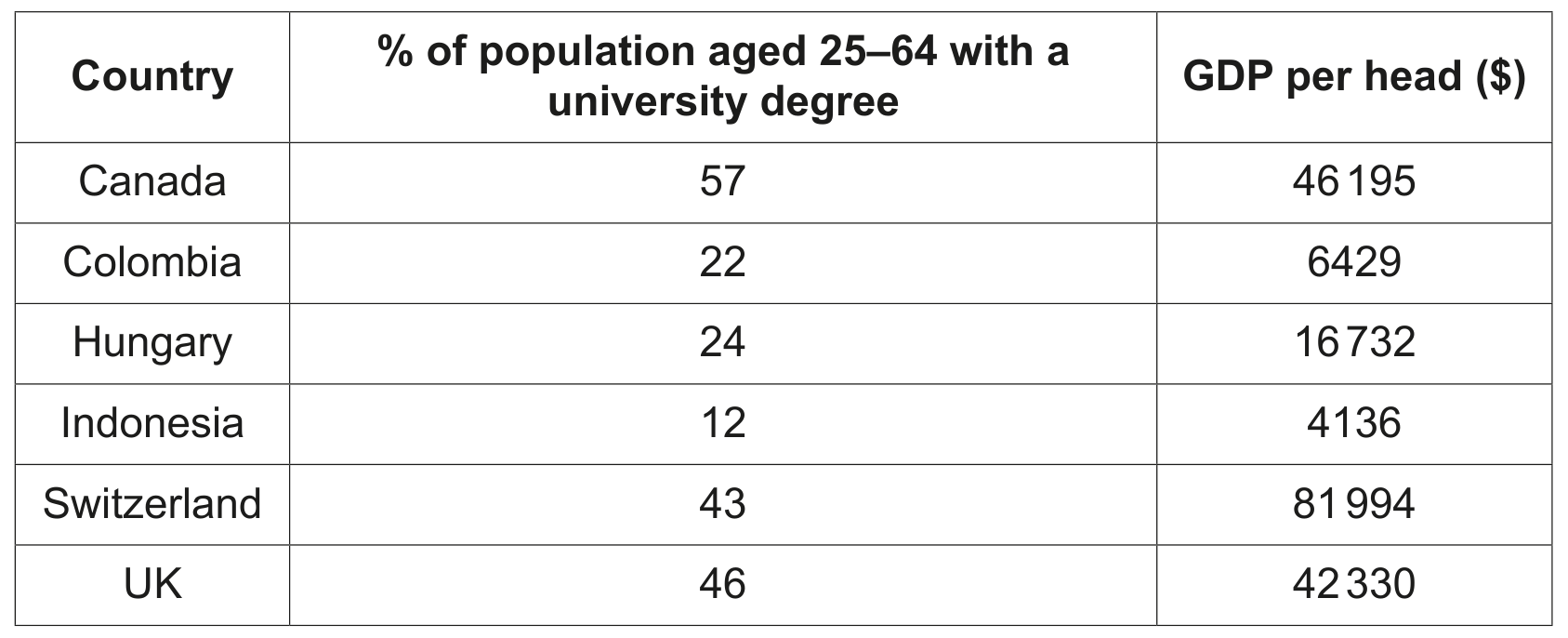
The increase in the size of the education industry has the potential to reduce poverty. This is because a more educated labour force is able to earn higher wages and also have access to more information on health. Table 1.1 shows the percentage of population aged 25-64 with a university degree and the GDP per head in selected countries in 2019.

Table 1.1 Percentage of population aged 25-64 with a university degree and the GDP per head in selected countries in 2019

Table 1.1 Percentage of population aged 25-64 with a university degree and the GDP per head in selected countries in 2019

Many of the people who live in Cambridge are strong supporters of globalisation and free trade between countries. A large number of firms in Cambridge depend on export revenues.

Cambridge is an attractive location for growing firms because of the availability of many highly skilled and educated workers from all over the world. It has good infrastructure including access to ultra-fast broadband and transport links to other cities and international airports. However, firms may be faced with high land and office costs. In 2019, Cambridge was the city with the third highest house prices in the UK. Poor air quality may also discourage workers from moving to Cambridge.

Analyse the relationship between the percentage of population aged 25-64 with a university degree and GDP per head.

Question 1(f)

[Maximum number: 5]

Read the source material carefully before answering Question 1.

Source material: The future of the economy of St. Kitts and Nevis

Source material: The future of the economy of St. Kitts and Nevis

St. Kitts and Nevis is a small, two-island country in the Caribbean. The country's three main industries are tourism, financial services and agriculture. Tourists are attracted by the country's beaches, coral reefs, forts, rainforests and shipwrecks. However, if rainforests continue to be cut down and soil erosion continues to pollute the coral reefs, killing off marine life, tourism may be discouraged. The St. Kitts and Nevis Government is also concerned that the social costs of tourism exceed the private costs.

St. Kitts and Nevis's financial services include a growing banking sector. Among the country's commercial banks are a few foreign multinational companies (MNCs). These MNCs are attracted by the country's relatively high incomes, the absence of personal income tax and a relatively high literacy rate.

Some of the country's main agricultural products are carrots, onions, peanuts and sweet potatoes. In 2017, the St. Kitts and Nevis Government introduced a training scheme to raise the productivity of onion farmers.

Other important industries in St Kitts and Nevis include healthcare and fishing. Table 1.1 shows healthcare spending as a percentage of GDP and life expectancy in six selected countries in 2022.

Table 1.1 Healthcare spending as a percentage of GDP and life expectancy in selected countries in 2022

Table 1.1 Healthcare spending as a percentage of GDP and life expectancy in selected countries in 2022

The small size of St. Kitts and Nevis's fishing industry means that it imports large quantities of fish. The country's fishing boats are small and some lack up-to-date equipment. A larger fishing industry, with bigger boats, may bring a number of benefits to the country.

Changes in the structure and performance of industries in St. Kitts and Nevis may alter the country's price level. Between 2018 and 2020, the country experienced deflation. This affected people's purchasing power, saving and debts. It also affected the country's exports and firms' investment decisions.

Analyse the relationship between healthcare spending as a percentage of GDP and life expectancy.

Question 2(c)

[Maximum number: 6]

Liechtenstein is a high-income economy in the middle of Europe. The country's low tax rates and low levels of regulation make it an attractive place for foreign firms and individuals to open bank accounts. Firms' costs of production in Liechtenstein are high but this is slightly offset by low indirect taxation.

Analyse the causes of differences in the level of income between countries.

Question 2(b)

[Maximum number: 4]

In 2019, Mozambique was hit by a serious storm which destroyed bridges, factories, roads and electricity lines. Almost 60% of Mozambique's population live in absolute poverty. The country's people are keen to increase Mozambique's economic development. There is a high level of government intervention in Mozambique's economy. Although Mozambique does not impose import quotas, it does impose a range of import tariffs.

Explain two causes of an increase in a country's economic development.

Question 2(b)

[Maximum number: 4]

Voralberg, a region in Austria, has the highest income and best healthcare of any region in Austria. It benefits from its short distance to Germany and Switzerland, and from the free trade between these countries. However, Voralberg hosts only a small number of foreign multinational companies (MNCs) and its inflation is higher than most areas in Europe.

Explain two possible causes of better healthcare.

0 selected