Question 1(g)
Read the source material carefully before answering Question 1.
Source material: What does the future hold for Nicaragua?
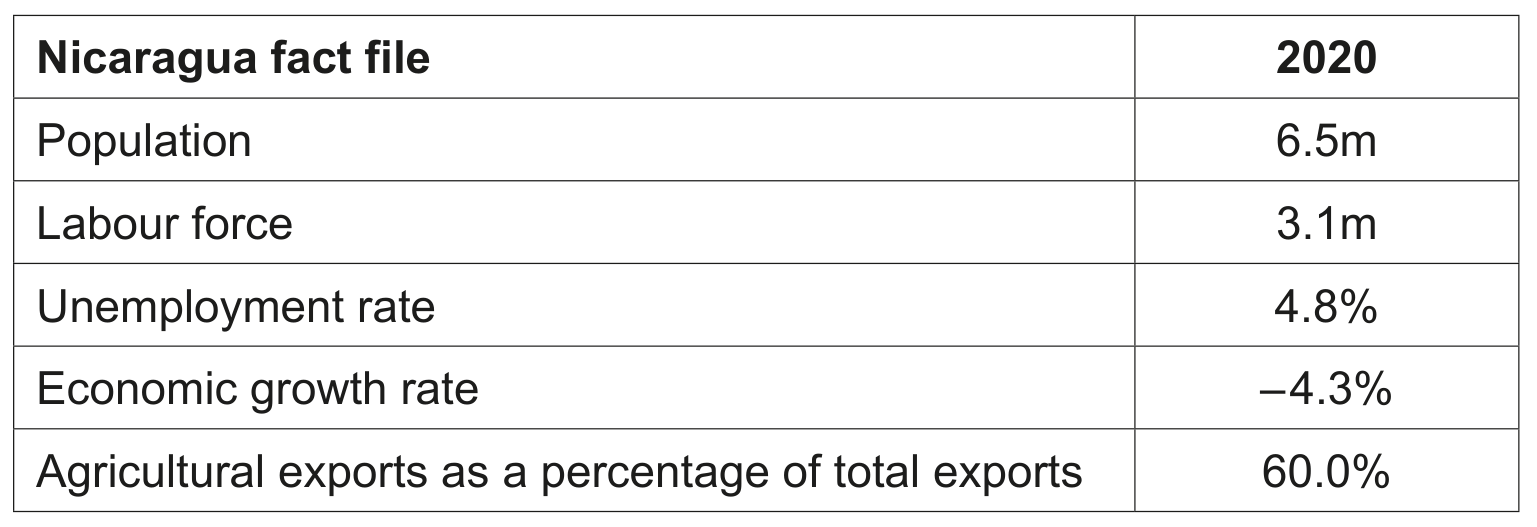
Nicaragua is the largest country in Central America. It has a large agricultural sector with one of its main exports being coffee. It has been estimated that a change in the price of coffee will cause a change in the quantity of coffee demanded. The country's agricultural output, including coffee, is often affected by natural disasters including droughts and earthquakes.
Nicaragua is the country with the lowest Gross Domestic Product (GDP) per head in Central America. Wages are particularly low in the rural areas of the country. There is a high degree of income inequality and firms tend to earn lower profits than in other Central American countries. The number of Nicaraguans who were willing and able to work but could not find a job increased as calculated by both the claimant count and the labour force survey in 2020.
The purchasing power of Nicaraguan consumers fell in 2020 as prices rose by more than incomes. However, the country's currency, the cordoba, was still generally acceptable. It continued to act as a medium of exchange and store of value.
Nicaragua's future economic performance will be influenced by a number of factors. These include the proportion of the labour force employed in agriculture, the size of the country's firms and what the country produces. Table 1.1 shows the percentage of the labour force employed in agriculture and GDP per head in selected countries in 2020.
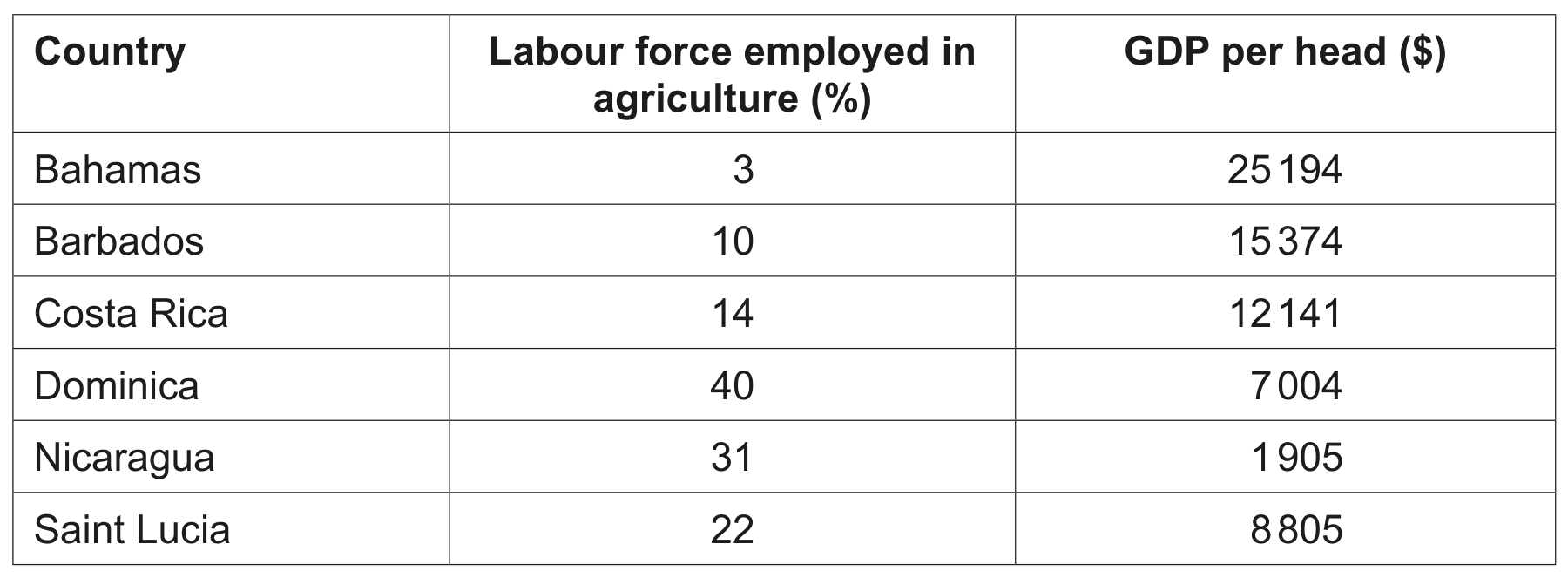
Table 1.1 The percentage of the labour force employed in agriculture and GDP per head in selected countries in 2020
Nicaraguan firms tend to be relatively small. These firms often get to know their individual customers' requirements but many are not large enough to benefit from economies of scale. In recent years, there has been a boom in coffee shops in Nicaragua. Between 2015 and 2020, the number of coffee shops more than doubled in the country. These shops differentiate themselves through their customer service and the quality of the coffee they serve.
Nicaragua is the world's twelfth largest producer of coffee. Global coffee consumption continues to increase. This trend may increase Nicaragua's coffee output and exports.
Discuss whether or not small firms benefit Nicaraguan consumers.