Question 1(d)
Read the source material carefully before answering Question 1.
Source material: How will oil change Guyana?
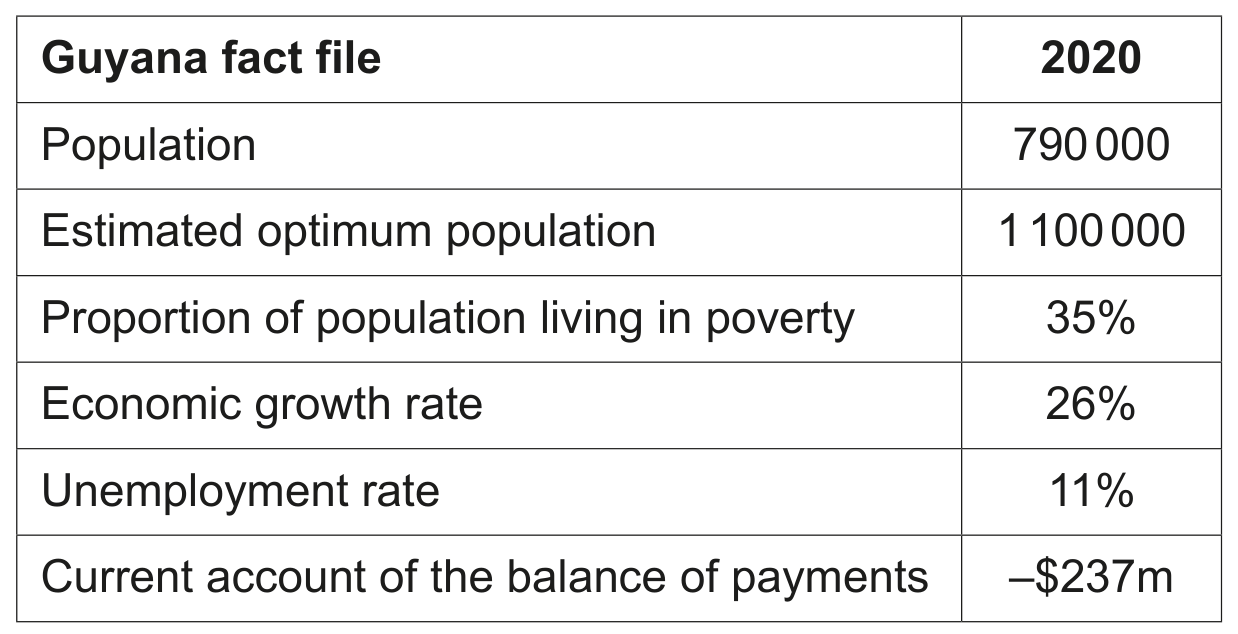
Guyana was the fastest growing economy in the world in 2020. Sugar, gold and timber have accounted for a relatively high proportion of the country's output and exports for some time. In 2020, the sugar industry was hit by bad weather and falling global demand. In contrast, the output of gold and timber increased.
The main reason why Guyana's real GDP increased so rapidly was the increase in oil production. Oil was discovered offshore by a foreign multinational company (MNC) in 2015 and the MNC started production in 2019. It is predicted that Guyana will become the world's largest oil producer per head by 2025 .
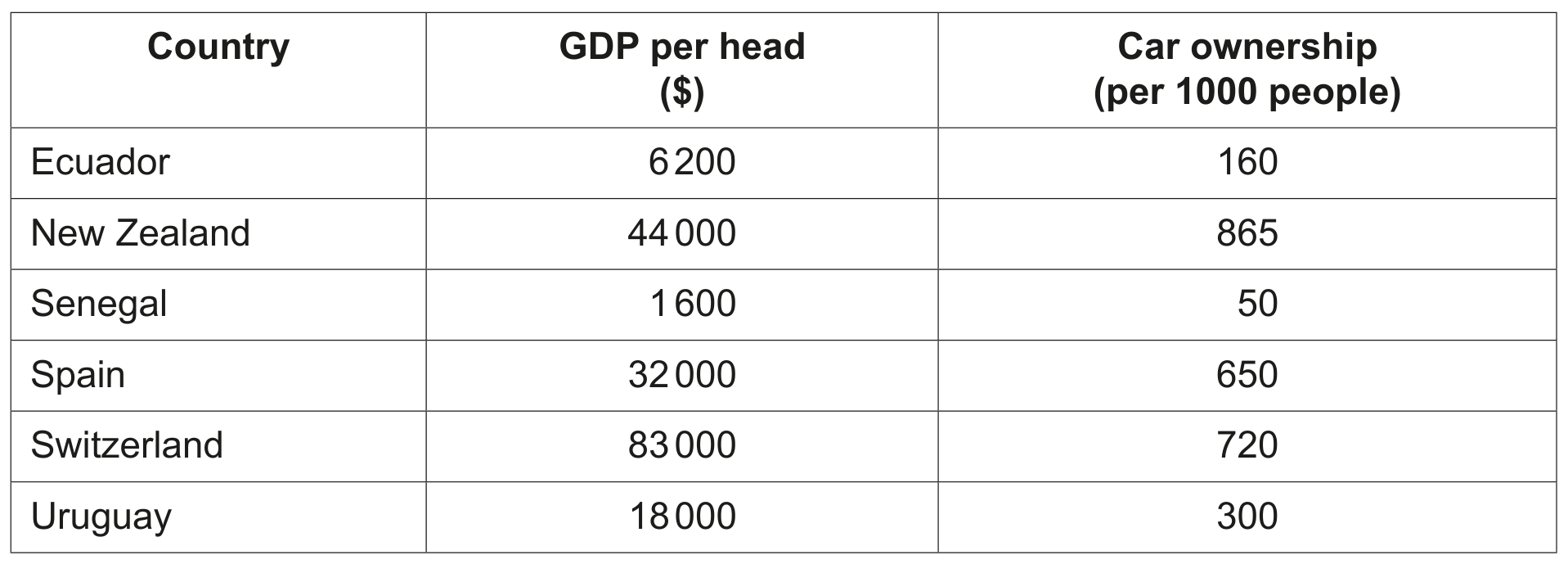
The Guyanese government is planning to use some of the tax revenue it will raise from oil to spend on education and improvements to the country's infrastructure. Planned projects include new railway lines and stations. A more extensive and cheaper rail service may enable more people to work further from home and may influence the market for substitutes, such as car transport. The Guyanese government is also planning to spend some of the tax revenue on improving the country's access to the internet. Table 1.1 shows GDP per head and internet access in seven countries in 2020.
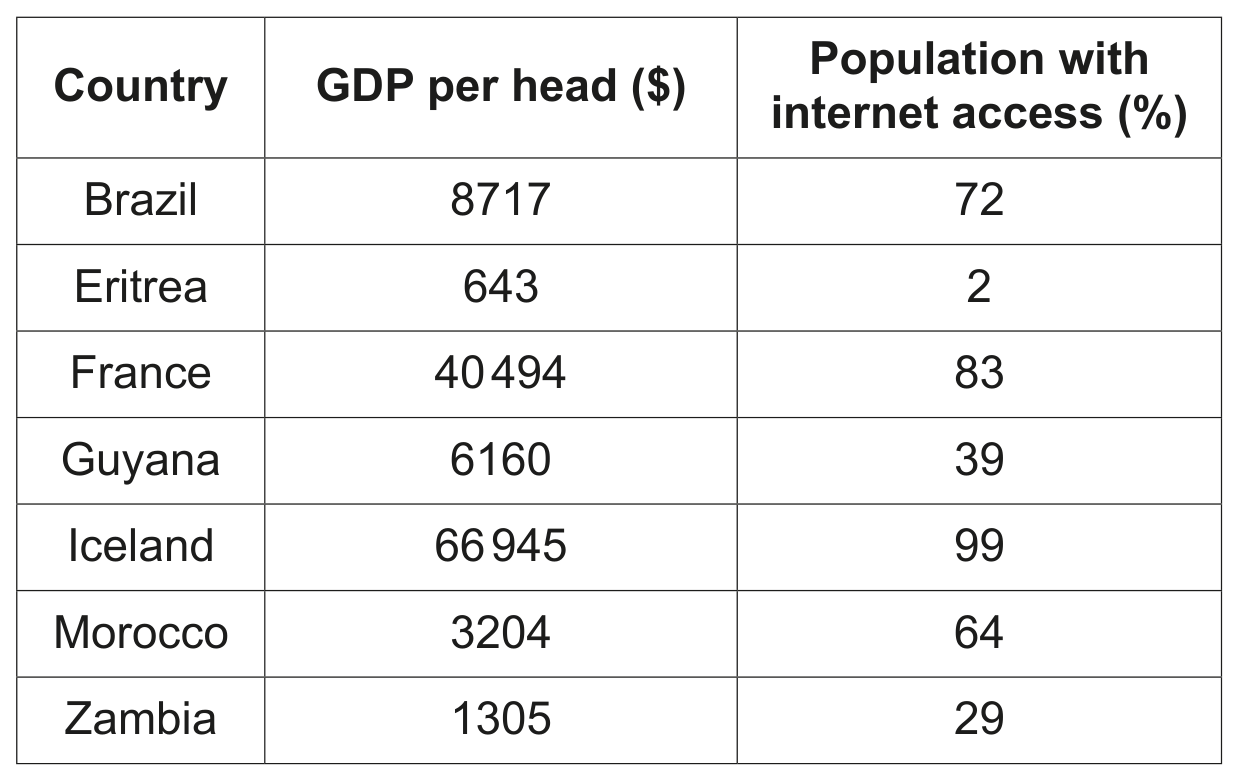
Table 1.1 GDP per head and internet access in selected countries in 2020
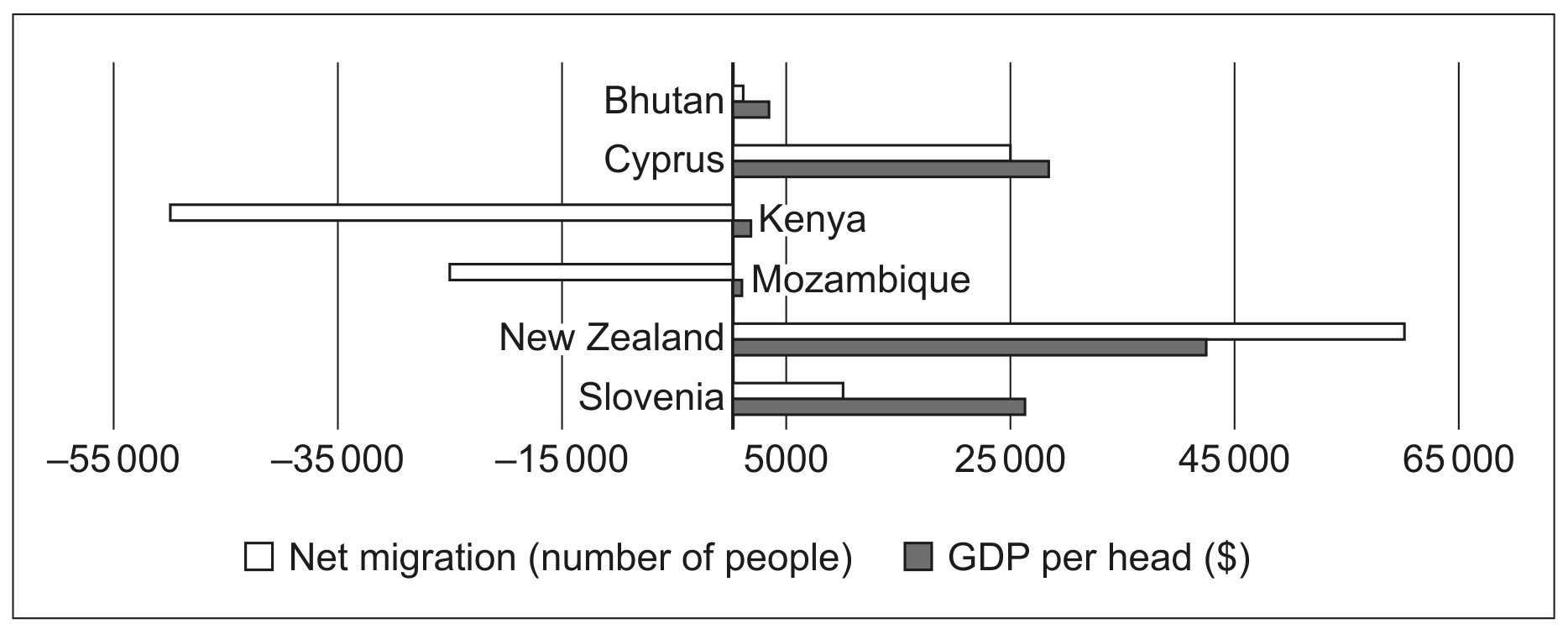
Guyana has experienced a slow growth in its population size in recent years. In 2020, its birth rate was 16.5 , its death rate was 6.8 and its net migration rate was -7.7 . With increases in oil production, emigration may decline and the country may start to experience net immigration. A higher population may affect Guyana in a number of ways including changing the size of its labour force and affecting the environment.
Explain two reasons why labour mobility may increase in Guyana in the future.