
EduNinja

IGCSE Biology Extended20.4.1—Sustainable resource as one which isTopic Practice

20.4.1—Sustainable resource as one which is

• Describe a sustainable resource as one which is produced as rapidly as it is removed from the environment so that it does not run out

Question 4(e)

[Maximum number: 2]

The Canadian Government were concerned about overfishing at the Grand Banks in the Atlantic Ocean.

As a result, commercial fish stocks were monitored from 2002 until 2013.
The population data for four species of fish are shown in Fig. 4.1.
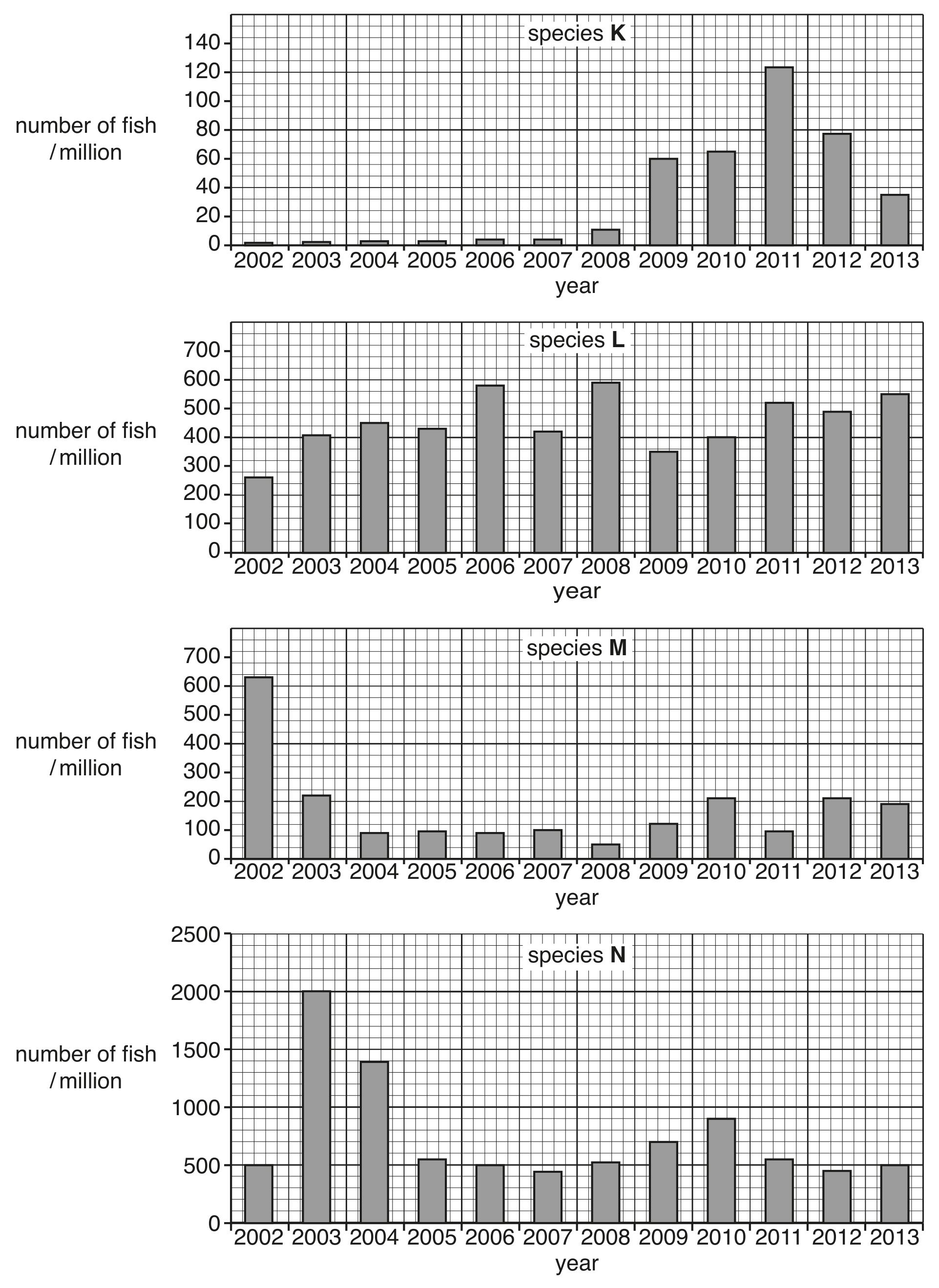
Fig. 4.1

Fig. 4.1

Sustainable development is required to manage fish stocks.

Define the term sustainable development.

Question 5(d)

[Maximum number: 3]

A researcher investigated the population growth of fish for fish farming. The researcher stocked a farmer's lake with a small number of these fish and recorded the number of fish over the next five years. The researcher's results showed that the population of fish had increased exponentially.

Like fish stocks, forests can be a sustainable resource.

Discuss what is meant by the term sustainable resource, using forests as an example.

Question 39

[Maximum number: 1]

What can be managed sustainably?

A

taking coal from a coalfield

B

taking gas from under the earth's surface

C

taking oil from an oilfield

D

taking wood from a woodland

Question 5(c)

[Maximum number: 2]

Define the term sustainable development.

Question 40

[Maximum number: 1]

What is meant by a sustainable resource?

A

a resource that is produced by non-intensive farming and is rarely used

B

a resource that is removed from a habitat without changing the environment

C

a resource that does not pollute the environment

D

a resource that is produced as rapidly as it is removed from the environment

Question 40

[Maximum number: 1]

Which definition of sustainable development is correct?

A

providing for the needs of an increasing human population without harming the environment

B

using a resource more quickly than it can be replaced

C

using increasing areas of land for crops, livestock production and housing

D

conservation of endangered species by captive breeding programmes and seed banks

0 selected