Question 1(d)
[Maximum number: 1]
The change shown in Fig. 1.3 occurs automatically without thought.
State the name given to this type of action.
 EduNinja
• Describe a reflex action as a means of automatically and rapidly integrating and coordinating stimuli with the responses of effectors (muscles and glands)
The change shown in Fig. 1.3 occurs automatically without thought.
State the name given to this type of action.
Fig. 1.1 is a diagram showing parts of two organ systems that are active when a person sneezes.
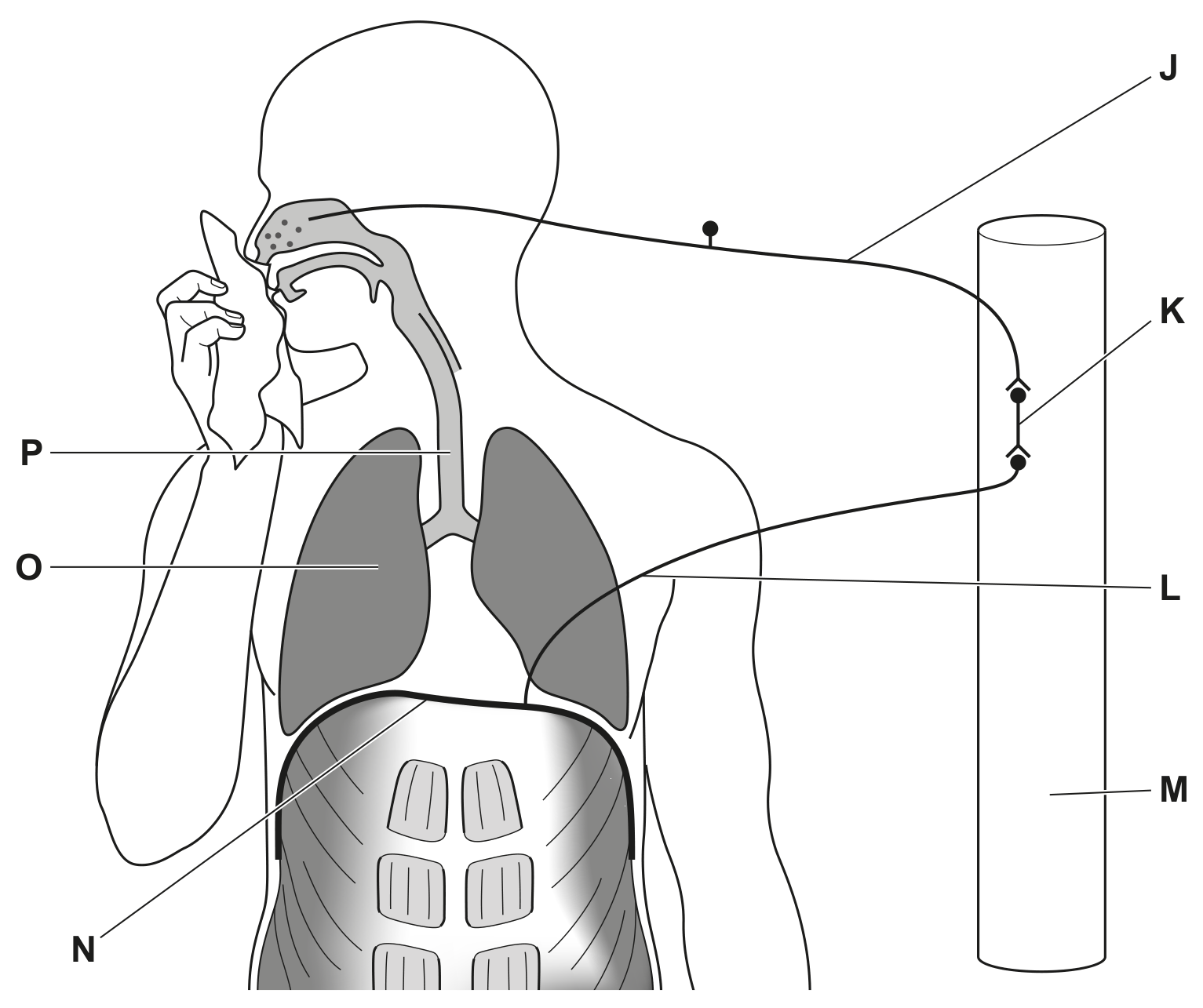
Fig. 1.1
view of part of the gas exchange system view of part of the nervous system
Sneezing is an automatic action that occurs in response to a stimulus in the nose.
State the name of this type of automatic action.
The nervous system coordinates the responses of animals to changes in their environment.
Fig. 2.2 is a flow chart that shows how an involuntary action is controlled.
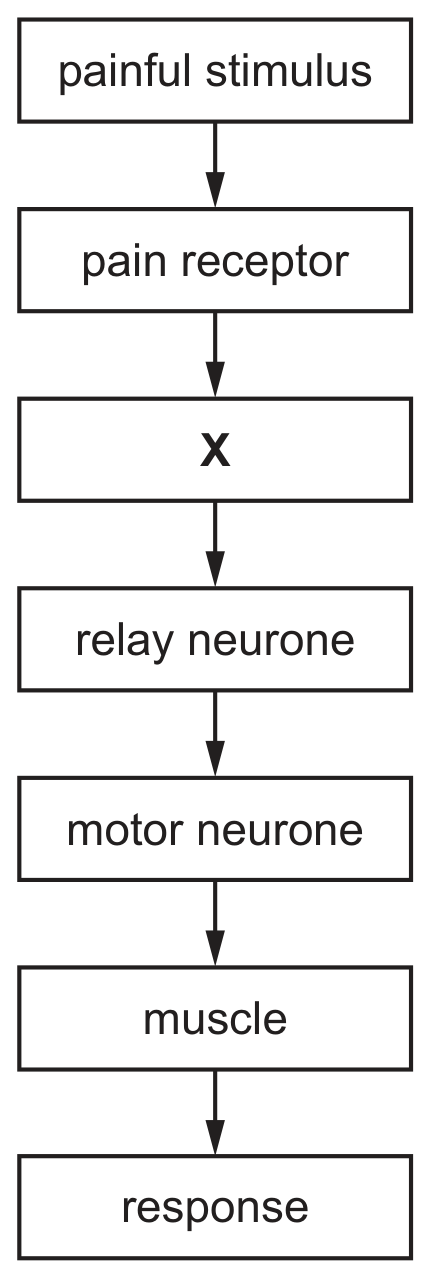
Fig. 2.2
State the type of involuntary action shown by the flow chart.
A reflex is an involuntary action.
Explain what is meant by the term involuntary action.
A reflex is an involuntary action.
Explain what is meant by the term involuntary action.
Neurones are part of the nervous system. Neurones are connected to each other by synapses.
Reflex actions allow the body to respond rapidly to changes in the external environment.
Doctors sometimes check the reflexes of people who are unconscious.
Suggest why reflexes occur in people who are unconscious.
Young mammals that are orphaned can be bottle-fed.
Fig. 6.1 shows a newborn tiger cub sucking on a bottle.
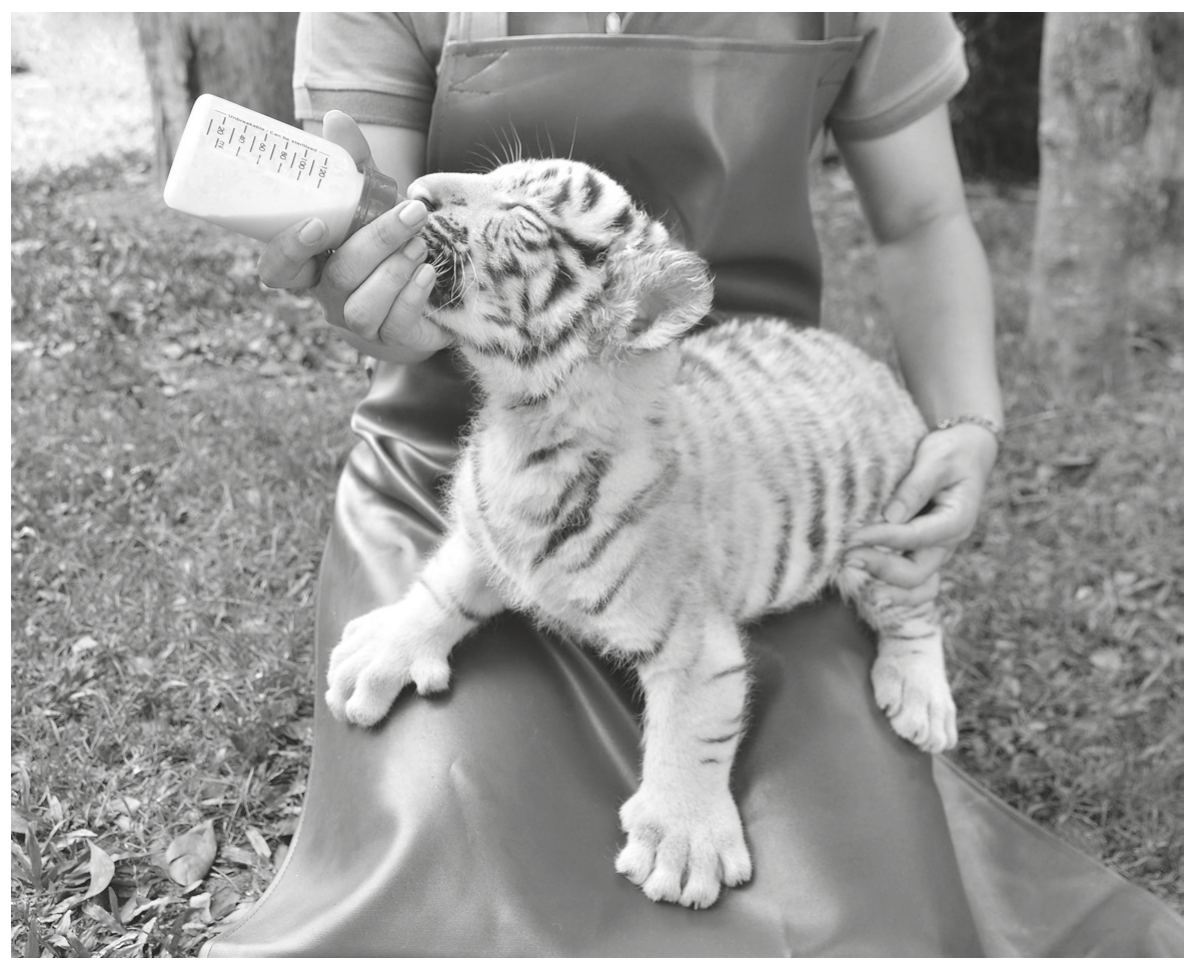
Fig. 6.1
Sucking is an example of an involuntary action observed in newborn mammals. State the name given to involuntary actions.