IB Physics SL A.1.2 Velocity and Acceleration Rates

Practise defining velocity and acceleration as rates of change, then extracting gradients or areas from position, velocity and acceleration graphs with correct signs and units.

Syllabus
First assessment 2025
Objective
Level
SL

Exam points

  • state instantaneous velocity as the rate of change of position and acceleration as change of velocity per time
  • calculate acceleration from a velocity-time tangent and retain a negative sign when the gradient falls
  • obtain change in velocity from the signed area under an acceleration-time graph

A.1.2—Velocity and acceleration rates question 1

[Maximum number: 2]

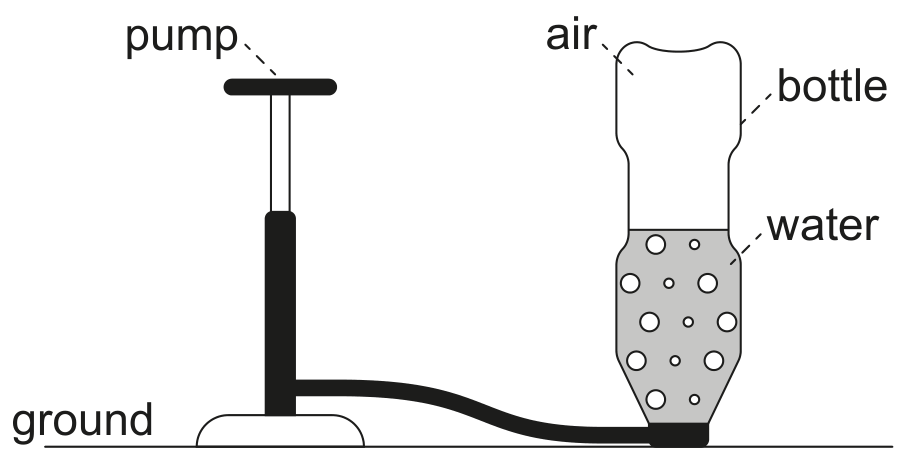
A toy rocket is made from a plastic bottle that contains some water.

Air is pumped into the vertical bottle until the pressure inside forces water and air out of the bottle. The bottle then travels vertically upwards.

Figure for Question A.1.2—Velocity and acceleration rates question 1 — IB Physics SL

The air-water mixture is called the propellant.
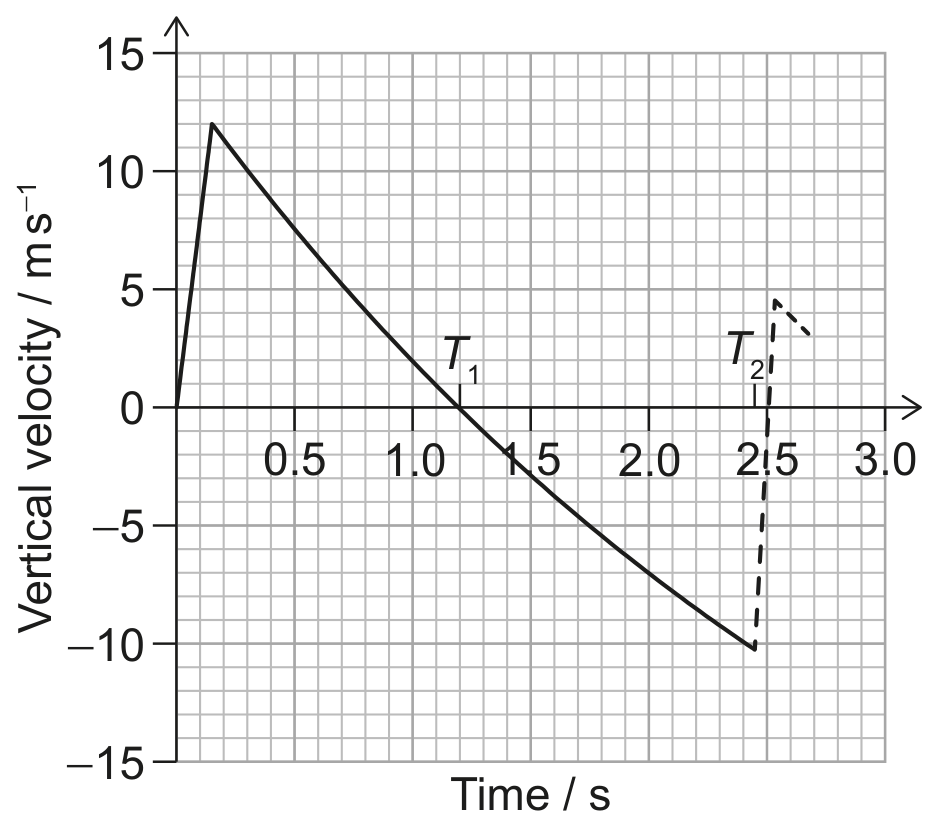
The variation with time of the vertical velocity of the bottle is shown.

Figure for Question A.1.2—Velocity and acceleration rates question 1 — IB Physics SL

The bottle reaches its highest point at time T1T_{1} on the graph and returns to the ground at time T2T_{2}. The bottle then bounces. The motion of the bottle after the bounce is shown as a dashed line.

Estimate the acceleration of the bottle when it is at its maximum height.

All question bank results loaded