IB Physics SL A.1.1 Position, Velocity and Acceleration

Practise reading and sketching position, velocity and acceleration representations, using tangent gradients, curve shape and direction to connect the three motion quantities.

Syllabus
First assessment 2025
Objective
Level
SL

Exam points

  • draw a velocity vector tangent to a trajectory with its arrow in the instantaneous direction of motion
  • infer velocity and acceleration signs from the gradient and curvature of a position-time graph
  • sketch position or height against time with the correct initial gradient and changing curvature

A.1.1—Position, velocity and acceleration question 1

[Maximum number: 3]

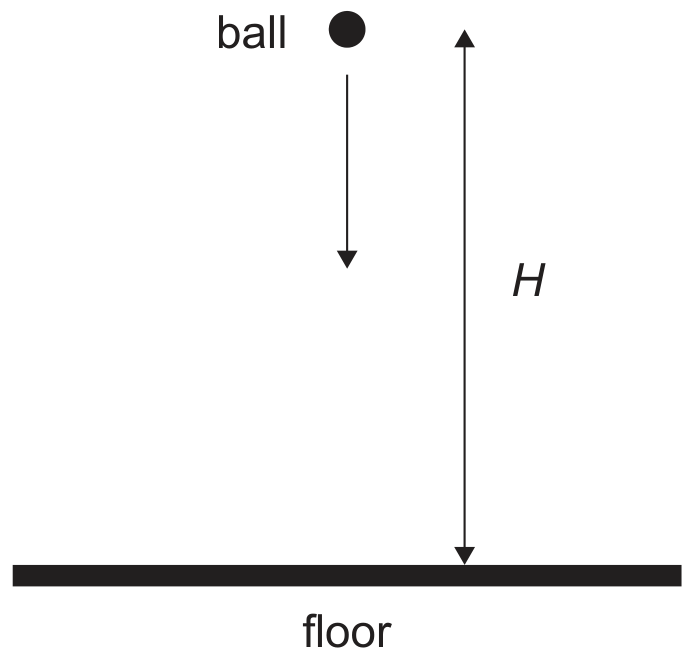
A ball of mass 0.250 kg is released from rest at time t=0, from a height H above a horizontal floor.

Figure for Question A.1.1—Position, velocity and acceleration question 1 — IB Physics SL

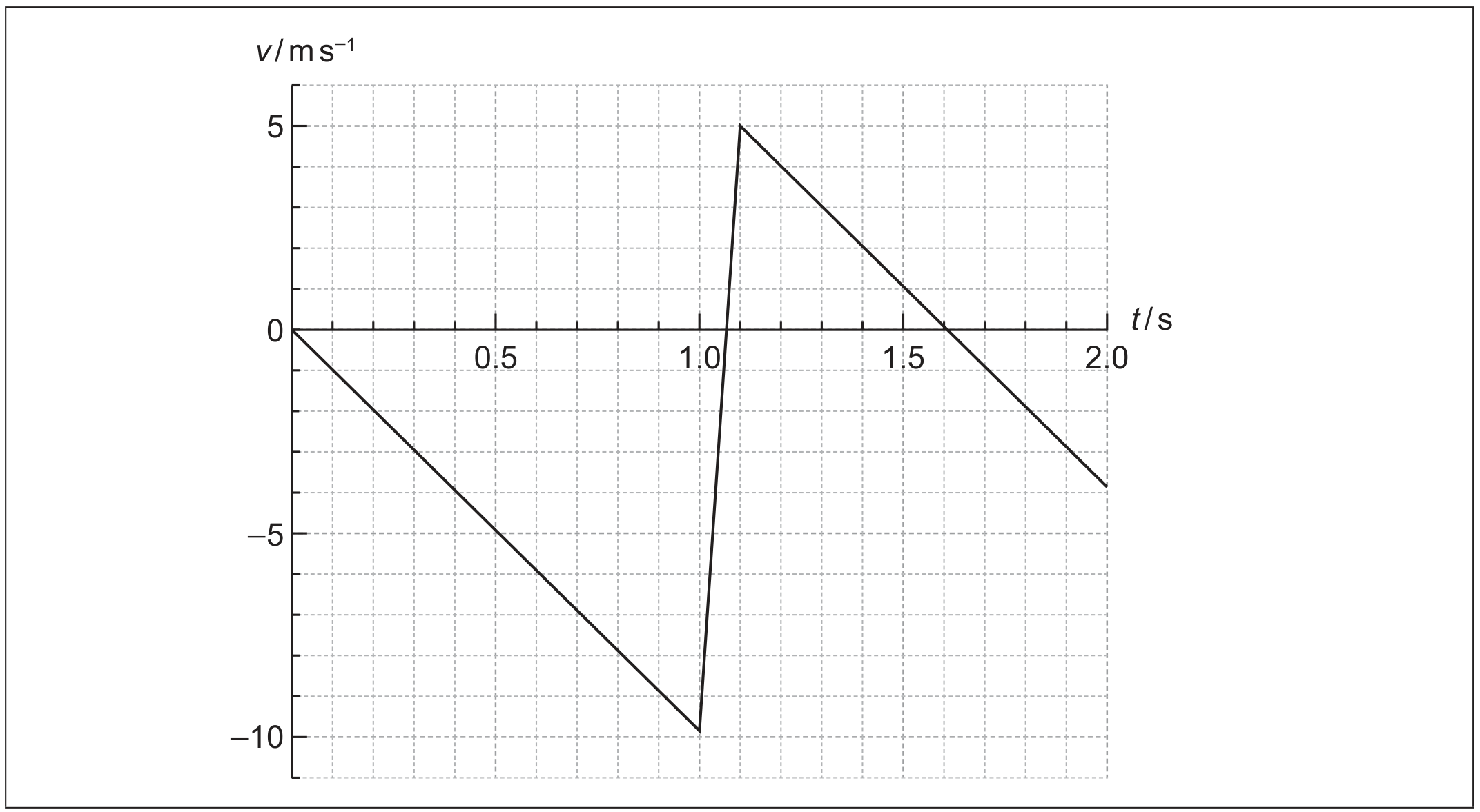
The graph shows the variation with time t of the velocity v of the ball. Air resistance is negligible. Take g=9.80 ms2g=-9.80 \mathrm{~ms}^{-2}. The ball reaches the floor after 1.0 s .

Figure for Question A.1.1—Position, velocity and acceleration question 1 — IB Physics SL

Question (a)

(a)

Label the time and velocity graph, using the letter M , the point where the ball reaches the maximum rebound height.

[ 1 ]

Question (b)

(b)

State the acceleration of the ball at the maximum rebound height.

[ 1 ]

Question (c)

(c)

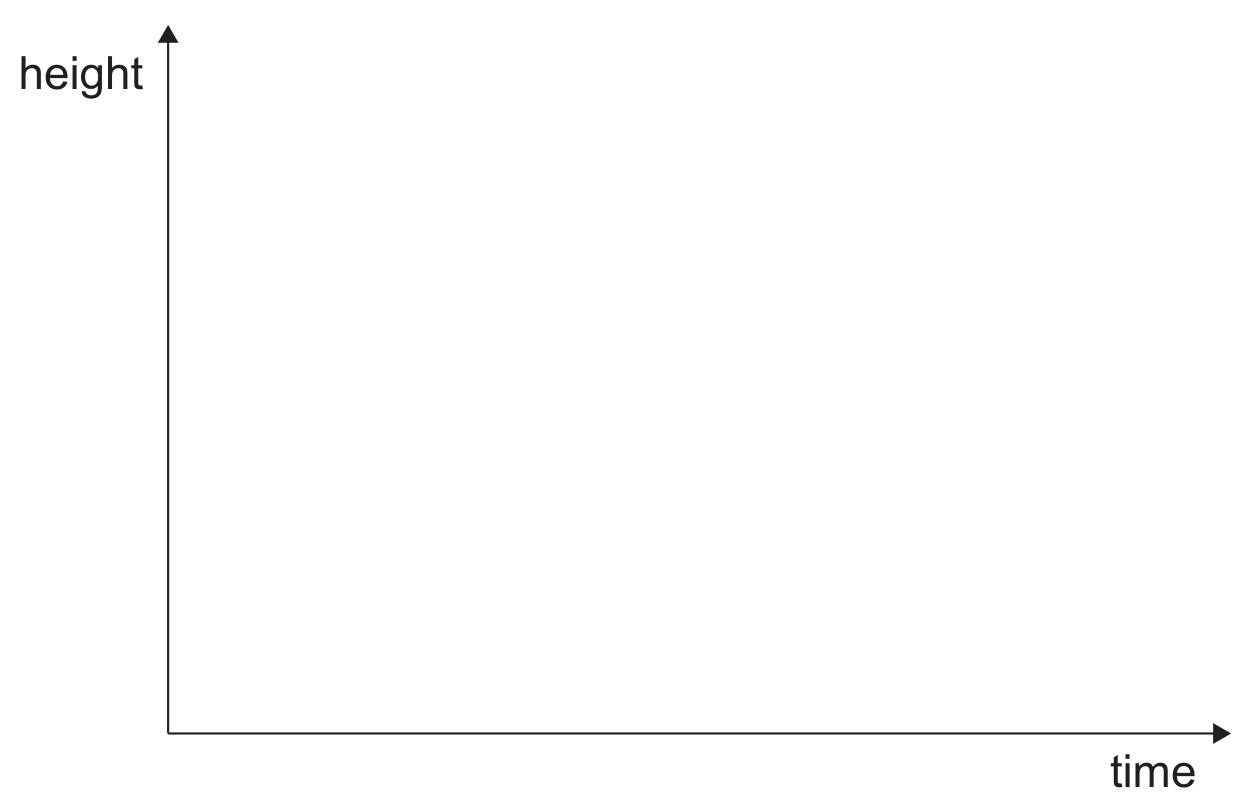
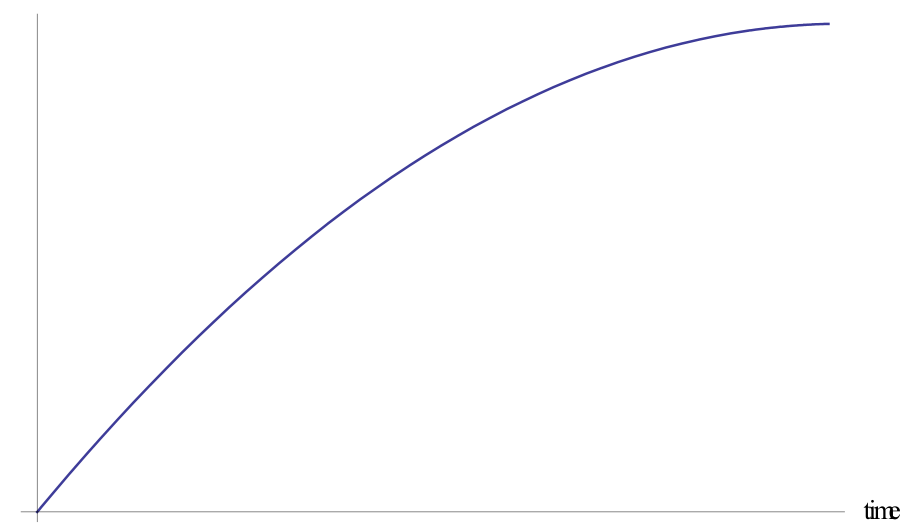
Draw, on the axes, a graph to show the variation with time of the height of the ball from the instant it rebounds from the floor until the instant it reaches the maximum rebound height. No numbers are required on the axes.

Figure for Question (c) — IB Physics SL
[ 1 ]
All question bank results loaded