
Question 1(e)
The US has experienced stronger economic growth than countries in Europe and elsewhere since the COVID-19 pandemic. In terms of Gross Domestic Product (GDP), it had particularly strong growth over the fourth quarter of 2023 of . This far exceeded economists' expectations of . This means that annual growth for 2023 was which was better than other high-income economies. It is on target to do the same in 2024 as shown in Fig 1.1.
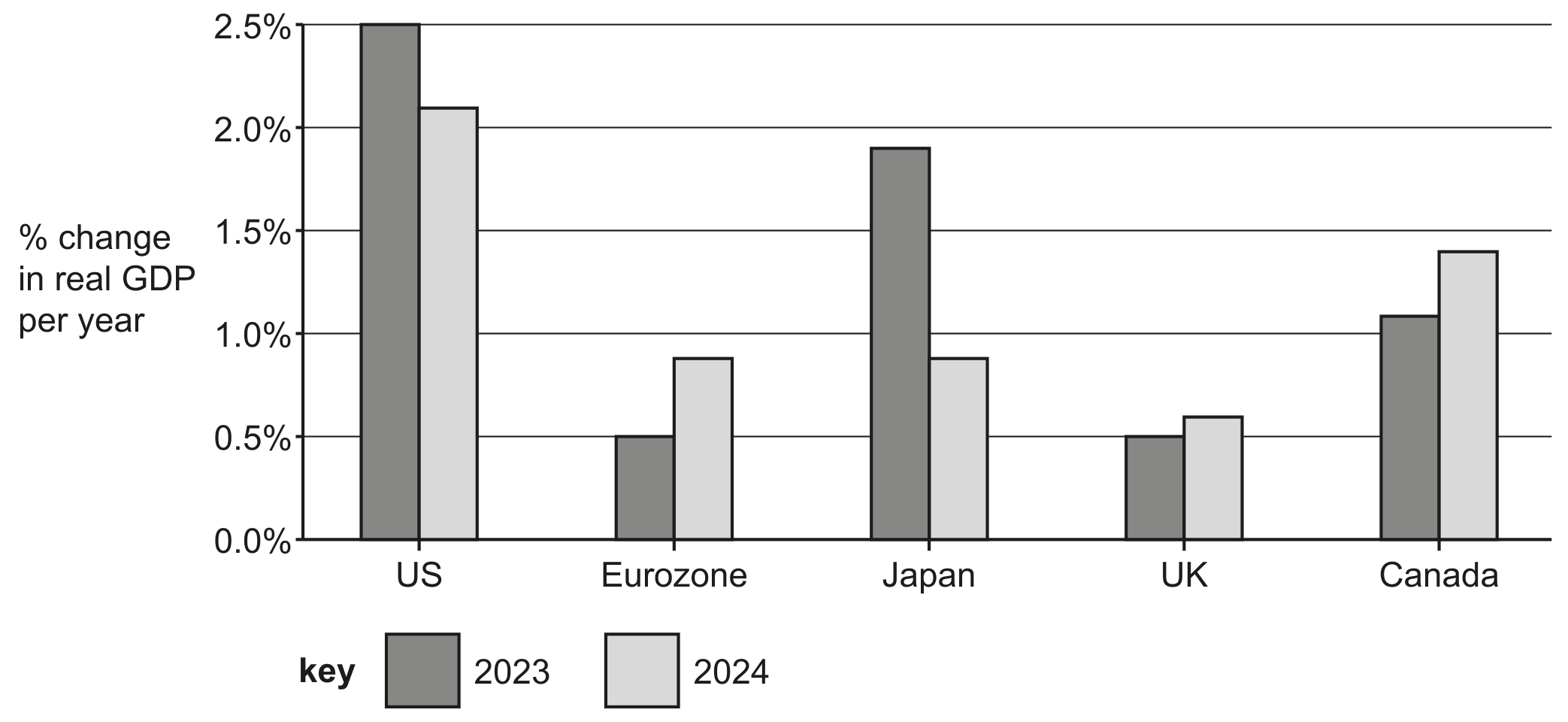
Fig. 1 International Monetary Fund (IMF) economic growth forecasts for 2023 and 2024
Economists have suggested that the strong economic growth in the US was caused by both demand and supply factors. In 2020, the US government responded to the COVID-19 pandemic by injecting US$5 trillion into the economy. Spending in many areas included more generous unemployment benefits and grants to small firms. This huge financial stimulus, much bigger than other countries, has been credited with maintaining consumer spending which represents of aggregate demand.
On the supply side of the economy, existing flexible labour markets enabled firms to make workers redundant. This encouraged firms to invest in new technologies, leading to increased productivity and continued expansion in the long run. As firms expanded, they employed more workers causing disposable incomes to rise. Finally, the US is a net exporter of energy and therefore firms did not suffer the huge increase in energy costs faced by firms in Europe caused by the conflict in Ukraine. This has allowed the US to keep inflationary pressure under control.
In March 2024, however, the rate of inflation in the US rose much faster than expected as its level of unemployment fell, leading to an increase in consumer spending. Although this may lead to further economic growth and the benefits this brings, there are costs associated with inflation that may need to be dealt with. One policy that could be used is to increase interest rates, but US interest rates were already at their highest level for more than two decades because of earlier inflationary pressures. The hope had been that interest rates might start to fall, but now there are
fears that any cuts in interest rates will be delayed or even worse, it might even be necessary to increase them further.
Sources: Adapted from BBC News articles: US economy sees surprisingly strong growth, 13 February 2024, US inflation jumps, 11 April 2024 and US jobs boom raises doubts about rate cuts, 5 April 2024
Assess the extent to which maintaining interest rates at a high level will be the best policy for the US to control inflation.
Answer one question.
EITHER