CAIE A-Level Economics 2 The Price System and the Microeconomy Question Bank

CAIE A-Level Economics 2 The Price System and the Microeconomy Question Bank
Cambridge International AS & A Level Economics 9708 syllabus for exams in 2026, 2027 and 20282026–2028

Practise demand, supply, equilibrium, elasticity and surplus analysis to explain price changes, revenue, market adjustment and microeconomic choices using diagrams and…

Question 1

[Maximum number: 6]

A global olive oil shortage

Almost every kitchen in the United States (US) will pay the price for the intense heat and drought in Europe in the summer of 2023. Olive harvests in key countries were so poor that some analysts were concerned that there would be a shortage of olives to produce enough olive oil to meet the demand around the world. The dramatic reduction in output of this typical household cooking oil has resulted in the consumer price of olive oil rising between 30% and 50% across the US. At the same time, the US dollar has fallen in value against Europe's main currency (the euro), further adding to the price increase of olive oil.
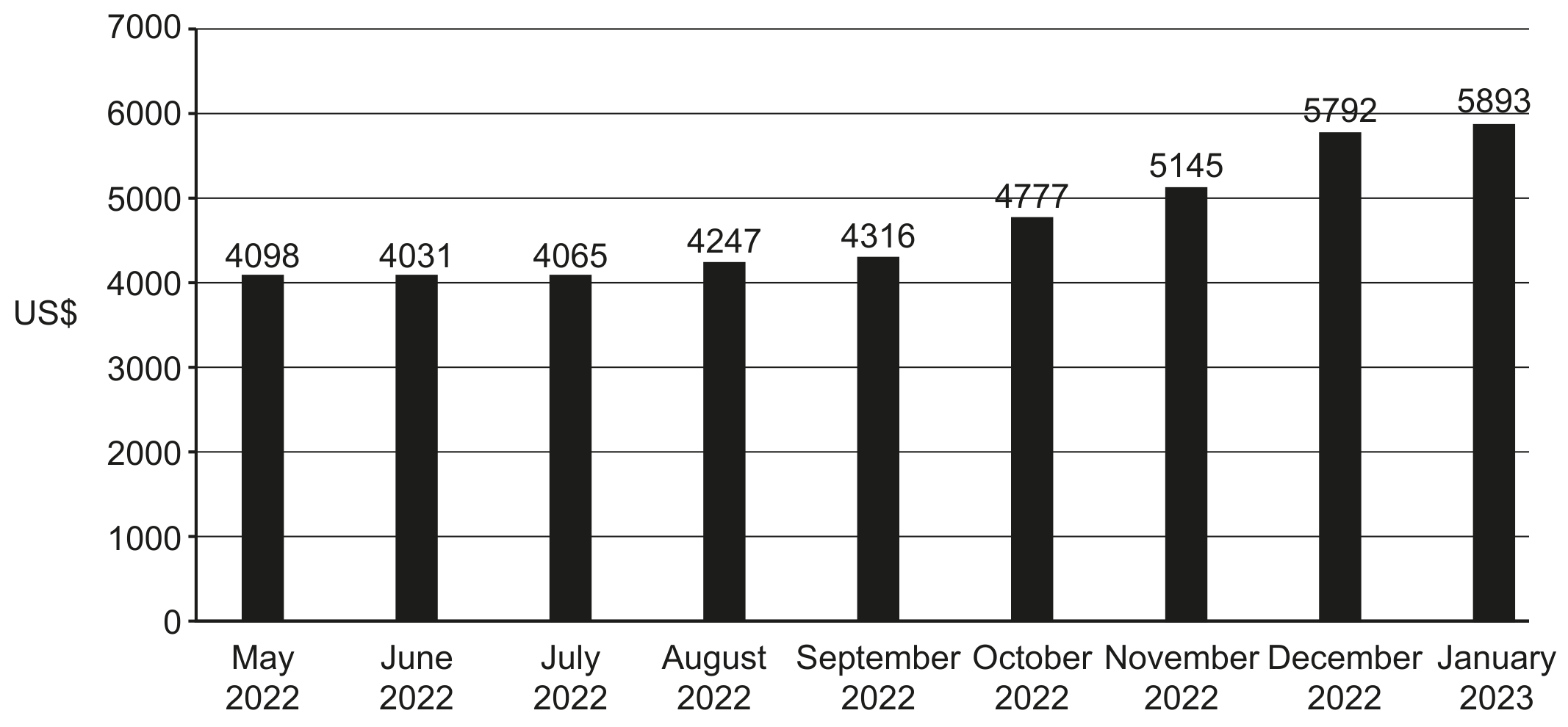
Fig. 1.1 World price of olive oil, May 2022 to January 2023 (US\$/tonne)

Fig. 1.1 World price of olive oil, May 2022 to January 2023 (US\$/tonne)

In Spain, olive production was forecast to be down by about 50% in 2023, which would make it the lowest since 2008. The wide-scale drought conditions across Southern European and other Mediterranean countries significantly impacted on the global supply of olives, since about 80% of global output comes from these regions.

Content removed due to copyright restrictions.

Restaurants and commercial kitchens are desperately trying to find a solution to the olive oil shortage, but alternatives are scarce too. Sunflower oil is a top choice for an olive oil replacement, but the conflict in Ukraine, which is the biggest producer of sunflower oil, has made this substitute increasingly difficult to access.

Previously, the US would look to other countries for olive oil, but supply chains have been severely disrupted. Olive oil does not store very well as its quality deteriorates over time, so increasing stocks does not solve the problem. It is perhaps unsurprising that analysts are recommending investment into new methods of storage that will preserve the quality of the olive oil. This would allow stocks to increase after good harvests to help stabilise prices during future periods of poor harvests.

Question 1(b)

(a)

Some restaurants and commercial kitchens are using sunflower oil as an alternative to olive oil.

Explain how economists could measure the impact of rising olive oil prices on the demand for sunflower oil.

[ 2 ]

Question 1(c)

(b)

With reference to Fig. 1.2 and the help of a demand and supply diagram, consider the possible impact of increased olive oil prices in 2023 on consumer surplus.
[ 4 ]

Question 5

[Maximum number: 1]

What ensures that demand for a product is effective?

A

The consumer must have the ability to buy the product.

B

The consumer must purchase in the private sector of the economy.

C

The consumer must receive consumer surplus.

D

The consumer must want to buy the product.

Question 6

[Maximum number: 1]

Which statement defines market equilibrium?

A

when ceteris paribus no longer applies

B

when quantity demanded equals quantity supplied

C

when quantity demanded is equal to price

D

when supply can no longer expand

Question 6

[Maximum number: 1]

What is consumer surplus?

A

the amount of a consumer's income less the amount paid in income tax

B

the amount of a consumer's income less the amount paid for goods and services

C

the amount of a consumer's income received in bonuses and overtime pay

D

the amount a consumer is willing to pay for a product less the amount actually paid

Question 2(a)

[Maximum number: 8]

In 2022 the supply of root ginger from Nigeria, Africa's biggest producer, fell by 20%. Market demand was expected to grow by more than 5%.

With the help of a demand and supply diagram, explain how the market equilibrium for root ginger in Nigeria is likely to change and consider how certain you are of the new market price.

Question 7

[Maximum number: 1]

What can be measured by cross-elasticity of demand?

A

a change in real income as a result of a change in the price of consumer goods

B

a change in the demand for a good in response to a change in the price of a complement

C

a change in the price of a good in response to a change in the demand for a substitute

D

a change in the price of a good when the demand for it changes

Question 7

[Maximum number: 1]

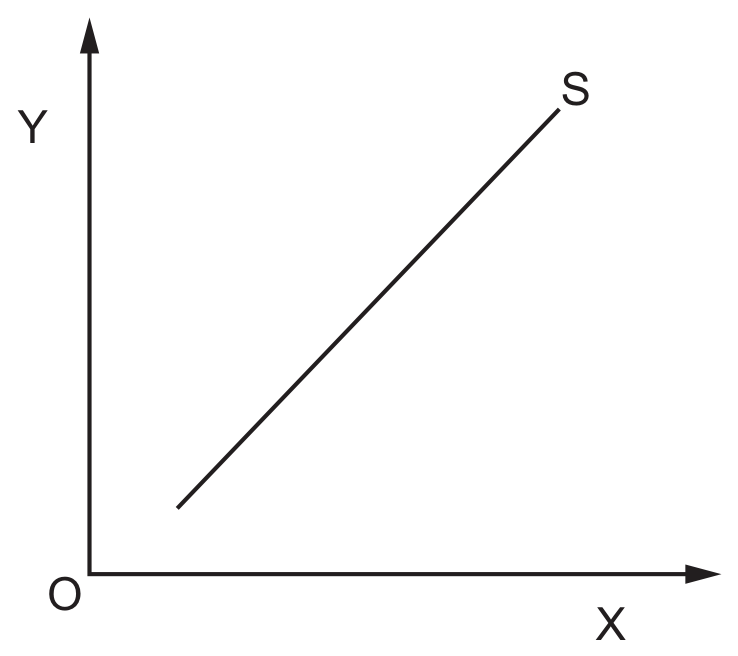
The diagram shows a market supply curve (S).

Figure for Question 7 — CAIE A-Level Economics

What is measured on the X -axis and the Y -axis?

X-axis

Y-axis

quantity

income

quantity

price

price

income

income

quantity

Question 9

[Maximum number: 1]

What is price elasticity of supply?

A

the change in the quantity supplied when a price changes

B

the change in the quantity supplied when demand changes

C

the comparison of the proportionate change in supply to the proportionate change in demand

D

the comparison of the proportionate change in supply to the proportionate change in price

Question 10

[Maximum number: 1]

Four firms produce furniture. The table shows the price elasticity of supply (PES) for each firm.
If the price of furniture rises by 5% which firm would experience an increase in quantity supplied of 2.5% ?

PES for

furniture

2.5

2.0

0.6

0.5

Question 10

[Maximum number: 1]

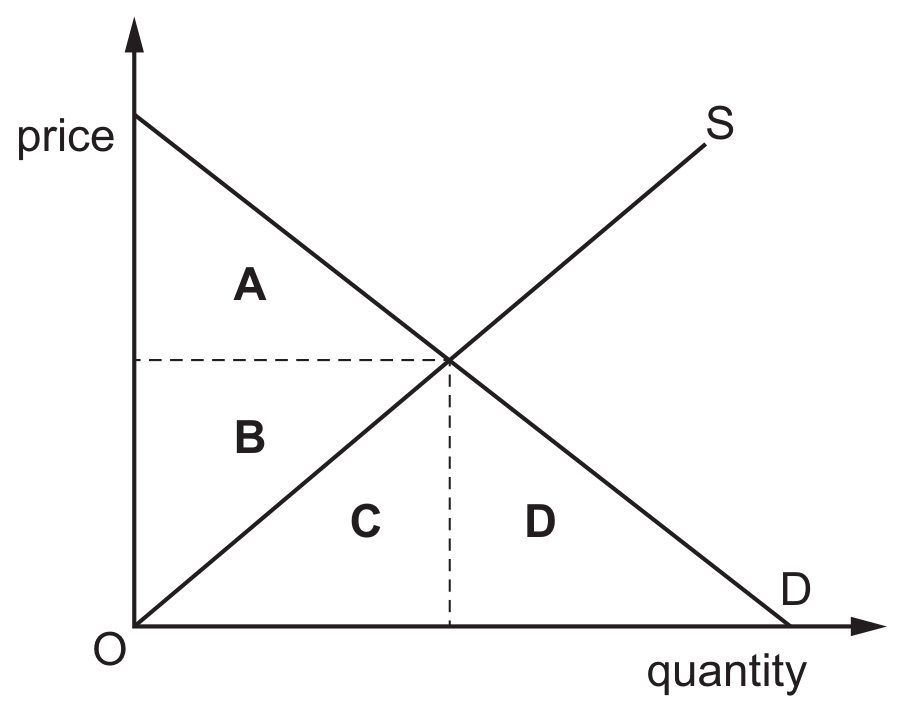
The diagram shows the demand for and supply of a product.

Which area shows producer surplus?

Figure for Question 10 — CAIE A-Level Economics
A
Option A shown in diagram

Option A shown in diagram

B
Option B shown in diagram

Option B shown in diagram

C
Option C shown in diagram

Option C shown in diagram

D
Option D shown in diagram

Option D shown in diagram