2.1.2—Ionic bonding

Syllabus
First assessment 2025
Objective
2.1.2
Level
HL

Ionic Bonding and Formulae

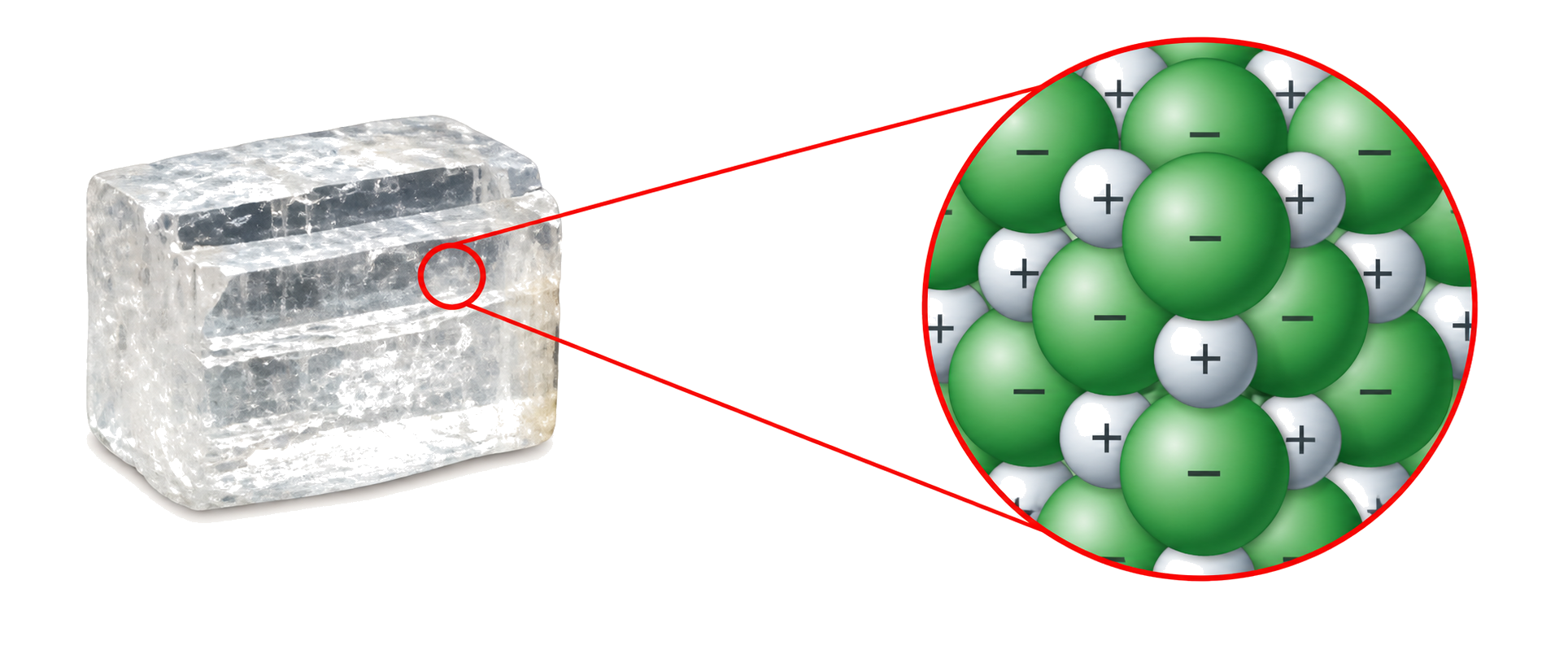
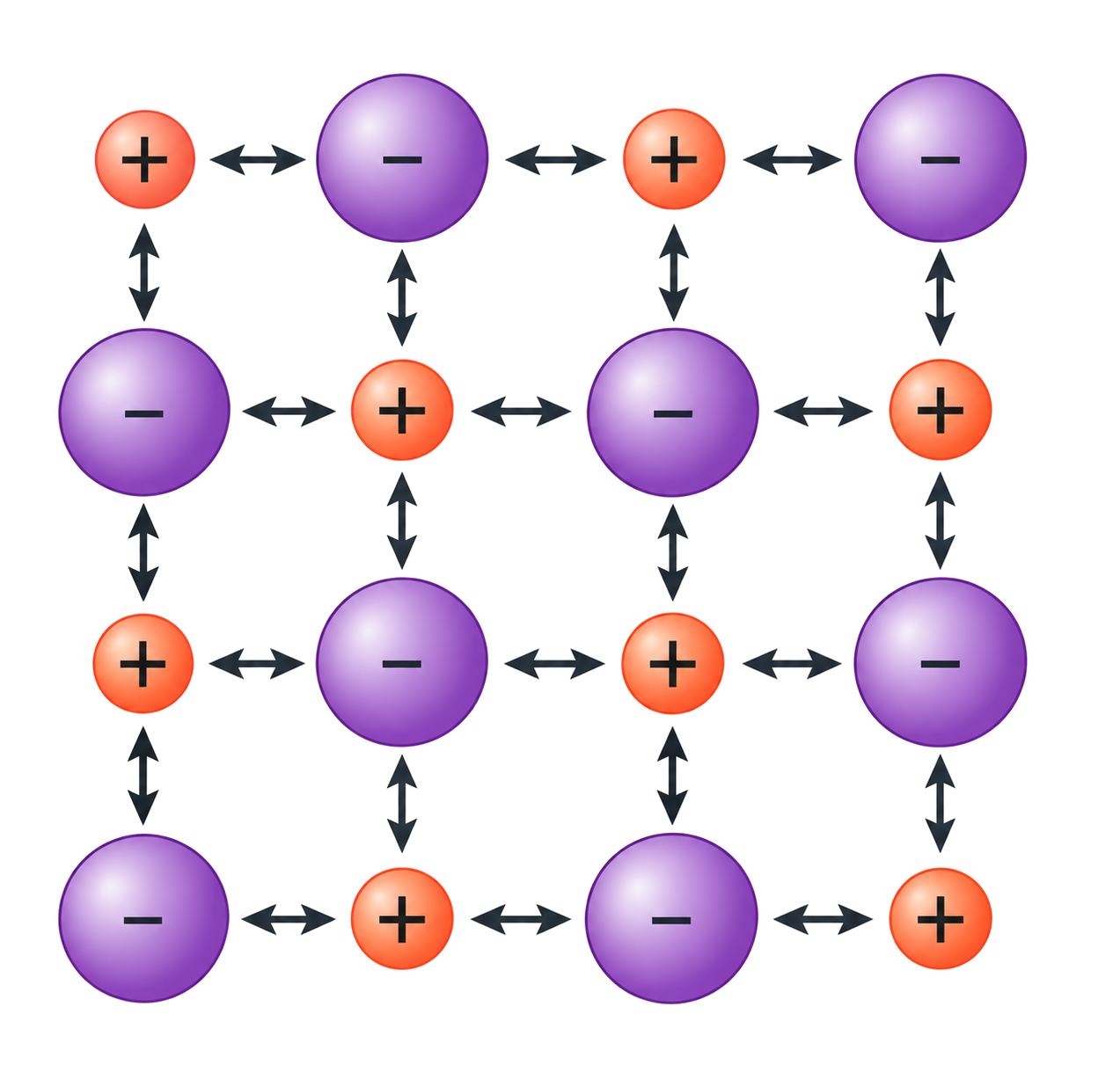
Ionic bonding is the electrostatic attraction between oppositely charged cations and anions. Electron transfer can create the ions, but it is not by itself the definition of the bond.
Task Check
Formula Choose subscripts so total positive and negative charge is zero
Name State the cation first, then the anion; binary anions use the -ide ending
Polyatomic ion Keep the ion together and use brackets when more than one is needed

For a metal ion and a polyatomic ion, balance the charges rather than copying the numerical charge into a subscript without checking the whole formula.

Balance total charge, not ion numbers. Al³⁺ and O²⁻ require 2(+3) + 3(−2) = 0, giving Al₂O₃; Ca²⁺ and NO₃⁻ give Ca(NO₃)₂. These formulae state the simplest ion ratio in a lattice, not the composition of one molecule.

Describing Ionic Bonding

Assessment in practice

1–2 marks in the selected structured examples marks
How it is assessed

Questions ask learners to describe ionic bonding or write a neutral formula for a named ionic compound with a polyatomic ion.

Command terms

describe / write

What earns marks

State electrostatic attraction between oppositely charged ions, and balance the cation and anion charges to produce the complete formula.

Watch for

Writing only electron transfer for the bonding description, or failing to use brackets and charge balance for a polyatomic ion.

Representative question

Question 1

[Maximum number: 2]

Describe the two types of bonding.
lonic bonding:

Covalent bonding:

The Ionic Model Summary

Retrieve the chain: atoms gain or lose electrons to form ions; oppositely charged ions attract and balance into empirical formulae; the three-dimensional lattice explains volatility, solubility, and conductivity.

When checking an answer, ask: Did I state gain or loss and charge? Did I define the bond as electrostatic attraction? Did I connect the property to lattice arrangement and ion mobility?