D4.2.8—Eutrophication

Eutrophication occurs when nitrate or phosphate enrichment drives algal blooms, decomposition, increased oxygen demand, hypoxia, and major aquatic biodiversity loss.

Syllabus
First assessment 2025
Objective
D4.2.8
Level
SL

Exam analysis

Chance of appearing1%of analysed past papers
Latest appearanceMay 2025
Most common paperPaper1A
Typical marks1

Common command terms

  • Explain
  • Discuss

Scoring notes

Common mistake
Saying algae directly use up all oxygen, instead of linking oxygen loss mainly to aerobic decomposition of dead organic matter.

Recent exam appearances

May 2025Paper1A ["SL"] · TZ130[ 1 ]D4.2.8—Eutrophication
Practice this objective

Coverage 2025–2025 · Updated 16 Jul 2026

Fertilizer Leaching Can Raise BOD and Remove Oxygen

Eutrophication occurs when leached nitrogen and phosphate fertilizers enrich aquatic or marine water and stimulate excessive primary production.

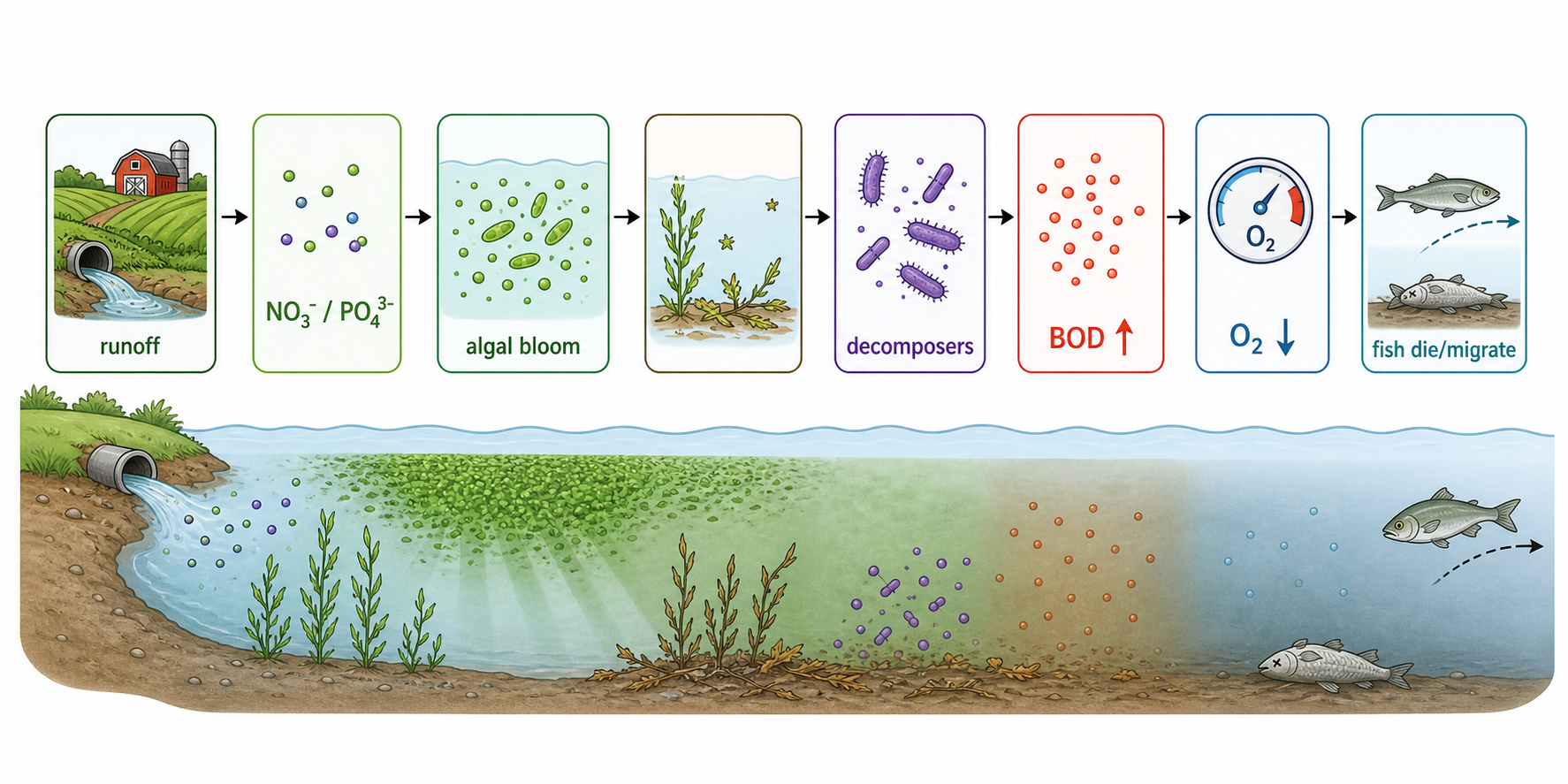
Nitrate/phosphate leaching → algal or plant growth → shading and biomass death → decomposer respiration rises → biochemical oxygen demand (BOD) rises → dissolved oxygen falls → hypoxia and organism death.

After fertilizer runoff causes a bloom, bacteria decomposing dead algae consume oxygen; fish may die when oxygen demand exceeds reaeration and photosynthetic supply.

BOD measures oxygen demanded by biological decomposition; it is not the same as dissolved oxygen, and a high BOD predicts stronger oxygen depletion.

Eutrophication exam focus

Assessment in practice

1–6 marks
How it is assessed

This objective is assessed through essay response, commonly using Explain / Discuss.

Command terms

Explain / Discuss

What earns marks

Build the answer around this relationship: Nitrate and phosphate enrichment commonly starts eutrophication in aquatic ecosystems.

Watch for

Saying algae directly use up all oxygen, instead of linking oxygen loss mainly to aerobic decomposition of dead organic matter.

Representative question

Question 1

[Maximum number: 6]

Discuss the causes and consequences of eutrophication.

Core Stability and Change

Core D4.2 is secure when students can judge whether a system is being stabilized or pushed toward change. The route is: identify the stability support or disturbance, explain the mechanism, and state the ecosystem consequence using evidence.

  • energy, nutrient cycling, diversity, and tolerance ranges maintain persistence
  • Amazon deforestation and keystone removal can push systems toward instability
  • harvest and agriculture require recovery, soil, nutrients, biodiversity, and monitoring
  • eutrophication, biomagnification, and plastics harm ecosystems through specific mechanisms

Ecosystem Stability and Human Impact

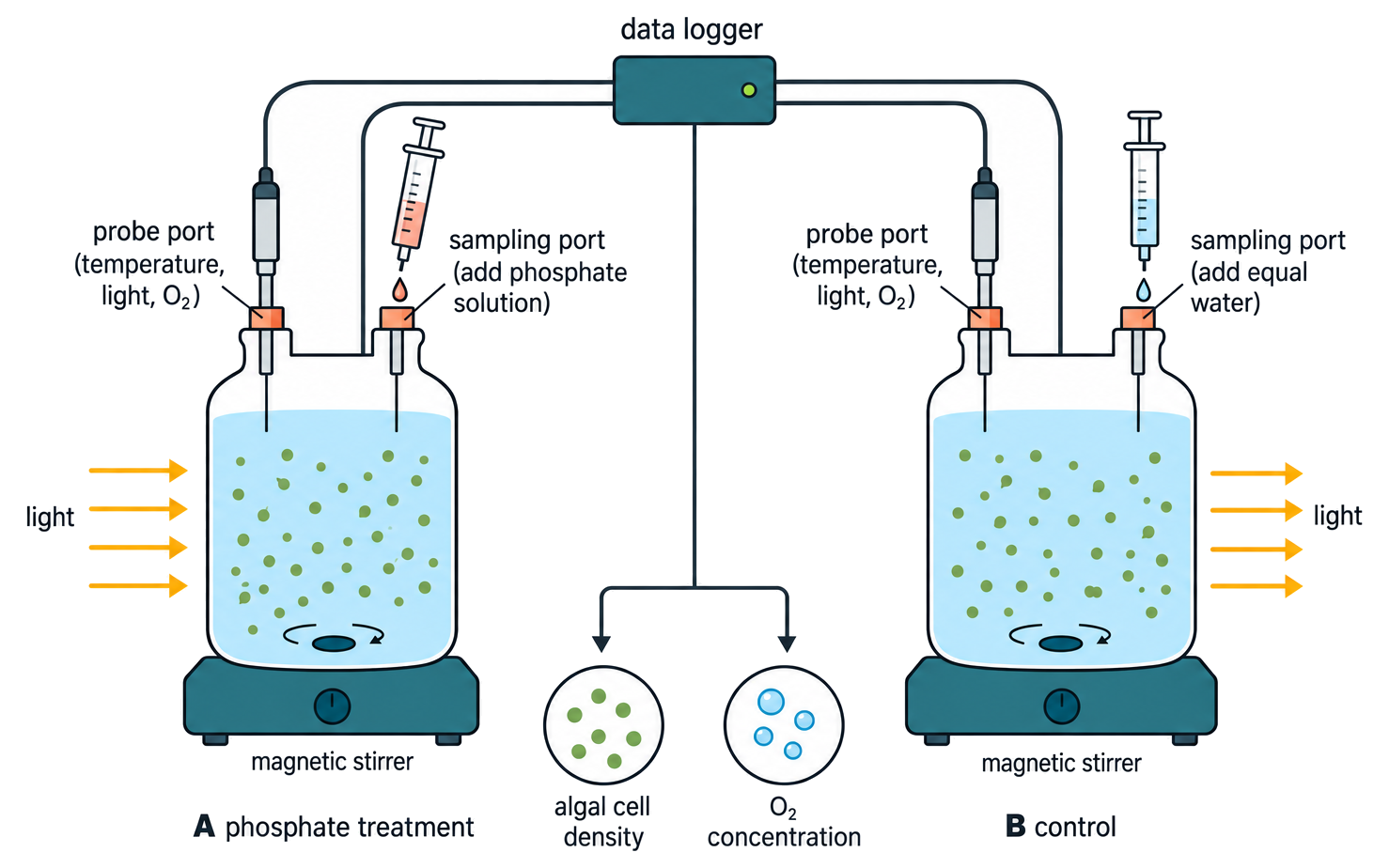
Core transfer questions ask students to explain why an ecosystem remains stable or why a disturbance pushes it toward change. Strong answers do not list threats; they explain mechanisms such as lost rainfall recycling, trophic cascade, overharvest, nutrient enrichment, toxin biomagnification, plastic movement, or restoration through rewilding.

  • Use stability requirements: energy input, nutrient cycling, biodiversity, genetic diversity, and abiotic tolerance ranges.
  • Explain disturbance mechanisms such as Amazon tipping points, trophic cascades, overharvesting, agricultural damage, eutrophication, biomagnification, plastics, or rewilding.
  • Support claims with evidence from controlled models, monitoring, food webs, or pollution pathways.

Concept essentials

  • Nitrate and phosphate enrichment commonly starts eutrophication in aquatic ecosystems.
  • Algal blooms increase organic matter that aerobic decomposers break down.
  • Higher biochemical oxygen demand lowers dissolved oxygen and can kill aquatic organisms.