What Are Producers in an Ecosystem? IB Biology Guide
Learn what producers are in IB Biology ecosystems, how they start food chains, and how to use exam-safe trophic level wording.
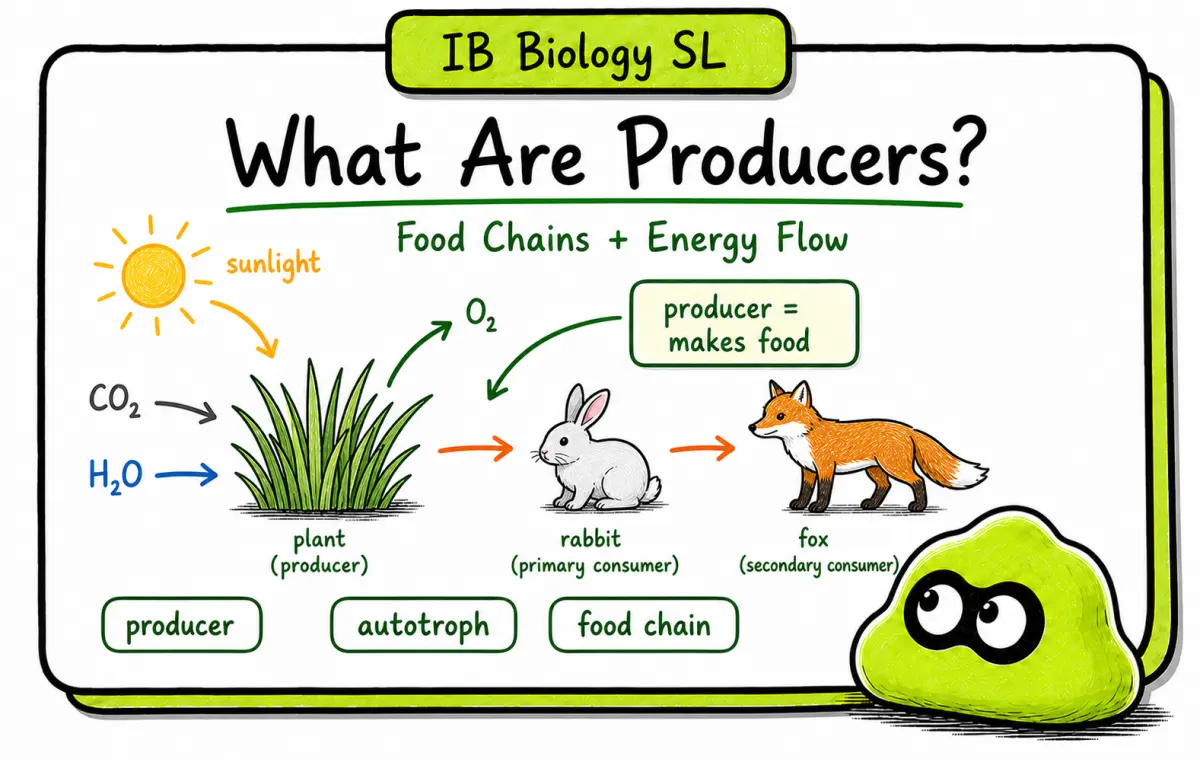
If a food chain question asks where energy starts, the answer is usually the producer. In IB Biology ecology, producers are organisms such as plants, algae and some bacteria that make their own organic nutrients instead of eating other organisms.
This page focuses on the search question what are producers in an ecosystem, then turns it into exam wording: producers, autotrophs, food chains, trophic levels, and energy flow.
Quick Answer
| Question | Exam-safe answer |
|---|---|
| What are producers? | Organisms that make their own organic nutrients |
| Where are they in a food chain? | The first trophic level |
| Common examples | Plants, algae and photosynthetic bacteria |
| Energy role | They convert light energy into chemical energy in organic compounds |
| Common trap | A producer is not just "the first animal" in a chain |
What a Producer Means in IB Biology
A producer is an organism that makes its own organic nutrients. In most school ecology examples, this happens through photosynthesis: a plant or alga uses light energy to make organic compounds from carbon dioxide and water.
That is why these organisms are also called autotrophs. They do not need to consume another organism to obtain organic nutrients. Consumers, by contrast, obtain organic compounds by feeding on autotrophs or other consumers.
In a food chain, the primary producer forms the first trophic level. This first trophic level creates biomass that becomes the energy and matter source for consumers. In IB Biology wording, primary production means the accumulation of carbon compounds in biomass by autotrophs.
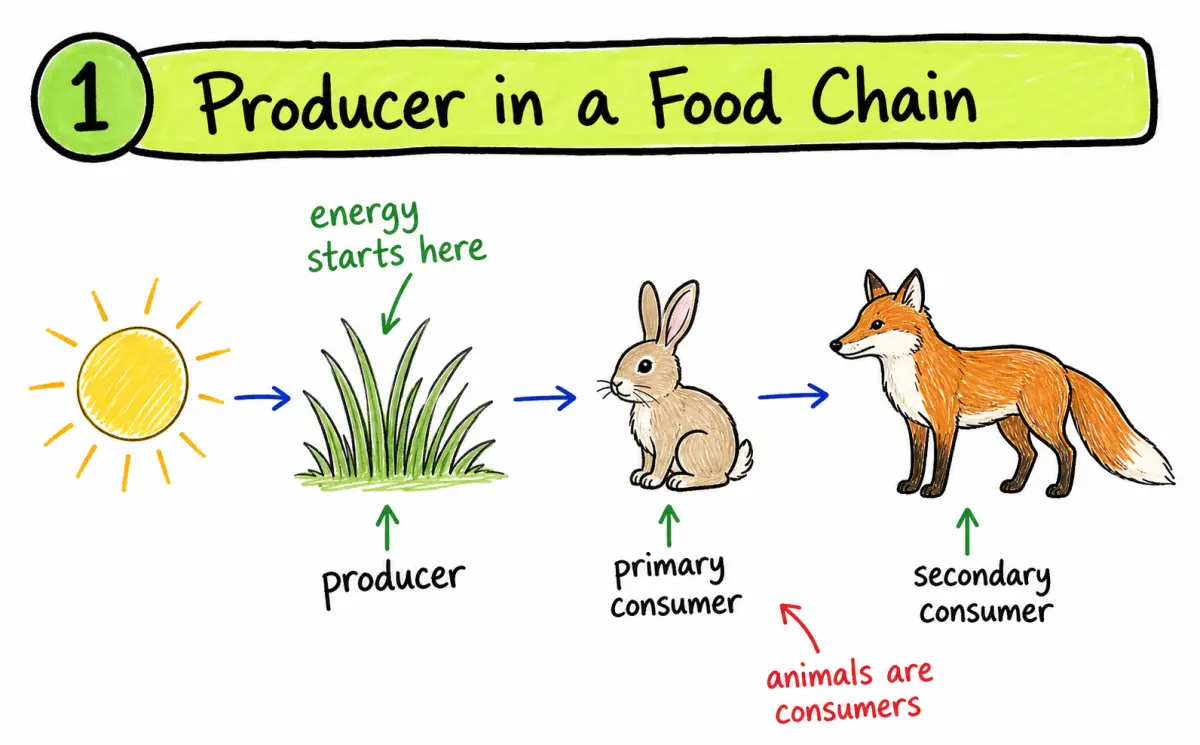
In an exam answer, the useful wording is not just "plants make food". A stronger answer says that a carbon-fixing organism makes its own organic nutrients and forms the first trophic level in a food chain.
Producers vs Consumers
| Term | What it means | Food-chain position |
|---|---|---|
| Producer | Makes its own organic nutrients | First trophic level |
| Primary consumer | Eats producers | Second trophic level |
| Secondary consumer | Eats primary consumers | Third trophic level |
| Tertiary consumer | Eats secondary consumers | Higher trophic level |
This distinction matters because many students identify the first animal as the producer. In the food chain grass → rabbit → fox, the grass is the primary producer. The rabbit is a primary consumer because it feeds on the organism at the first trophic level.
Are All Producers Plants?
Producers are not always plants. Most school examples are photosynthetic producers such as grasses, trees, algae and phytoplankton, because those examples are easy to place in food chains and ecosystems.
Some producers are chemosynthetic bacteria. Chemosynthetic producers use energy from inorganic chemical reactions instead of sunlight. Hydrothermal vent ecosystems are the classic example: bacteria near the vent can make organic matter even where sunlight does not reach.
Exam-safe wording: a producer is defined by making organic matter from inorganic substances, not by being a plant.
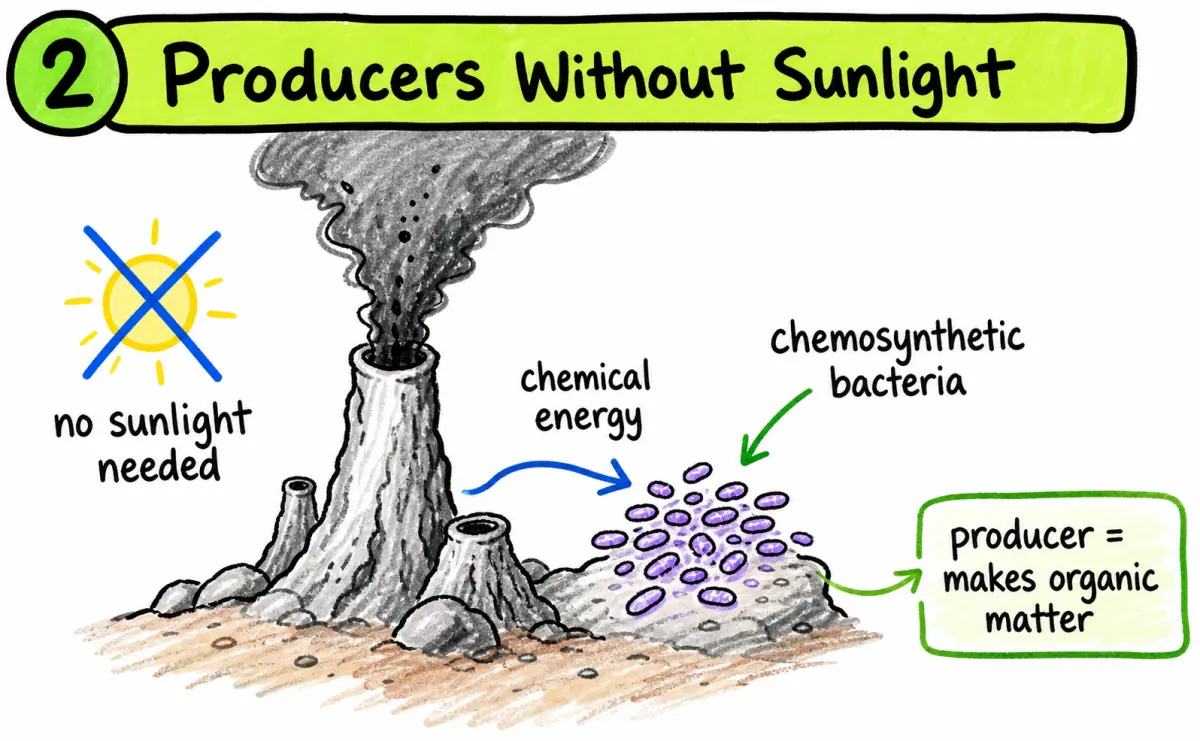
| Type of producer | Energy source | Examples | Exam wording |
|---|---|---|---|
| Photosynthetic producer | Light energy | grass, trees, algae, phytoplankton | uses photosynthesis to make organic compounds |
| Chemosynthetic producer | chemical energy | bacteria near hydrothermal vents | uses energy from inorganic chemical reactions |
The important comparison is photosynthesis versus chemosynthesis. Both can support organisms at the first trophic level, but they use different energy sources.
Worked Example
Question: In the food chain below, identify the producer and explain your choice.
grass → grasshopper → frog → snake
Answer: The producer is the grass. It is the first trophic level and makes its own organic nutrients by photosynthesis, so the other organisms receive energy indirectly from the grass.
Why this works: The answer does three things: it identifies the organism, links it to the first trophic level, and explains the reason using photosynthesis or organic nutrient production.
Exam-Safe Wording
For definition questions, use:
A producer is an organism that makes organic matter from inorganic substances, usually using light energy in photosynthesis.
For food-chain questions, add:
- Primary producers are at the first trophic level.
- Arrows in food chains show the direction of energy transfer.
- Primary consumers feed on autotrophs or other first-trophic-level organisms.
- Biomass made by autotrophs becomes an energy and matter source for consumers.
Avoid saying that producers "create energy". Energy is not created. Photosynthetic organisms convert light energy into chemical energy stored in organic compounds; chemosynthetic organisms use chemical energy from inorganic reactions.
Common Mistakes
| Mistake | Why it loses marks | Better wording |
|---|---|---|
| Calling the first animal the producer | Animals are consumers | The plant/alga is the producer |
| Saying producers make energy | Energy is transferred or converted | Producers convert light energy into chemical energy |
| Ignoring trophic levels | Ecology questions often ask position | Producers are the first trophic level |
| Confusing producer with decomposer | Decomposers feed on dead organic matter | Producers make organic nutrients |
Mini Practice Set
- Define the term producer.
- In the chain algae → zooplankton → small fish, identify the producer.
- Explain why a rabbit is not a producer in a grass → rabbit → fox food chain.
- State what the arrows in a food chain show.
- Rewrite this weak answer: "Producers are animals that give energy to the food chain."
Practice This Topic
Try this exam-style question:
A student writes: "The rabbit is the producer because it is the first animal in the food chain grass → rabbit → fox." Explain why this answer is incorrect and rewrite it using correct IB Biology ecology wording.
Answer guide:
- The producer is the grass, not the rabbit.
- Producers make their own organic nutrients, usually by photosynthesis.
- The rabbit is a primary consumer because it feeds on the producer.
- The producer forms the first trophic level in the food chain.
- The arrows show energy transfer from food to feeder.
Practice this exact topic
Practise IB Biology trophic levels questions
Some questions may require an EduNinja membership.
Browse broader practice
Browse the full IB Biology Question Bank
Use this if you want to explore more available practice by topic.
Related Study Links
- IB Biology SL Study Hub
- IB Biology Ecology Revision Guide
- Primary Consumer Examples: IB Biology Ecology
- IB Biology Photosynthesis Equation: Calvin Cycle
FAQ
What are producers in an ecosystem?
Producers are organisms that make their own organic nutrients. In most IB Biology food-chain examples, producers are plants, algae or photosynthetic bacteria. They are important because they introduce chemical energy into the ecosystem and form the first trophic level that consumers depend on.
Are producers the same as autotrophs?
Yes, producers are autotrophs in ecology questions. Autotrophs make their own organic compounds rather than obtaining them by eating other organisms. If an exam asks for a producer example, a plant or alga is usually safer than naming an animal, because animals are consumers.
Why are producers first in a food chain?
Producers are first in a food chain because they make the organic nutrients that other organisms feed on. They convert light energy into chemical energy stored in compounds such as carbohydrates. Primary consumers then obtain that stored energy by eating producers.
Is a rabbit a producer or a consumer?
A rabbit is a consumer, not a producer. It cannot make its own organic nutrients by photosynthesis, so it feeds on plant material. In a grass → rabbit → fox food chain, the grass is the producer and the rabbit is the primary consumer.
What is the biggest producer mistake in IB Biology?
The biggest mistake is identifying the first animal as the producer. Exam answers should look for the organism that makes its own organic nutrients, not the first organism that looks active or visible. In most food chains, that organism is a plant, alga or photosynthetic microorganism.
Final Takeaway
Producers are the entry point for energy in most food chains. If you can identify the producer, explain photosynthesis or organic nutrient production, and connect it to the first trophic level, your ecology wording becomes much safer.
Put topic practice back into your full IB Biology SL study plan.
Return to the complete course overview, or move directly into the most relevant study tool.
Related articles
More course notes, updates and study resources from the EduNinja blog.

IB Biology SL Assessment and Grade Boundaries: How 55 + 50 + 24 Marks Become Your Final Grade
Learn how IB Biology SL Paper 1, Paper 2 and the scientific investigation combine through weighted assessment, how grade boundaries work and how to plan component-level revision.
Diploidy and Haploidy Explained
Revise diploid and haploid chromosome sets, meiosis, fertilisation and common IB Biology mistakes.
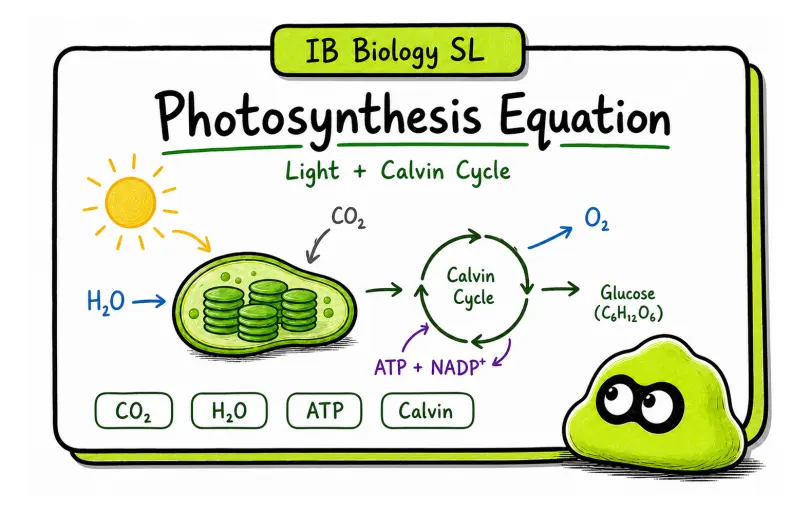
IB Biology Photosynthesis Equation: Calvin Cycle
Revise the photosynthesis equation in IB Biology with light-dependent reactions, carbon fixation, exam wording and practice questions.