Primary Consumer Examples: IB Biology Ecology
Learn primary consumer examples, food-chain wording and common ecology mistakes before practising IB Biology populations questions.
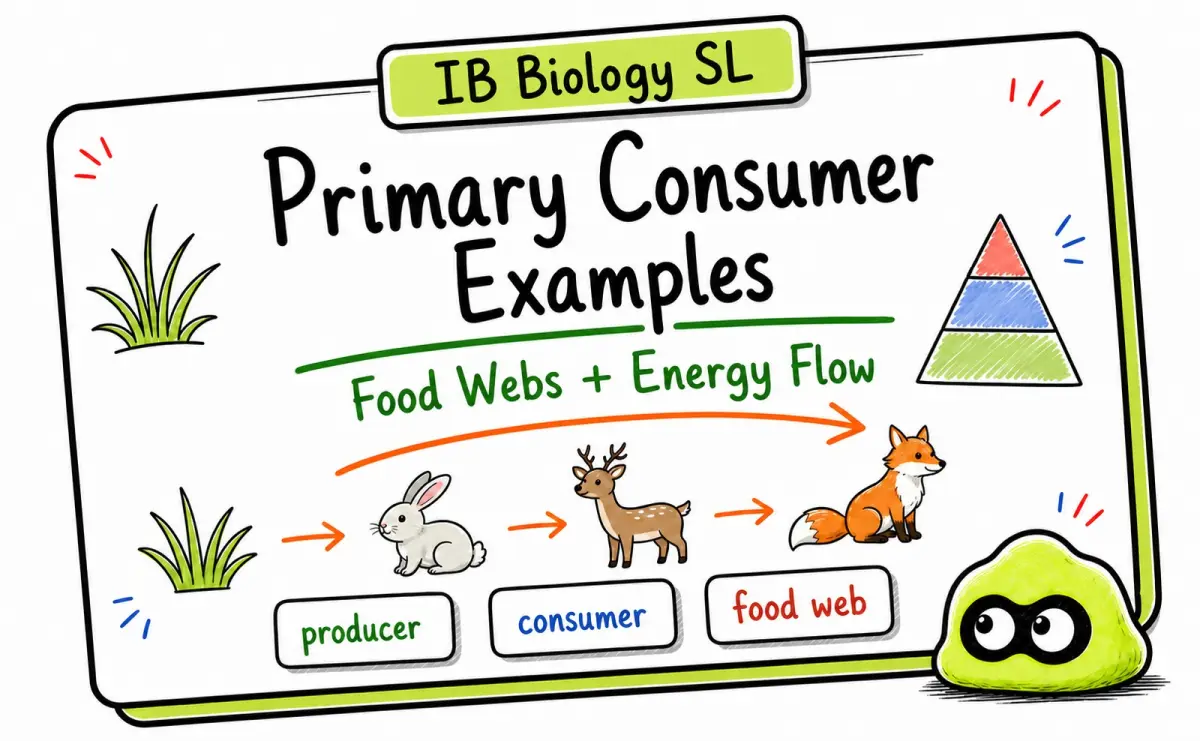
Primary consumer examples are organisms that eat producers, such as grass, algae or other photosynthetic organisms. In IB Biology ecology, a primary consumer is usually the first animal in a food chain because it feeds directly on a producer.
Use this short rule: producer feeds primary consumer. Once the definition is clear, practise it with the IB Biology SL populations and communities question bank.
Quick Answer
| Term | Meaning | Examples |
|---|---|---|
| Producer | Makes organic compounds using light or chemical energy | Grass, algae, phytoplankton |
| Primary consumer | Eats producers | Rabbit, deer, zooplankton, caterpillar |
| Secondary consumer | Eats primary consumers | Fox, small fish, bird |
Primary consumers are not defined by size. They are defined by what they eat.
What a Primary Consumer Means
A primary consumer is an organism that feeds on producers. In most school ecology examples, this means a herbivore eating a plant or algae.
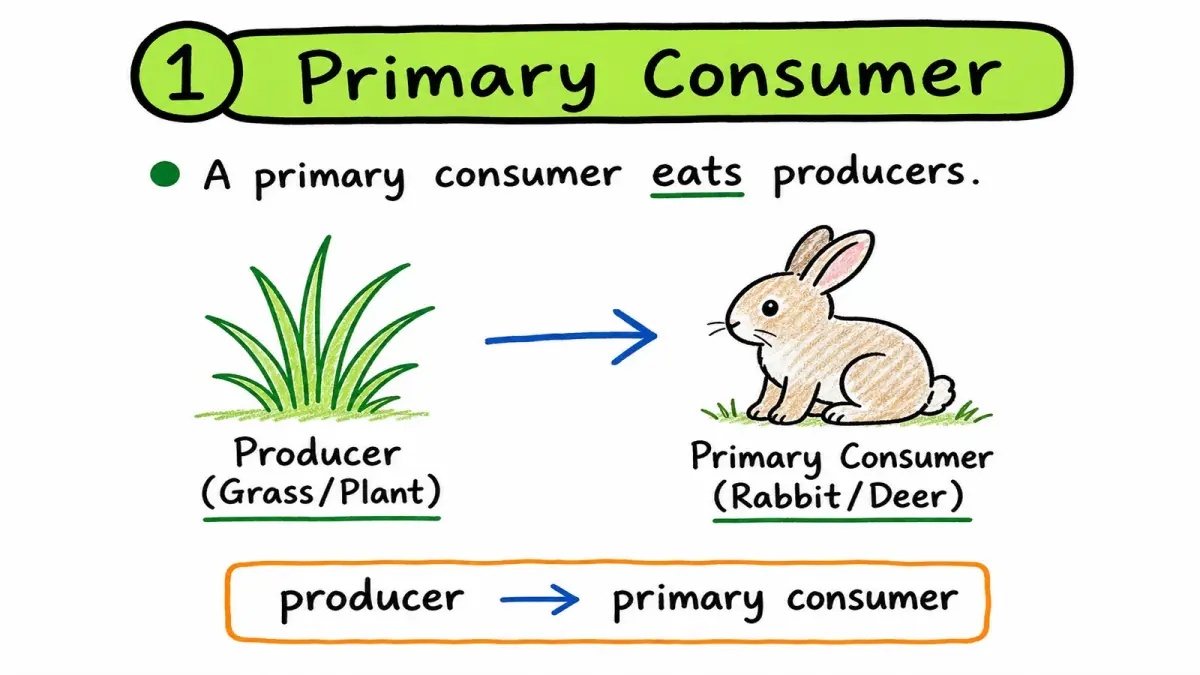
The word "primary" means it is the first consumer level, not the first organism in the food chain. Producers come before primary consumers because they make biomass that other organisms can eat.
Primary Consumer Examples in Food Chains
Common primary consumer examples include rabbits eating grass, deer eating leaves, caterpillars eating plant tissue and zooplankton feeding on phytoplankton.
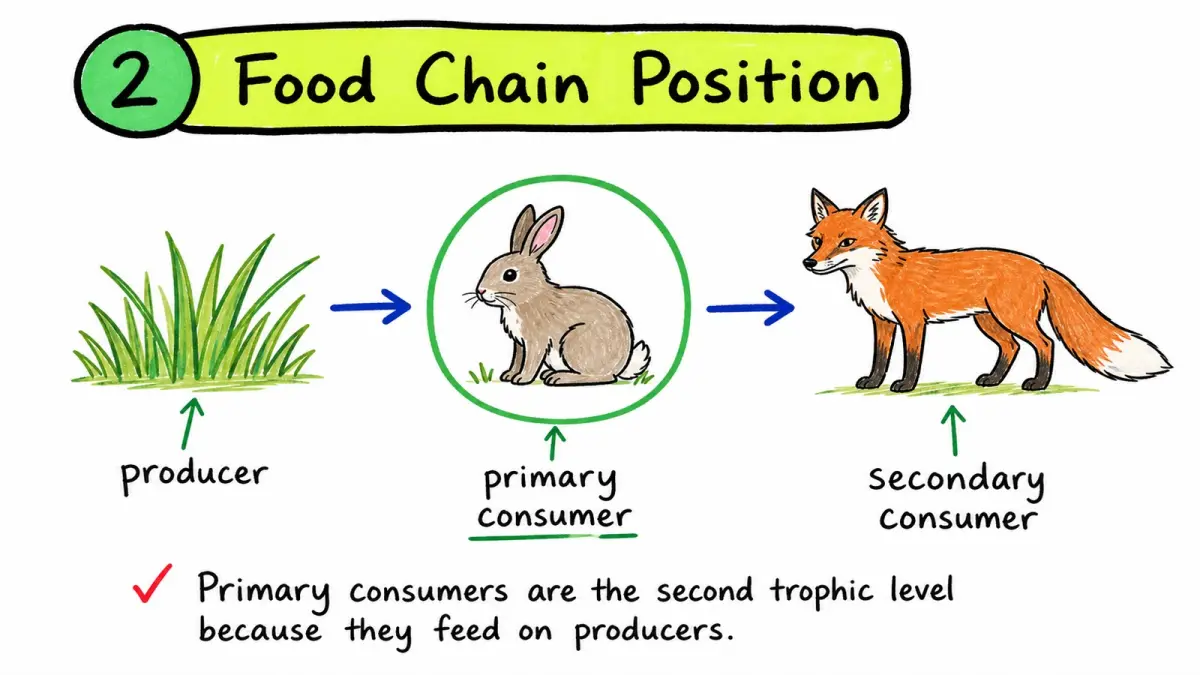
The exact organism can change depending on the food chain. A small fish might be a primary consumer if it eats algae, but it could be a secondary consumer if it eats zooplankton. Always check the feeding relationship shown in the question.
How Exams Usually Ask This
IB Biology and ecology questions usually test primary consumers in three ways:
- identify the primary consumer in a food chain or food web
- explain energy flow from producer to consumer
- avoid confusing producer, primary consumer and secondary consumer
For data or diagram questions, follow the arrows carefully. The primary consumer is the organism receiving energy directly from the producer.
Markscheme Translation
| Markscheme phrase | Student-friendly meaning | Better answer wording |
|---|---|---|
| Feeds on producers | Eats plants, algae or photosynthetic organisms | The rabbit is a primary consumer because it eats grass. |
| Second trophic level | Comes after producers | Producers are the first trophic level; primary consumers are second. |
| Energy transfer | Energy passes through feeding | Energy is transferred from grass to the rabbit. |
The safest answer pattern is: name the organism + say what it eats + name the trophic level.
Common Mistakes
| Mistake | Why it loses marks | Better wording |
|---|---|---|
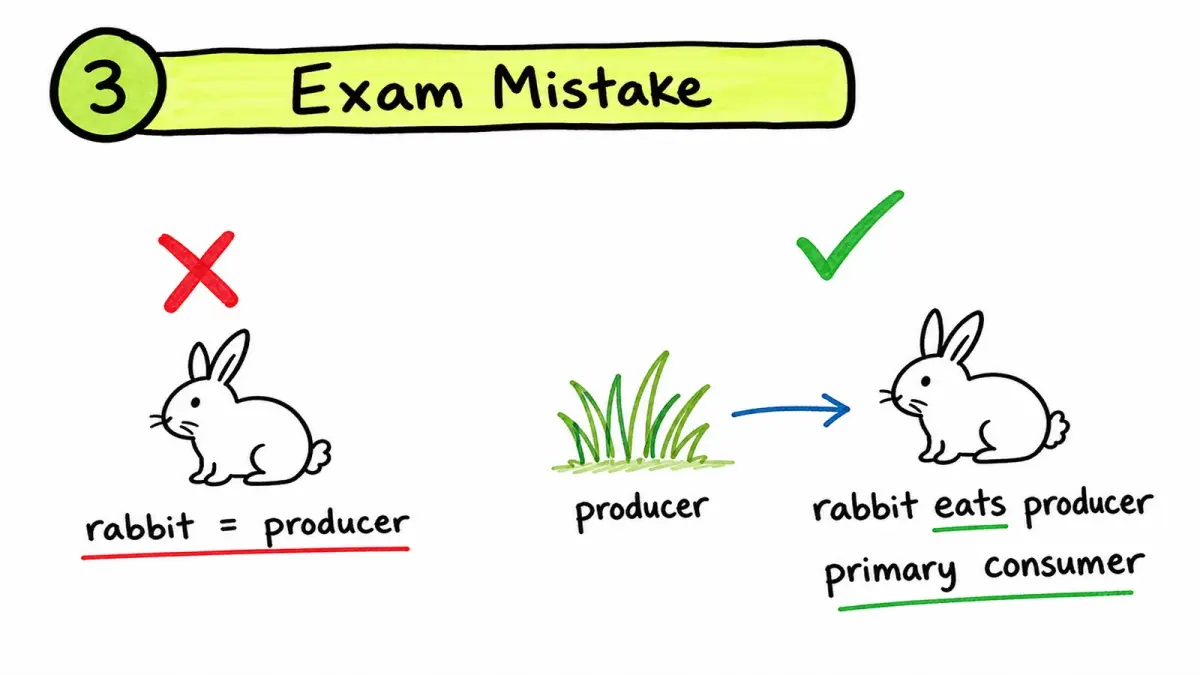
| Calling the rabbit a producer | Animals do not photosynthesise | The rabbit is a primary consumer because it eats grass. |
| Saying primary consumers are always small | Trophic level depends on feeding, not size | Deer can be primary consumers if they eat plants. |
| Ignoring arrows in a food web | Food webs can show several feeding paths | Follow the arrow from producer to consumer. |
Practice This Topic
Try this exam-style question:
In the food chain grass -> grasshopper -> frog -> snake, identify the primary consumer and explain why it has that trophic role.
Answer guide:
- The grasshopper is the primary consumer.
- It feeds directly on grass, which is the producer.
- A primary consumer is usually the second trophic level in a food chain.
- Do not choose the frog or snake because they feed on consumers, not directly on the producer.
Practice this exact topic
Trophic levels question bank
Some questions may require an EduNinja membership.
Browse broader practice
Browse the full IB Biology Question Bank
Use this if you want to explore more available practice by topic.
Related Articles
- IB Biology Ecology Revision Guide
- IB Biology SL Ecology: Energy Flow, Carbon and Climate
- IB Biology SL Ecosystems: Sampling, Food Webs and Carbon
FAQ
What is a primary consumer?
A primary consumer is an organism that eats producers. In many ecology examples, this means a herbivore eating plants, algae or phytoplankton. It is called primary because it is the first consumer level after producers.
What are examples of primary consumers?
Examples of primary consumers include rabbits, deer, caterpillars, grasshoppers, zooplankton and some small fish. The example depends on the food chain because an organism's trophic level is decided by what it eats in that specific diagram.
Is a rabbit a primary consumer?
A rabbit is a primary consumer when it eats grass or other plant material. In that food chain, grass is the producer and the rabbit is the first consumer that receives energy from the producer.
How do I identify a primary consumer in a food web?
Find the producer first, then look for the organism that feeds directly on it. In exam answers, name the organism and explain the feeding link, such as "the rabbit is the primary consumer because it eats grass."
Related Study Links
Final Takeaway
Primary consumer examples are easiest when you focus on feeding: producer -> primary consumer -> secondary consumer. Do not guess from size or familiarity; follow the food chain.
Put ecology back into your full IB Biology SL study plan.
Return to the complete course overview, or move directly into the most relevant study tool.
Related articles
More course notes, updates and study resources from the EduNinja blog.

IB Biology SL Assessment and Grade Boundaries: How 55 + 50 + 24 Marks Become Your Final Grade
Learn how IB Biology SL Paper 1, Paper 2 and the scientific investigation combine through weighted assessment, how grade boundaries work and how to plan component-level revision.
Diploidy and Haploidy Explained
Revise diploid and haploid chromosome sets, meiosis, fertilisation and common IB Biology mistakes.
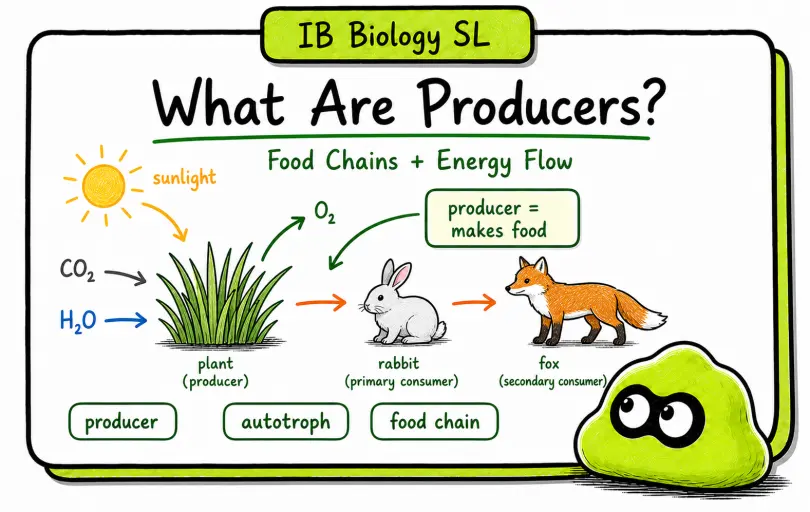
What Are Producers in an Ecosystem? IB Biology Guide
Learn what producers are in IB Biology ecosystems, how they start food chains, and how to use exam-safe trophic level wording.