IB Biology Cell Specialization: Differentiation and Function
Revise IB Biology cell specialization with differentiation, gene expression, stem cells, structure-function links and practice questions.
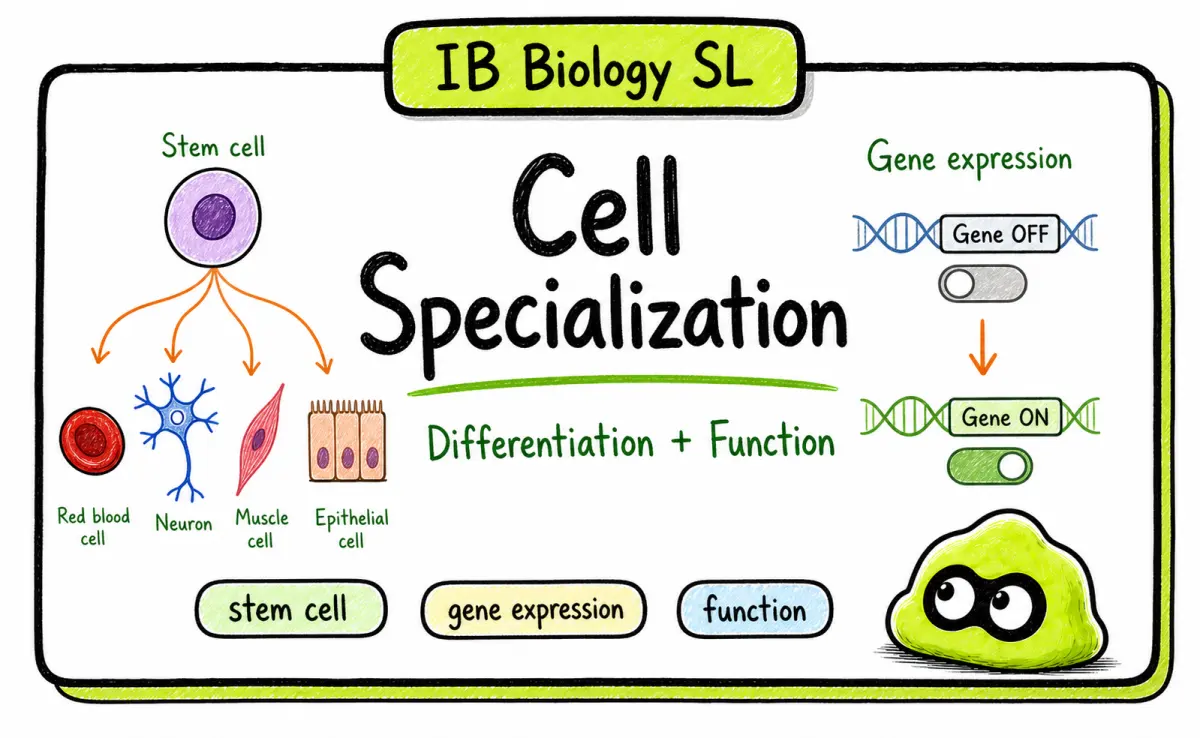
If you search why cells are specialized, the short IB Biology answer is this: specialized cells have structures adapted for specific functions because different genes are expressed during differentiation.
This page is built for IB Biology SL cell specialization practice. It connects the definition to the exam wording students usually miss: same DNA, different gene expression, different proteins, and structure-function links.
Quick Answer
| Idea | What it means | Exam-safe wording |
|---|---|---|
| Cell specialization | Cells become adapted for specific roles | Structure supports function |
| Differentiation | A cell becomes specialized | Different genes are expressed |
| Stem cell | Cell that can divide and differentiate | Can produce specialized cells |
| Gene expression | Some genes are active, others inactive | Same DNA, different proteins |
What Cell Specialization Means
Cell specialization means that a cell has features that help it do a particular job. A red blood cell is adapted for transport, a neuron for signalling, and a muscle cell for contraction. The exam point is not just that they look different. It is that structure and function are linked.
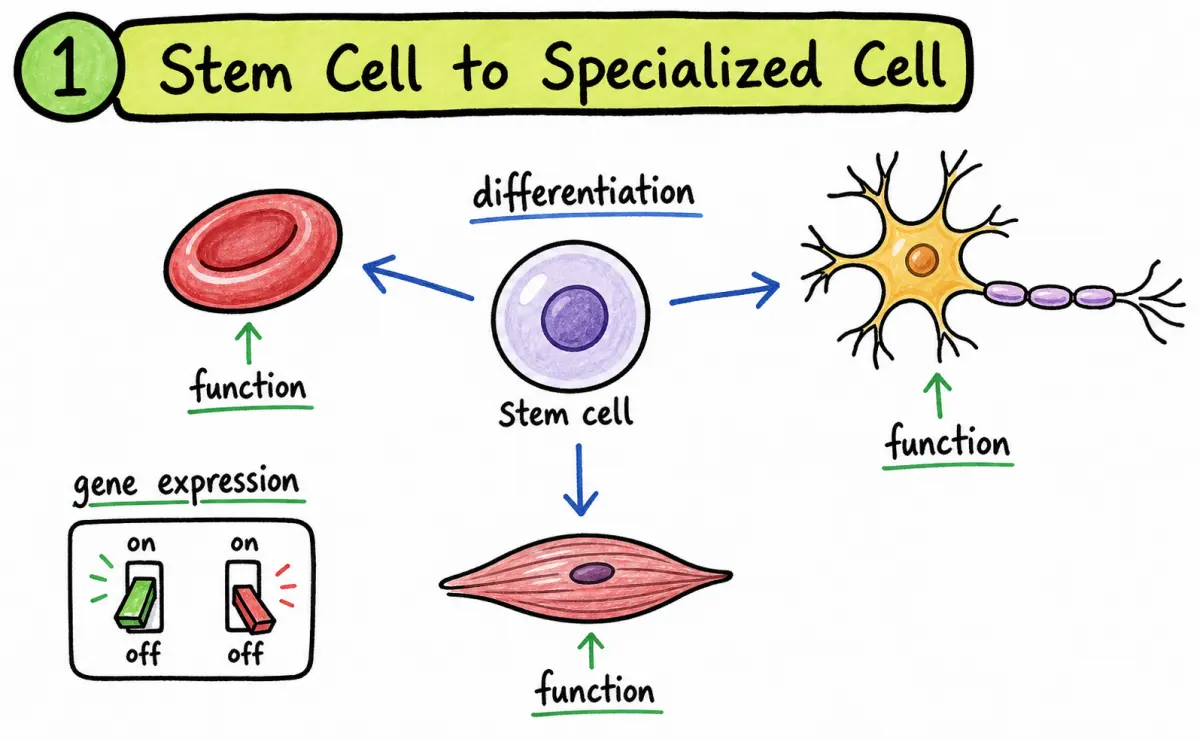
In IB Biology, the strongest explanation uses differentiation and gene expression. Most body cells contain the same DNA, but different genes are switched on or off. That changes which proteins are made, and those proteins help create different cell structures.
Worked Example
Question: Explain why a neuron and a muscle cell can have different structures even though they come from cells with the same DNA.
Answer: Both cells contain the same genetic information, but different genes are expressed during differentiation. This leads to different proteins being made. A neuron develops long extensions for transmitting impulses, while a muscle cell contains contractile proteins for movement.
Why this scores: The answer connects same DNA, gene expression, differentiation, protein production, structure and function. A weaker answer only says that the cells have different jobs.
If you understand that chain, the next useful step is practice: use the Practice This Topic block below to test whether you can write it under exam-style wording.
Exam-Safe Wording
Use this answer chain when the question asks why specialized cells are different:
| Step | Strong wording |
|---|---|
| 1 | Cells contain the same DNA |
| 2 | Different genes are expressed |
| 3 | Different proteins are produced |
| 4 | Cell structures become adapted to function |
Avoid saying that cells "choose" a role. Differentiation is controlled by gene expression and development signals, not intention.
Common Mistakes
| Mistake | Why it loses marks | Better wording |
|---|---|---|
| Saying cells have different DNA | Most body cells have the same genome | Different genes are expressed |
| Saying specialized means better | It means adapted for a role | Structure supports function |
| Forgetting stem cells | Stem cells explain the source of new cell types | Stem cells divide and differentiate |
| Listing examples only | Examples need explanation | Link structure to function |
Mini Practice Set
- Explain how gene expression allows cells with the same DNA to become specialized.
- Give one structure-function link for a neuron, red blood cell or muscle cell.
- Describe why stem cells are important in growth and repair.
Practice This Topic
Try this exam-style question:
A student says that a neuron and a muscle cell have different DNA because they look different. Explain why this statement is incorrect.
Answer guide:
- Most body cells contain the same DNA.
- Different genes are expressed during differentiation.
- Different proteins are produced, giving different structures.
- The structures are adapted to different functions, such as signalling or contraction.
Practice this exact topic
Practise IB Biology cell specialization questions
Some questions may require an EduNinja membership.
Browse broader practice
Browse the full IB Biology SL Question Bank
Use this if you want to explore more available practice by topic.
Related Study Links
- Explore the IB Biology SL Study Hub
- IB Biology SL Cell Biology Revision Guide
- IB Biology SL Nucleic Acids: DNA, RNA, and Protein Synthesis
- Topoisomerase vs Helicase: DNA Replication Guide
FAQ
What is cell specialization in IB Biology?
Cell specialization is the process where cells become adapted for specific functions. In IB Biology, the important explanation is that cells differentiate through changes in gene expression, producing different proteins and structures. A strong answer links the specialized structure directly to the cell's role.
Why do specialized cells have different shapes?
Specialized cells have different shapes because their structures support different functions. A neuron is long for signal transmission, while a red blood cell has a shape suited to gas transport. In exam answers, do not only name the shape; explain how it helps the cell perform its role.
Do specialized cells have different DNA?
Most specialized body cells have the same DNA, but they express different genes. This is a common IB Biology trap. The safer wording is that different genes are switched on or off, so different proteins are produced and the cells develop different structures.
How are stem cells linked to cell specialization?
Stem cells are linked to specialization because they can divide and differentiate into specialized cell types. This matters in growth, repair and development. For exam wording, say that differentiation involves changes in gene expression, not that the stem cell chooses a job.
What is a common mistake in cell specialization answers?
A common mistake is saying specialized cells have different DNA because they look different. That is usually incorrect for body cells. A better answer says they have the same genetic information, but different genes are expressed, producing proteins that give each cell its structure and function.
Final Takeaway
For cell specialization questions, use this chain: same DNA, different gene expression, different proteins, different structures, different functions. That chain turns a simple definition into an exam-ready explanation.
Put topic practice back into your full IB Biology SL study plan.
Return to the complete course overview, or move directly into the most relevant study tool.
Related articles
More course notes, updates and study resources from the EduNinja blog.

IB Biology SL Assessment and Grade Boundaries: How 55 + 50 + 24 Marks Become Your Final Grade
Learn how IB Biology SL Paper 1, Paper 2 and the scientific investigation combine through weighted assessment, how grade boundaries work and how to plan component-level revision.
Diploidy and Haploidy Explained
Revise diploid and haploid chromosome sets, meiosis, fertilisation and common IB Biology mistakes.
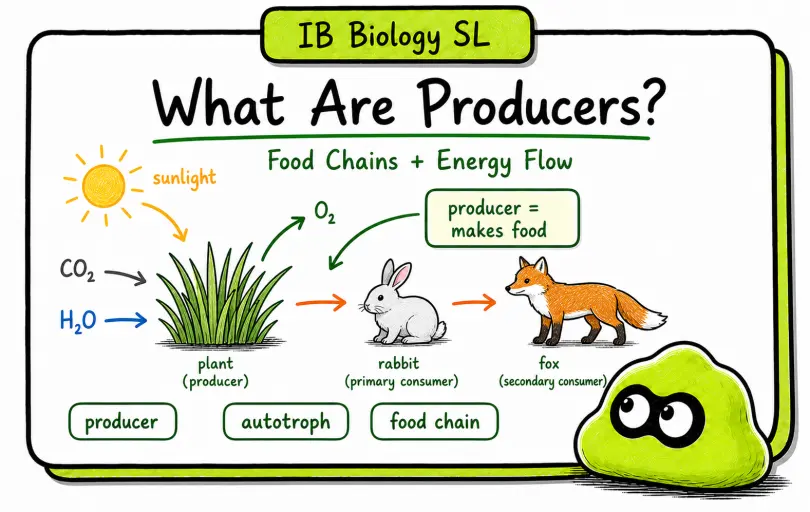
What Are Producers in an Ecosystem? IB Biology Guide
Learn what producers are in IB Biology ecosystems, how they start food chains, and how to use exam-safe trophic level wording.