IB Biology SL B2/D2 Cell Biology: Membranes and Division
Revise IB Biology 2025 SL B2/D2 cell-level topics with cells, membranes, transport, mitosis and exam-ready answer chains.
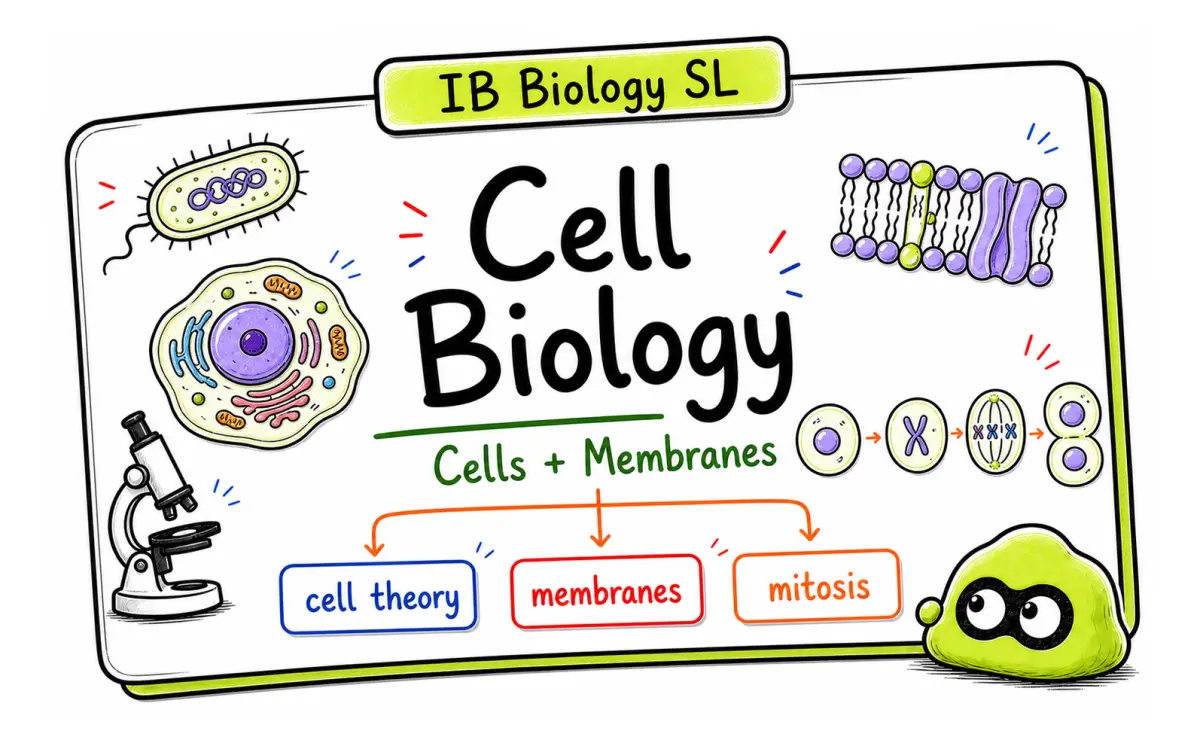
Cell Biology is a high-mark IB Biology topic when you revise it as an answer system rather than a list of labels. The exam rarely rewards naming a structure on its own. It rewards the link between the structure, the process, and the wording that explains why the process works.
Current syllabus map: This article is aligned to the IB Biology first assessment 2025 roadmap, especially A2/B2/C2/D2 cell-level ideas, B2.1 membranes and D2.1 cell and nuclear division.
This guide turns the source notes into a cleaner revision route. Use it after reading your class notes: first rebuild the core idea, then practise one short answer, then check whether your sentence includes the exact mechanism the markscheme expects.
Use the relevant EduNinja course pages as your base:
Do not open every link at once. Start with the notes or topic page, then move into question practice and use any PDF resource only when it helps clarify the exact idea you are revising.
Quick Answer
- Use cell theory as the starting point: living organisms are made of cells, cells are the smallest unit of life, and cells arise from pre-existing cells.
- Compare prokaryotic and eukaryotic cells by nucleus, DNA location, organelles, ribosomes, and cell wall features.
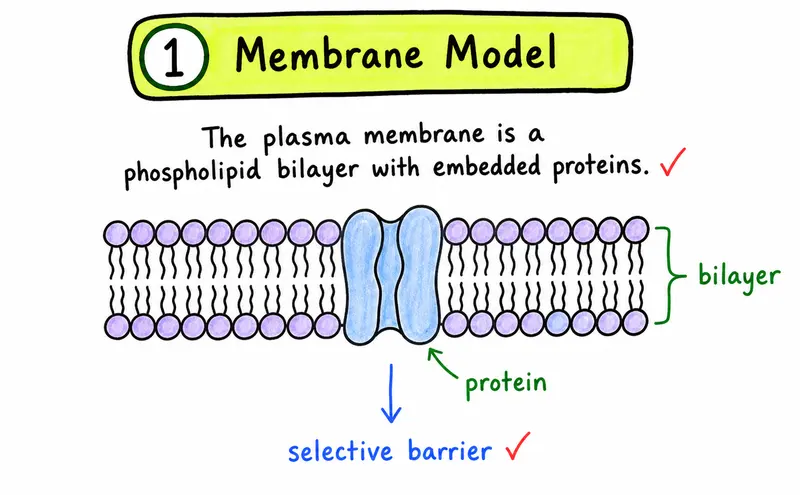
- Explain membranes through structure and movement: phospholipid bilayer, proteins, diffusion, osmosis, active transport, and vesicles.
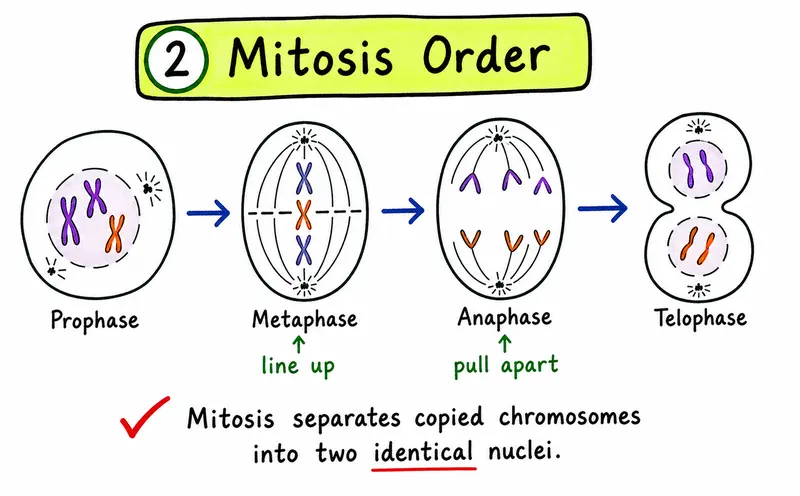
- Treat mitosis as a controlled division process that produces genetically identical daughter cells.
The useful rule is simple: define the term, identify the structure or process, then explain the biological consequence.
Core Concept That Gets Marks
The core concept in Cell Biology is not memorisation. It is the ability to turn a diagram or keyword into a cause-and-effect explanation.
| Idea | What to check | How to turn it into marks |
|---|---|---|
| Cell theory | Anchor every answer in the cell as the unit of life | State the principle, then apply it to the organism or process in the question. |
| Prokaryote vs eukaryote | Compare DNA location, nucleus, ribosomes, and organelles | Use paired comparison points rather than describing one cell only. |
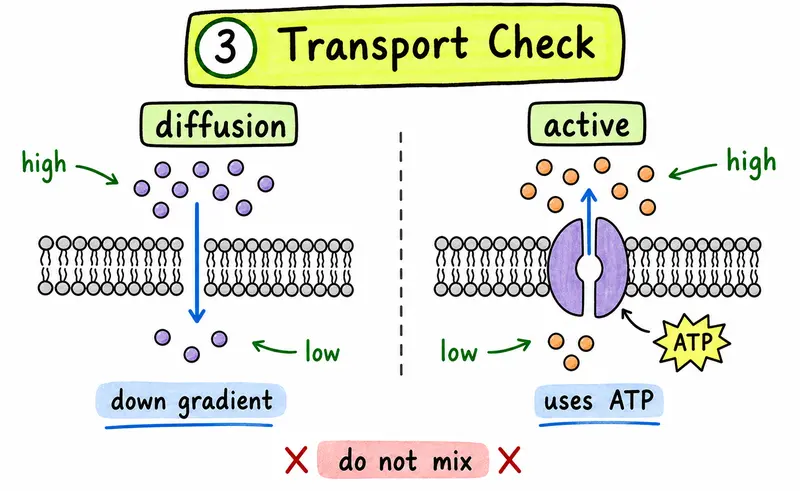
| Membrane transport | Identify whether movement is passive, active, or vesicle-based | Link the mechanism to concentration gradient, ATP, or membrane proteins. |
| Mitosis | Explain chromosome separation and identical daughter cells | Mention growth, repair, asexual reproduction, or embryo development when relevant. |
When a question says "explain", do not stop at the label. Add the mechanism and the consequence.
Weak Answer vs Mark-Worthy Answer
| Topic point | Weak answer | Mark-worthy answer |
|---|---|---|
| Cell theory | Names the idea but does not explain the tested relationship. | State the principle, then apply it to the organism or process in the question. |
| Prokaryote vs eukaryote | Names the idea but does not explain the tested relationship. | Use paired comparison points rather than describing one cell only. |
| Membrane transport | Names the idea but does not explain the tested relationship. | Link the mechanism to concentration gradient, ATP, or membrane proteins. |
Weak answers usually sound correct because they contain the topic word. Strong answers show the relationship that the examiner is testing.
Worked Example 1
Question: Explain one reason cells must remain small or increase surface area.
Markscheme-style answer: As a cell gets larger, its volume increases faster than its surface area. This lowers the surface area to volume ratio, so exchange across the membrane becomes less efficient. Small cells or folded membranes keep diffusion distances short and allow enough nutrients and oxygen to enter while waste leaves.
Why this scores: It links a named structure or process to the reason it matters. That connection is where most explanation marks sit.
Worked Example 2
Question: Compare prokaryotic and eukaryotic cells.
Markscheme-style answer: Prokaryotic cells do not have a nucleus, so their DNA is found in the cytoplasm or nucleoid region. Eukaryotic cells have DNA enclosed in a nucleus and contain membrane-bound organelles such as mitochondria. Both cell types have a plasma membrane, cytoplasm, ribosomes, and genetic material.
Why this scores: It gives the answer in a sequence. IB Biology answers often lose marks when the order is wrong, even if the vocabulary is familiar.
Question-Type Breakdown
| Question type | First move | What the marker is looking for |
|---|---|---|
| Define or state | Write the exact term before adding detail | Precise vocabulary with no extra confusion |
| Label a diagram | Identify the system and direction of movement | Correct labels and arrows, not guessed parts |
| Explain | Use because, therefore, or so that | A visible cause-and-effect chain |
| Compare | Pair points in the same sentence or row | Both sides of the comparison |
| Interpret data | Describe the trend before explaining it | Evidence plus biological reason |
Topic-Specific Revision Route
- Redraw the simplest version of the topic from memory.
- Add the three terms you most often confuse.
- Write one structure-function sentence for each key part.
- Answer one short exam-style question without notes.
- Mark the missing wording and turn it into a flashcard.
Do this before rereading a whole PDF. Rereading feels calm, but retrieval shows whether the idea is actually available under exam pressure.
Common Mistakes That Cost Marks
- Saying prokaryotes have no DNA instead of no nucleus.
- Writing that active transport happens down a concentration gradient.
- Forgetting ATP or membrane proteins in active transport answers.
- Describing mitosis as producing variation; that belongs to meiosis.
The fix is to write corrections as exact sentences, not vague reminders. "Revise more" is not useful. "Mention concentration gradient before diffusion" is useful.
Exam-Ready Mini Checklist
- Did I define the main term accurately?
- Did I identify the structure, process, or direction of movement?
- Did I explain the mechanism rather than just name it?
- Did I include units, ratios, probabilities, arrows, or labels where the question needed them?
- Did I avoid mixing this topic with a similar process?
How EduNinja Helps
Use EduNinja as the active practice loop. Start with the notes page to rebuild the concept, move into the question bank to test it, then use flashcards or your error log to keep the correction alive.
The best next step is small: one topic, one question set, one correction list. That beats opening five resources and leaving with no marked work.
FAQ
How should I revise Cell Biology for IB Biology SL?
Start with the core definitions, then practise one diagram or short explanation question. Mark whether your answer included the mechanism, not just the vocabulary.
Are notes enough for this topic?
Notes are useful for rebuilding understanding, but they are not enough for exam readiness. You need questions to test whether you can retrieve the idea and apply it to unfamiliar wording.
What should I do if I keep losing marks?
Look at the missing sentence in your answer. Most repeated errors come from a missing direction, missing mechanism, missing comparison, or unclear use of a technical term.
Related Study Links
- Review the full IB Biology SL syllabus
- EduNinja study guides
- IB Biology SL question bank
- IB Biology study hub
Closing
Cell Biology becomes easier when every note is converted into an answer move. Name the idea, explain the mechanism, and make the mark-worthy link visible.
Put PDF source back into your full IB Biology SL study plan.
Return to the complete course overview, or move directly into the most relevant study tool.
Related articles
More course notes, updates and study resources from the EduNinja blog.
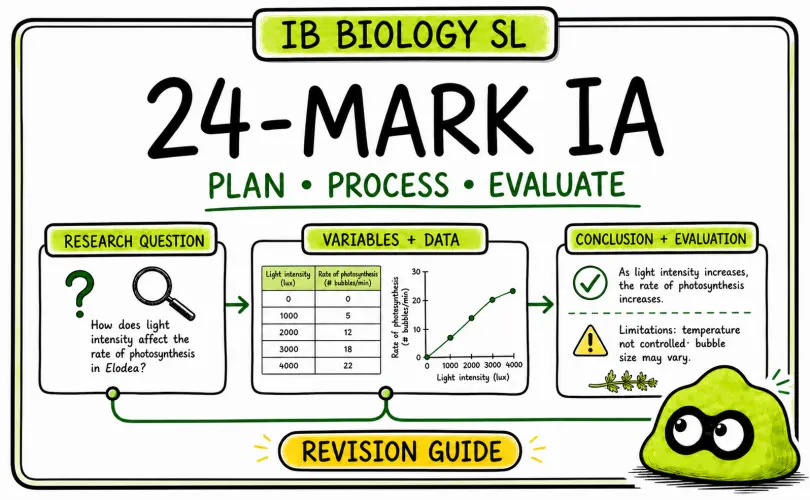
IB Biology Scientific Investigation Guide: How to Build a Strong 24-Mark IA
A practical IB Biology guide to the 24-mark Scientific Investigation: choose a workable research question, control variables, process data, draw a supported conclusion and evaluate limitations with specific improvements.
Abiotic Factors Explained | IB Biology SL
Revise IB Biology SL abiotic factors, tolerance ranges, limiting factors and how environmental variables affect distribution.
Active Transport vs Passive Transport | A-Level Biology
Revise A-Level Biology active and passive transport with concentration gradients, ATP, carrier proteins, examples, common mistakes and practice.