EduNinja

IB Biology SLB2.3 Cell specializationQuestion Bank

Question 1

[Maximum number: 1]

How would surface area, volume and surface area to volume ratio of a cell change as the cell becomes bigger, if the cell does not change shape?

Surface area

Volume

Surface area : volume

Increase

Increase

Increase

Increase

Increase

Decrease

Increase

Decrease

Decrease

Decrease

Increase

Increase
Question 1

[Maximum number: 1]

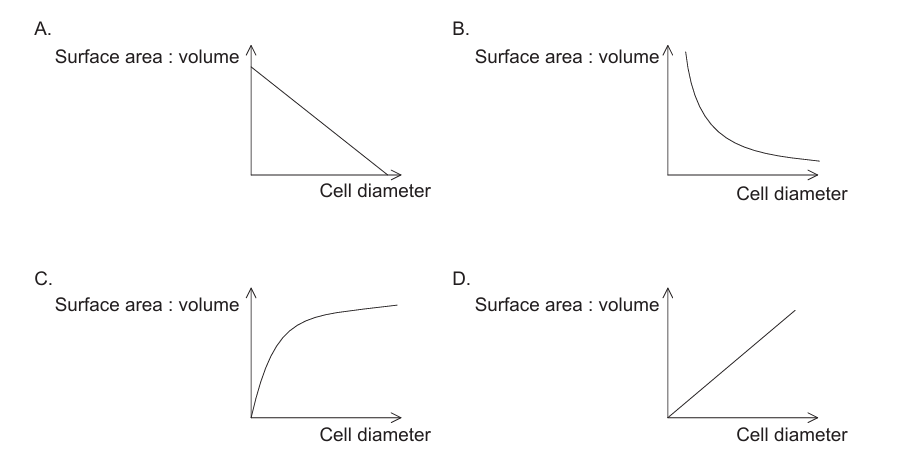
Which graph represents the change in cell surface area to volume ratio with increasing cell diameter?

Question image

Question 1

[Maximum number: 1]

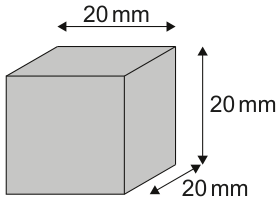
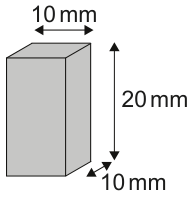
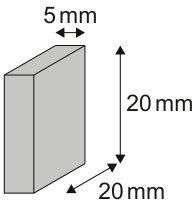
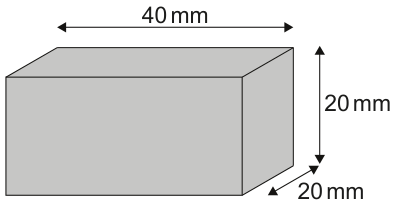
The diagrams represent cells with the same concentration of dissolved substances in their cytoplasm. If all the cells were placed in the same hypertonic sucrose solution, which cell would show the greatest rate of change in the concentration of its cytoplasm?

A
Question image
B
Question image
C
Question image
D
Question image

Question 1

[Maximum number: 1]

Stargardt's is an inherited disease caused by the mutation of a gene associated with vitamin A processing in the eye. It results in degeneration of receptor cells and loss of vision. For what reason are stem cells suitable to treat this disease?

A

They can be taken from the eye of an embryo and transplanted into a patient.

B

They can produce vitamin A in newborn babies.

C

They can develop into receptor cells and prevent blindness.

D

They can be removed from an embryo to detect early onset of the disease.

Question 2

[Maximum number: 1]

In a cell, what is the effect of a large surface area to volume ratio?

A

Slower rate of exchange of waste materials

B

Faster heat loss

C

Faster rate of mitosis

D

Slower intake of food

Question 2

[Maximum number: 1]

What are stem cells?

A

Specialized cells that can be used therapeutically

B

Surplus cells taken from an embryo

C

Cells that retain their ability to divide and differentiate

D

Cells in the xylem and phloem tissues that support a plant

Question 2

[Maximum number: 1]

Which property makes stem cells suitable for therapeutic use?

A

They can divide by meiosis to form gametes.

B

They contain chemicals that can kill bacteria.

C

Their chromosomes are suitable for gene transfer and cloning.

D

They can differentiate into specialized cells.

Question 3

[Maximum number: 1]

How can cells in a multicellular organism differentiate?

A

They express some of their genes but not others.

B

They all have a different genetic composition.

C

Different cells contain a different set of chromosomes.

D

Different cells do not have some of the genes.

Question 3

[Maximum number: 1]

Which sequence has the cells arranged according to their ability to differentiate, starting fromthe least able?

A

bone marrow, neuron, embryonic, umbilical

B

neuron, bone marrow, umbilical, embryonic

C

umbilical, embryonic, bone marrow, neuron

D

embryonic, umbilical, bone marrow, neuron

Question 3

[Maximum number: 1]

What causes cells to differentiate?

A

Sufficient nutrition

B

Full expression of all genes

C

Specialized functions at different stages of embryo development

D

Expression of some genes with suppression of other genes

0 selected