EduNinja

IGCSE Physics8.9 Sun-like star evolutionTopic Practice

8.9 Sun-like star evolution

Describe the evolution of stars of similar mass to the Sun through the following stages:

• nebula

• star (main sequence)

• red giant

• white dwarf

Question 1(a)(iii)

[Maximum number: 2]

This question is about stars.

The table gives information about four different stars.
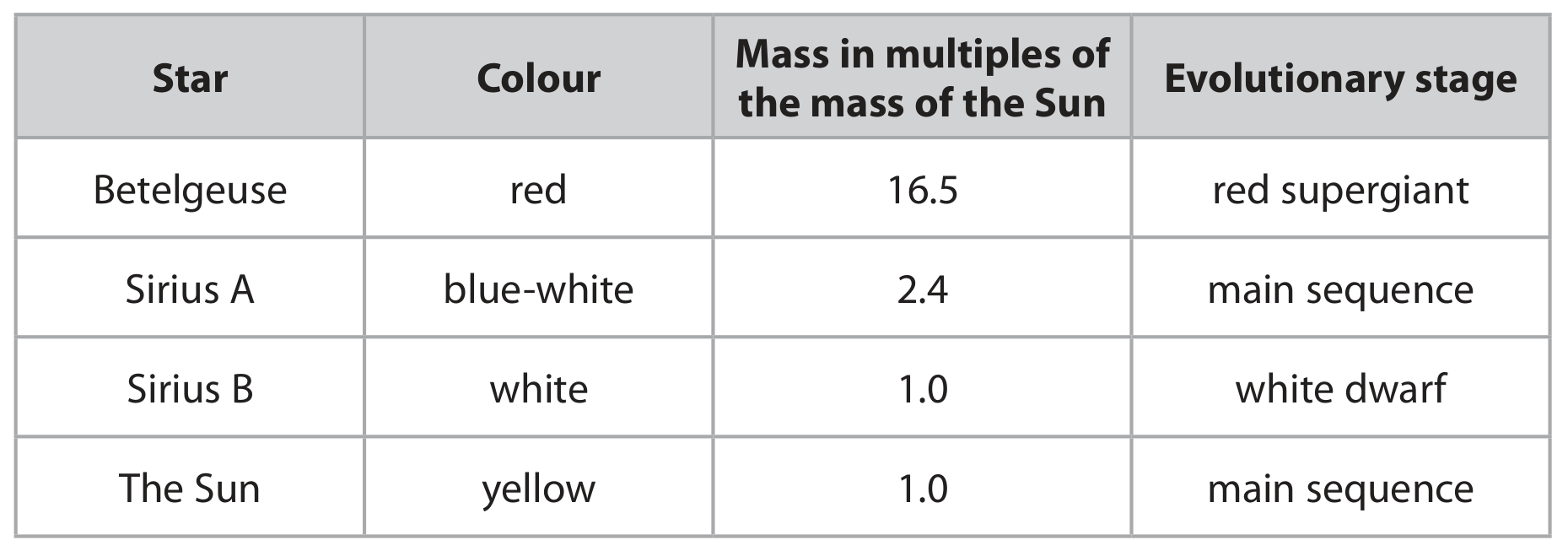
Table

Sirius B and the Sun have approximately the same mass but are different colours and in different evolutionary stages.

Describe two other differences between Sirius B and the Sun.

1 ............
2 ............
Question 2(b)(iv)

[Maximum number: 2]

This question is about astrophysics.

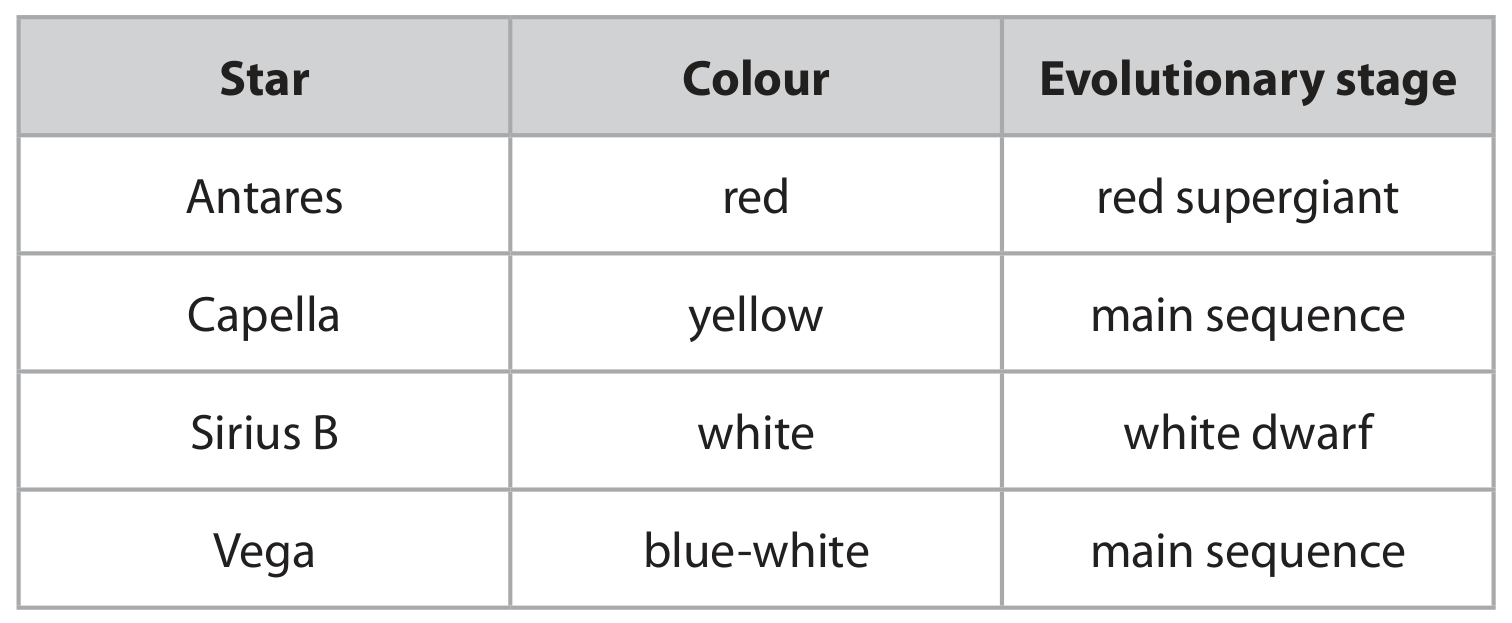
Table 2 gives information about four different stars in the same galaxy as the Sun.

Table 2

Table 2

Describe what additional information is needed to predict the next evolutionary stage for Vega.

Question 3(a)

[Maximum number: 4]

This question is about stars.

Describe the stages in the evolution of a star similar in mass to the Sun.

Question 4(a)

[Maximum number: 4]

This question is about the Sun.

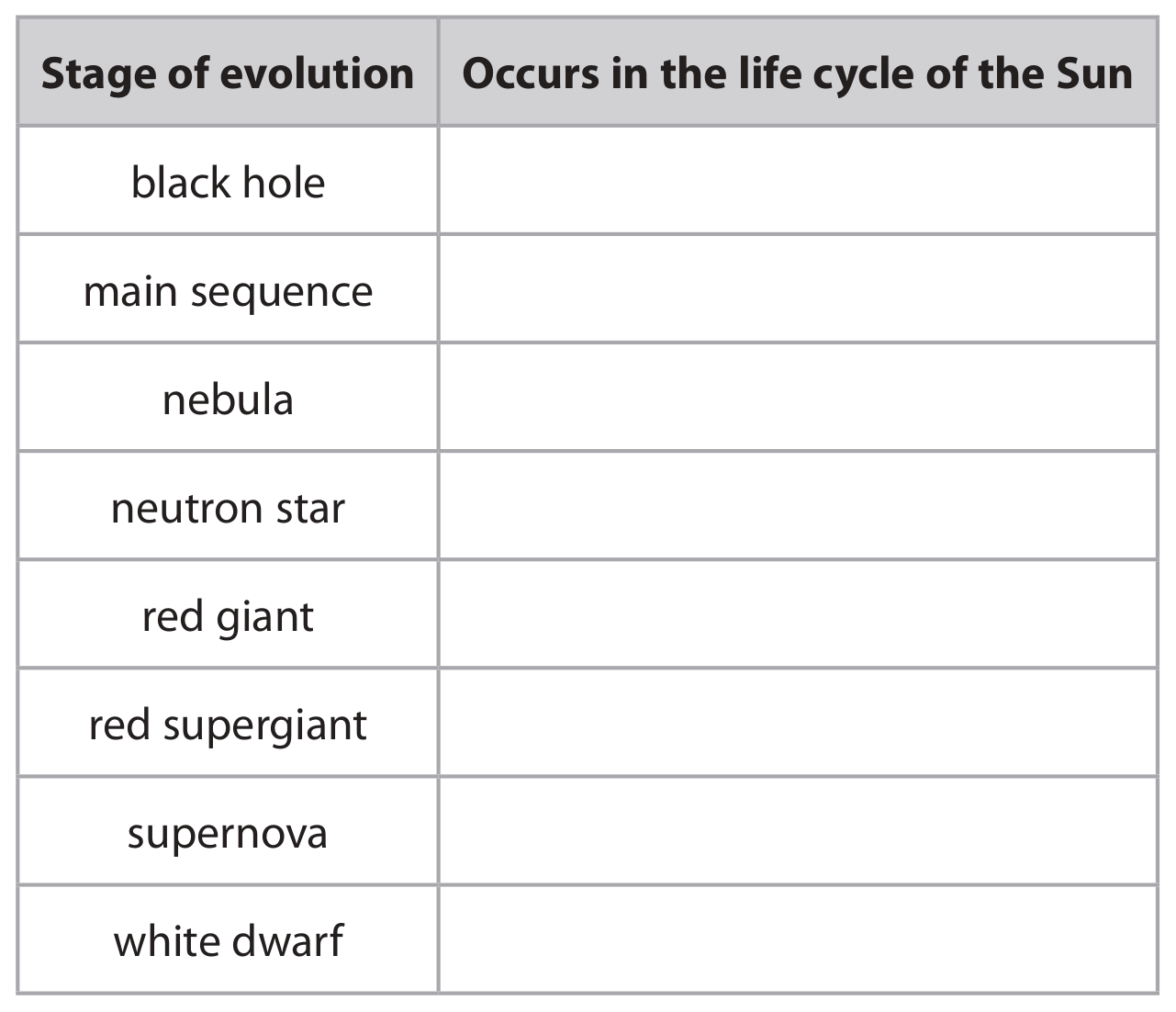
The table shows the different stages in the evolution of stars of different masses.

Complete the table by adding ticks ( ✓ ) to show which stages of evolution occur in the life cycle of the Sun.

Table

Question 4

[Maximum number: 6]

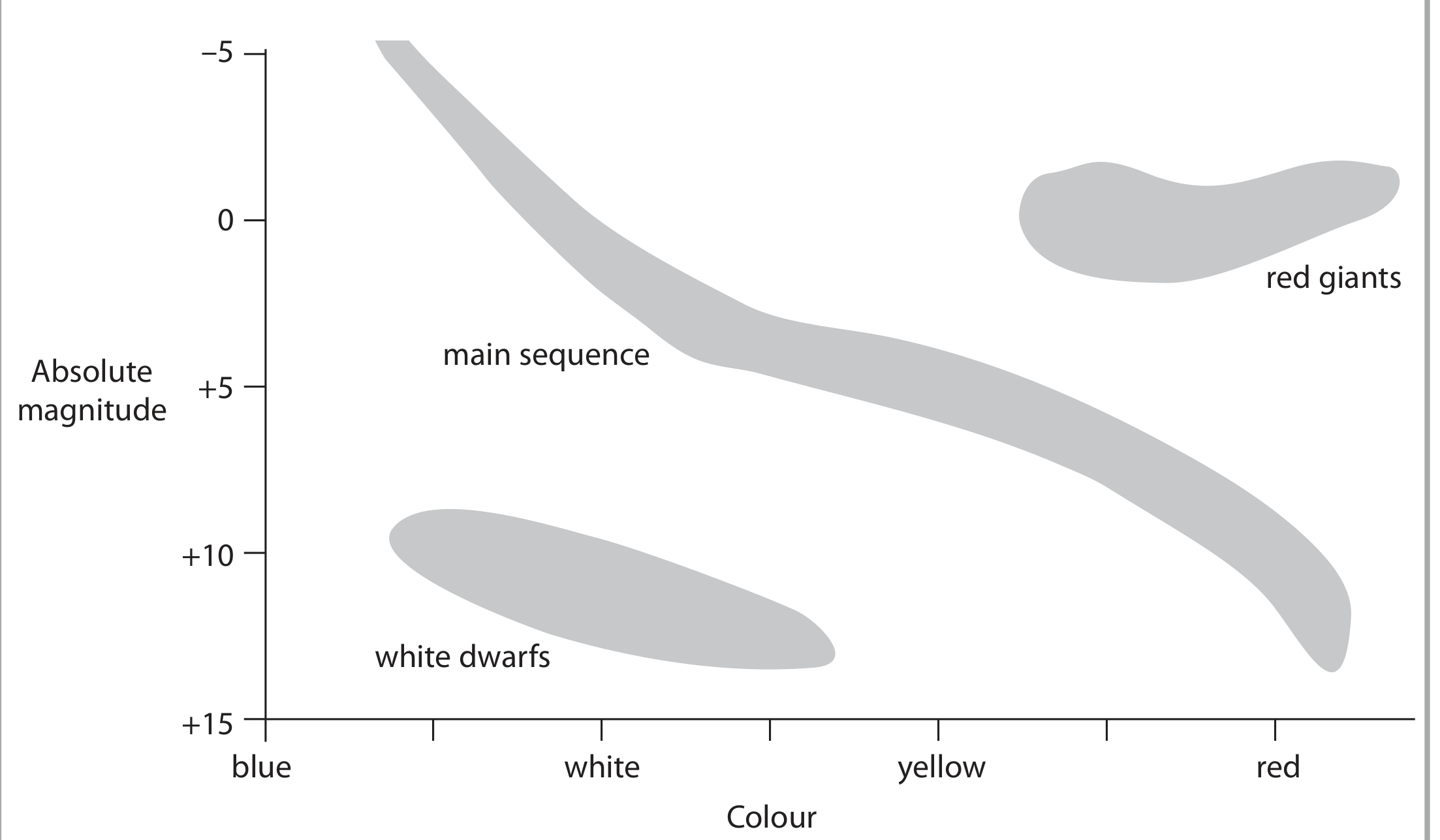
A Hertzsprung-Russell diagram shows how different astronomical objects may be classified according to their colour and absolute magnitude.

Question image

The diagram shows three stages of evolution for stars of similar mass to the Sun.

Describe the evolution of stars of similar mass to the Sun.

You should refer to the temperature and brightness of the stars in your answer.

0 selected