EduNinja

IGCSE Physics8.12P Hertzsprung-Russell diagramTopic Practice

8.12P Hertzsprung-Russell diagram

Draw the main components of the Hertzsprung–Russell diagram (HR diagram)

Question 1

Question 1(a)

(a)

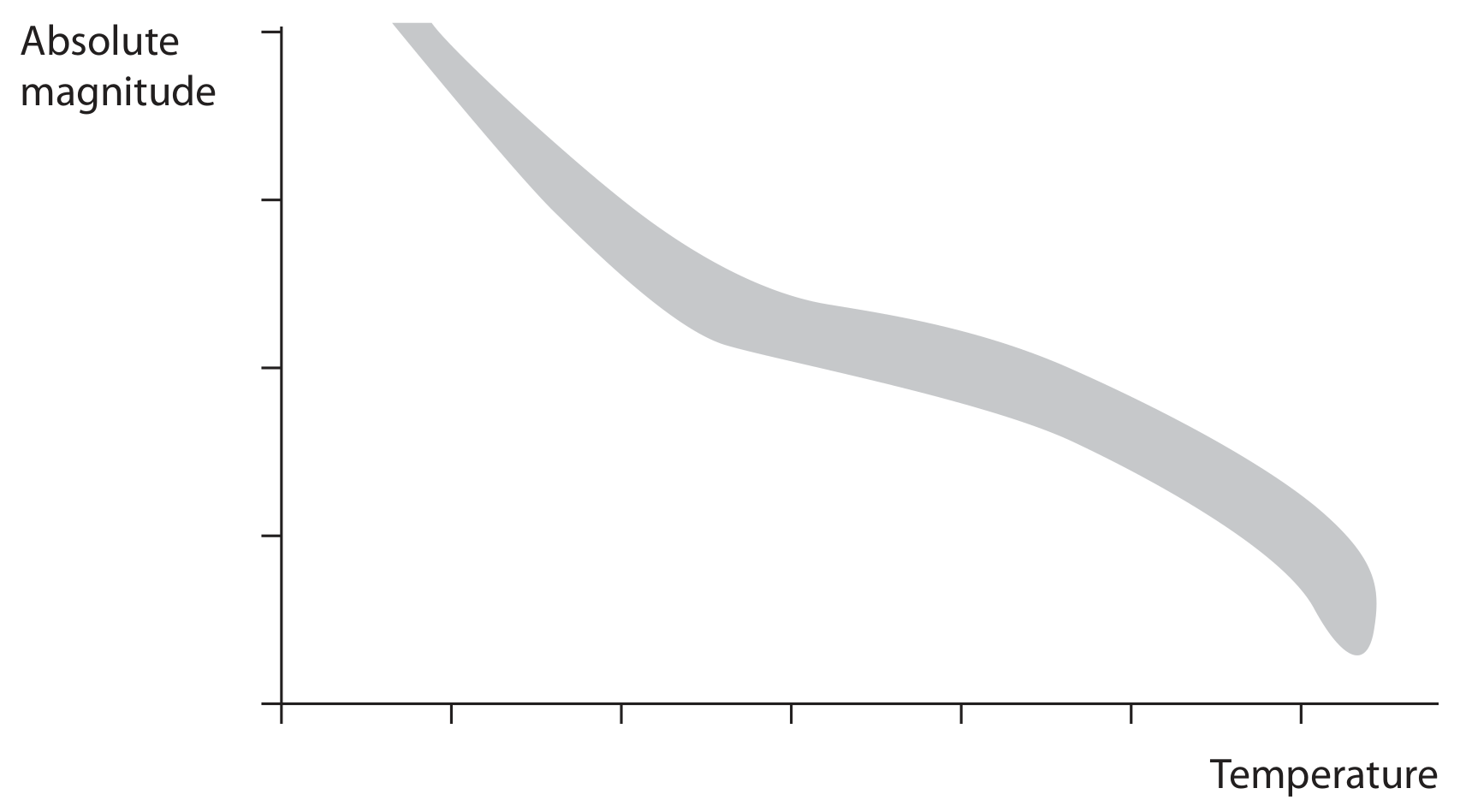
This is an incomplete Hertzsprung-Russell diagram.
Question image
[ 3 ]

Question 1(a)(i)

(i)

Which of these is in the shaded area of the diagram?

A

black holes

B

main sequence stars

C

neutron stars

D

protostars

[ 1 ]

Question 1(a)(ii)

(ii)

On the diagram, draw the area to show the position of white dwarf stars. Label this area WD.

[ 1 ]

Question 1(a)(iii)

(iii)

On the diagram, draw the area to show the position of red giant stars.

Label this area RG.

[ 1 ]
Question 1(a)

[Maximum number: 4]

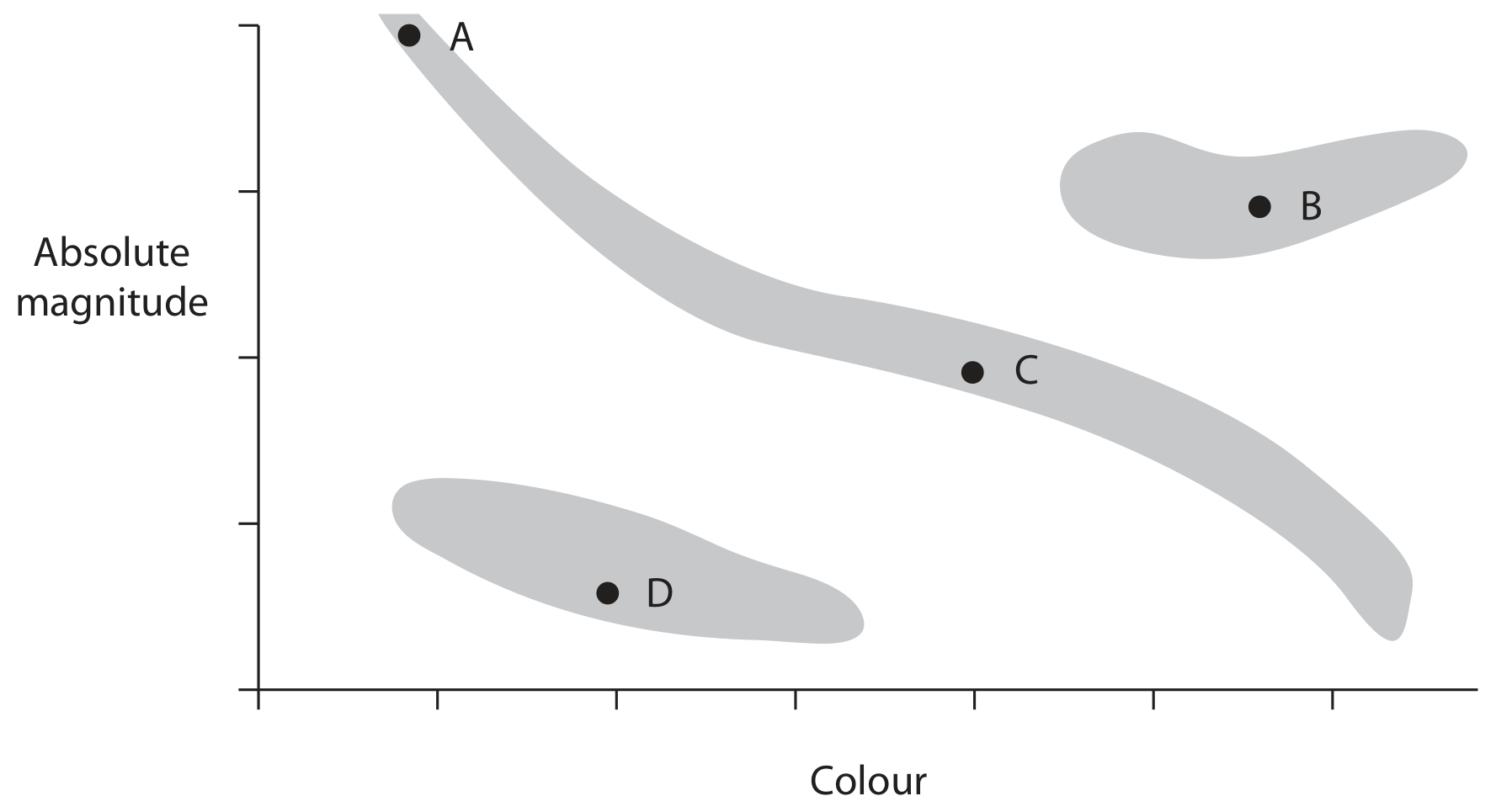
The Hertzsprung-Russell diagram shows stars classified into different regions.

Question image

The boxes give four points, A, B, C and D, and four star classifications.

Draw lines connecting each point to the correct star classification.

Point

Question image
Question image
Question image
Question image
Star classification

Star classification

Question image
Question image
Question image

Question 1

[Maximum number: 5]

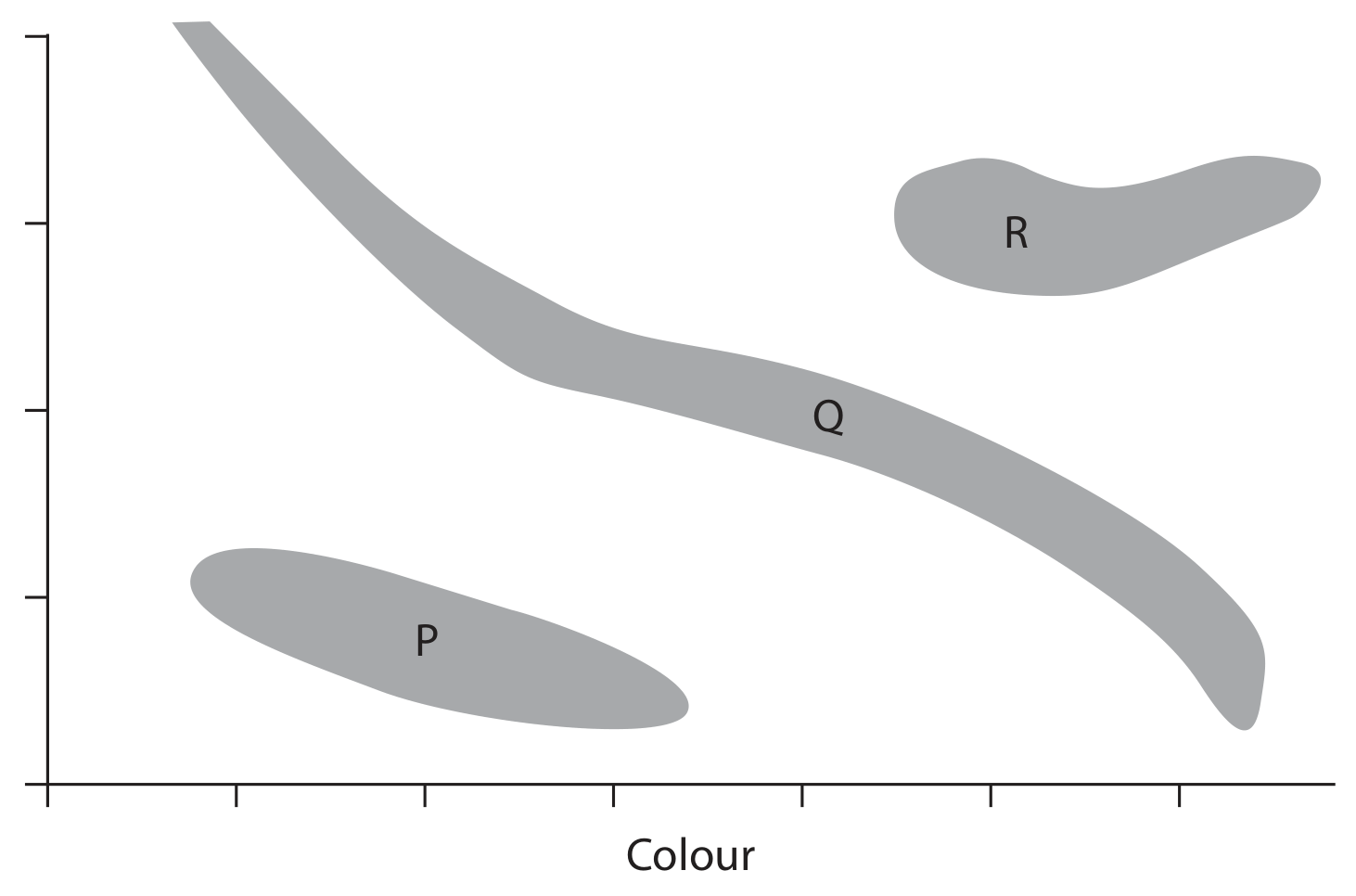
The diagram is an incomplete Hertzsprung-Russell diagram which astronomers use to compare stars.

Question image

Question 1(b)

(a)

The box contains words to identify the shaded areas P, Q and R on the Hertzsprung-Russell diagram.

Table

Use words from the box to identify P, Q and R.

P Q R

[ 3 ]

Question 1(c)

(b)

Explain which side of the diagram contains stars with the highest surface temperature.

[ 2 ]

Question 1(a)

[Maximum number: 3]

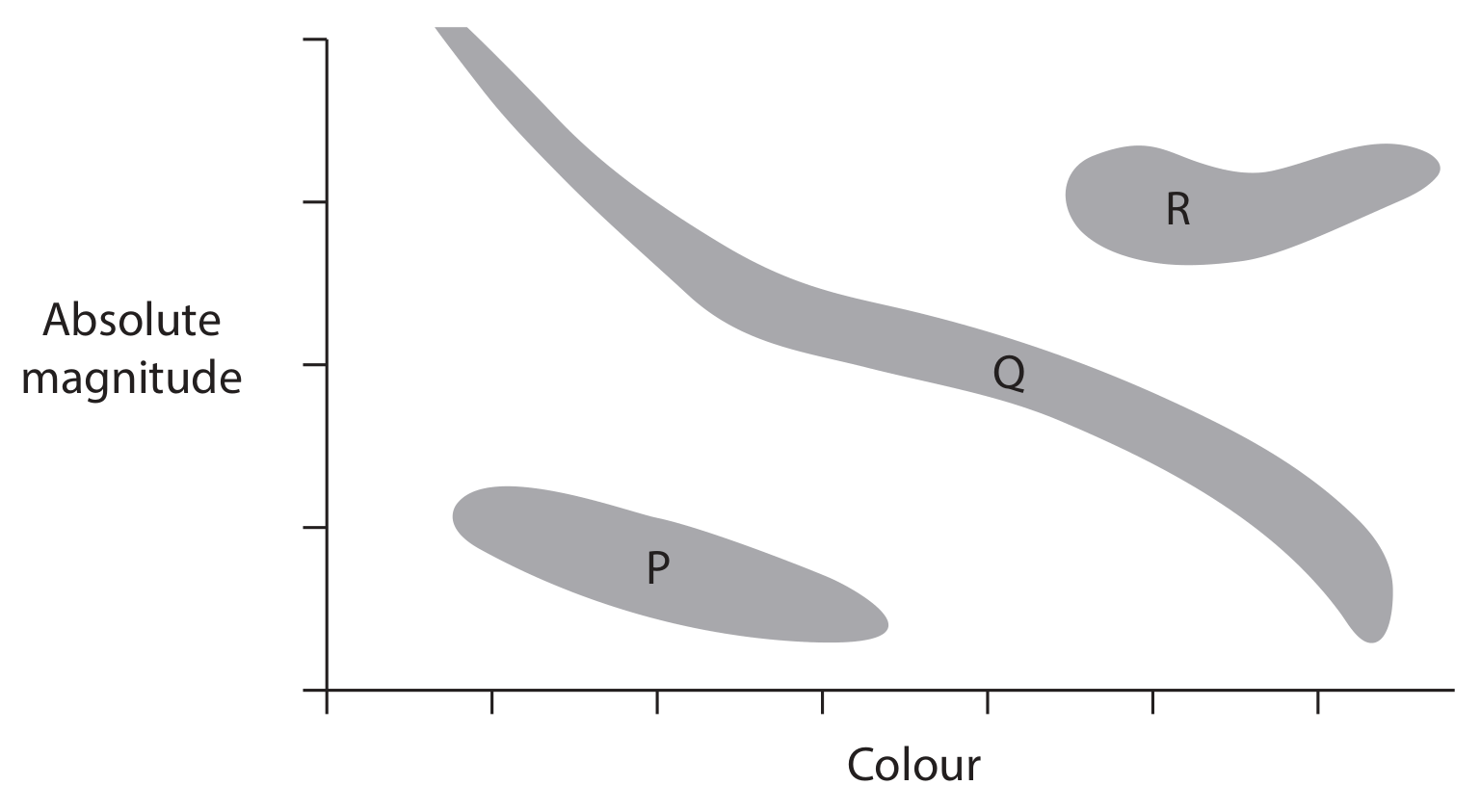
The Hertzsprung-Russell (HR) diagram shown can be used to classify stars.

Question image

Three regions in the HR diagram are labelled P, Q and R.

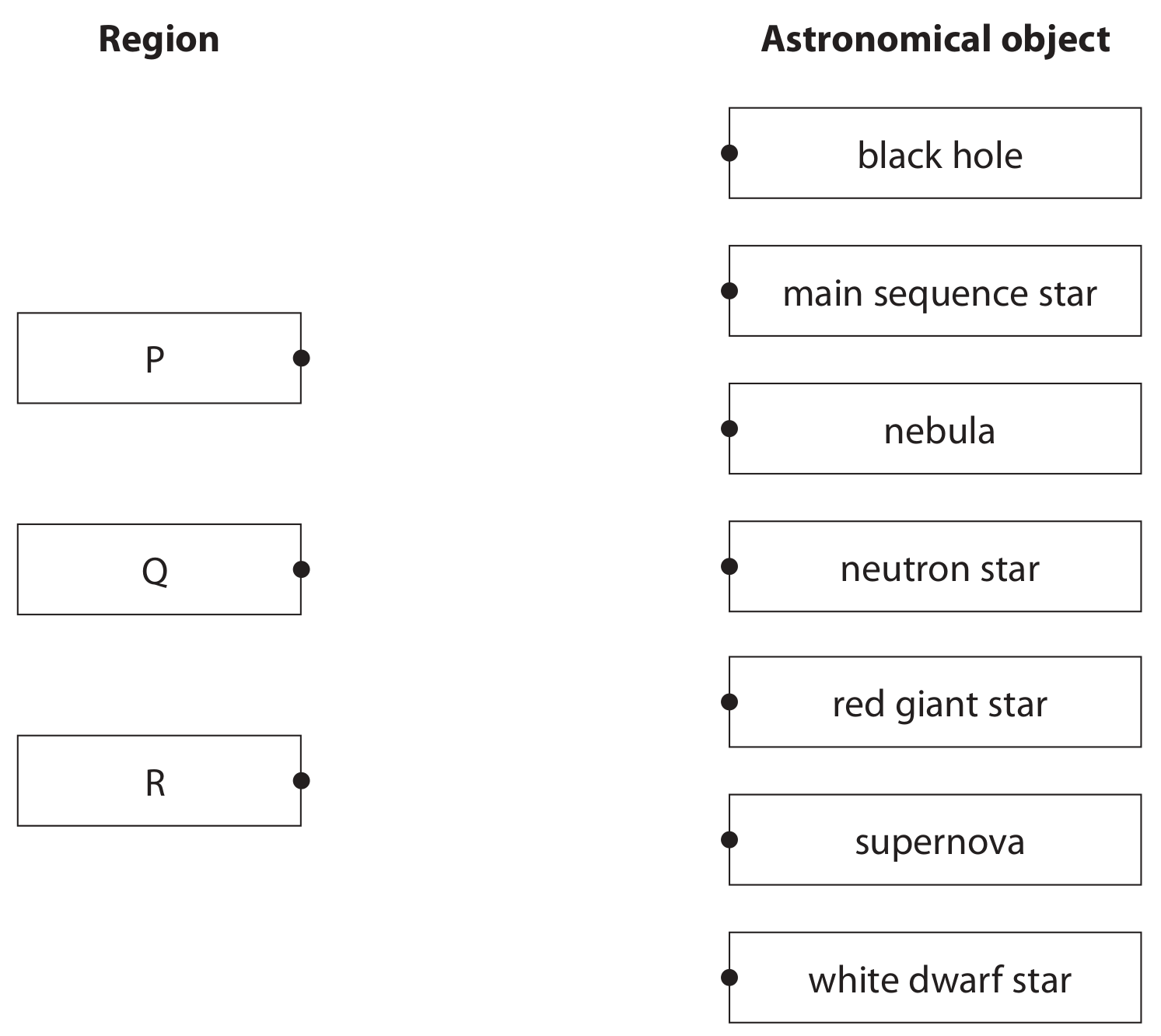
The boxes show the three regions and different astronomical objects.
Draw a straight line from each region to the type of astronomical object contained in that region.

Question image

Question 1

[Maximum number: 5]

This question is about stars.
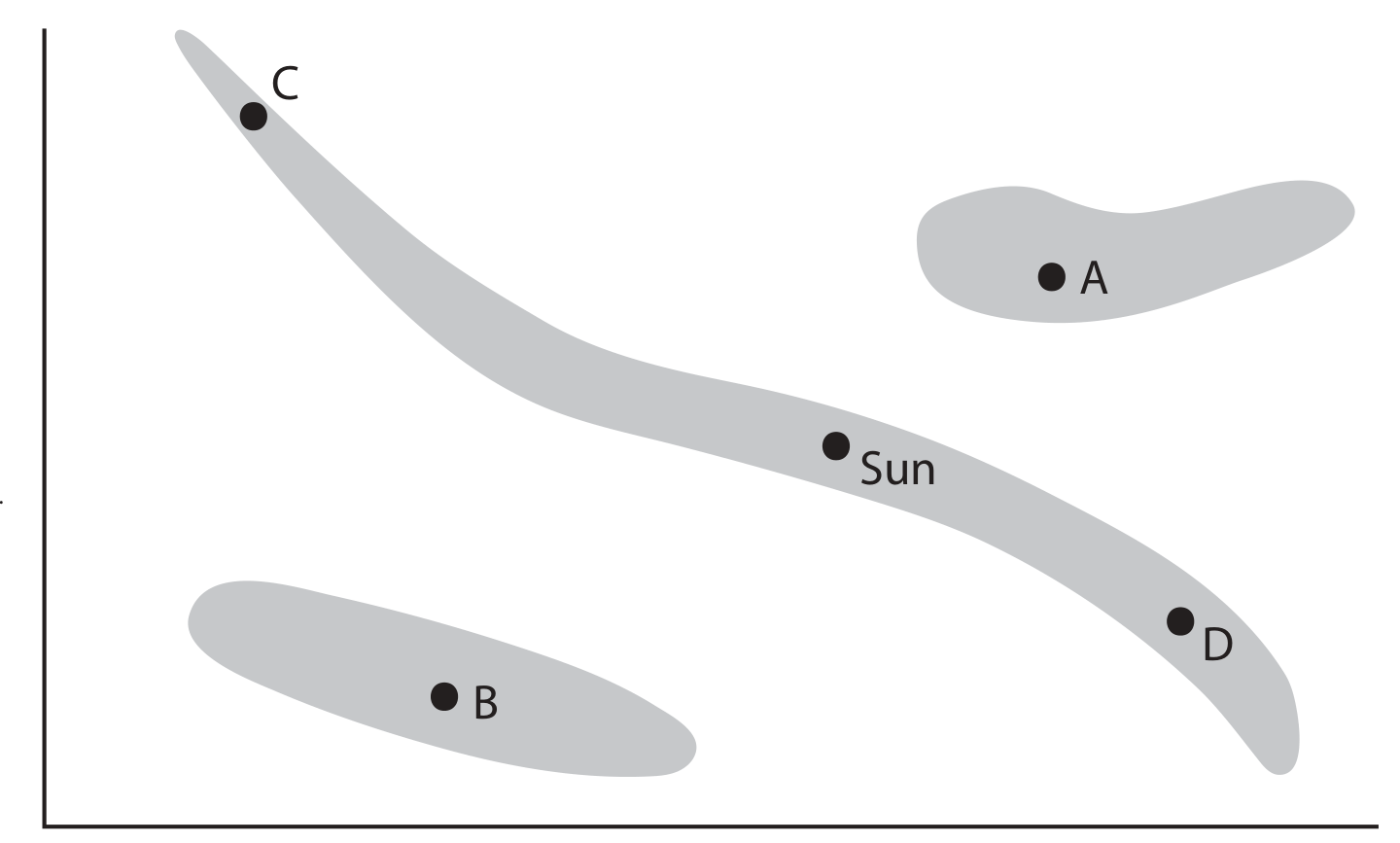
The diagram shows an incomplete Hertzsprung-Russell (H-R) diagram.

Question image

Question 1(a)

(a)

Label the axes on the diagram.

[ 2 ]

Question 1(b)

(b)

There are three shaded areas on the diagram.

State the name of the shaded area that contains the Sun.

[ 1 ]

Question 1(c)

(c)

Which star is a white dwarf?

[ 1 ]

Question 1(d)

(d)

At a standard distance from the Earth, which star is brighter than the Sun and has a greater surface temperature than the Sun?

[ 1 ]

Question 6(b)

[Maximum number: 5]

This question is about stars.

The evolution of stars can be shown on a Hertzsprung-Russell diagram (HR diagram).

Complete the HR diagram by
- labelling the x-axis
- completing the absolute magnitude scale
- drawing the main sequence, red giant and white dwarf regions

Question 6

[Maximum number: 5]

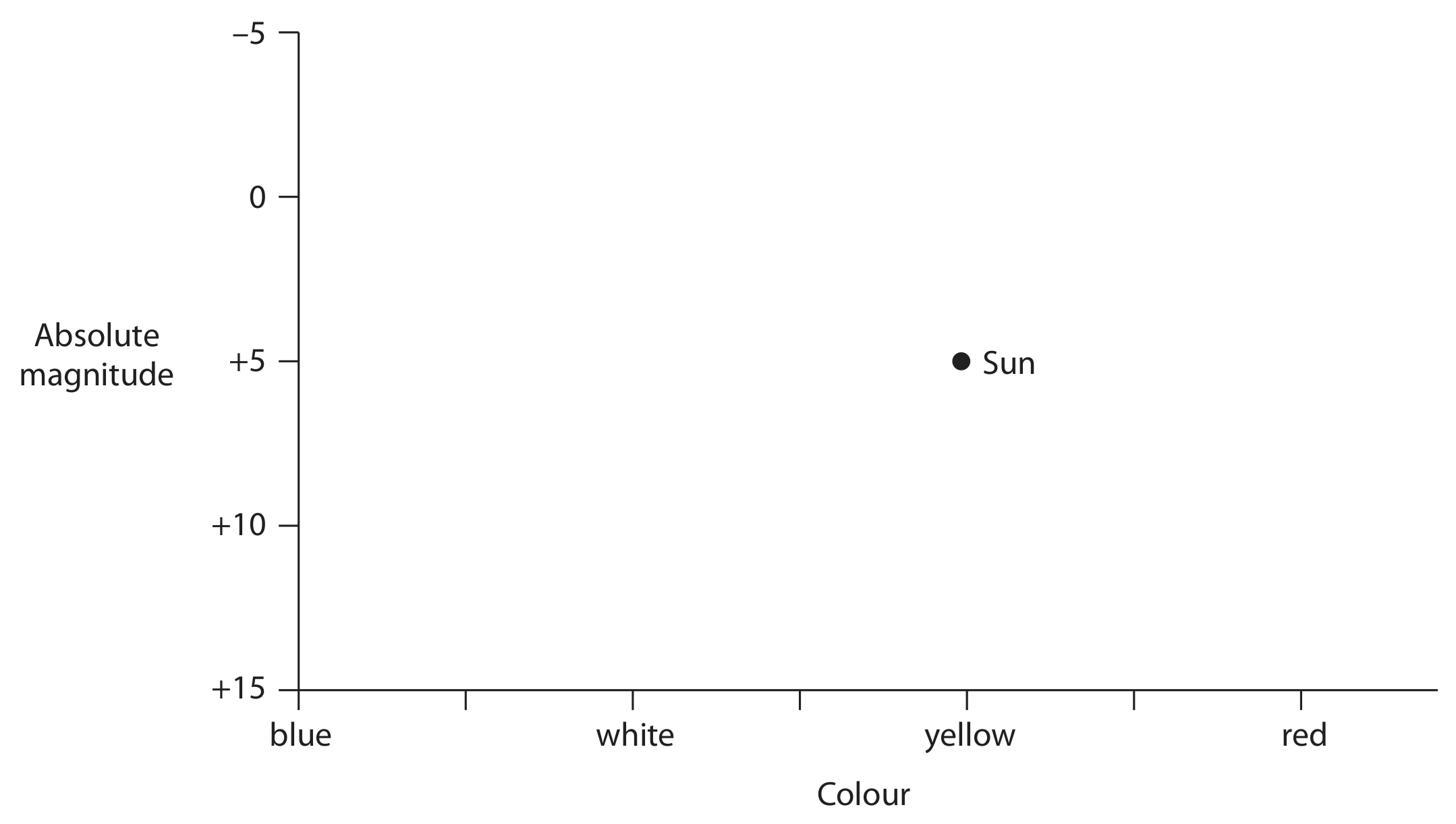
The Hertzsprung-Russell diagram shows the relationship between the absolute magnitude and colour of stars.

Question image

The position of the Sun is shown on the Hertzsprung-Russell diagram.

Question 6(a)

(a)

Star W is a white dwarf.

Add a W to the Hertzsprung-Russell diagram to show the position of star W.

[ 1 ]

Question 6(b)

(b)

Star X is a red giant.

Add an X to the Hertzsprung-Russell diagram to show the position of star X.

[ 1 ]

Question 6(c)

(c)

Star Y is a main sequence star that is much larger than the Sun.

Add a Y to the Hertzsprung-Russell diagram to show the position of star Y.

[ 1 ]

Question 6(d)

(d)

Star Z has the same surface temperature as the Sun, but would be dimmer than the Sun if it were the same distance away from Earth as the Sun.

Add a Z to the Hertzsprung-Russell diagram to show the position of star Z.

[ 1 ]

Question 6(e)

(e)

The Moon is the brightest object in the night sky.

Suggest why the Moon cannot be shown on the Hertzsprung-Russell diagram.

[ 1 ]
0 selected