EduNinja

IGCSE Physics(c) ElectromagnetismTopic Practice

(c) Electromagnetism

Edexcel IGCSE Physics (c) Electromagnetism question practice helps you revise this syllabus point with the course map in view. Use this page to focus on one topic, check the style of questions available, and connect each attempt back to the knowledge area it is testing.

EduNinja keeps Physics practice aligned to Edexcel, so you can move from topic review into exam-style question bank work without losing the syllabus structure. Start with a small set, mark the weak steps, then return to nearby topic links when a definition, graph, calculation, or explanation needs repair.

Question 3(c)(i)

[Maximum number: 1]

The SPS is a particle accelerator in Geneva.
The SPS can accelerate sulfur particles to speeds almost as fast as the speed of light.

The sulfur particles enter a large tube and complete a circular orbit.

Diagram 2 shows a sulfur particle, travelling with velocity v , in the tube.
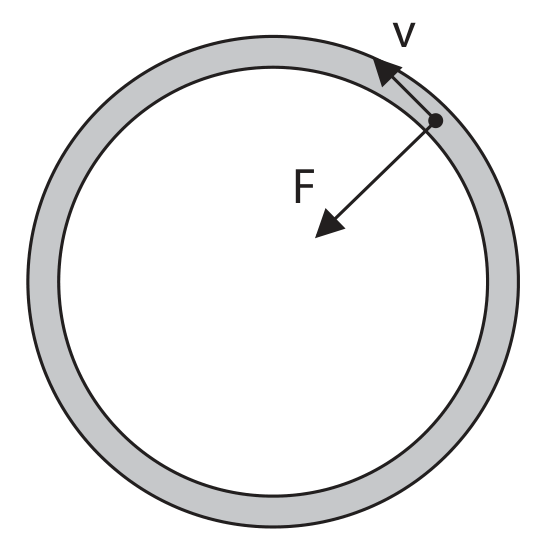
Diagram 2

Diagram 2

A magnetic force acts on the positively charged sulfur particle.

This force makes the particle travel in a circle.
The force is labelled F.
Use the left-hand rule to determine the direction of the applied magnetic field.
Question 4(d)(ii)

[Maximum number: 1]

This question is about a filament lamp.

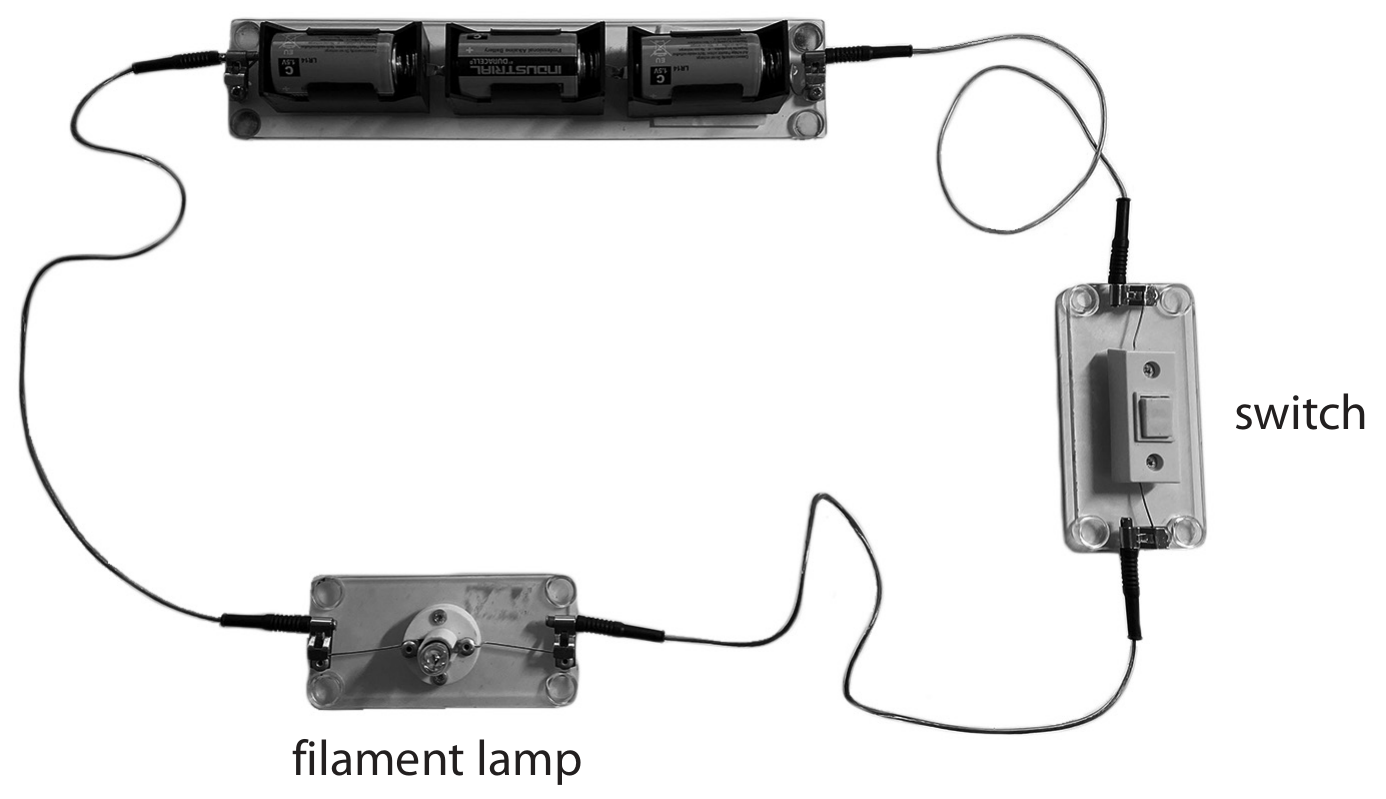
The filament lamp is connected in a circuit with a switch and a battery of three cells.

battery

battery

A small plotting compass is placed near the wires in the circuit.

When the switch is turned on, the compass needle moves to a new position.
Give a reason why the compass needle moves.

Question 4

[Maximum number: 9]

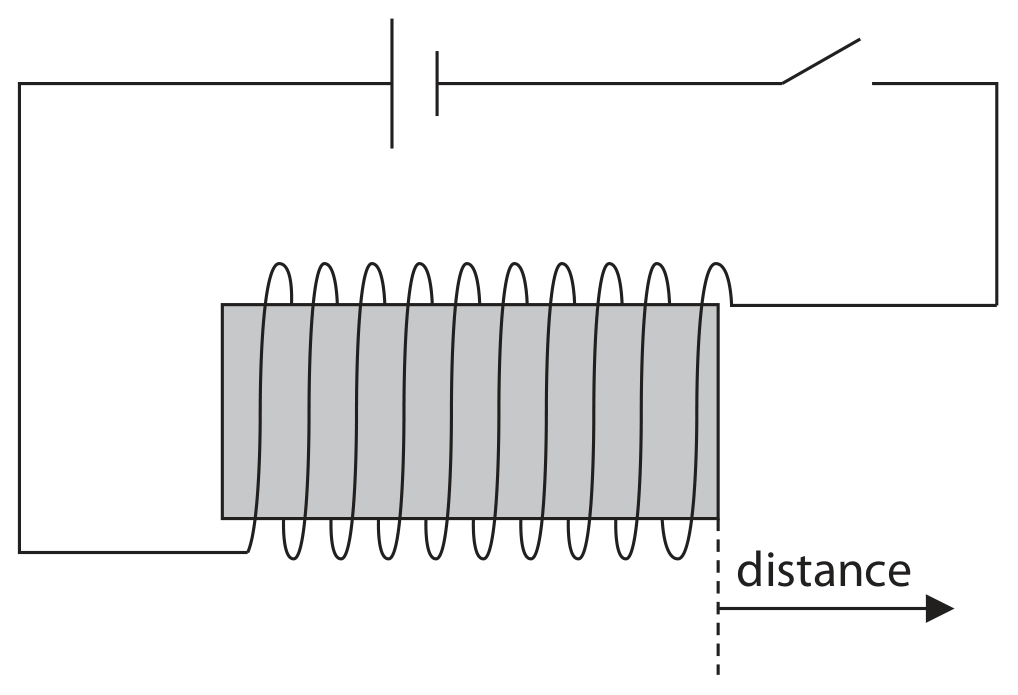
A student investigates how the strength of the magnetic field from a solenoid changes with distance from the end of the solenoid.

The diagram shows the solenoid connected to a power supply.

Question image

Question 4(a)

(a)

The student uses a device called a Hall probe, which can be placed anywhere in the magnetic field to measure its strength at that point.

Design a suitable method for the investigation.
Your answer should include
- any extra measuring equipment needed
- details of the independent variable, dependent variable and any control variables

You may include a diagram to help your answer.

[ 5 ]

Question 4(b)

(b)

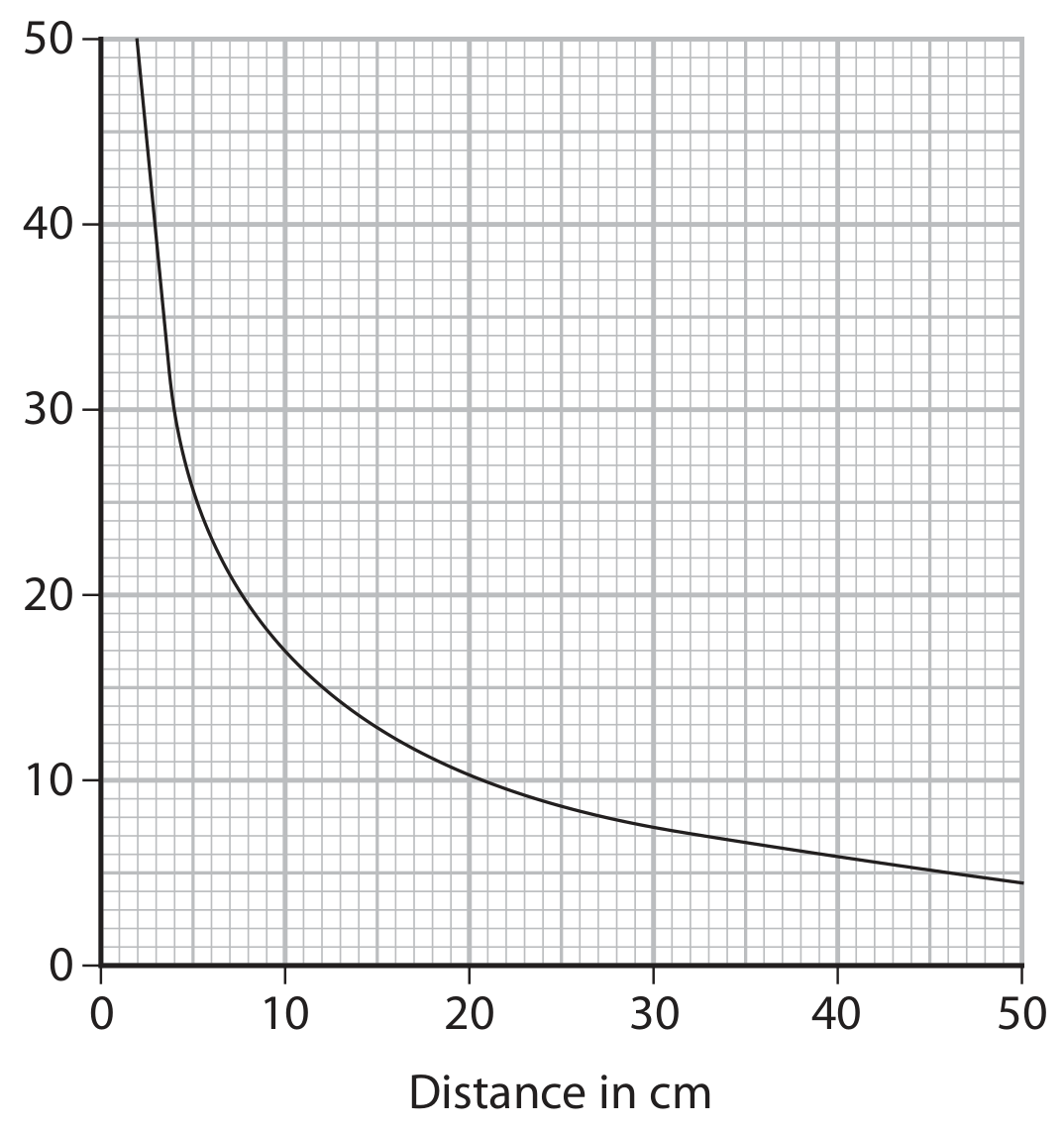
The graph shows the results of the student's investigation.

Strength of magnetic field in arbitrary units

Question image

The student suggests that the relationship linking the strength of the magnetic field and the distance from the end of the solenoid is

 strength of magnetic field × (distance) 3= constant \text { strength of magnetic field × (distance) }{ }^{3}=\text { constant }

Use readings from the graph to deduce whether the results of the student's investigation support this relationship.

[ 4 ]

Question 4(b)(ii)

[Maximum number: 3]

A racing car uses an engine and an electric motor to power its wheels.

Question image

(Source:Jens Mommens/Shutterstock)

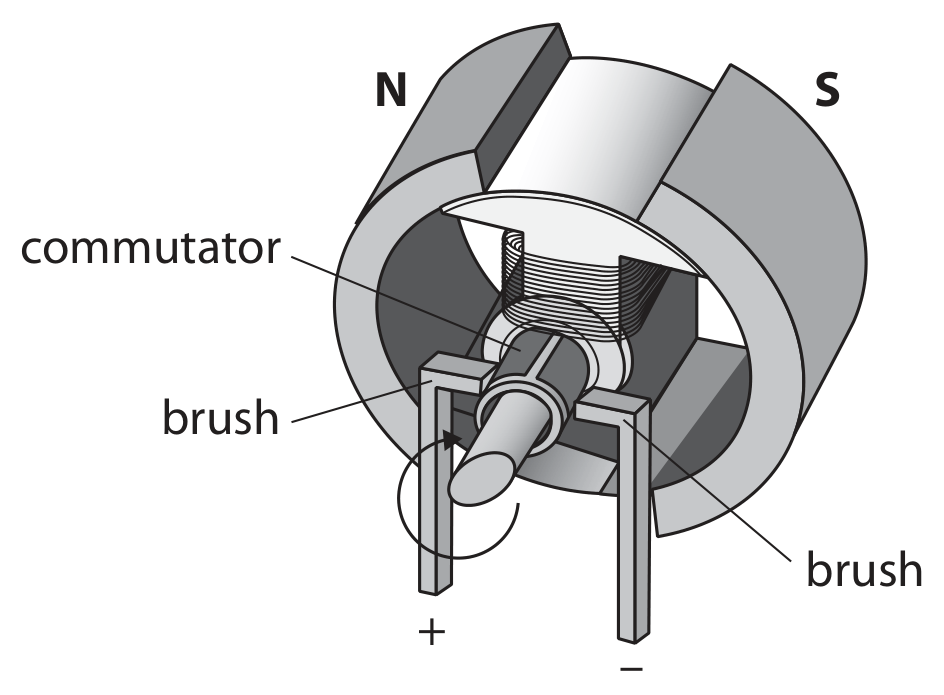
The diagram shows a simplified view of a direct current (d.c.) electric motor.

Question image

Explain the purpose of the brushes and the commutator in the d.c. motor.

Question 4

Question 4(b)(i)

(a)

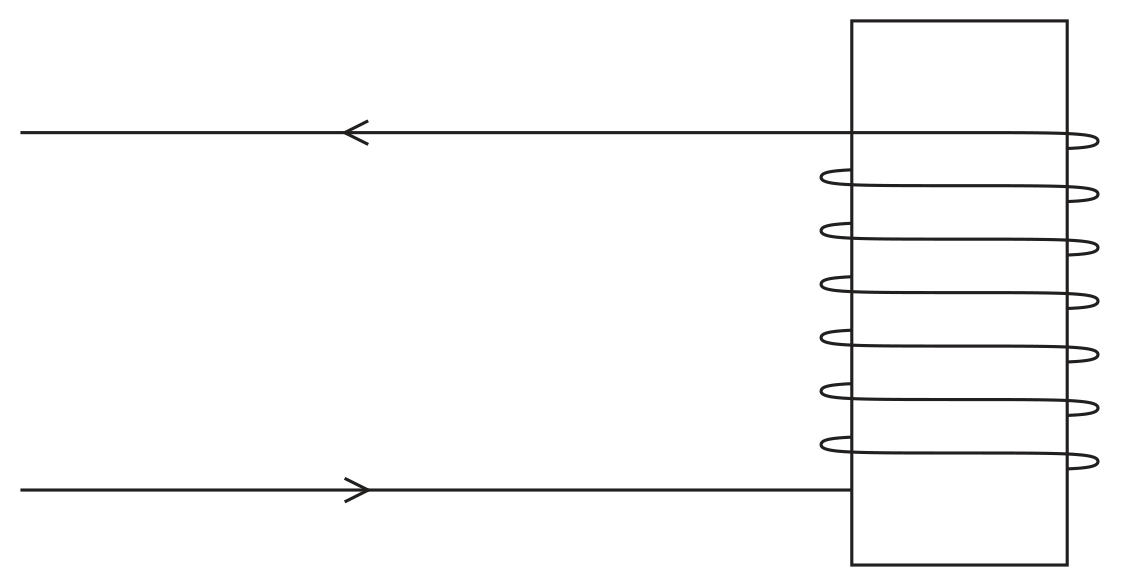
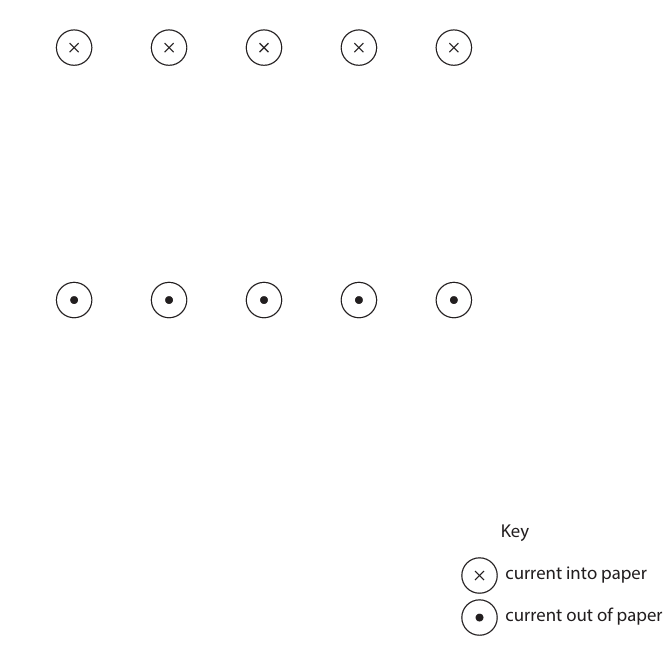
Diagram 1 shows a coil of wire wrapped around a cardboard tube.

The coil is fixed to the cardboard tube.
On diagram 1, draw field lines to represent the magnetic field produced when the current is in the direction shown.

Question image
[ 3 ]

Question 4(b)(ii)

(b)

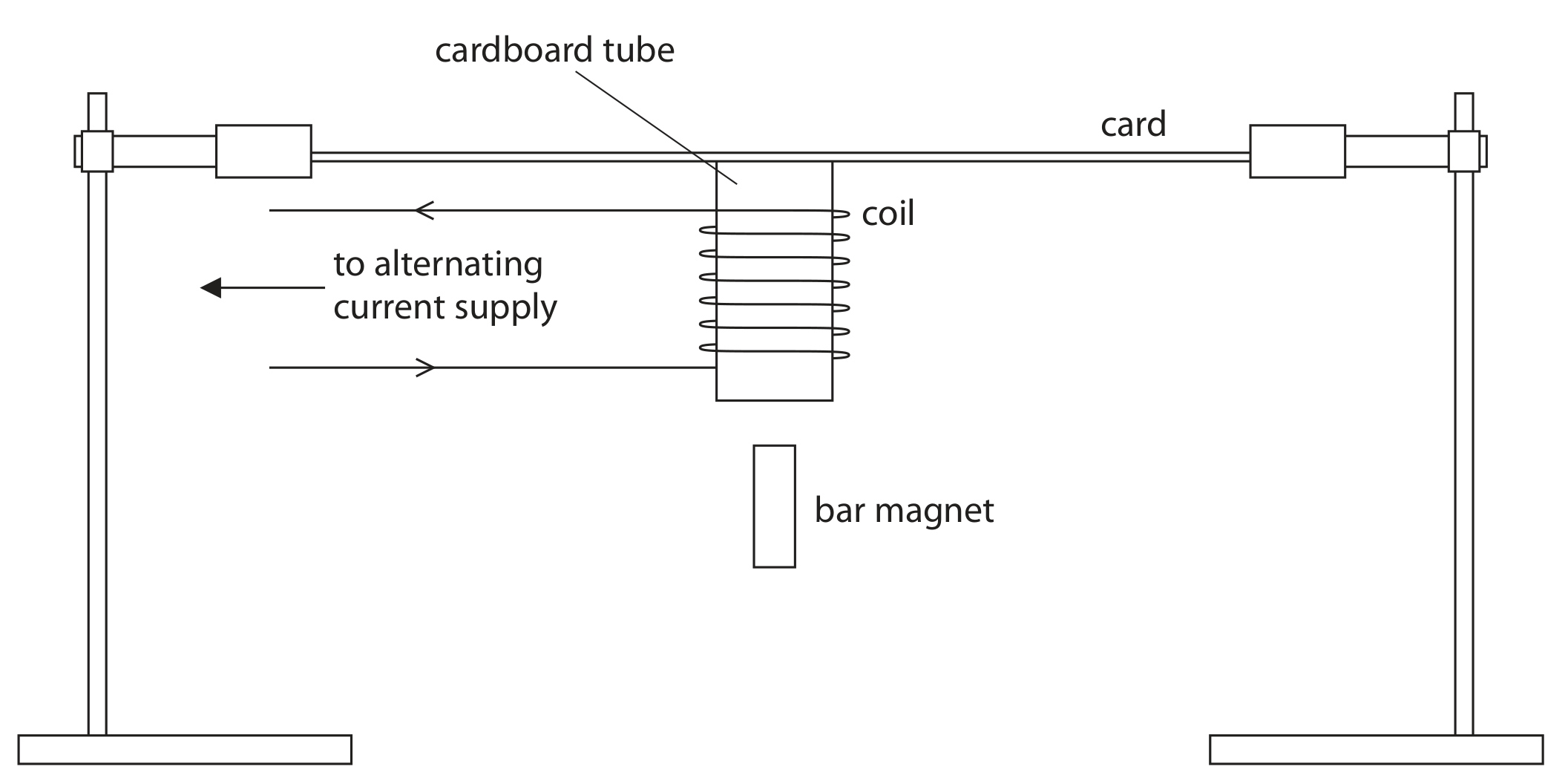
Diagram 2 shows a model of a loudspeaker that uses the coil and the cardboard tube. The cardboard tube is fixed to a thin piece of card, which is clamped at both ends.

Question image

Diagram 2

The student holds a bar magnet near the bottom of the cardboard tube.
Explain why this causes the loudspeaker to produce a sound.

[ 3 ]

Question 4(b)(iv)

(c)

Suggest a change to the apparatus that would increase the loudness of the sound when the frequency of the alternating current is 10 kHz .

[ 1 ]

Question 6(a)

[Maximum number: 4]

Magnetic Resonance Imaging (MRI) machines can take scans of the inside of a patient.

There is an electromagnet inside the MRI machine.

Describe the construction of an electromagnet.
You may draw a diagram to help your answer.

Question 5

Question 5(a)

(a)

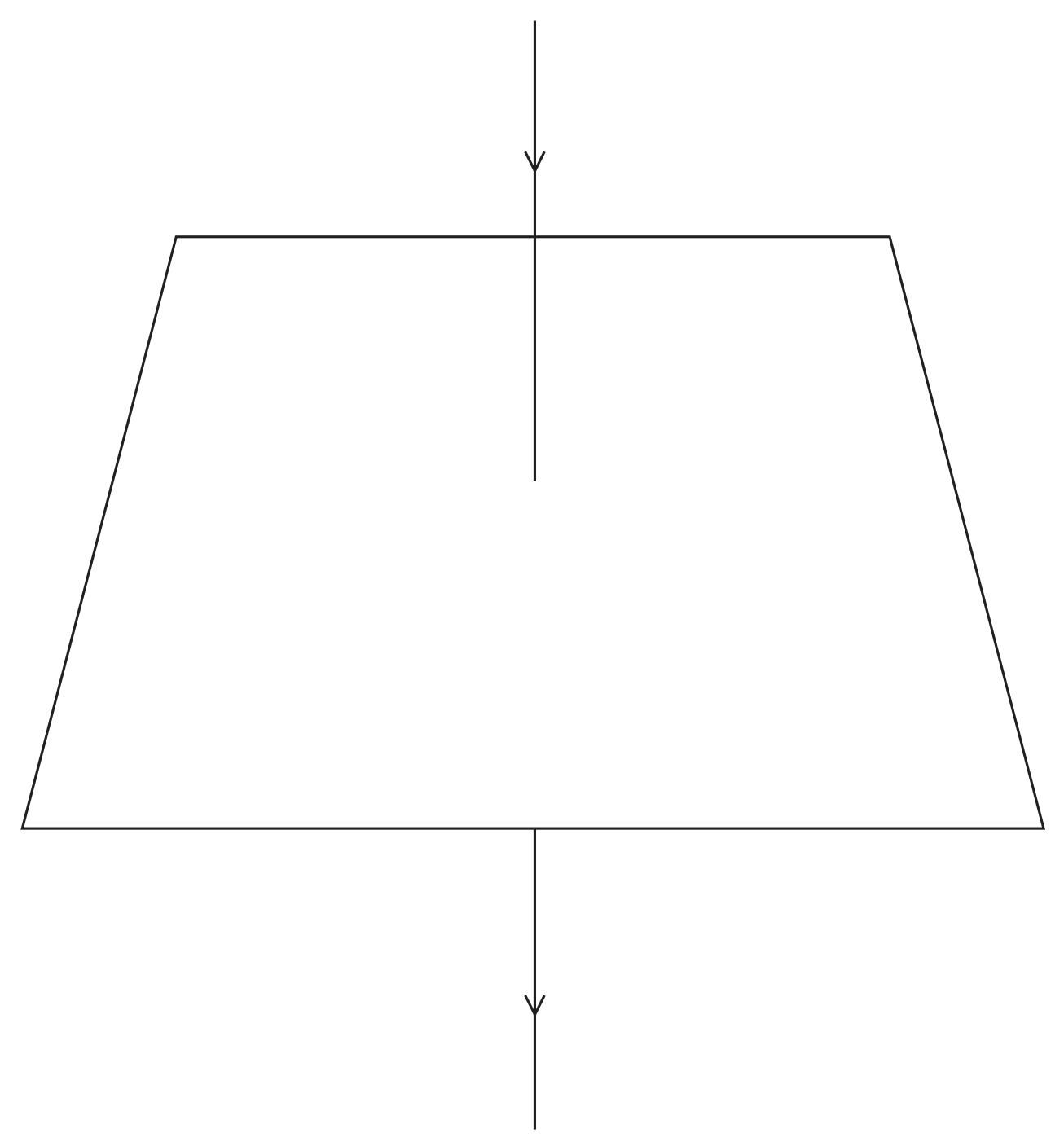
The diagram shows a cross-section of a solenoid.

Question image
[ 3 ]

Question 5(a)(i)

(i)

Draw one field line on the diagram to show the direction of the magnetic field.

[ 2 ]

Question 5(a)(ii)

(ii)

Use the field line to determine which end of the solenoid is the north pole and label this on the diagram.

[ 1 ]

Question 6

[Maximum number: 8]

This question is about magnetic fields.

Question 6(a)

(a)

A student positions a thick wire vertically through the centre of a horizontal card.

The student then passes a constant current through the wire in the downward direction, as shown in diagram 1.

Diagram 1

Diagram 1

[ 5 ]

Question 6(a)(i)

(i)

On diagram 1, draw the shape and direction of the magnetic field produced by the current in the wire.

[ 3 ]

Question 6(a)(ii)

(ii)

Describe a method the student could use to show the shape of the magnetic field produced by the current in the wire.

[ 2 ]

Question 6(b)

(b)

The student then removes the card and sets up a second wire next to the first wire, as shown in diagram 2.

The current in both wires is in the downward direction.
The student observes that the wires move towards each other.
Explain why the wires move towards each other.

[ 3 ]

Question 5

[Maximum number: 3]

This question is about nuclear fusion.

Question 5(b)

(a)

A tokamak is an experimental nuclear fusion reactor.

Strong magnetic fields are used to contain the reactants inside the tokamak.

[ 3 ]

Question 5(b)(i)

(i)

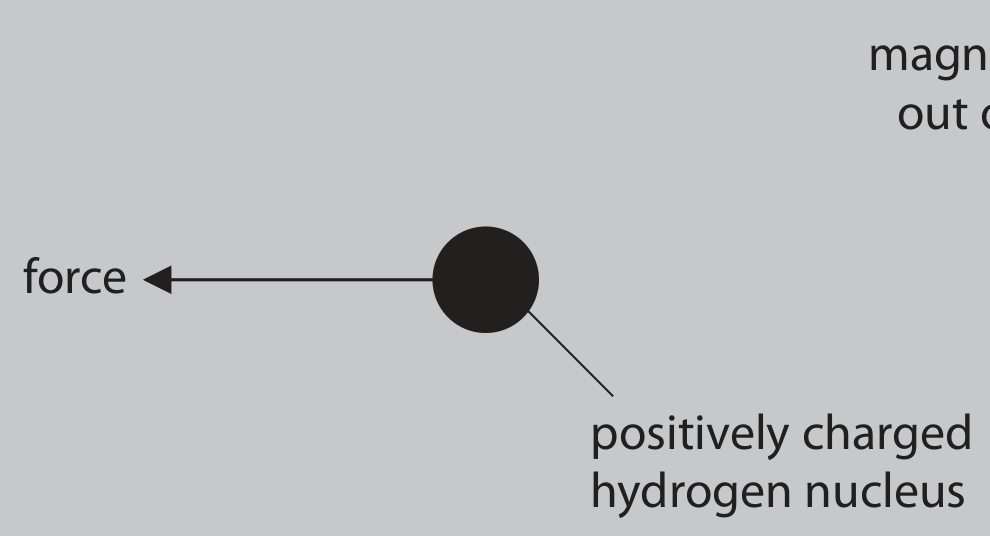
The diagram shows a positively charged hydrogen nucleus in a uniform magnetic field directed out of the page.
magnetic field out of page

The nucleus experiences a force acting to the left because of the magnetic field.

Deduce how the nucleus must behave to experience this force.

[ 2 ]

Question 5(b)(ii)

(ii)

Suggest how engineers working on the tokamak could increase the force on the nucleus.

Question image
[ 1 ]

Question 6

[Maximum number: 7]

This question is about electromagnets.

Question 6(a)

(a)

Describe the construction of a simple electromagnet that is producing a magnetic field.

You may draw a diagram to help your answer.

[ 3 ]

Question 6(b)

(b)

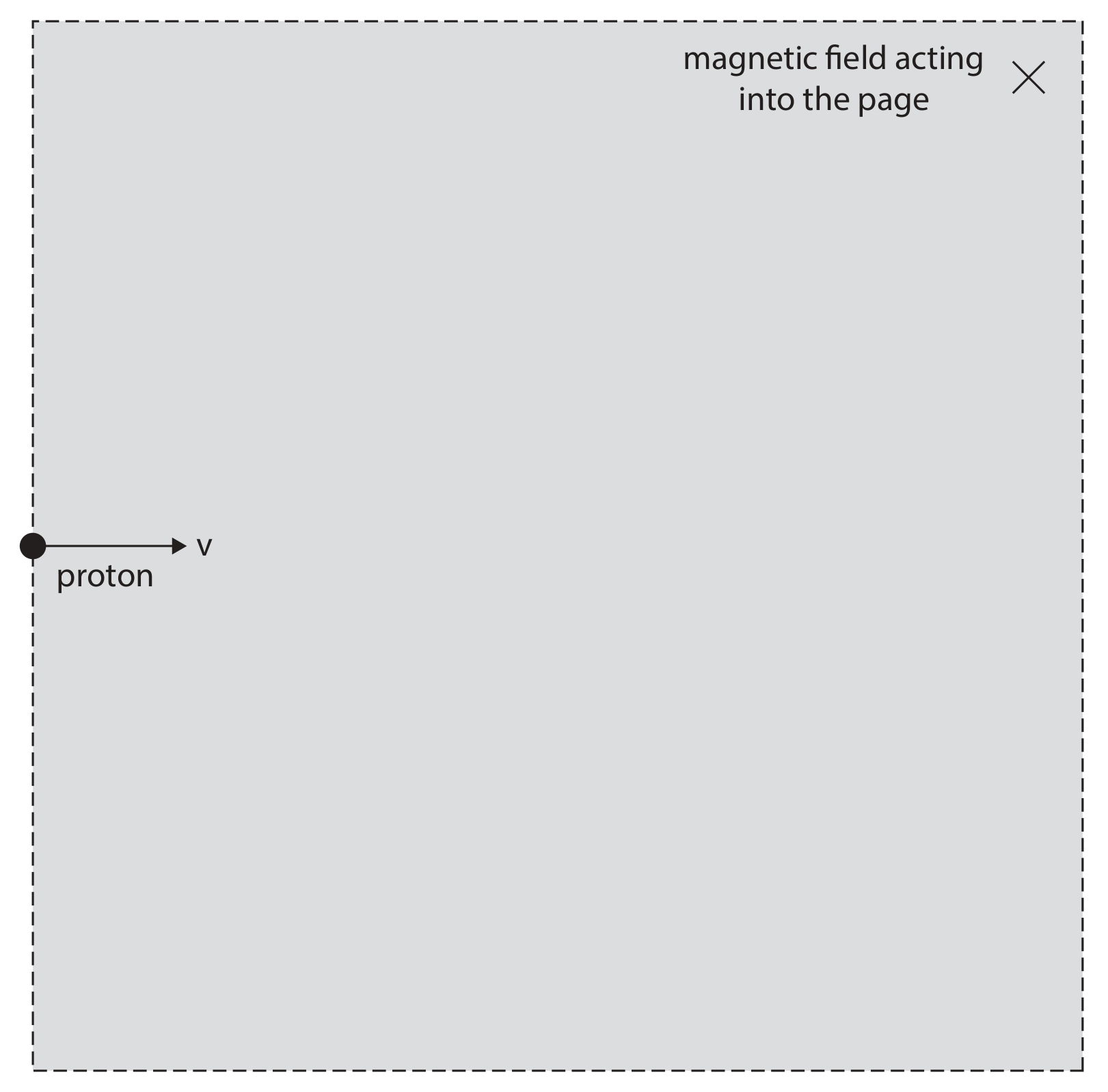
A proton moves through a uniform magnetic field produced by a strong electromagnet.

The shaded area in the diagram represents the magnetic field.
The initial velocity, v, of the proton is also shown.

Question image
[ 4 ]

Question 6(b)(i)

(i)

Use the left-hand rule to determine the direction of the force acting on the proton.

[ 1 ]

Question 6(b)(ii)

(ii)

Explain how the force on the proton changes as the proton moves through the magnetic field.

You may add to the diagram to help your answer.

[ 2 ]

Question 6(b)(iii)

(iii)

Suggest why the velocity of the proton changes.

[ 1 ]
0 selected