EduNinja

IGCSE Physics(b) Density and pressureTopic Practice

(b) Density and pressure

Edexcel IGCSE Physics (b) Density and pressure question practice helps you revise this syllabus point with the course map in view. Use this page to focus on one topic, check the style of questions available, and connect each attempt back to the knowledge area it is testing.

EduNinja keeps Physics practice aligned to Edexcel, so you can move from topic review into exam-style question bank work without losing the syllabus structure. Start with a small set, mark the weak steps, then return to nearby topic links when a definition, graph, calculation, or explanation needs repair.

Question 1

[Maximum number: 7]

A student plays a game using a single dice.
The student decides to determine the density of the dice by measuring its mass and volume.
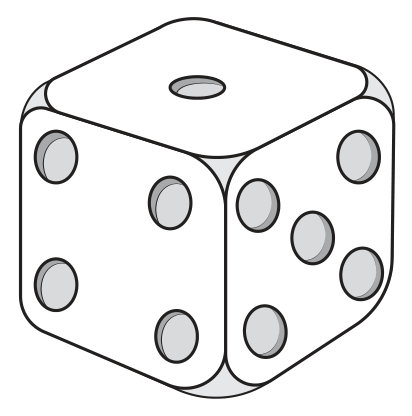
Question image

Question 1(a)

(a)

Describe how the student could accurately measure the mass of the dice.

[ 2 ]

Question 1(b)

(b)

The dice is not a regular shape.

The student decides to measure the volume of the dice using a displacement method.

The student places the dice into a measuring cylinder containing water.

The diagram shows the water in the measuring cylinder before and after the dice is fully submerged.
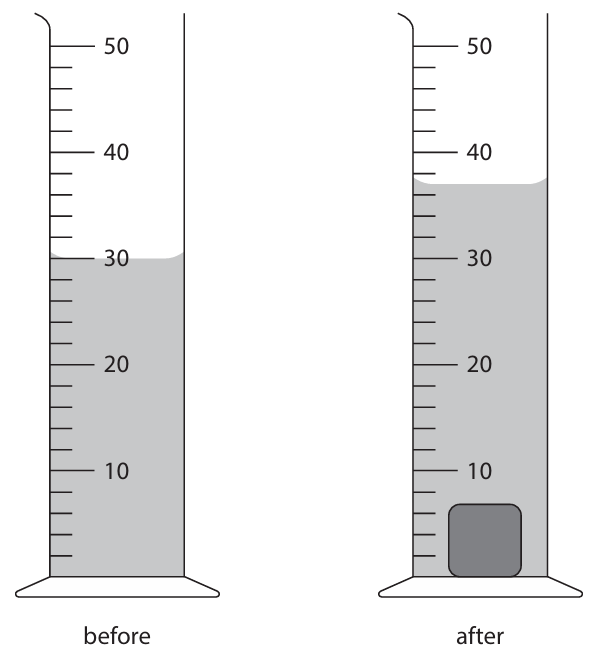
Question image
[ 5 ]

Question 1(b)(i)

(i)

The measuring cylinder gives volume in units of cm^3.

Using the diagram, determine the volume of the dice.

volume = ............ cm^3

[ 2 ]

Question 1(b)(ii)

(ii)

The dice has a mass of 9.2 g.

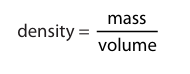
Calculate the density of the dice using the formula
Question image

Give a suitable unit.

density = ............
unit = ............
[ 3 ]

Question 2

[Maximum number: 4]

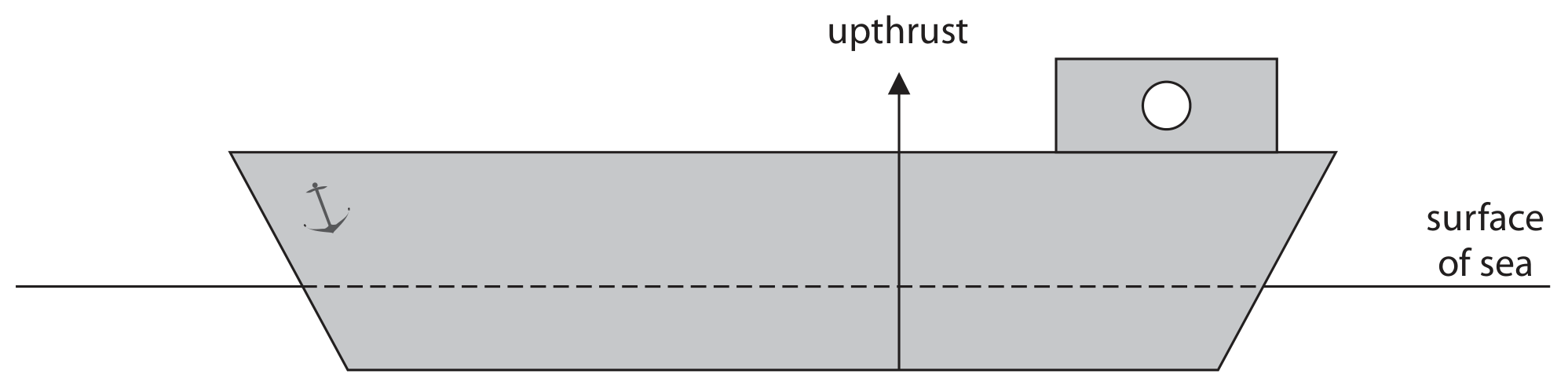
A ship floats on the sea.

Question image

Question 2(b)

(a)

The upthrust force acting on the ship is proportional to the pressure difference between the bottom of the ship and the surface of the sea.

The pressure acting on the ship at the surface of the sea is 100 kPa .

[ 4 ]

Question 2(b)(i)

(i)

State the formula linking pressure difference, height, density and gravitational field strength (g).

[ 1 ]

Question 2(b)(ii)

(ii)

The bottom of the ship is 15.8 m below the surface of the sea.

Show that the pressure acting on the bottom of the ship is approximately 260 kPa .
[density of seawater =1030 kg/m3=1030 \mathrm{~kg} / \mathrm{m}^{3} ]

[ 3 ]

Question 2

[Maximum number: 5]

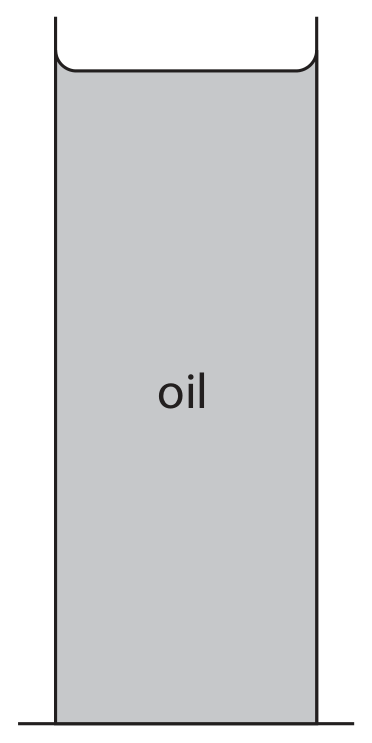
The diagram shows a can filled with oil.

Question image

Question 2(a)

(a)

The total pressure at the bottom of the can is 110 kPa.

Atmospheric pressure is 101 kPa.

Calculate the pressure difference due to the oil.

pressure difference = ............ kPa

[ 1 ]

Question 2(b)

(b)

State the formula linking pressure difference, height, density and gravitational field strength.

[ 1 ]

Question 2(c)

(c)

Calculate the height of the oil in the can.

[density of oil = 960 kg / m^3]

height = ............ m

[ 3 ]

Question 2

[Maximum number: 4]

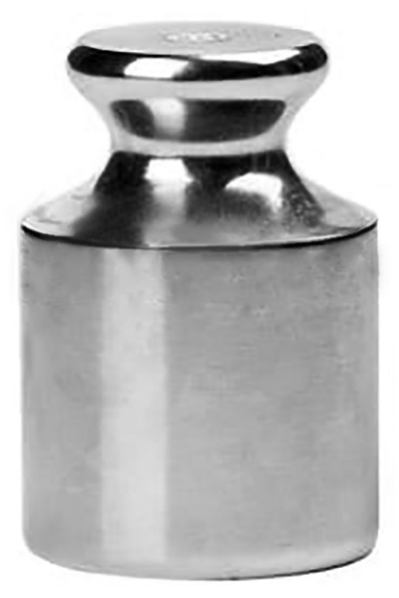
The photograph shows a brass mass.

Question image

© Dudaeva/Shutterstock

Question 2(a)

(a)

State the formula linking density, mass and volume.

[ 1 ]

Question 2(b)

(b)

The brass mass has a mass of 454 g.

The density of brass is 8.46 g/cm^3.

Calculate the volume of the brass mass.

Give the unit.

volume = ............
unit ............

[ 3 ]

Question 4

[Maximum number: 6]

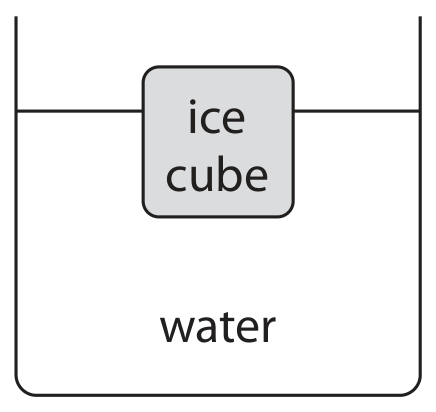
Diagram 1 shows an ice cube floating at rest in a beaker of water.

Diagram 1

Diagram 1

Question 4(b)

(a)

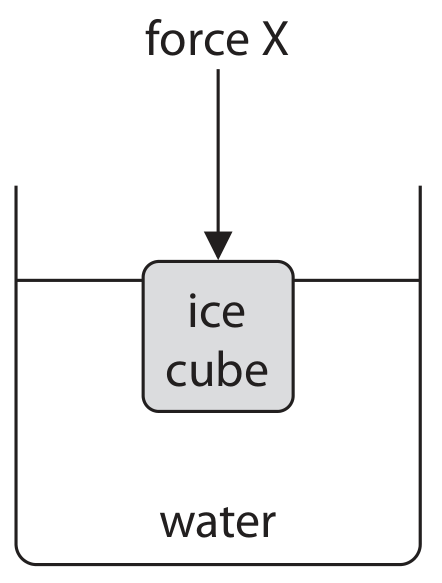
Diagram 2 shows the ice cube pushed down into the water by force X.

The ice cube is at rest in this new position.

Diagram 2

Diagram 2

[ 6 ]

Question 4(b)(i)

(i)

State the formula linking pressure difference, height, density and gravitational field strength.

[ 1 ]

Question 4(b)(ii)

(ii)

The bottom of the ice cube is 0.041 m below the surface of the water.

The density of water is 1000 kg/m31000 \mathrm{~kg} / \mathrm{m}^{3}.
Show that the pressure difference between the bottom of the ice cube and the surface of the water is about 400 Pa .

[ 2 ]

Question 4(b)(iii)

(iii)

State the formula linking pressure, force and area.

[ 1 ]

Question 4(b)(iv)

(iv)

The area of the base of the ice cube is 0.0017 m20.0017 \mathrm{~m}^{2}.

Calculate the upward force on the bottom of the cube from the water due to the pressure difference.
upward force =

[ 2 ]

Question 4

[Maximum number: 4]

A student investigates how much pressure she exerts on the ground when she is standing up.

Question 4(b)

(a)

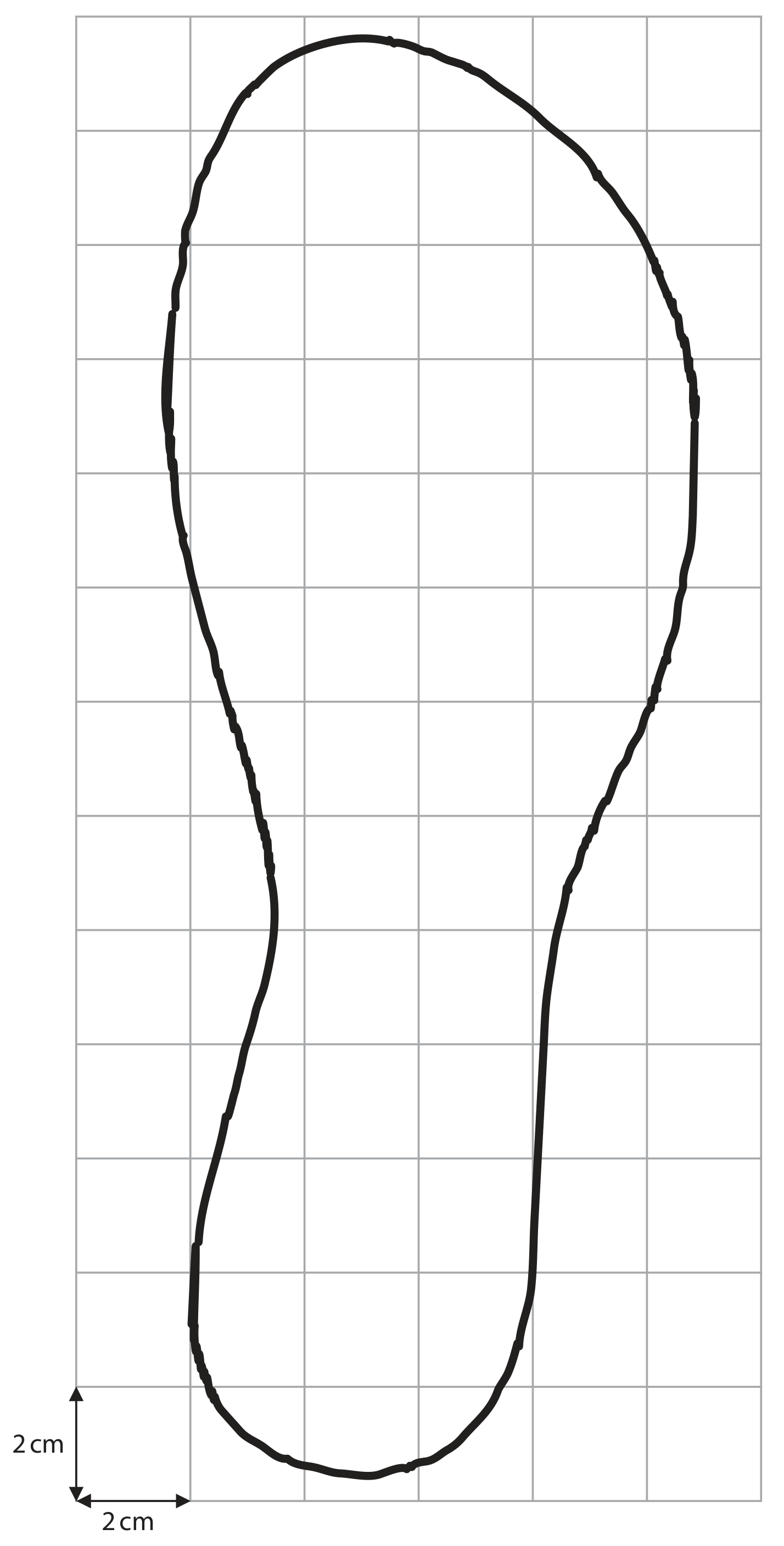
The student measures the area of one of her feet when it is in contact with the ground. She draws around her foot on a piece of squared paper.

Question image

grid not to scale

[ 4 ]

Question 4(b)(ii)

(i)

State the formula linking pressure, force and area.

[ 1 ]

Question 4(b)(iii)

(ii)

The weight of the student is 520 N.

Calculate the pressure the student exerts on the ground when she is standing on both feet.

Give the unit.

pressure = ............ unit ............

[ 3 ]

Question 5

[Maximum number: 10]

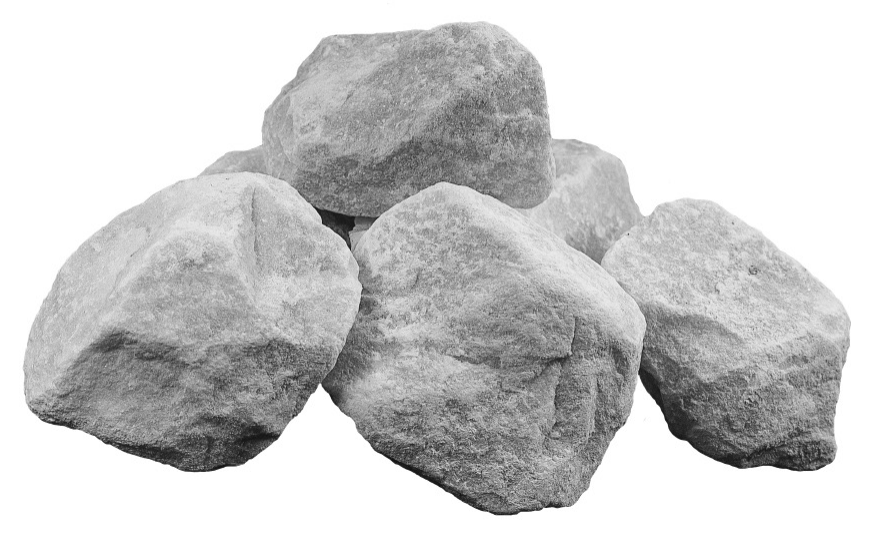
A student needs to determine the density of some small rocks that appear to all be made of the same material.

Question image

(Source: © Chake / Shutterstock)

Question 5(a)

(a)

The student decides to measure the mass and the volume of each rock.

Describe a method the student could use to accurately determine the mass and the volume of each rock.

You may draw a diagram to help your answer.

[ 5 ]

Question 5(b)

(b)

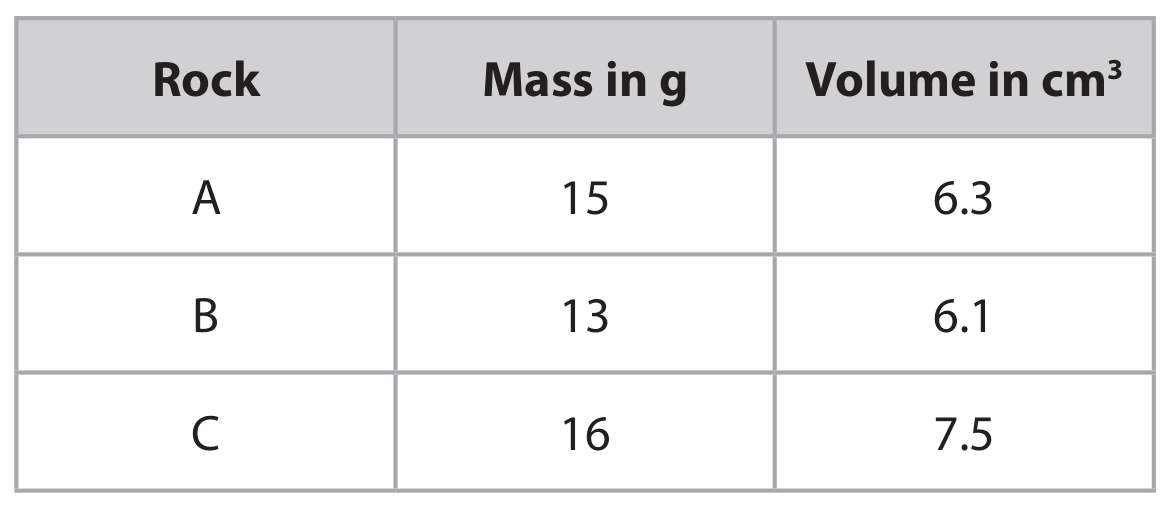
The table shows the student's results for three of the rocks.

Table
[ 5 ]

Question 5(b)(i)

(i)

State the formula linking density, mass and volume.

[ 1 ]

Question 5(b)(ii)

(ii)

After looking at the data, the student concludes that one of the rocks may be made of a different material from the others.

Using the data from the table, justify the student's conclusion.

[ 4 ]

Question 7

[Maximum number: 6]

A glass contains fizzy water.
Bubbles of carbon dioxide form at the bottom of the glass and rise to the surface.

Question 7(a)

(a)

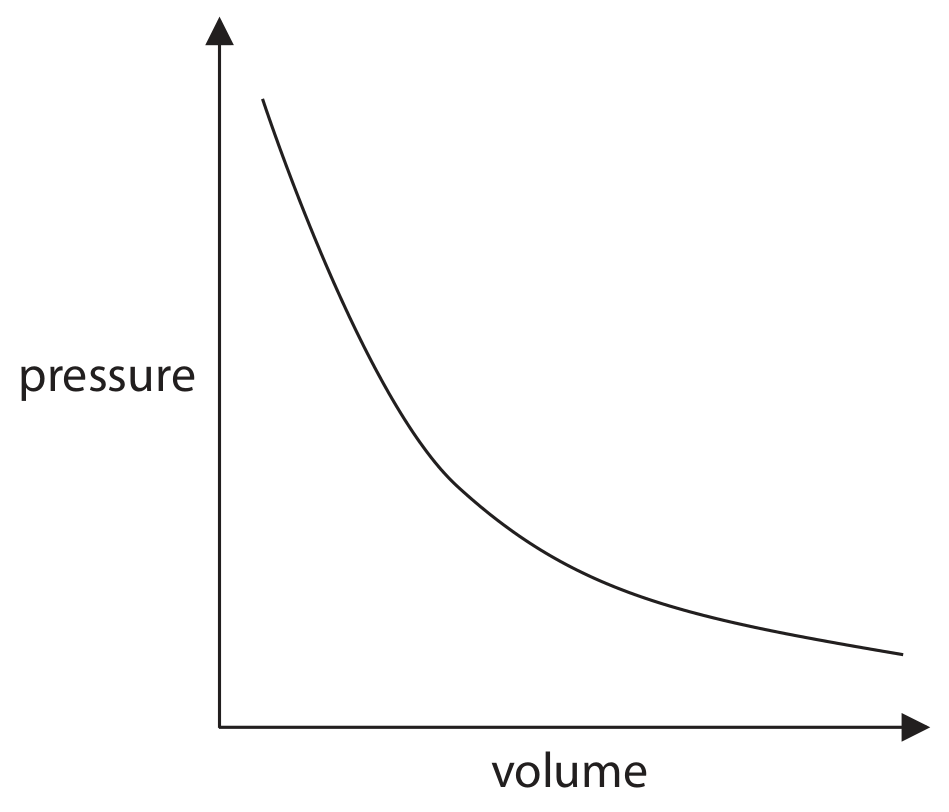
The graph shows the relationship between the volume of a bubble and the pressure of the gas in the bubble.

Question image
[ 6 ]

Question 7(a)(i)

(i)

Describe the relationship shown by the graph.

[ 2 ]

Question 7(a)(ii)

(ii)

State the formula linking pressure difference, height, gravitational field strength and density.

[ 1 ]

Question 7(a)(iii)

(iii)

The depth of the fizzy water in the glass is 22 cm.

The density of the fizzy water is 1080 kg/m^3.

Calculate the pressure difference at the bottom of the glass due to the fizzy water.

pressure difference = ............ Pa

[ 2 ]

Question 7(a)(iv)

(iv)

Calculate the pressure of the gas in the bubble when the bubble is at the bottom of the glass.

[atmospheric pressure = 101000 Pa]

pressure = ............ Pa

[ 1 ]

Question 6

[Maximum number: 6]

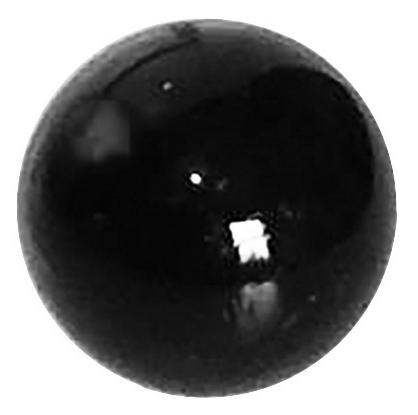
The photograph shows a small glass ball used to investigate density and pressure.

Question image

Question 6(a)

(a)

The mass of the ball is 19 g .

The density of the ball is 2.3 g/cm32.3 \mathrm{~g} / \mathrm{cm}^{3}.

[ 3 ]

Question 6(a)(i)

(i)

State the formula linking density, mass and volume.

[ 1 ]

Question 6(a)(ii)

(ii)

Calculate the volume of the ball.
volume = cm3\mathrm{cm}^{3}

[ 2 ]

Question 6(b)

(b)

The ball is dropped into deep water and sinks to a depth of 560 cm .

[ 3 ]

Question 6(b)(i)

(i)

State the formula linking pressure difference, height, density and gravitational field strength.

[ 1 ]

Question 6(b)(ii)

(ii)

Calculate the increase in pressure at this depth.
[density of water = 1000 kg/m31000 \mathrm{~kg} / \mathrm{m}^{3} ] Pa

[ 2 ]

Question 7

[Maximum number: 4]

This question is about pressure.

Question 7(a)

(a)

Small air bubbles form in a container of water.

[ 1 ]

Question 7(a)(i)

(i)

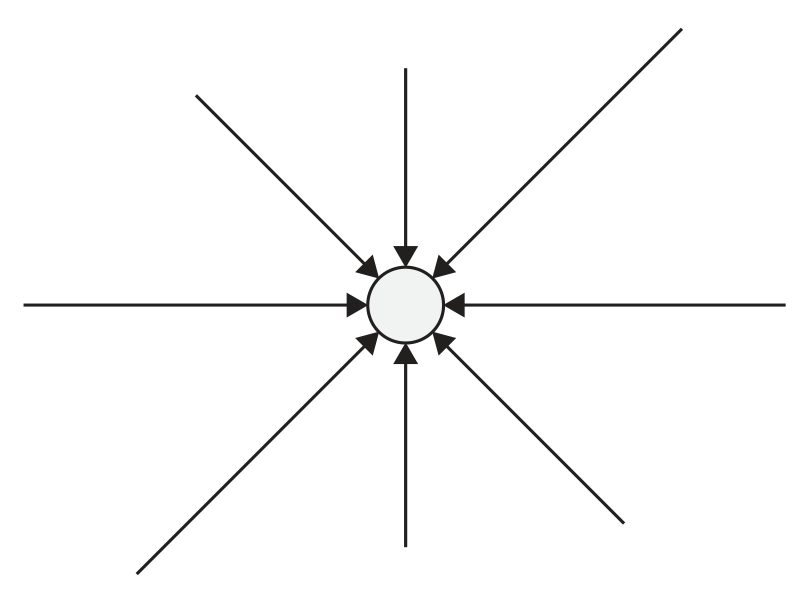
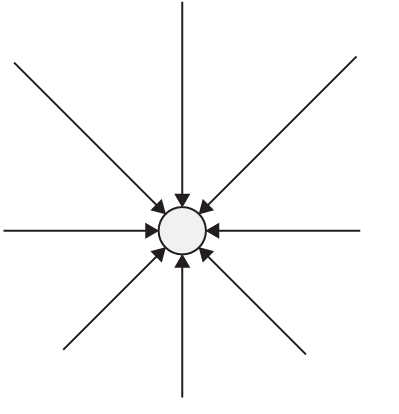
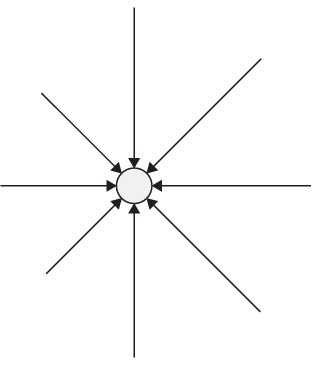
The pressure of the water acts on these bubbles.

The diagrams show the forces that cause this pressure.
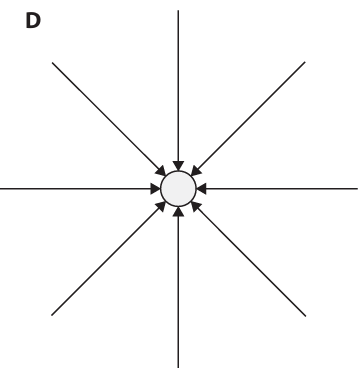
Which diagram correctly shows how the pressure of the water acts on a stationary air bubble?

A
Question image
B
Question image
C
Question image
D
Question image
[ 1 ]

Question 7(b)

(b)

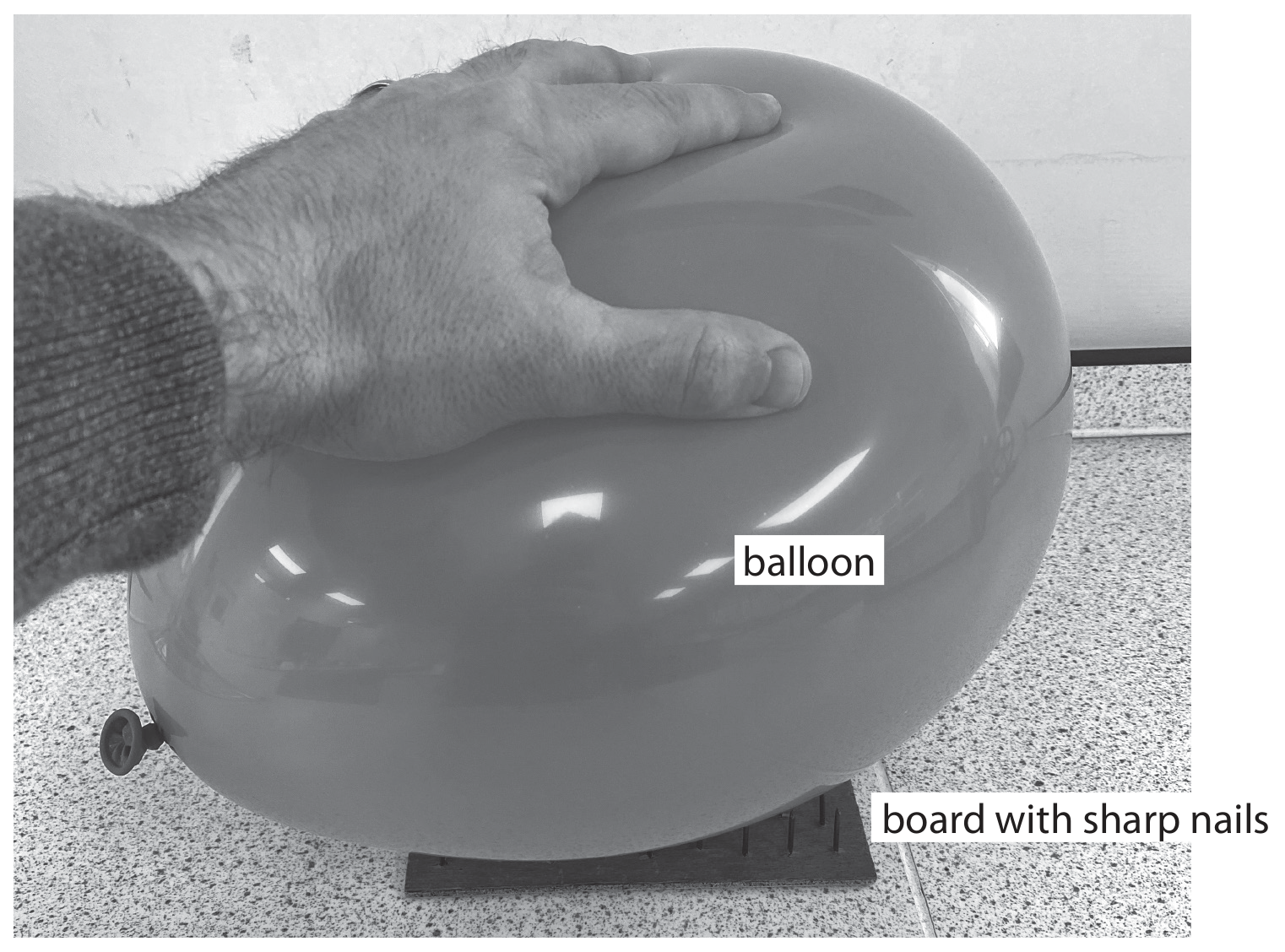
A teacher does a demonstration using an inflated balloon and a board with many sharp nails.

Question image

The teacher pushes the balloon onto the board of nails. The balloon does not pop. The teacher then pops the balloon using a single nail.

Explain why the balloon does not pop when pushed onto the board of nails.

[ 3 ]
0 selected