EduNinja

IGCSE Physics2.27P Electrostatic dangersTopic Practice

2.27P Electrostatic dangers

Explain the potential dangers of electrostatic charges, e.g. when fuelling aircraft and tankers

Question 1(b)

[Maximum number: 2]

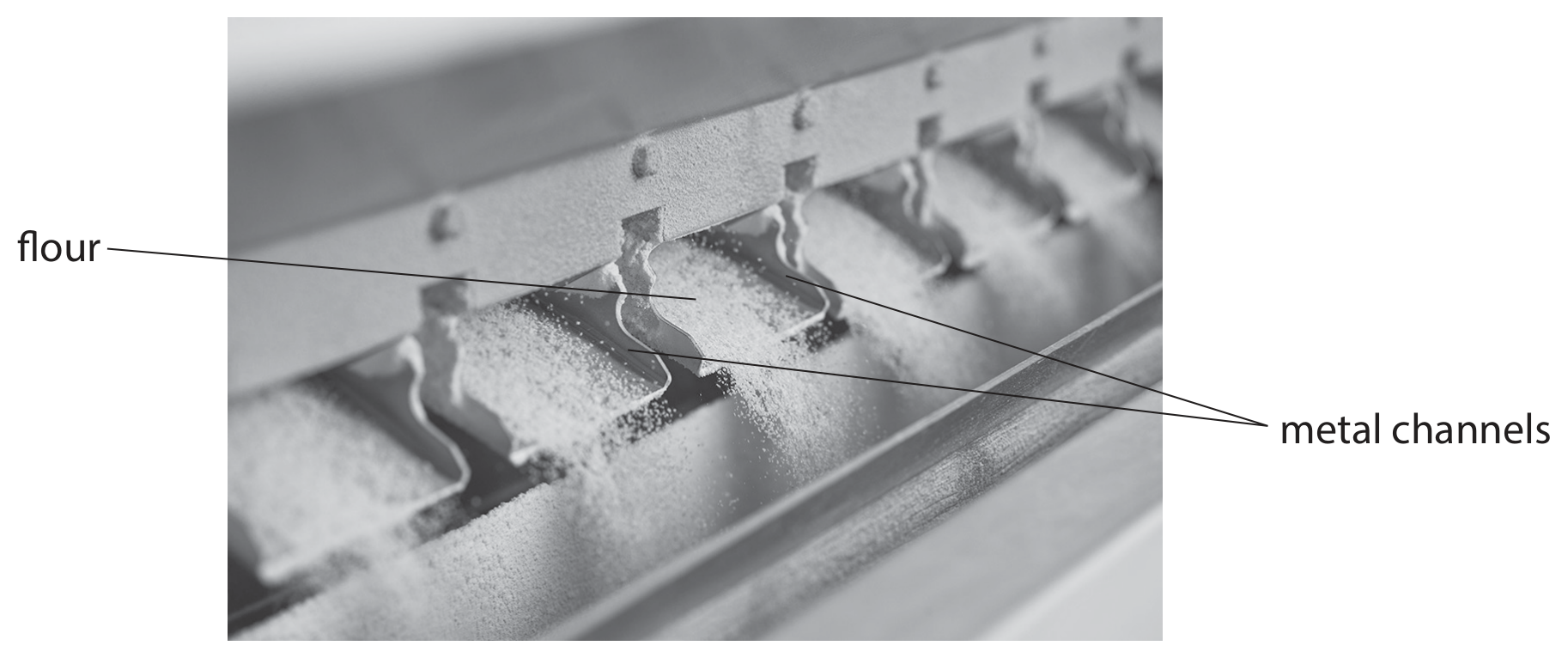
A flour mill is a factory where flour is produced.
The photograph shows some flour moving through metal channels in the flour mill.
Question image

The dust created by producing flour in a flour mill is dangerous because the dust is flammable. This creates a risk of an explosion.

Explain why connecting the metal channels to earth reduces the risk of an explosion in a flour mill.
Question 3(c)

[Maximum number: 3]

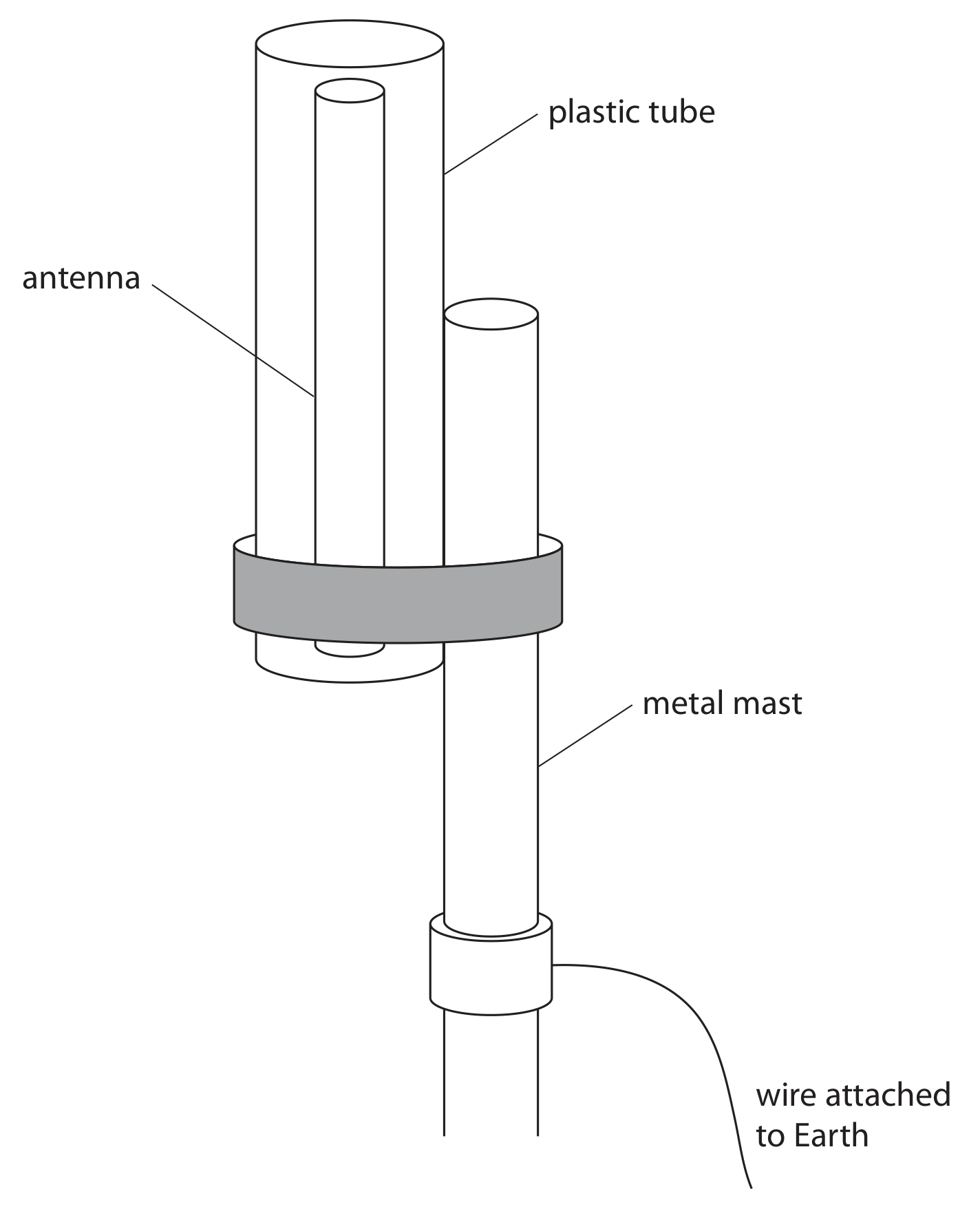
The diagram shows part of a radio antenna.
The plastic tube protects the radio antenna from bad weather.
Dust particles carried by the wind rub against the plastic tube.
After some time, the dust particles cause the tube to become positively charged.

Question image

The plastic tube is attached to a metal mast.

This would cause the metal mast to become positively charged.
Explain why there is a wire connecting the metal mast to the Earth.

Question 4(c)

[Maximum number: 3]

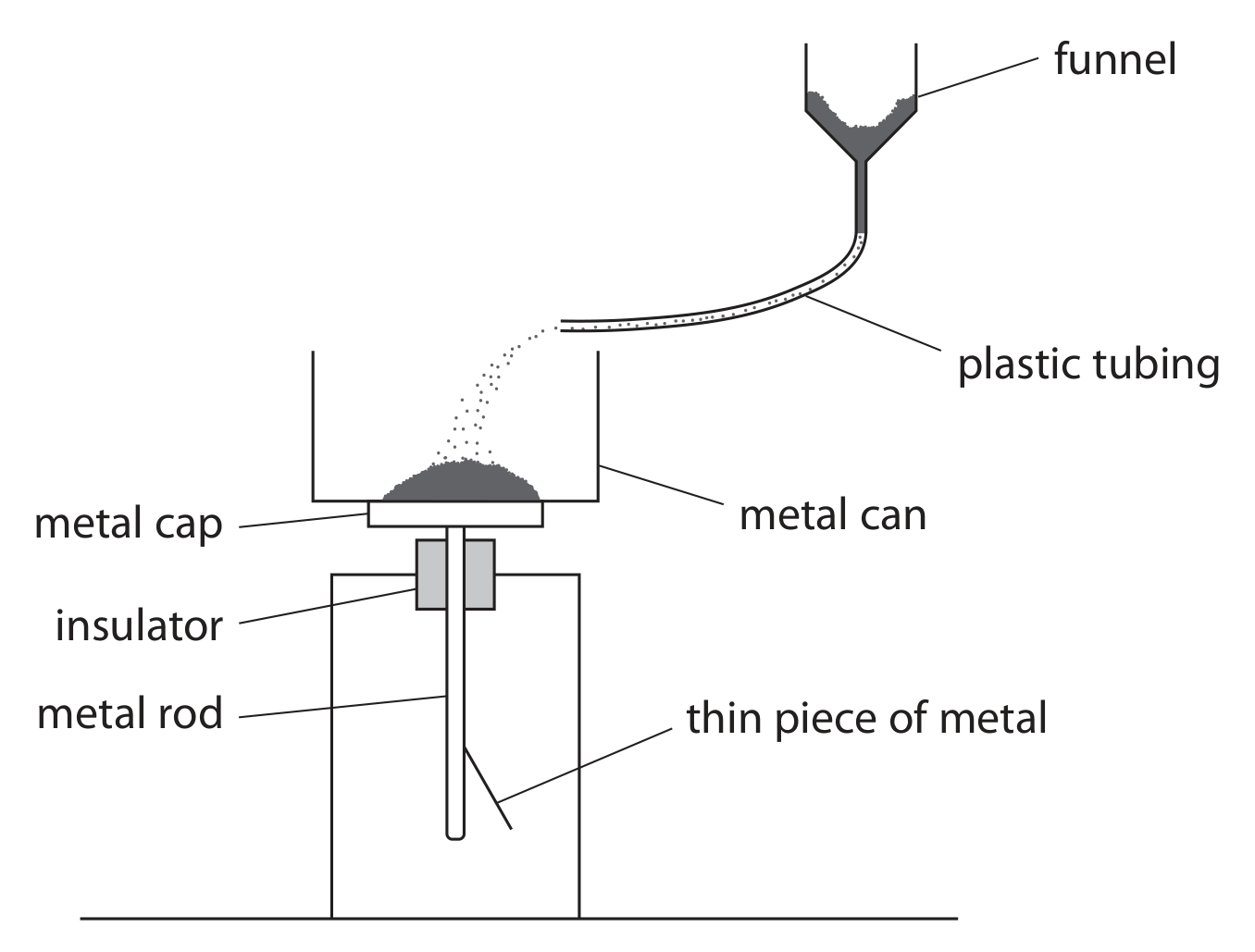
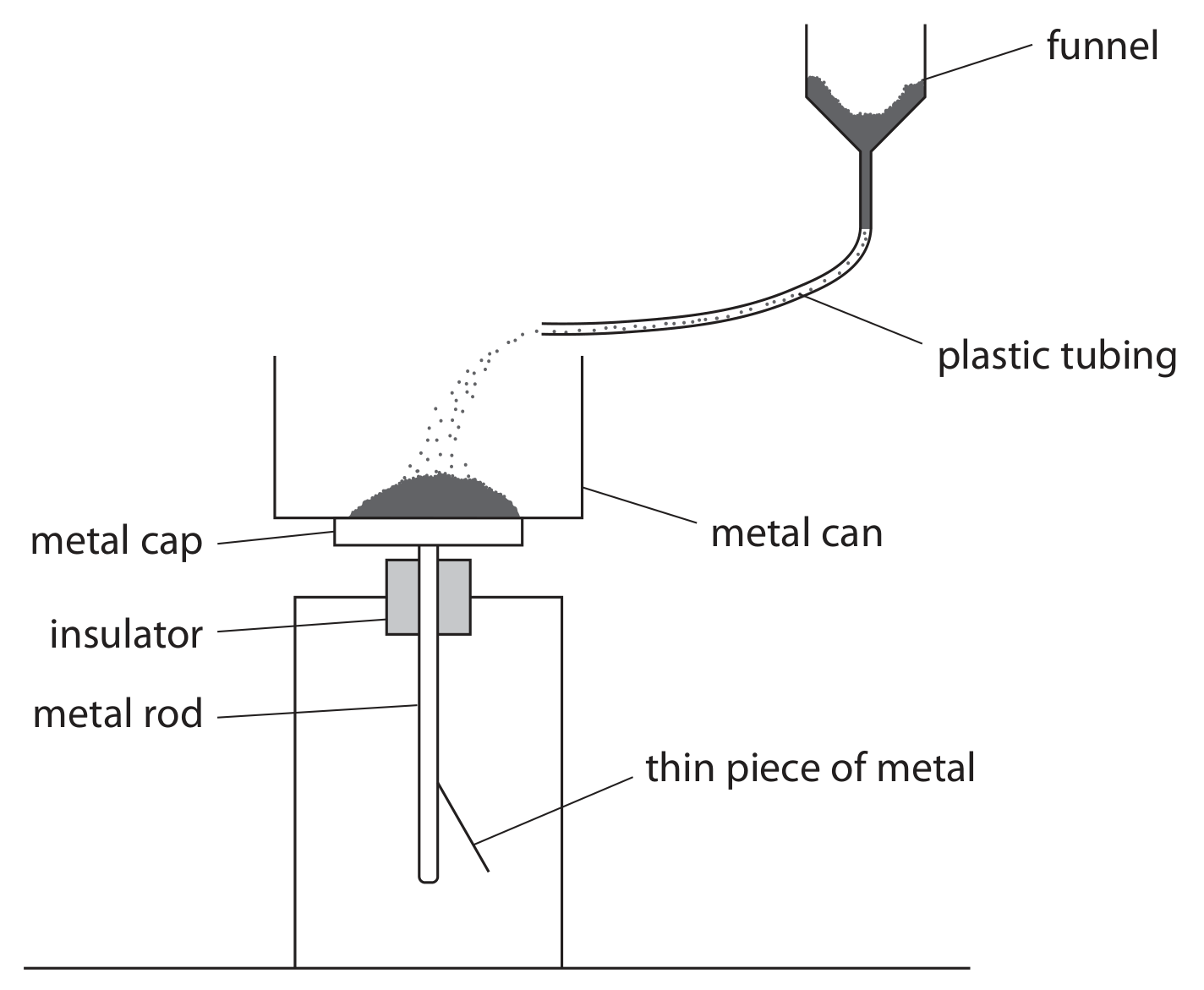
A student uses this apparatus to demonstrate the effect of electric charge.

Question image

He pours some fine powder into a funnel.
The fine powder moves through a length of plastic tubing and falls into a metal can.
The metal can rests on a metal cap.
The metal cap is connected to a thin piece of metal via a metal rod.
When the powder lands in the can, the thin piece of metal moves away from the metal rod.

The student suggests that this demonstration is similar to refuelling an aircraft.

The powder represents the fuel and the metal can represents the fuel tank in the aircraft.

Question image

Explain how the student should modify this apparatus to demonstrate how to minimise the dangers when refuelling an aircraft.

You may add to the diagram to help your answer.

0 selected